
Affordable Fun Cars: Budget Builds and Ownership Tips
Explore affordable fun cars, budget enthusiast builds, and key ownership tips for cost-effective performance and maintenance.
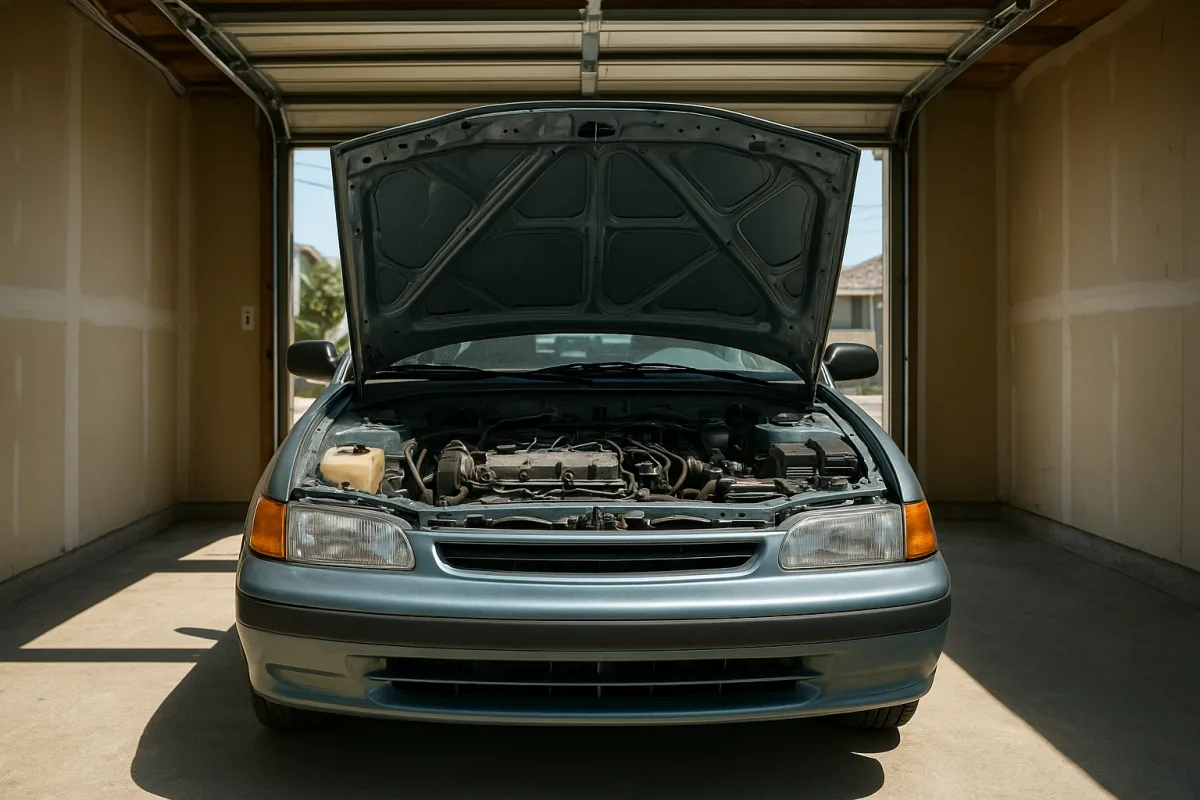
Start with the sort of fun you can actually afford
“Fun car under $10K” is often treated as a performance question. It is really a tolerance-for-interruption question. Can you afford to have it on stands for three weekends, pay for parts before fitting upgrades, and walk away from a car whose seller says it only needs one small job?
The sensible starting point is a clean, ordinary 1990s Honda rather than a wounded prestige car. JDMBUYSELL reports that the broader JDM market has settled after its pandemic spike, with well-kept 1990s cars tending toward stable or gently appreciating values rather than guaranteed big gains. [7]
That does not mean every old Japanese car is suddenly an investment. It means buying the least modified, best-documented example remains a better bet than paying enthusiast money for somebody else’s unfinished vision.
A 1990 Honda Accord in excellent condition is generally put in the $5,000 to $8,000 range in the research brief. That leaves a realistic reserve for tyres, fluids, brakes, bushings and the forgotten jobs that come with a 30-plus-year-old car.
The car that best illustrates the difference between an interesting Honda and a cheap Honda is the 1996 Honda Accord SiR featured by Larry Chen. It is a Japanese-market CD6 sedan with the H22 engine and five-speed manual, built as a road-going relation to Honda’s mid-1990s Japanese Touring Car Championship effort.
Larry Chen’s Accord SiR is not presented as a bargain commuter. It was sourced in Japan because a comparable example could not be found in the United States, and it arrived with an unusually clean interior, rust-free structure and original SiR-specific details.
That is the point. A rare car is only affordable if it starts complete. Missing SiR headlights, interior trim, correct tail lamps or period parts can turn a seemingly cheap imported Honda into a parts hunt conducted across continents.
Check whether the JDM Honda can be imported before falling for it
The 25-year import rule is useful, but it is not a magic pass. In 2026, vehicles built in 2001 are eligible for the federal 25-year exemption, according to JDM Import Guide. [3] A 1996 Honda Accord SiR is therefore old enough, but eligibility does not remove state registration, inspection or insurance questions.
Before sending money, confirm the build month, chassis number, title status and export paperwork. Do not rely on an auction listing calling something an SiR, or on an engine cover marked H22. The useful documents are the Japanese export certificate, auction sheet where available, photographs of identification plates, and a matching drivetrain number.
Larry Chen’s featured Accord had 86,000 kilometres indicated, a stock H22 and manual transmission, plus SiR-specific black-housing headlights. Those are details worth preserving because they establish what the car is, rather than making it look like a generic lowered Accord.
The car also had replica JTCC-inspired bodywork, forged wheels and rolled rear arches. That may suit a period-correct street-and-show build, but inspect the work under the cosmetic layer. Rolled arches, removed wheel liners and very low ride height can conceal tyre contact, rust traps and compromised suspension travel.
For a first enthusiast build, use the Accord SiR as the target specification, not necessarily the mandatory purchase. Its H22 five-speed configuration, ordinary sedan body and restrained factory appearance make it a better long-term proposition than a wildly modified car with no baseline.
Budget maintenance before modifying the Honda
The boring jobs arrive before the fun ones. VinExposed estimates average annual maintenance for a 1996 Accord at roughly $400, about 24 percent below the midsize average. [6] That is a useful baseline for an ordinary car, not a promise for a rare imported SiR with old rubber and scarce trim.
The research brief puts a differential-fluid service at $245 to $286, a power-steering pump at $759 to $906, an engine belt replacement at $281 to $343, and an independent-shop fuel-pump job at $450 to $750. Those numbers should become your first-year reserve, not an afterthought.
Start with fluids, filters, belts, tyres and brake condition. Then inspect engine mounts, CV boots, suspension bushes, steering leaks and cooling-system hoses. An H22-powered Accord can be a fun, usable road car, but a neglected cooling system or tired gearbox synchro will make it feel like an old car quickly.
Avoid immediately copying every detail from Larry Chen’s build. His car is a specifically themed Radwood and Hagerty project, with rare replica motorsport parts and custom forged wheels. It suits someone recreating a JTCC-inspired Honda, not necessarily someone who needs uncomplicated daily transport.
If you want a lower stance, preserve suspension movement and steering lock before chasing wheel fitment. The featured Accord had its rear arches rolled and its liners removed, and its seller had raised it roughly two centimetres before driving. That is a clue that the best photograph may not be the best usable setup.
Do not confuse a cheap Lamborghini with affordable ownership
The cheapest twin-turbo Lamborghini Gallardo is still not a sub-$10,000 fun car. It is an exotic-car bill wearing a tempting purchase price. Marque’s 2026 Gallardo market data puts the median asking price around €130,000, approximately $155,000, with a stated range of €115,000 to €168,000. [1]
The 2006 twin-turbo Gallardo shown by Emelia Hartford demonstrates why the entry price can be misleading. It had changed hands several times after a jump-start reportedly bricked its electronics, and it still would not select third or fifth gear after the engine-side problems were addressed.
That car had about 35,000 miles, a twin-turbo 5.0-litre V10 and a promise of cheap diagnosis. The responsible reading is not that a relay will save every broken Gallardo. It is that a seller’s “probably calibration” theory is not a repair plan.
The cost range makes the risk plain. A Gallardo transmission rebuild can be $2,000 to $4,000, while an E-Gear actuator replacement is cited at $8,000 to $12,000. [1] Neither figure includes the possibility that a poorly modified car needs wiring, clutch, ECU or drivability work as well.
If you are considering such a car, pay an independent Lamborghini specialist to scan it with the proper factory-capable diagnostic equipment before purchase. Ask for clutch wear data where applicable, stored codes, gearbox adaptation status, charging voltage and evidence of the original electronics diagnosis.
A twin-turbo conversion also changes the ownership question. Find out who installed it, whether the engine management is documented, what fuel system it uses, whether the tune is available, and who can support it locally. “It runs and spits flames” is not evidence of safe calibration.
Understand why bigger Lamborghini builds get expensive fast
The Liberty Walk twin-turbo Lamborghini Murciélago build from throtl is an honest reminder that the dramatic bits are only the visible fraction. The project began with accident damage, a stripped engine bay, a rebuilt V12, a manual-transmission conversion, a replacement chassis harness and a dedicated twin-turbo system.
The Murciélago was originally an E-Gear car, so converting it to manual required cutting the centre-console structure for a shifter. The team also replaced hacked or mystery wiring with a new chassis harness integrated for a MoTeC-based setup. That is proper project-car scope, not weekend bolt-on work.
The build also showed the mundane trouble that consumes time and money. Installing the fuel tank required removing an entire suspension corner. The engine bay needed cleaning, corrosion treatment and refinishing before the rebuilt V12 and transmission could go in.
Budget accordingly. General Murciélago ownership estimates put annual maintenance at $3,500 to $8,000, major service every three to five years at $3,500 to $6,000, and tyres at $3,000 to $5,000 per set. [4][5]
A clutch can reach $15,000 where engine removal is required, and specialist labour is commonly quoted at $150 to $300 per hour. [4][5] Those are general Murciélago figures, not specific pricing for throtl’s twin-turbo Liberty Walk car, whose bespoke hardware makes its eventual costs less predictable.
The Lamborghini Temerario build shown by TheStradman offers a different warning. Carbon bonnet, wing, splitter, roof scoop, wheels and wrap work were being fitted against an 11-day SEMA deadline. The owner had to remove factory trim and transfer wiring, brake lights, clips and fasteners to aftermarket parts.
That is not criticism of the build. It is a reminder to inspect any recently modified car for panel alignment, water sealing, secure wiring, missing factory hardware and whether every removed original part comes with the sale. Carbon fibre does not make a car complete.
Sort legality, finance and insurance before ordering parts
A road car does not become exempt from federal and state law because the build is expensive. The Clean Air Act prohibits disabling emissions equipment, with potential penalties of up to $5,911 per vehicle. [2] California adds the requirement for a CARB Executive Order for many aftermarket emissions-related parts used on the street. [2]
For a turbo Honda or Lamborghini, ask whether catalytic converters, evap equipment, oxygen sensors and engine-management calibration remain emissions compliant in your state. Do this before fitting parts, rather than trying to reverse a build after a failed inspection.
Finance is another practical barrier. Traditional lenders are often reluctant to fund modified vehicles, while credit unions may cap lending at 80 to 90 percent of loan-to-value and require detailed records. Expect a 20 to 30 percent down payment if financing is available.
Specialist lenders can be an option, but usually at a cost. An unsecured personal loan can run from 6 to 36 percent APR, and buyers with weak credit can face 20 to 30 percent rates. That can make a supposedly cheap project wildly expensive before a single repair begins.
Insurance should be discussed before purchase, not after the deposit. Full coverage may be required by a lender, and modified-car premiums can rise. Give the insurer the actual specification, including turbo system, standalone ECU, body conversion and declared value, rather than assuming a normal policy will quietly cover it.
Buy the build history, not the finished photograph
The best enthusiast car is one whose previous owner can explain every decision. For a Honda, look for service invoices, Japanese import paperwork, factory parts and photographs before the modifications. For a Lamborghini, demand invoices for engine work, gearbox work, tuning, wiring and fuel-system installation.
I have not owned or driven the individual cars featured by Larry Chen, Emelia Hartford, throtl or TheStradman, so their projects should be read as useful case studies rather than personal road tests. They do show the questions a buyer should ask.
For an affordable build, a solid Honda platform is the rational choice. For an exotic build, the Gallardo, Murciélago and Temerario examples show why purchase price is only admission. The real test is whether you can fund diagnosis, specialist labour and the inevitable second round of work.
Frequently Asked Questions
What are the best affordable fun cars for enthusiasts?
A clean, well-maintained 1990s Honda, such as a 1996 Honda Accord SiR, is a good affordable choice for enthusiasts. These cars offer a balance of condition, originality, and potential for upgrades without the high costs associated with exotic or heavily modified vehicles. Prioritize condition and documentation over flashy badges or extensive modifications.
How much does it cost to maintain an affordable fun car?
For a 1996 Honda Accord, average annual maintenance is roughly $400, about 24% below the midsize average. First-year reserves should include typical service items like fluids, filters, belts, tires, and brakes, plus potential repairs such as differential fluid service ($245–$286) and fuel pump replacement ($450–$750). Maintenance costs can increase if the car has rare or imported parts.
Which budget cars are best for enthusiast modifications?
The 1996 Honda Accord SiR with its H22 engine and five-speed manual transmission is a popular base for enthusiasts due to its factory performance pedigree and availability of parts. However, it is best to start with a complete, original example rather than a heavily modified car, as modifications can hide underlying issues and complicate maintenance.
What should I consider before buying a cheap modified car?
Before purchasing a modified car, confirm insurance availability, emissions compliance, and lender willingness to finance. Modified vehicles often require 20–30% down payments, and many lenders may refuse financing. Also, inspect modifications carefully, especially cosmetic changes like rolled arches or lowered suspension, which may hide rust or suspension problems.
Are JDM cars affordable and legal to import for enthusiasts?
JDM cars built 25 years ago or older, such as a 1996 Honda Accord SiR, are eligible for import under the federal 25-year rule. However, import eligibility does not guarantee easy registration, inspection, or insurance. Buyers must verify build month, chassis number, export paperwork, and compliance with state regulations before purchase to ensure legality and avoid costly surprises.
How we researched this
This article was assembled from 5 video sources across 5 channels, 7 cited references.
Nothing here is based on hands-on testing. Where a figure or finding appears, it belongs to the source cited beside it, and the writing says so rather than implying otherwise. Every source is listed below so you can check it.
Sources
Building the STO Version Temerario That Lamborghini Won't. — TheStradman
LAMBORGHINI WANTED BACK MY ABANDONED TWIN TURBO GALLARDO — EmeliaHartford
My New Dream-Spec JDM Honda Accord SiR — Larry Chen
Building a Liberty Walk Twin Turbo Lamborghini Murciélago for SEMA — throtl
The Best Fun Cars Under $10K, According to a Mechanic & a Car Guy — Ideal
Lamborghini Gallardo Prices & Market Data — United States | Marque
Are Modified Cars Illegal? Exhaust, Tint, and Lighting Rules - FedLaws
Honda Accord Maintenance & Repair Cost — Average Per Year | VinExposed
Watch Affordable Fun Cars and Enthusiast Builds on Youtube
Also from the sources
Related Articles
Embracing Change: Car Sales, Departure of Car Wizard, and Personal Reflections
Hoovies Garage faces changes with potential car sales and the departure of the Car Wizard. Reflects on personal loss and the importance of seeking therapy. Amidst challenges, the Amola red cars make a comeback.

Mat Armstrong Overcomes Lamborghini Revolto Technical Challenges on Epic Journey
Mat Armstrong faces technical challenges driving his Lamborghini Revolto across the country, dealing with a crash code and hybrid battery issues. Despite struggles, the team perseveres, using innovative solutions to overcome obstacles on their journey to Monaco.

Race Against Time: Rebuilding a GT3 RS for Mr. JWW in 24 Hours
Mat Armstrong races against time to rebuild a damaged GT3 RS for Mr. JWW after a Nurburgring mishap. The team tackles airbag deployment, a blown dash, and a pyro fuse issue, aiming for a 24-hour turnaround. Follow their high-stakes journey of automotive restoration.

Ultimate R32 GTR Build: High-Performance Upgrades by Mighty Car Mods
Mighty Car Mods transforms a legendary R32 GTR with high-performance upgrades from Haltech, Dixel, and MTQ. PRP kits and meticulous tuning ensure optimal power and drivability, making this build a masterpiece of speed and precision.