
Jaguar Type 01 Market Position and Reveal Overview
Explore the Jaguar Type 01 reveal and market position, including performance, design, and how it compares to luxury EV rivals.
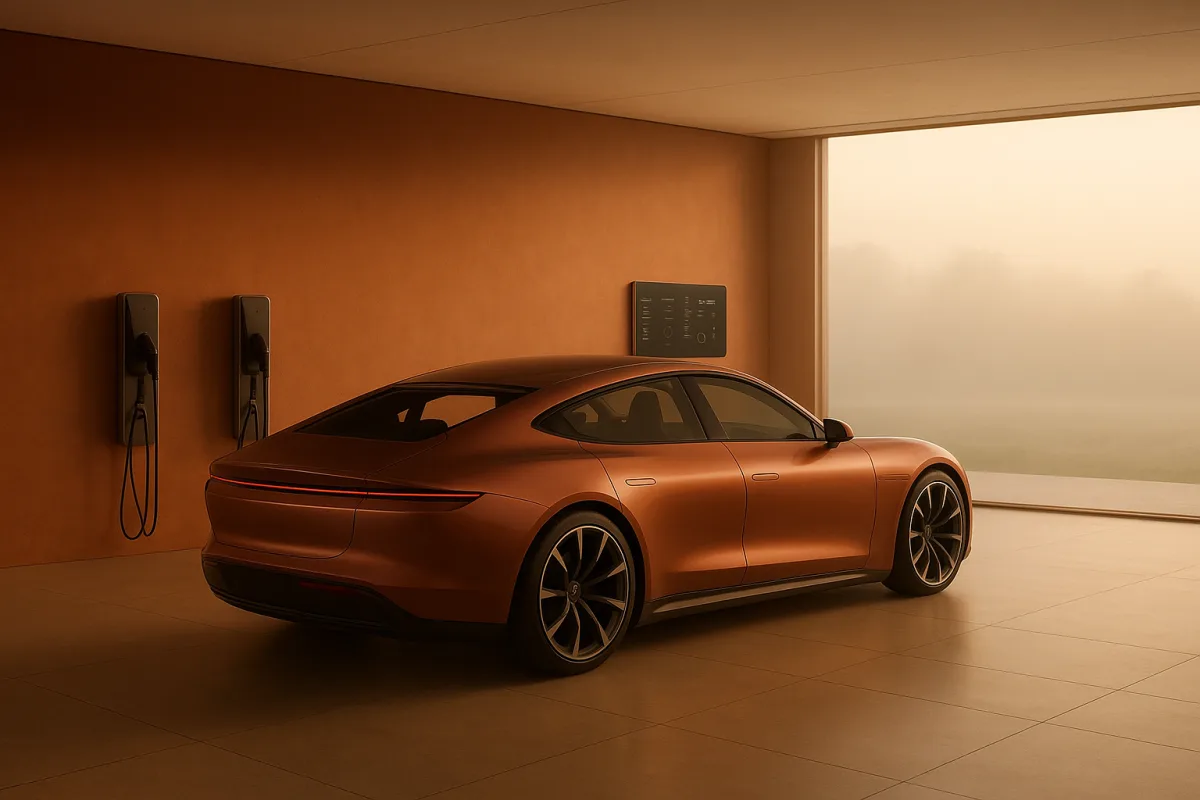
Jaguar has stopped trying to be the sensible alternative
The shift is plain: Jaguar is no longer positioning itself as a slightly more characterful rival to the BMW 5 Series, Mercedes-Benz E-Class or Audi A6. The Type 01 is a six-figure electric grand tourer intended to make Jaguar feel scarce, conspicuous and materially special again.
That is more than a change of grille shape or badge design. Jaguar has removed its previous mainstream models, rebuilt its public identity and placed its first car of the new era well above the old XF, F-Pace and even most versions of the discontinued XJ.
The base price is £130,000 in Britain and $130,500 in the United States, excluding tax and options. Orders are expected to open in early 2027, with first deliveries forecast for the second half of that year. [3]
Creative Bloq frames the Type 01 reveal as the point at which Jaguar’s much-criticised rebrand becomes legible: the car has been designed to justify the disruption, rather than merely wearing a new logo. [1] Wallpaper reaches much the same conclusion, treating the Type 01 as the opening car of an electric-era reset rather than a conventional replacement model. [2]
The independent video coverage points in the same direction. Carwow focuses on the Type 01’s length, proportions, digital rear visibility and effort to look unlike a conventional luxury saloon. Archie Hamilton Racing similarly identifies it as a large, low, four-seat electric GT with a deliberately theatrical cabin and a limited practical brief.
Ideal takes the argument furthest, but the central observation is fair: Jaguar is trying to become an object of desire rather than a rational premium purchase. That is not proof the strategy will succeed, but it is a clear break from the old volume-premium plan.
The product supports the new position, mostly
The Type 01 is 208 inches long, with a 126-inch wheelbase. Jalopnik notes that puts it almost exactly alongside the current Mercedes-Benz S-Class in footprint, while making it longer than a Lucid Air. It is not a compact sports saloon with batteries added. [5]
Its layout is equally intentional. Jaguar has given it three electric motors producing more than 1,000 PS, or roughly 986 hp, and 1,365 Nm of torque. The confirmed 0-60 mph figure is 4.0 seconds, despite some early video reports quoting substantially quicker numbers. [3]
That correction matters. A 4.0-second car is quick enough for nearly every real road, particularly one expected to weigh heavily and ride on standard 23-inch wheels, but it does not win a numbers contest against the Tesla Model S Plaid or Lucid Air Dream Edition.
The Model S Plaid costs $129,990, claims 396 miles of range and reaches 60 mph in 1.99 seconds. The Lucid Air Dream Edition asks $169,000, claims 503 miles and quotes 2.5 seconds to 60 mph. [3]
The Jaguar instead sits closer to the Mercedes-Benz EQS 580 4MATIC, at $125,950 with a 4.1-second 0-60 mph claim and 340 miles of range, and the BMW i7 xDrive60, at $119,300 with a 4.5-second claim and 318 miles. [3]
Jaguar’s claimed EPA range of up to 400 miles gives the Type 01 a useful paper advantage over those German rivals. Its 118 kWh usable battery and 350 kW DC charging capability are also serious hardware, with Jaguar claiming 200 miles added in 13 minutes under suitable conditions. [3]
As always, the phrase “under suitable conditions” deserves more attention than it gets at a reveal. Peak charging power, battery temperature, charger capability and the shape of the charging curve determine whether that 13-minute figure means anything on a wet February journey.
There is no independent charging test yet, so there is no basis to say whether the Type 01 will repeatedly achieve its headline rate. It is sensible to treat the 400-mile EPA figure and 200-mile charging claim as targets to be verified after customer cars arrive.
Luxury is being used as a defence against the spec-sheet war
Jaguar cannot realistically out-spec every electric rival. Chinese manufacturers move quickly, Tesla still has a performance advantage at the price, Lucid has a range advantage, and Mercedes-Benz, BMW and Porsche have larger established customer bases and dealer footprints.
Instead, the Type 01 attempts to make its packaging part of the purchase. Carwow highlights the long bonnet, low roofline, broad body and unusually narrow glasshouse. Those are old-fashioned grand-tourer proportions, even though an electric powertrain does not need a V12-length nose.
The cabin follows the same logic. The Type 01 has a full-length central spine, four individual seats, a panoramic roof and a full-width soundbar rather than conventional door-mounted speakers. Jaguar is selling an environment, not merely a dashboard with several screens.
That can work at this end of the market. A buyer cross-shopping an EQS, i7 or Audi e-tron GT RS may already have more acceleration, range and screen technology than they genuinely need. The Type 01’s task is to provide a stronger reason to choose it.
The Audi e-tron GT RS illustrates the problem. At $143,400, it claims 3.1 seconds to 60 mph, but its 232-mile range is much lower than Jaguar’s claimed 400 miles. [3] It is the sportier, more familiar choice, while Jaguar is trying to be the more unusual one.
Jaguar’s market position therefore sits somewhere between the German luxury saloons and more bespoke electric flagships. It is less expensive than a Cadillac Celestiq, which Jalopnik reports starts above $400,000 for the 2026 model, but it is aiming for a similarly design-conscious kind of buyer. [5]
The Rolls-Royce Spectre is another obvious visual comparison because of its upright nose, long bonnet and imposing scale. Yet the Jaguar is a four-door fastback priced far below the Rolls-Royce, so its more direct showroom competition remains Mercedes-Benz, BMW, Audi, Tesla and Lucid.
The most interesting feature is also the least proven
The Type 01 has no conventional rear window. In its place is Jaguar’s ClearSight Rear View digital mirror system, integrated into the panoramic soundbar, plus an additional rear-view camera display at the base of the windscreen. [3]
Carwow’s concern about this is sensible rather than reactionary. A camera-based rear view can be clear in ideal conditions, but it adds another screen, another camera, another electronic control unit and another behaviour for the driver to adapt to.
There is no independent evidence yet on camera performance in rain, road grime, glare, darkness or winter salt. Nor is there user feedback on whether drivers find the system intuitive after six months, rather than impressive for ten minutes on a static reveal stand.
This is the difference between a design feature and an ownership feature. A rear window is passive, simple and familiar. A digital mirror may improve the view around rear-seat headrests, but it also needs to work perfectly when the car is dirty, old and out of warranty.
The same caution applies to Jaguar’s minimalist control layout. Carwow reports touch-sensitive steering-wheel controls and climate functions integrated into screens. It may look clean, but there is no road-test evidence yet on whether basic adjustments are easy while driving.
A £130,000 luxury car cannot afford to make ordinary tasks feel clever but awkward. Buyers at this level may accept eccentricity, but they should not be expected to tolerate delayed software responses, confusing menus or poor camera reliability.
Why this is happening now
The old Jaguar approach had a basic commercial problem. The brand was trying to compete in crowded premium segments without BMW’s scale, Mercedes-Benz’s breadth, Audi’s fleet-business strength or Porsche’s profit margins. Being well liked was not enough.
The Type 01 reflects a wider luxury-EV reality: performance figures have become cheap. A four-second 0-60 mph time no longer creates a lasting identity, and even a 300-mile range claim is increasingly ordinary in the expensive end of the market.
What remains harder to copy is brand meaning, visual recognisability and a convincing ownership experience. Jaguar’s answer is extreme design, low expected volumes and a dramatic step upward in transaction price, rather than a new electric equivalent of the old XF.
There is a tax angle, although it is not a reason to buy this particular car. In the UK, the Type 01 is far above the Electric Car Grant’s £37,000 price limit, so it will not qualify for that support. [7]
It will also fall into the UK’s expensive-car Vehicle Excise Duty supplement. The first-year VED rate for an EV is £10, while vehicles above £50,000 face a £640 annual charge in years two through six. [7]
US buyers should not assume a federal incentive either. The federal EV tax credit expired on 30 June 2026, and Type 01 eligibility for any remaining state-level programmes is not confirmed. [3] European incentives vary by country, with tax breaks and charging support far from uniform. [4]
For business users, the picture may be more favourable in Britain, where 100% first-year capital allowances for zero-emission cars and charging points remain available through the relevant 2027 deadlines. [7] That helps company buyers, not private purchasers paying from taxed income.
What a prospective buyer should wait to learn
The Type 01 is not an ownership proposition yet. No customer car has covered 60,000 miles, nobody has paid for out-of-warranty camera repairs, and there is no credible evidence on real battery degradation, insurance premiums, finance residuals or parts availability.
Jaguar has not disclosed typical option costs or tax-inclusive transaction prices. That matters because a £130,000 base car can become a very different financial commitment once paint, interior trim, wheels, driver assistance and insurance are included. [3]
The company has also not published the kind of long-term service-cost evidence that matters more than launch-day theatre. A 118 kWh battery, three-motor system, active suspension and digital rear-view architecture offer plenty of sophistication, but sophistication is not the same thing as proven durability.
For a buyer who wants the safest known quantity, the BMW i7 xDrive60 at $119,300 or Mercedes-Benz EQS 580 4MATIC at $125,950 are the more established luxury-EV choices. Their range claims are lower than Jaguar’s, but their dealer support and owner knowledge base are less of an unknown. [3]
For maximum acceleration, the Tesla Model S Plaid remains the obvious $129,990 choice. For maximum claimed range, the $169,000 Lucid Air Dream Edition remains ahead. The $143,400 Audi e-tron GT RS suits the buyer prioritising dramatic performance and low-slung style over distance between charges. [3]
The Jaguar Type 01 suits the buyer prepared to accept uncertainty in exchange for something less conventional. That is not a criticism, but it is the honest market position: it is a bold new luxury EV with promising hardware, not yet a proven long-term car.
Frequently Asked Questions
What is Jaguar's market position with the Type 01?
Jaguar has shifted from competing as a volume premium brand against BMW, Mercedes-Benz, and Audi to offering a lower-volume, design-led electric flagship priced around £130,000 in the UK and $130,500 in the US. The Type 01 is positioned as a scarce, conspicuous luxury grand tourer that aims to redefine Jaguar’s identity rather than compete on volume or conventional specs.
How does the Jaguar Type 01 compare to Mercedes EQS and BMW i7?
The Type 01 is similar in size to the Mercedes-Benz S-Class and priced competitively against the EQS 580 4MATIC ($125,950) and BMW i7 xDrive60 ($119,300). It offers a claimed EPA range of up to 400 miles, which is higher than the EQS’s 340 miles and the i7’s 318 miles. Performance-wise, the Type 01’s 0-60 mph time of 4.0 seconds is comparable to the EQS (4.1 seconds) and faster than the i7 (4.5 seconds), but it is not class-leading.
What are the key features of the Jaguar Type 01?
Key features include a 118 kWh battery with 350 kW DC fast charging capability, enabling a claimed 200 miles of range added in 13 minutes under suitable conditions. It has three electric motors producing over 1,000 PS (~986 hp) and 1,365 Nm torque. The design includes a missing rear window replaced by a digital "ClearSight Rear View" system and a touchscreen-heavy cabin with a low seating position, aiming for a distinctive luxury experience.
What is Jaguar's strategy behind the Type 01 reveal?
Jaguar’s strategy is to reposition itself as a luxury brand focused on scarcity, design, and desirability rather than volume or purely rational specs. The Type 01 is intended to justify the brand’s recent rebranding by delivering a bold, theatrical electric grand tourer that stands apart from conventional luxury saloons and signals a new electric era for Jaguar.
How does the Jaguar Type 01's performance stack up against rivals?
The Type 01 accelerates from 0-60 mph in 4.0 seconds, which is quick but not as fast as rivals like the Tesla Model S Plaid (1.99 seconds) or Lucid Air Dream Edition (2.5 seconds). Its range claim of up to 400 miles is competitive, exceeding the Mercedes EQS and BMW i7. Jaguar focuses on a balance of performance, range, and luxury rather than outright acceleration supremacy.
How we researched this
This article was assembled from 4 video sources across 4 channels, 1 published article, 7 cited references.
Nothing here is based on hands-on testing. Where a figure or finding appears, it belongs to the source cited beside it, and the writing says so rather than implying otherwise. Every source is listed below so you can check it.
Sources
Doug Reacts to the Jaguar Type 01! Saleen Returning? New Porsche Supercar?! THIS CAR POD! EP132 — Doug DeMuro
Exclusive FIRST LOOK At The NEW Jaguar Type 01! — Archie Hamilton Racing
The Jaguar Type 01 Might Be Huge, But These EVs Are Even Longer — Jalopnik
Jaguar's controversial rebrand finally makes sense with the unveiling of the bold Type 01
The Jaguar Type 01 is finally here to herald the brand's electric era. Can the cat strike back?
Jaguar Type 01 finally gets its full reveal - and it still looks like it's from another planet
Vehicle tax for electric, zero and low emission vehicles - GOV.UK
Watch Jaguar Type 01 Reveal and Market Position on Youtube
Also from the sources
Related Articles
The Future of Performance Cars: Evolution and Luxury
Explore the future of performance cars, focusing on electric models, luxury features, and the evolution of driving experiences.

2026 Honda CRV Trail Sport Hybrid Review: Quiet Ride & Continental Tires
TheStraightPipes review the 2026 Honda CRV Trail Sport Hybrid, praising its quiet ride and Continental tires. They critique the lackluster Trail Sport features and high price, suggesting opting for a non-hybrid CRV instead.

2025 Chevy Tahoe Z71 Review: Comfort, Power, and Off-Road Capabilities
TheStraightPipes review the 2025 Chevy Tahoe Z71, highlighting its comfort, powerful engine, child seat compatibility, and off-road capabilities.

2025 Lexus IS-500 Review: Power, Design, and Performance Highlights
TheStraightPipes review the 2025 Lexus IS-500, praising its 472 horsepower V8 engine, sleek design, comfortable interior, and impressive performance features.