
Car Enthusiast Community Events: Culture, Meets & Ownership
Explore car enthusiast community events, from grassroots meets to Monterey Car Week, and learn about culture, ownership, and event participation.
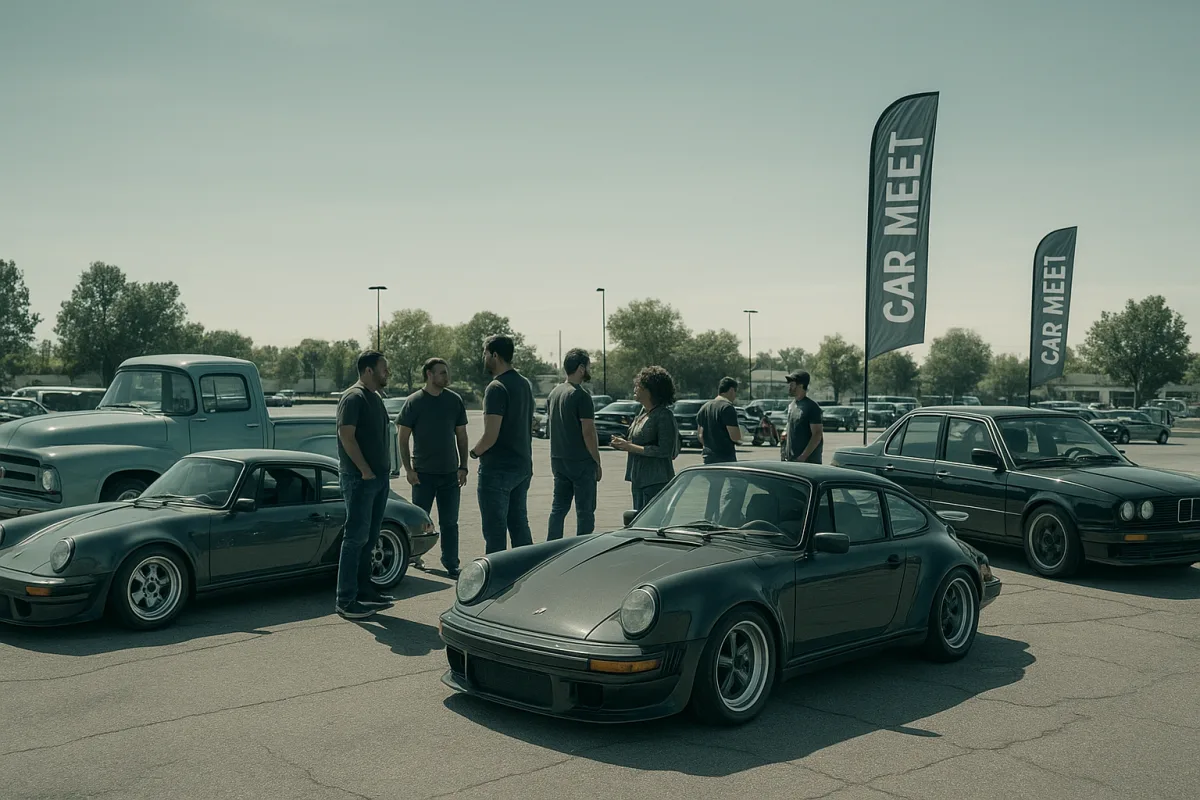
The quick list
- Best overall: public Monterey Car Week events , for enthusiasts who want variety, access and a real chance of seeing the cars moving without needing a seven-figure garage.
- Best value: the Regular Car Reviews FD Car Meet , for people who prefer oddball builds, local conversation and a mixed-field meet over concours gatekeeping.
- Best for family use: the Alfaholics SuperR 270 , for the owner who wants GTA-R-derived engineering in a four-door Alfa Romeo Giulia sedan with four usable seats.
- Best statement build: the GT1-style Lamborghini Murciélago , for a collector prepared to accept that rare conversion parts can be almost impossible to replace after even a minor accident.
- Best for established supercar owners: Fast Lane Drive Monterey , for people who already own an eligible supercar or hypercar and want a curated driving group rather than a public show.[5]
The real decision is not which event is “best.” It is whether you want to participate through ownership, attend as a paying spectator, or turn up to a grassroots meet with something interesting and a realistic attitude about noise, behaviour and local rules.
These examples sit at completely different points of car culture. The Regular Car Reviews FD Car Meet is built around variety and personality. Monterey Car Week is a large public calendar with a private, invitation-only layer. Alfaholics sells craftsmanship and development work, not cheap horsepower.
Then there is the modified Lamborghini Murciélago shown by Mr JWW, which represents the expensive middle ground between collecting a factory car and commissioning a full restomod. It is usable, apparently, but no longer simple to repair as a standard Murciélago would be.
Comparison table
| Option | Entry price or cost disclosed | Size, layout or access | What makes it compelling | Main trade-off |
|---|---|---|---|---|
| Regular Car Reviews FD Car Meet | No ticket price stated | Broad grassroots field, from lawnmowers and kei-sized oddities to modified sports cars | Maximum variety and low formality | Venue rules, permits and noise enforcement vary locally |
| Alfaholics GTA-R 290 | No public complete-build price. Upgrade packages run from about £1,595 to £44,995 excluding VAT | Alfa Romeo 105-series two-door GT layout | 240bhp 2.1-litre Twin Spark engine, carbon fibre and titanium hardware | Bespoke cost, limited production and no meaningful maintenance history |
| Alfaholics SuperR 270 | No public complete-build price | Four doors, four seats, Giulia sedan body | GTA-R running gear with genuine family usefulness | Still a hand-built classic-based specialist car |
| GT1-style Lamborghini Murciélago | Donor market median about $425,000 in the US, before conversion costs | Mid-engined two-seat V12 coupe | Rare, motorsport-inspired visual drama and a gated manual | Conversion value is unproven, and body damage could be extremely costly |
| Monterey Car Week public events | Ticket prices vary by event | Public shows, tours and displays across the Monterey Peninsula | Wide choice, from Italian and German specialists to microcars and exotics | Accommodation, parking and travel can outweigh ticket cost |
| Fast Lane Drive Monterey and private brand houses | Fees undisclosed | Supercar and hypercar ownership, appointments or invitation-only access | Curated drives and access to brand-hosted private spaces | Ownership requirement, opaque entry criteria and no transparent pricing |
Grassroots culture: the FD Car Meet approach
The Regular Car Reviews FD Car Meet 2026 coverage is a useful corrective to the idea that car culture needs a concours lawn, a private villa or a brand relationship. Its appeal is the collision of completely unrelated machinery.
A lowered, de-restricted 600cc racing lawnmower capable of 50mph shares attention with a Reliant Regal, a Honda Gold Wing, a Noble M400, a Mitsubishi 3000GT and an anime-decorated Ford Falcon. That is a healthier cross-section than many polished meets manage.
For a newcomer, this is probably the least intimidating route. A clean, ordinary car with a story tends to work better at this sort of gathering than a finance-heavy supercar parked silently at the edge of a retail park.
The catch is that casual does not mean unregulated. Local authorities generally require permits for organised meets on public property, often with applications submitted 60 to 90 days ahead. Noise ordinances commonly restrict loud activity between 10pm and 7am.[9]
The rules are fragmented. California requires a properly maintained muffler under Vehicle Code section 27150, New York specifies 86 dB(A) at up to 35mph and 90 dB(A) above that speed, while Florida limits new vehicles to 83 dB(A) at 50 feet.[9]
Pennsylvania requires effective noise-suppression systems, and Ohio permits counties and townships to set local rules. Georgia lawmakers are also considering clearer vehicle-noise legislation, which tells you how unsettled enforcement can be even where rules already exist.[1][9]
That matters because the FD meet’s appeal is modification. A big-cam Datsun 260Z, a turbocharged 3000GT or a loud motorcycle belongs in this culture, but so does the responsibility not to make the venue unusable for everyone else.
The sensible grassroots formula is straightforward: use a private venue where possible, agree arrival and departure behaviour, keep burnouts and revving out of the programme, and make the organiser visible enough to stop a good meet becoming a police report.
The engineered-build route: Alfaholics GTA-R 290
Hagerty’s visit to UK Alfa Romeo specialist Alfaholics shows the opposite end of enthusiast culture. The GTA-R 290 is not simply a restored Alfa Romeo 105-series GT with nicer wheels. It is a comprehensive re-engineering exercise.
The headline hardware is a 240bhp 2.1-litre Twin Spark engine, carbon-fibre components and titanium suspension pieces.[2] Alfaholics’ own development programme has been based on road and track use rather than a single showroom reveal.
The company’s original development car has covered more than 100,000 miles over 25 years, including Nürburgring development trips. That does not prove every customer build will be trouble-free, but it is better evidence than a restomod that has only done photo-call mileage.
There is still no fixed public price for a complete GTA-R 290. Alfaholics sells individual packages from roughly £1,595 to £44,995 excluding VAT, with the Ultraleggera Titanium Suspension Package listed at £44,995 before tax.[2]
That is package pricing, not a usable finished-car budget. It excludes the donor vehicle, the full restoration, labour, paint, interior specification, delivery, taxes and whatever bespoke requests arrive once the build conversations begin.
The donor matters too. Hagerty’s Alfaholics feature explains that the workshop prefers straight, honest cars that have not been badly repaired or accident-damaged. Corrosion is less concerning because the chassis is extensively restored, reinforced and rebuilt on a jig.
The GTA-R 290’s closest practical alternative from the same workshop is the Alfaholics SuperR 270, a four-door Alfa Romeo Giulia sedan fitted with the GT 290 running gear. It retains four proper seats and is intended for family trips, not merely two-person weekend use.
That makes the SuperR 270 the more interesting answer for an owner who has children, friends or luggage to carry. A two-door GTA-R has more visual purity, but a fast four-door classic can get used more often.
Maintenance is the uncomfortable part of the GTA-R proposition. There is no owner survey, published service-cost record or common-failure dataset for the model. Anyone quoting a precise annual number is presenting a guess as ownership knowledge.
General Alfa Romeo Giulia maintenance data puts average repairs at $2,481 over five years, but that is not a valid GTA-R 290 running-cost forecast.[3] A hand-built classic Alfa with titanium, carbon-fibre, bespoke suspension and performance tuning is a different ownership proposition.
An estimated $3,000 to $5,000 annual maintenance allowance is plausible only as a planning figure, not a documented GTA-R average. General Alfa Romeo concerns such as electrical faults, sensor problems, corrosion and brake wear should not be automatically transferred to this build.[3][4]
The sensible buyer keeps a substantial contingency fund, establishes who will service the car before commissioning it, and asks Alfaholics exactly what is proprietary. A billet component may be beautifully made, but availability matters more at 60,000 miles than it does on collection day.
Monterey Car Week: public access versus private access
Mr JWW’s Monterey Car Week coverage captures the part most visitors do not see: manufacturer “brand houses” rented in large private properties, with access controlled by appointments, invitation lists and customer relationships.
The Quail is central to that high-end ecosystem, where manufacturers use the week for launches and wealthy collectors gather around them.[6] It is compelling, but it is not the only way to experience Monterey.
The published 2026 calendar includes Pebble Beach Concours d’Elegance, Concorso Italiano, Legends of the Autobahn, Concorso d’Lemons, Exotics on Broadway, the Little Car Show, Tour d’Elegance and Monterey Motorsports Festival.[7]
That public side is the better buy for most enthusiasts. It lets you choose a theme rather than paying indirectly for access through ownership. Italian cars, German cars, microcars, concours machinery and eccentric failures all have places on the calendar.
Costs need looking at honestly. Event tickets are only one part of the spend. Flights, accommodation, rental cars, parking, food and the practical difficulty of moving around the peninsula can make a supposedly affordable day expensive.
Private access is different. Fast Lane Drive Monterey requires supercar or hypercar ownership, while its membership and event fees are not publicly disclosed.[5] That is not necessarily a criticism, but it means prospective members cannot compare it like a normal ticketed event.
The most realistic route is public entry first, then relationships. Attend smaller events, talk to owners without treating them as access cards, and return over several years. Monterey’s lasting appeal is not that everything is exclusive, but that rare cars are actually driven around the peninsula.
The modified supercar route: GT1-style Murciélago
Mr JWW’s California drive featured a 2003 Lamborghini Murciélago with the 6.2-litre pre-LP V12 and a factory gated manual. Its owner spent five years sourcing original Reiter Engineering parts for a GT1-inspired street conversion.
The build is unusually serious because the conversion parts came from a discontinued race programme. The front fender and louvre assembly is bonded into one piece, rather than remaining a straightforward removable panel arrangement.
That is the key ownership warning. A standard Murciélago is already an expensive, complex old supercar. A modified one with effectively irreplaceable bodywork has a different risk profile, especially if it is used on busy roads or driven in groups.
The underlying Murciélago market is strong. Marque puts the US median at about $425,000, following a 25 percent rise over 12 months.[10] Verified auction results nevertheless span roughly $136,000 to more than $700,000, depending on year, condition and specification.[11]
None of that proves a GT1 conversion commands a premium. Modified-car values are exceptionally dependent on workmanship, provenance and whether the buyer wants precisely that interpretation. A quality, reversible modification can help, but this particular bonded conversion is not easily reversible.
It suits the collector who values the build itself and can afford to preserve it. It does not suit someone buying a Murciélago as a liquid, easily comparable asset. The more individual the car becomes, the smaller the pool of future buyers may be.
Who each option suits
The Regular Car Reviews FD Car Meet suits the enthusiast who wants conversation, variety and a place for unusual machinery. Bring something tidy, drive responsibly and respect the organiser’s rules, especially where noise and permits are sensitive.
The Alfaholics GTA-R 290 suits the buyer who wants engineering depth, a bespoke commission and a classic Alfa Romeo that has been materially improved rather than cosmetically modernised. It is for someone comfortable with undisclosed total cost and specialist support.
The Alfaholics SuperR 270 suits the same buyer with a more realistic life outside the garage. Four doors and four seats make it the strongest option here for school runs, friends, touring and using the car without treating every journey as an event.
Monterey Car Week’s public programme suits the enthusiast who wants access without ownership credentials. Pick one or two events that match your interests, budget for travel properly, and regard the private houses as part of the spectacle rather than the whole point.
Fast Lane Drive Monterey and similar private brand gatherings suit existing supercar and hypercar owners who value a curated group. The membership requirement is the price of admission in itself, while actual club costs and selection criteria remain undisclosed.[5]
The GT1-style Lamborghini Murciélago suits a collector who understands that distinctive modifications can make a car more meaningful to its owner while making it harder to price, repair and resell. It is the most dramatic choice, not the safest financial one.
Frequently Asked Questions
What are the different types of car enthusiast community events?
Car enthusiast events range from grassroots meets like the Regular Car Reviews FD Car Meet, which feature a broad mix of vehicles and low barriers to participation, to large public events such as Monterey Car Week that include ticketed shows, tours, and displays. There are also exclusive, invitation-only gatherings like Fast Lane Drive Monterey and private brand houses that cater to supercar and hypercar owners. Additionally, some events focus on specialized builds or restomods, such as those offered by Alfaholics.
How do grassroots car meets differ from large public car shows?
Grassroots car meets, exemplified by the Regular Car Reviews FD Car Meet, emphasize variety, personality, and informal participation with a wide range of vehicles from everyday cars to oddball builds. They generally have lower entry barriers but must still comply with local permits, noise ordinances, and venue rules. Large public car shows, like those during Monterey Car Week, offer a curated experience with significant cars on display and in motion, often requiring tickets and involving more formal organization and higher costs.
What should I know before attending a car meet or event?
Before attending, it is important to understand that even informal grassroots meets are subject to local laws regarding permits, noise limits, and venue policies. For example, noise restrictions vary by state, and permits may need to be applied for 60 to 90 days in advance. Additionally, your choice of event should align with your goals—whether you want to participate as an owner, attend as a spectator, or simply enjoy the culture with a realistic attitude toward rules and behavior.
What makes Monterey Car Week a unique car culture event?
Monterey Car Week stands out because it combines a wide variety of public events showcasing everything from microcars to exotic supercars, with a private, invitation-only layer that includes exclusive brand houses and curated driving clubs like Fast Lane Drive Monterey. This structure allows both general enthusiasts and established supercar owners to engage with the culture at different levels. The event’s scale and variety provide opportunities to see significant cars in motion without necessarily owning one.
How do ownership requirements affect access to exclusive car events?
Ownership requirements restrict access to certain exclusive events, such as Fast Lane Drive Monterey and private brand houses, which are typically invitation-only and require participants to own eligible supercars or hypercars. These events often have undisclosed fees and opaque entry criteria, making them accessible mainly to established collectors. In contrast, public events and grassroots meets usually have fewer or no ownership restrictions, allowing broader participation.
How we researched this
This article was assembled from 3 video sources across 3 channels, 11 cited references.
Nothing here is based on hands-on testing. Where a figure or finding appears, it belongs to the source cited beside it, and the writing says so rather than implying otherwise. Every source is listed below so you can check it.
Sources
240 HP ÷ 830 KG = Perfection: How The GTA-R 290 By Alfaholics Is Built | Capturing Car Culture — Hagerty
RCR Goes to: FD Car Meet 2026 — Regular Car Reviews
Alfa Romeo Maintenance: Cost, Plans and Service Schedule (2026)
The world's most exclusive auto show? The Quail is now a hotspot of high-end car launches
Monterey Car Week 2026 | Schedule of Events and Things to Know
Monterey Car Week for First-Timers (and on a Budget) | Pursuit
When Are Car Meets Illegal? Laws and Consequences - LegalClarity
Lamborghini Murcielago Prices & Market Data — United States | Marque
Lamborghini Murcielago Auction Results — 38 Verified Sales | DriveIndex
Watch Car Culture and Enthusiast Community Events on Youtube
Also from the sources
Related Articles

StanceWorks Shop Relocation: Embracing Change for Fresh Beginnings
StanceWorks faces shop relocation due to building sale. Seeking new warehouse in SoCal with parking and office space. Embracing change as an opportunity for fresh beginnings.

Enhancing Jeremy's E28: H&R Coilovers Upgrade
StanceWorks upgrades Jeremy's E28 with H&R coilovers, overcoming challenges like stripped screws. The team's meticulous work enhances both aesthetics and performance, showcasing a commitment to automotive excellence.

Transforming a 1987 BMW E28 into a Budget-Friendly Daily Driver
StanceWorks transforms a 1987 535 5-speed E28 into a budget-friendly daily driver with upgrades like Euro headlights, new wheels, and a stereo install. Follow the team's journey to breathe new life into this classic BMW.

StanceWorks: Transforming the E36 with BBS e87 Wheels and Engine Bay Revamp
StanceWorks unveils new BBS e87 wheels for the E36, transforming the neglected engine bay with dry ice cleaning. The team faces challenges with pillar covers but overcomes them, leading to a successful wheel assembly and tire mounting, culminating in a stunning E36 transformation.