
GTA 6 Vehicle Realism: Trunks, Fuel, and Driving Physics
Explore GTA 6 vehicle realism, including trunk storage, fuel mechanics, and improved driving physics for a more immersive gameplay experience.
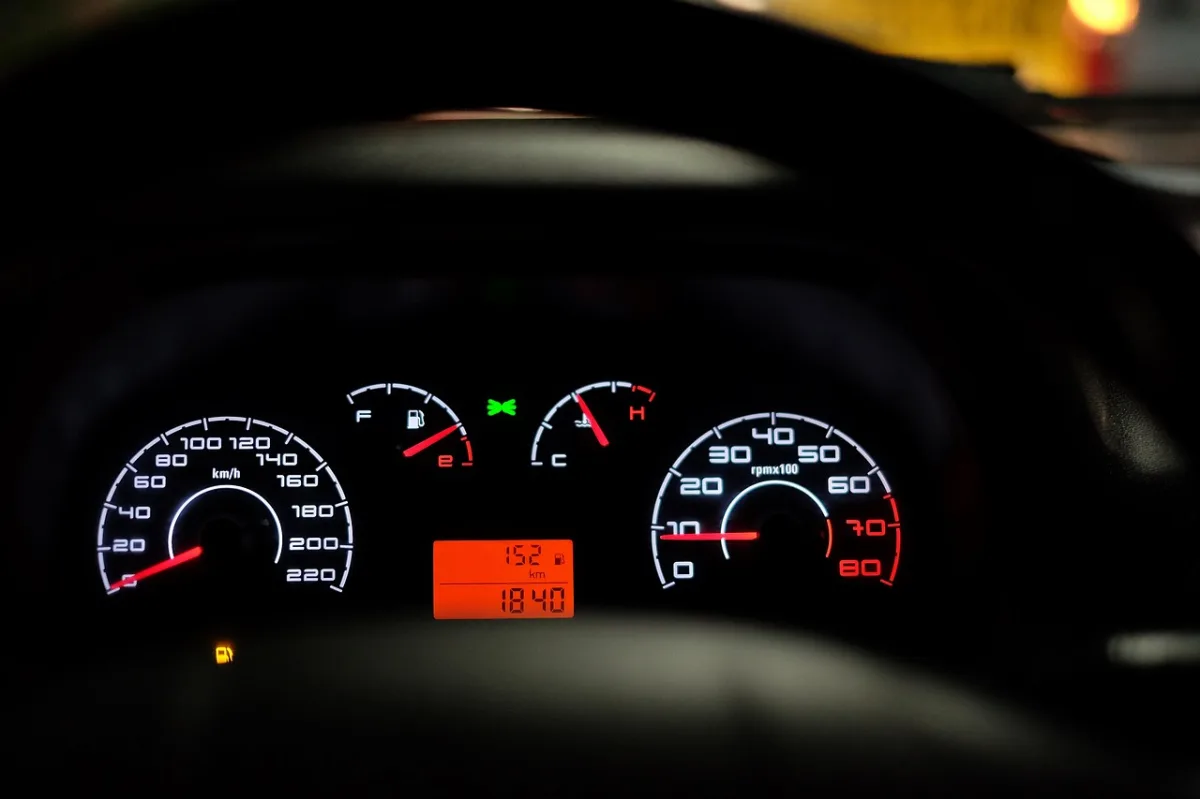
Photo: Fotorech via Pixabay
The trunk lid changes what a car is for
The trunk lid is now part of the mission equipment. Open it after a chase, and the car becomes a rolling supply cabinet for weapons, clothing, and loot, rather than the disposable escape appliance GTA players have learned to abandon.
That sounds like a small change. It rewrites the relationship between player and vehicle, though, because GTA 6 limits what Lucia and Jason can carry personally and pushes surplus gear into the car. [17]
Jalopnik reports that vehicle trunks can hold equipment, clothing, and even bodies. The first two uses are the ones that will affect ordinary play, because they turn parking location, vehicle condition, and your ability to get back to the car into mission variables.
The reported personal inventory limit is eight fixed slots for weapons and equipment. There are no reported character upgrades that expand that capacity, so the trunk is the workaround, not an optional convenience feature for players who enjoy organizing menus. [17]
Previous GTA games largely let you summon whatever weapon suited the next ten seconds. GTA 6 makes you decide what comes with you before entering a store, approaching a target, or starting a police chase.
Eight slots make preparation matter
Eight slots sound generous until you account for the kinds of jobs GTA encourages. A handgun, a larger firearm, ammunition or equipment, healing items, mission-specific tools, and clothing can consume space quickly, leaving little room for loot.
The game’s storage system therefore creates a familiar ownership problem: capacity is finite, and every item you carry displaces something else. You cannot bring every tool, so your vehicle loadout needs to reflect the job ahead. [17]
GTA6 RESOURCES reports that players cannot increase their inventory capacity and must use trunks for additional storage. It also warns that stored equipment can be lost when a vehicle disappears or is destroyed, which makes the trunk valuable but not secure. [8]
That risk separates a trunk from a magic inventory screen. A parked coupe full of weapons is only useful if you can return to it, and a smoking wreck after an ambitious escape can take your backup plan with it.
We would avoid using the trunk as permanent storage for rare or mission-critical gear. Keep it stocked with replaceable backup equipment, a change of clothes, and room for loot, then move important items out when you reach a safer location.
There is a cost to that discipline. You may have to leave a useful gun behind, return to the car midway through an encounter, or protect a vehicle you would once have ditched without a second thought.
That is the intended friction. Rockstar has made the car part of the character’s carrying capacity, so stealing the nearest vehicle may be fast, but it can mean leaving your carefully prepared kit several blocks away.
Clothing in the trunk is an evasion tool
A change of clothes has a clearer purpose than role-playing. Jalopnik reports that police characters can remember what Lucia or Jason was wearing, what weapon they displayed, and what vehicle they used during a crime.
The reported answer is to break those identifying links. Get back to your vehicle, change outfits, swap weapons, and leave in another car if the one you used is now associated with the crime.
That turns a trunk into a low-tech countermeasure. Instead of treating every pursuit as a maximum-speed run from flashing lights, you can use the car as a place to reset your visible identity.
It also gives ordinary, forgettable vehicles a reason to exist. A fast supercar may be the right escape car, but a bland sedan with clean clothes and a discreet weapon in the trunk could be the better car after the immediate chase ends.
Jalopnik compares the arrangement with Red Dead Redemption 2, where Arthur Morgan’s horse saddle served as storage for weapons and weather-appropriate clothing. The idea is familiar Rockstar design, transferred from a saddlebag to a trunk.
The difference is that GTA’s city gives the player more ways to lose the vehicle. Traffic, collisions, police attention, theft, water, and explosions can all separate you from the trunk, making where you park matter more than it did in GTA 5.
Fuel turns the route into part of the job
A fuel gauge adds another reason to care about the car you are driving. GTA 6 displays fuel status in the vehicle interface and directs you toward a gas station as the tank runs low, according to Motor1.
Rockstar has confirmed the broad system, but it has not published fuel-consumption figures by vehicle, distance, or driving style. Claims of precise in-game mpg equivalents or exact range should therefore be read as player estimates, not factory data. [1]
CarScoops reported a Kotaku test in which a hard-driven Banshee ran dry after a little more than 18 minutes, while a large pickup lasted more than 29 minutes. Those are observations from one outlet’s play, not official consumption ratings.
The important part is the variation. A powerful sports car and a heavy truck do not necessarily impose the same refueling schedule, so a vehicle’s running cost in time depends on what you drive and how you use it.
Unlike real refueling, the stop is short. Rockstar’s system uses an interaction at the pump that takes around 10 seconds, with no reported fueling minigame, so the penalty is interruption and exposure rather than a long wait. [1]
Electric vehicles require charging at dedicated stations. Motor1 found that charging also takes only seconds, which keeps the system inside GTA’s fast-moving rhythm even when the game asks you to acknowledge a vehicle’s energy supply.
We would refuel before beginning a major mission or a long cross-map run, not wait for the warning. A nearly empty tank is manageable during routine travel, but it is a poor time to discover a fuel stop while police are tracking your vehicle.
Fuel also makes the designated vehicle more valuable. If the trunk carries your backup equipment and the tank carries you out of town, abandoning that car for the first faster vehicle you see can create two problems at once.
Better physics make bad planning expensive
Vehicle realism works because the trunk and fuel systems sit inside driving that asks more from you. Motor1 found GTA 6 less arcade-like than GTA 5, with vehicle weight more apparent and braking distances requiring greater attention.
There are no Rockstar-published braking-distance figures, tire data, or class-by-class handling metrics. The improvement is felt in weight transfer, suspension movement, steering response, and the consequences of arriving at a corner too quickly, not in a neat specification sheet. [11]
Rockstar executive Rob Nelson has described the driving model as built from scratch, with an aim to combine the heavier feel associated with GTA 4 and the more approachable behavior of GTA 5. [6]
That balance sounds right for the game. A heavy pickup should not stop, turn, or recover like a compact performance car, but GTA still needs to let you thread through traffic and survive the occasional poorly judged curb strike.
Motor1’s early experience supports that approach. A work truck and a sports car feel meaningfully different in mass and response, while braking becomes an active consideration before a turn or an obstacle.
The trunk system raises the stakes of those differences. A crash no longer merely costs bodywork and a few seconds, because damaging or losing the car can strand the equipment and clothes you intended to use after the crash.
Damage is now a logistics problem
GTA 6’s damage modeling reportedly adds more deformation, crumple behavior, and detachable components than GTA 5. Both Motor1 and specialist GTA coverage describe impacts as visually and mechanically more convincing than the older game’s simplified damage. [5]
Rockstar has not released impact-force thresholds, deformation measurements, or a quantitative comparison with GTA 4 or GTA 5. It is fair to say damage looks more detailed, but not to claim a particular percentage improvement. [5]
For the player, the key result is not visual authenticity alone. A badly damaged car is a less reliable escape vehicle, a more conspicuous police target, and a poor place to leave supplies if another collision is likely.
This makes driving a valuable car feel closer to ownership. You have fuel in the tank, gear in the trunk, a recognizable appearance, and body damage that can make the whole package less dependable after one bad decision.
We would pick a durable, ordinary-looking vehicle with accessible trunk space for missions involving loot, disguises, or a long escape. Save the exotic machinery for short runs where outright speed matters more than preserving your mobile inventory.
The new GTA car is a base of operations
GTA 6 has not turned into a simulator. Refueling takes seconds, the map provides gas stations, and the driving remains designed for action rather than for reproducing a commuting routine. [1]
It has, however, made the car carry consequences. Fuel affects range, physics affects whether you reach the trunk intact, damage affects whether the vehicle remains usable, and the trunk determines what you can do once you get there.
That is why the best car is not always the quickest one. The vehicle worth keeping is the one that gets you through the job, survives the exit, and is still waiting with the right equipment when the police attention finally drops.
Frequently Asked Questions
How does vehicle trunk storage work in GTA 6?
In GTA 6, the vehicle trunk acts as an extension of the player’s limited personal inventory, allowing storage of weapons, clothing, and loot beyond the fixed eight-slot inventory. However, items stored in the trunk can be lost if the vehicle is destroyed or abandoned, so it is best used for backup gear and loot rather than critical mission items. Players must return to their vehicle to access trunk contents, making parking location and vehicle condition important gameplay factors.
What impact does GTA 6's fuel system have on driving?
GTA 6 features a fuel consumption system where vehicles display a fuel gauge and require refueling at gas stations, which takes about 10 seconds with no minigame involved. Fuel consumption varies by vehicle type and driving style, adding a strategic element to route planning, but exact fuel economy figures have not been officially released. This system encourages players to consider fuel levels during missions and travel.
How realistic is the driving physics in GTA 6 compared to previous games?
GTA 6 combines the weight and realistic feel of GTA 4’s driving physics with the accessibility and smoother handling of GTA 5. Vehicles have more noticeable mass, braking effects, suspension movement, and crash damage than in GTA 5, while controls remain user-friendly. The driving model accounts for drivetrain, tires, suspension, and steering dynamics, reflecting a more authentic driving experience without sacrificing playability.
Can you upgrade your inventory capacity in GTA 6?
No, players cannot upgrade their personal inventory capacity beyond the fixed eight slots for weapons and equipment. The only way to carry additional gear is by using the trunk of a vehicle as extra storage. This limitation requires careful preparation and strategic use of vehicle trunks to manage equipment and loot.
How does vehicle ownership affect gameplay in GTA 6?
Owning or having access to a vehicle with trunk storage changes gameplay by turning cars into mobile supply cabinets that extend carrying capacity. Players must protect their vehicles to avoid losing stored gear, and the vehicle’s condition and location become tactical considerations. Additionally, trunks can be used to store alternate clothing and weapons for evasion, making vehicle choice and management integral to mission success.
How we researched this
This article was assembled from 8 published articles, 17 cited references.
Nothing here is based on hands-on testing. Where a figure or finding appears, it belongs to the source cited beside it, and the writing says so rather than implying otherwise. Every source is listed below so you can check it.
Sources
Vintage Modern’s New Fastback Turns the Mustang into a Carbon-Fiber Movie Star, Car and Driver
Temerario Spyder revealed with Lambo’s first folding hard top, Autocar
An Audi Built on a Scout? Scout’s CEO Calls It a ‘Capable Possibility’, The Drive
Tested: 2027 Subaru Forester Wilderness Hybrid Is a Fuel-Economy-Hero Of a Soft-Roader, Road & Track
Why Car Trunks Matter Way More In GTA 6 Than Previous Games, Jalopnik
GTA 6 Made Cars More Realistic, But It Might Be Going Too Far, CarScoops
Vintage Modern’s New Fastback Turns the Mustang into a Carbon-Fiber Movie Star, Car and Driver
GTA 6 Fuel System: How Refueling and Gas Stations Work | GAME6
Vehicle Damage in GTA 6 Looks Violent and I Love It | GTAPulse
GTA 6 Has No Inventory Upgrades, Your Car Trunk Is the Workaround | GTA6 RESOURCES
GTA 6 Driving Physics: Handling, Weight & Verified Evidence | GTA 6 College
GTA 6 Driving Keeps GTA 4's Weight With GTA 5's Accessibility, Rockstar Confirms | News About GTA
GTA 6 vs GTA 4 Vehicle Physics: Which Handling Is More Realistic?
Related Articles
Fuel Economy Regulation Rollback and Its Impact
Explore how the 2026 fuel economy regulation rollback affects automakers, vehicle design, and regulatory compliance.

Tesla Cybertruck Hitch Test: Regulations, Standards, and Real-World Scenarios
Engineering Explained tests the Tesla Cybertruck's hitch, breaking at 10,400 lb near its 11,000 lb rating. Regulations, real-world scenarios, industry standards, and fatigue life are explored, comparing Tesla's approach with Ram's rigorous testing regime.

Porsche's Six-Stroke Engine: Power Advantages and Design Challenges
Porsche's innovative six-stroke engine combines elements of four-stroke and two-stroke designs, offering a 33% power advantage. Challenges include cost, emissions, and engine balance, but the unique design promises a distinct engine sound and potential efficiency improvements.

Fast Charging Electric Car Batteries: Degradation Risks and Solutions
Engineering Explained explores the impact of fast charging on electric car batteries, revealing how faster charging rates can accelerate degradation. They provide insights on lithium plating, variables affecting battery health, and practical solutions to mitigate degradation risks.