
Genesis Hybrid SUVs and Sedans
Explore the 2027 Genesis hybrid SUVs and sedans, their hybrid powertrains, performance, and fuel efficiency improvements.
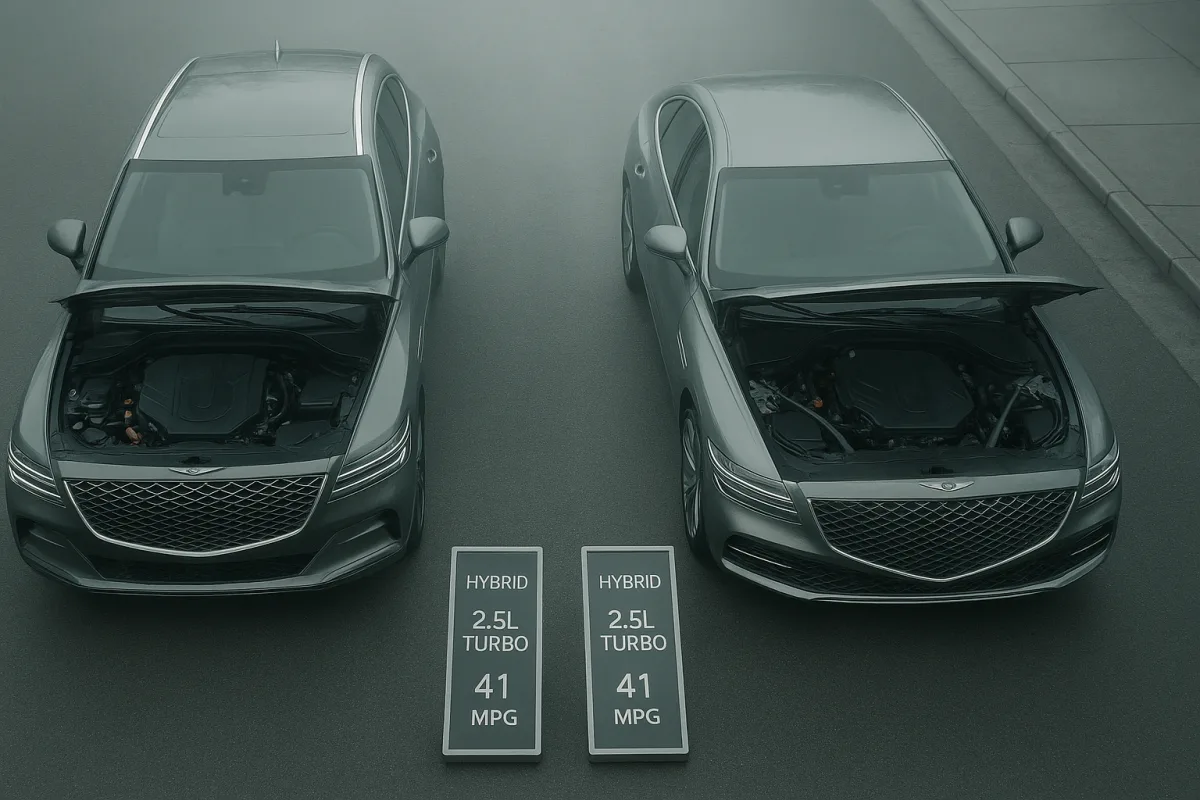
Genesis entered the hybrid market in November 2026
At the November 2026 Los Angeles Auto Show, Genesis introduced hybrid versions of its G80 sedan and GV80 SUV, its first gasoline-electric models for the U.S. market. The two vehicles arrive as 2027 models. [1][2]
That timing is revealing. Hyundai and Kia have built large hybrid lineups while Genesis, their luxury sibling, tried to move from gasoline directly toward EVs. InsideEVs reported that hybrids now represent 29 percent of Hyundai sales.
Genesis had not been sharing in that volume. Its Electrified G80 sedan left the U.S. after weak demand, while the smaller Electrified GV70 has sold in comparatively modest numbers, leaving a wide gap between conventional gas models and full EVs.
The G80 and GV80 hybrids fill that gap with familiar body styles, conventional refueling, and standard all-wheel drive. For many long-term owners, that is a less disruptive change than a battery-electric replacement for a gas luxury sedan or three-row SUV. [1][3]
Several outlets arrived at the same reading of the launch: Genesis is not abandoning electrification, but it is broadening it. Car and Driver, The Drive, Jalopnik, and InsideEVs all characterized the hybrid pair as the brand’s first serious move into the premium hybrid segment.
The powertrain is aimed at replacing the V6, not merely improving mileage
Both hybrids use a turbocharged 2.5-liter four-cylinder gas engine, electric motors, a liquid-cooled battery, and a seven-speed transmission. Genesis rates the combined system at 347 horsepower and 391 lb-ft of torque. [1][2]
The horsepower figure sits below the 375-hp 3.5-liter twin-turbo V6. Torque is the headline, because 391 lb-ft matches the V6 output, and torque is what you feel when the SUV pulls away with passengers aboard or the sedan joins fast traffic. [1][2]
Genesis says the hybrid system was developed for its longitudinal, rear-wheel-drive-based platform, even though the U.S. hybrids use all-wheel drive. That packaging differentiates these vehicles from many transverse-engine hybrid crossovers, but it also means this is new hardware with no accumulated owner history. [1][2]
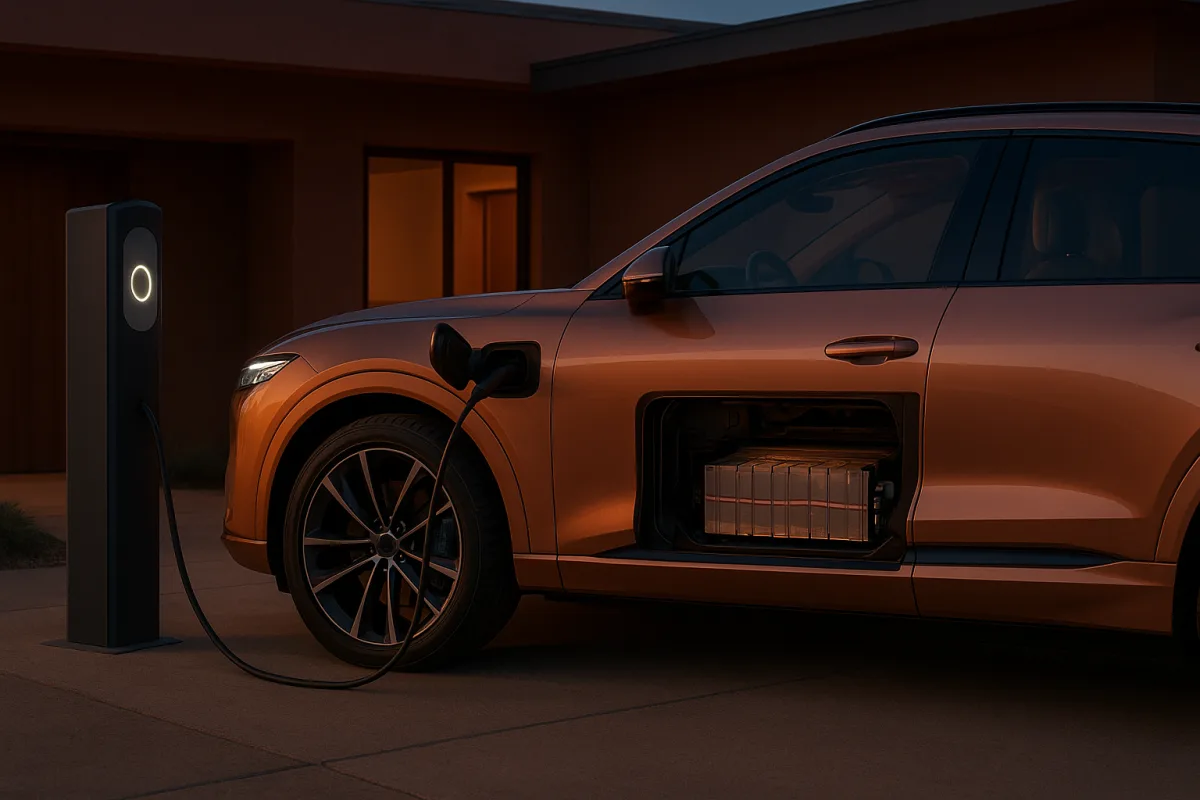
The company also says these are Hyundai Motor Group’s first hybrids with liquid-cooled battery packs. Liquid cooling is intended to control battery temperature and support higher discharge output than a typical air-cooled hybrid battery. [2][7]
That sounds promising for heat management and sustained electric assist, especially in a heavy luxury SUV. But Genesis has not published the battery capacity, battery chemistry, pack location, service procedure, or replacement pricing, so there is no basis yet for projecting an ownership outcome.
Genesis includes adjustable regenerative braking, including an automatic setting that can alter regeneration based on road and traffic conditions. A Stay mode lets occupants run climate-control and multimedia functions without starting the gas engine. [2][7]
Those features may make waiting in a school line or sitting parked with the air conditioning on more pleasant. They do not turn the G80 or GV80 into plug-in hybrids, and neither model can be charged from a home outlet or public charging station.
Genesis also advertises an EV mode for limited engine-off operation. It has not said how far either vehicle can travel in that mode, and it has not disclosed a battery size, so buyers should not treat it as a substitute for an EV commuting range figure. [2][3]
Fuel-economy claims are substantial, but still unverified
Genesis claims the GV80 Hybrid improves fuel efficiency by 24 percent compared with the gas 2.5-liter GV80. For the G80 Hybrid, the claimed improvement is 30 percent over the regular turbo-four sedan. [2][3]
The company also estimates that both models can travel more than 500 miles on one tank of gas. That number is useful for a road-trip owner, but it remains a Genesis estimate, not an EPA-certified combined range figure. [2][7]
Official EPA fuel-economy ratings for the 2027 G80 Hybrid and GV80 Hybrid were not available as of November 19, 2026. Genesis has not specified whether its percentage gains refer to city, highway, combined, or a particular wheel-and-tire configuration.
That missing detail matters because the GV80 Hybrid will be offered with 19-, 20-, and 22-inch wheels. Large wheels can alter ride quality, tire cost, and real-world fuel use, so the eventual EPA label may not tell the whole story either. [3][7]
For context, Tom’s Guide recorded 19.4 mpg during a week with a 2026 GV80 3.5T Prestige AWD, a gasoline model that requires premium fuel. That result is not a forecast for the hybrid, but it shows why a meaningful efficiency gain can matter in a large luxury SUV. [5]
Car and Driver estimated that a 30 percent improvement could put the G80 Hybrid near 30 mpg combined. Treat that as a publication estimate based on Genesis’s claim, not as an official rating or a promise of what the sedan will return on your commute.
The price spread tells you where Genesis thinks hybrids belong
Genesis lists the 2027 GV80 Hybrid from $68,900. That is the published starting MSRP for the base vehicle, not a complete drive-away cost, and it leaves options, taxes, registration, insurance, financing, and any dealer additions to the buyer. [3]
The gas GV80 lineup begins at $58,850 for the 2.5T rear-wheel-drive model, while the 3.5T Advanced AWD begins at $76,250. The hybrid therefore occupies the middle of the range rather than serving as the cheapest way into a GV80. [3]
The G80 Hybrid starts at $64,550, according to Cars.com. That matches the stated starting price of the 3.5T AWD gasoline G80, signaling that Genesis sees the hybrid as a premium powertrain choice, not a fuel-economy trim. [1]
This is a different strategy from offering a low-cost hybrid that asks you to trade performance for lower gas bills. The Genesis pair gives you V6-grade torque, more equipment options, and potentially lower fuel use, but it asks for a substantial entry price.
The regular G80 and GV80 are already expensive enough that the hybrid’s financial case will depend heavily on miles driven and fuel prices. A buyer covering 6,000 miles annually will see a slower payback than one regularly driving 15,000 to 20,000 miles.
We would not buy the hybrid solely to recover its premium through gas savings. We would buy it because the torque, expected range, quiet low-speed operation, and regenerative braking suit the way a luxury daily driver is actually used.
The G80 is the more unusual car
The GV80 Hybrid looks like the obvious sales-volume model. It is a midsize luxury SUV with available three-row seating, a familiar shape, and a powertrain designed to reduce the penalty that usually comes with moving a large SUV around town. [3][7]
The G80 Hybrid is the more interesting long-term proposition because Genesis has stretched it by 5.1 inches. Jalopnik reported a 123.6-inch wheelbase, bringing it close to the larger G90 flagship sedan’s proportions.
Genesis has not fully detailed how the added length changes U.S.-spec rear-seat room, trunk capacity, or chassis tuning. Still, the longer sedan suggests Genesis sees a role for chauffeur-friendly rear accommodation without moving every buyer into the G90 price class.
Both hybrids receive a distinct three-dimensional G-Matrix grille, hybrid-specific wheel designs, and new colors. Inside, the familiar 27-inch OLED display combines the instrument cluster and infotainment screen beneath one wide glass panel. [2][3]
Available Nappa leather, real wood trim, quilting, two-tone interiors, and a Bang & Olufsen audio system carry the luxury pitch forward. Those are attractive options, but they are also the equipment most likely to widen the gap between the advertised starting price and the window sticker. [2][7]
Maintenance is the unresolved part of the ownership case
There are no owner reports, repair histories, or reliability scores for the 2027 Genesis hybrids because they have not reached customers yet. You should also resist borrowing a conclusion from the gas G80 or GV80, since the hybrid adds a high-voltage battery, electric drive components, cooling hardware, and a different transmission.
The broader hybrid picture is reasonably encouraging. VehicleCodex says hybrid batteries commonly last 150,000 to 200,000 miles, while replacement costs can range from roughly $2,000 to $6,000 depending on the vehicle and repair path. [4]
That range is general industry information, not Genesis-specific pricing. It tells you what can eventually be at stake after warranty coverage ends, not what a Genesis battery will cost or how long it will last.
Regenerative braking can reduce wear on brake pads and rotors, and reduced engine running can trim some routine wear. Oil changes, filters, coolant services, tires, suspension parts, and luxury-car electronics still remain, particularly on a heavy SUV riding on 22-inch tires. [4]
The liquid-cooled battery may help durability by moderating temperature, but it also creates another cooling circuit and more components to diagnose years down the road. This is why we would want written warranty terms, service schedules, and battery coverage before signing a long-term loan.
What the expansion means for your next long-term Genesis
Genesis has confirmed further electrification beyond these full hybrids. InsideEVs reported that Genesis plans extended-range electric vehicles, or EREVs, for 2027, claiming more than 640 miles of combined range, though product details remain limited.
An EREV uses its gas engine as a generator while the electric motor drives the wheels. That is a very different ownership proposition from the G80 and GV80 hybrids, which remain conventional gasoline-electric vehicles with mechanical engine drive to the wheels.
Genesis is also pursuing product expansion at both ends of its range. Road & Track reported that Hyundai Motor Group CEO José Muñoz said Genesis is working to bring the 1,100-hp X-Scorpio off-road concept toward production, while the X Gran Equator SUV has been confirmed for production.
For a buyer, the near-term result is less exotic than those concepts suggest: more choices between gas, hybrid, EV, and eventually range-extended electric power. The evidence is strongest for the G80 and GV80 hybrids, while specifications and timing for later models remain thin.
We would start with the G80 Hybrid if you want a luxury sedan and can live without SUV cargo space. At its $64,550 starting price, it offers the V6’s torque at the same entry price while promising materially better fuel use, pending EPA confirmation. [1]
We would choose the GV80 Hybrid if you regularly use its passenger space, need SUV access, or cover enough highway miles to value the claimed 500-plus-mile range. We would skip the largest wheel package until tire pricing, ride quality, and EPA figures are published. [2][3]
Frequently Asked Questions
What are the key features of the Genesis GV80 Hybrid and G80 Hybrid?
The 2027 Genesis GV80 Hybrid and G80 Hybrid feature a turbocharged 2.5-liter four-cylinder engine paired with electric motors, a liquid-cooled battery, and a seven-speed transmission. Both models come standard with all-wheel drive and offer a combined system output of 347 horsepower and 391 lb-ft of torque. They are positioned as luxury hybrids aimed at replacing the V6 powertrain in their respective segments.
How does the Genesis hybrid powertrain compare to the V6 engine?
The hybrid system matches the 3.5-liter twin-turbo V6’s torque output of 391 lb-ft, which is key for strong acceleration and responsiveness. While the hybrid’s horsepower rating is slightly lower at 347 hp compared to the V6’s 375 hp, the torque equivalence suggests comparable performance, especially in real-world driving scenarios where torque is critical.
What fuel efficiency improvements do Genesis hybrid SUVs and sedans offer?
Genesis claims the GV80 Hybrid delivers 24 percent better fuel efficiency and the G80 Hybrid offers a 30 percent improvement over their gasoline counterparts. However, official EPA fuel economy ratings have not yet been released, so these figures remain manufacturer estimates at this time.
What is the driving experience like in Genesis hybrid SUVs and sedans?
The hybrids provide strong torque similar to the V6 models, which should translate to confident acceleration and smooth power delivery. The use of a liquid-cooled battery pack is designed to maintain consistent electric assist and efficient heat management, potentially enhancing driving refinement in both the SUV and sedan.
Are Genesis hybrid models plug-in hybrids or do they have electric-only range?
The Genesis GV80 Hybrid and G80 Hybrid are full hybrids without plug-in capability. They do not have a published electric-only driving range, and their batteries are charged through regenerative braking rather than external charging. Genesis has not disclosed battery capacity or pure electric mileage for these models.
How we researched this
This article was assembled from 7 published articles, 7 cited references.
Nothing here is based on hands-on testing. Where a figure or finding appears, it belongs to the source cited beside it, and the writing says so rather than implying otherwise. Every source is listed below so you can check it.
Sources
Genesis Is Trying to Bring Its 1100-HP X-Scorpio SUV Concept to Production, Hyundai CEO Says, Road & Track
2028 Genesis G80 Is the Luxury Brand’s First Hybrid Sedan, Car and Driver
Genesis’ First Hybrids Use a Four-Cylinder. The Torque Matches the Twin-Turbo V6, The Drive
2027 Genesis G80 And GV80 Hybrids Launch In The U.S. With 347 HP And Much Better Fuel Economy, Jalopnik
2027 Genesis GV80 And G80 Hybrids Promise To Drive Like EVs But Without The Anxiety, CarScoops
Genesis Is Finally Getting Into The U.S. Hybrid Market, InsideEVs
Live Updating: Unbeatable Black Friday and Cyber Monday Dash-Cam Deals Right Now, Road & Track
Genesis G80 Gains Turbo Hybrid Powertrain for 2027 | Cars.com
GENESIS EXPANDS PRODUCT PORTFOLIO WITH NEW HYBRID POWERTRAIN; DEBUTS GV80 HYBRID AND G80 HYBRID
I drove the Genesis GV80 for a week - and it's my favorite luxury 3-row SUV
TAKE A STEP TOWARDS ELECTRIFICATION WITH THE GENESIS GV80 HYBRID
Related Articles
New Hybrid Off-Road SUVs: 2026-2027 Models and Features
Explore new hybrid off-road SUVs for 2026-2027, including fuel economy, AWD features, and suitability for family and light off-road use.
Hybrid Large SUVs: GM’s Plans and What Buyers Should Know
Explore GM’s hybrid large SUVs plans, costs, and ownership insights for 2027. Learn what buyers need to know before choosing a hybrid large SUV.
2027 Hyundai Tucson Redesign and Hybrid Powertrain Details
Explore the 2027 Hyundai Tucson redesign, hybrid powertrain, fuel economy, towing, and new features in this detailed overview.
2027 Lexus NX Hybrid Refresh
Explore the 2027 Lexus NX hybrid refresh, including new battery, e-axle, and ownership details for hybrid and plug-in models.