
2027 Lexus NX Hybrid Refresh
Explore the 2027 Lexus NX hybrid refresh, including new battery, e-axle, and ownership details for hybrid and plug-in models.
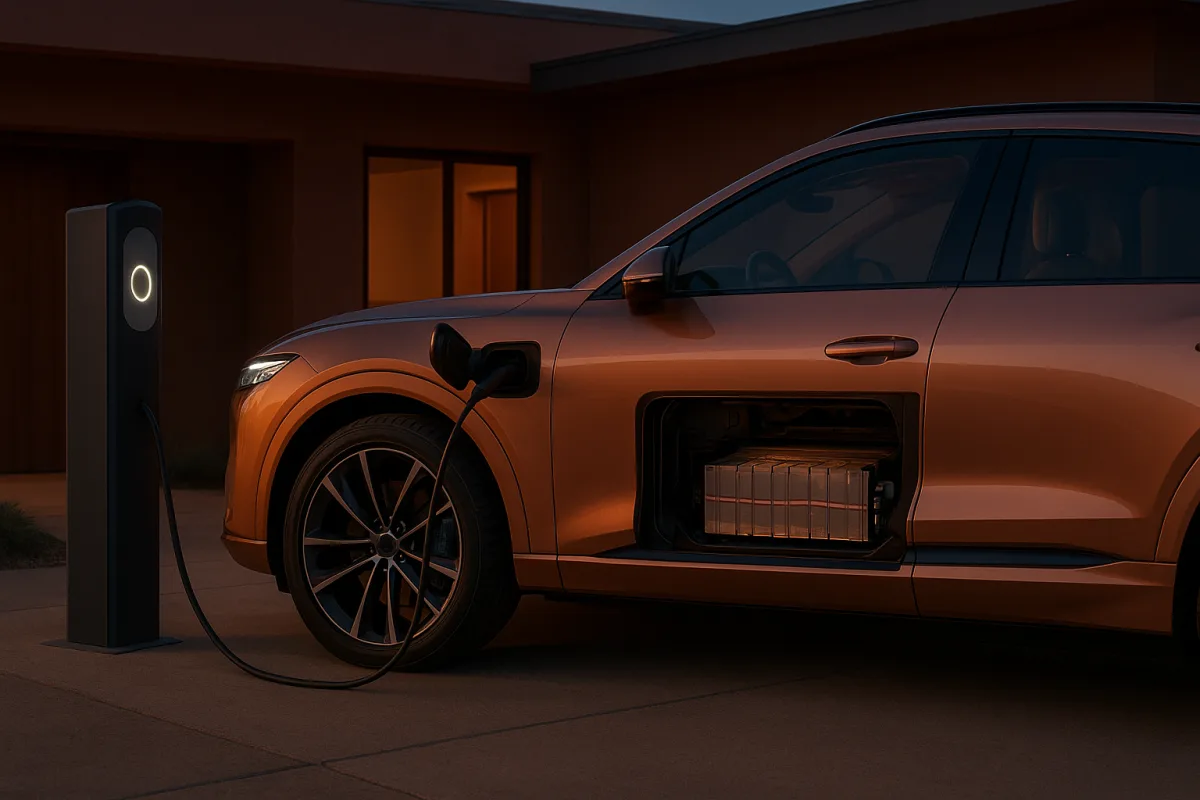
This is a hybrid-only NX, not necessarily a simpler NX
The 2027 Lexus NX facelift matters less for its altered grille than for what Lexus has removed. The old NX 350, with its 2.4-litre turbocharged four-cylinder and conventional petrol-only drivetrain, is gone from the US range. [1]
That leaves two versions. The NX 350h is a conventional or “self-charging” hybrid, with a 2.5-litre petrol engine, electric motors, battery and electronically controlled continuously variable transmission. The NX 450h+ is a plug-in hybrid using the same basic engine family but a much larger rechargeable battery. [1]
On paper, this makes the range easier to understand. In practice, it puts more weight on how, and where, the owner charges. A hybrid is broadly indifferent to a missed charging opportunity. A plug-in hybrid can become an expensive regular hybrid if it is never plugged in.
I have not driven the facelifted NX, and nobody has accumulated 60,000 miles in one yet. It is not in customer hands, so there are no credible owner reports on real battery range, software stability, servicing costs or early production faults.
That absence matters because this is not merely a trim reshuffle. Lexus has introduced its sixth-generation hybrid system, revised the e-axle assembly, enlarged the plug-in battery and added DC rapid-charging capability to the NX 450h+. [1][3]
Lexus has a deservedly strong reputation for hybrid durability, but the 2027 NX should not be given a reliability pass before it earns one. New battery packaging, new power electronics and a new combined e-axle are precisely the sort of changes that require time and mileage to assess.
The 23-kWh battery is the number to understand
The repeated headline figure is 23 kWh. That is the capacity of the new lithium-ion traction battery in the NX 450h+, replacing the outgoing model’s roughly 18-kWh pack. Lexus says this is a 30 percent capacity increase. [1][3]
A kilowatt-hour is a measure of stored electrical energy, not a measure of power. Think of it as the size of the fuel tank, rather than the horsepower of the engine. A larger battery can store more electricity, but range depends on how quickly the vehicle consumes it.
The 2027 NX 450h+ uses its battery to drive electric motors, either alone or alongside the 2.5-litre petrol engine. The battery is charged from the mains, by regenerative braking and, at times, by the petrol engine. Only the first method is cheap enough to make the plug-in proposition properly compelling.
Lexus claims more than 40 miles of electric range on the US EPA cycle, up from 33 miles, while European reporting quotes more than 100 km, or about 62 miles, on the more forgiving WLTP test. [1][3] Both may be valid test figures, but they are not interchangeable.
WLTP and EPA tests use different assumptions about speed, temperature, acceleration, climate-control use and driving pattern. WLTP generally produces the larger number. A buyer comparing markets should treat the 62-mile figure as a European laboratory measure, not as a promise of 62 silent miles every morning.
The useful unknown is winter range. Cabin heating, cold battery chemistry, wet roads, motorway speeds and a full passenger load all raise energy consumption. A cold plug-in hybrid driven at 70 mph can use electricity at a very different rate from one commuting gently in mild weather.
There is at least a relevant reference point, though it is not a substitute for testing this car. Tom’s Guide recorded around 38 electric miles in a 2026 Lexus RX 450h+, a larger plug-in Lexus SUV. [5] The NX could do better, worse, or simply differently.
What determines the result is not one simple number. Battery capacity is one part. Aerodynamics, tyre choice, ambient temperature, road gradient, cabin heating or air conditioning, acceleration habits and how long the car sits at motorway speed all have a say.
Lexus says the new NX battery cells are arranged transversely rather than longitudinally. That packaging change is said to improve lateral body rigidity, while the battery also sits lower in the vehicle. [1] Those claims may help refinement and handling, but they do not repeal the physics of a heavy SUV on winter tyres.
Why the new e-axle matters to ownership
The NX 450h+ gets a more integrated e-axle, combining the electric motor, transaxle and power-control unit into one assembly. Lexus says the arrangement is more compact and lightweight than before. [1]
Mechanically, this means fewer separate major components to package, cool and connect. The power-control unit converts and regulates electrical energy between the battery and motors, while the transaxle transmits motor and engine output through the hybrid drivetrain.
The potential advantages are real: less bulk, fewer external connections, more efficient packaging and potentially smoother power delivery. Lexus says the revised programming uses more battery power under acceleration and makes the transition between electric and petrol operation feel more linear. [1]
The ownership trade-off is that an integrated assembly can be harder to treat as a collection of small, separately repaired parts. If a fault develops outside warranty, the financial question may become the cost of a major e-axle assembly rather than a modest individual component.
No replacement-price data exists for the 2027 system. Anyone claiming to know what a failed 23-kWh battery or new e-axle will cost at eight or ten years is guessing. Greater battery capacity also means more cells and potentially higher replacement cost, even if reliability proves strong.
That does not mean the NX 450h+ is a bad long-term bet. Hybrid systems avoid several wear points found in conventional automatic transmissions and starter systems, and Lexus has decades of experience with petrol-electric drivetrains. It means only that the facelift’s long-term risk profile is still unproven.
Charging will decide whether the 450h+ earns its premium
Lexus says DC fast charging is now available for the NX 450h+, with reports indicating a 10-to-80 percent charge in around 30 minutes. Dual-voltage home charging equipment is included. [3][4] The company has not yet supplied enough charging-rate detail to judge how consistently it will achieve that timing.
Thirty minutes at a rapid charger sounds convenient, but it is not the main charging pattern most plug-in hybrid owners need. The important question is whether the car can be plugged in where it sleeps, preferably at home, and whether that electricity is sensibly priced.
A home charge lets the NX begin each day with a full battery. That is how an owner with a 20- to 35-mile round-trip commute could potentially run largely on electricity during the week, while keeping the petrol engine for unplanned longer trips.
Public rapid charging changes the arithmetic. Charging a plug-in hybrid at high public tariffs can cost as much as, or more than, simply using petrol. It can also be inconvenient because the NX’s battery is far smaller than an EV’s, so it is not an efficient use of a busy rapid-charging bay.
The NX 350h avoids that decision entirely. It recovers energy through braking and coasting, then uses it to assist the petrol engine. It cannot do meaningful daily electric-only commuting, but it also does not ask an owner to manage cables, tariffs, chargers or charge schedules.
For a driver in a flat with no assigned parking, the NX 350h is likely the honest choice. For an owner with cheap overnight electricity and predictable daily mileage below the eventual real electric range, the NX 450h+ could justify its higher upfront cost.
Price, tax and the cost that has not been published
There is no official 2027 US pricing yet, so published figures should be handled carefully. The 2026 NX 350h AWD began at $47,120 MSRP, while the 2026 NX 450h+ Premium AWD began at $59,205 MSRP. [7][8]
Those are context, not quotations for the facelift. The redesigned interior, standard 14-inch display, upgraded powertrain and added charging hardware suggest a higher price is plausible, but Lexus has not confirmed it. Buyers should wait for a proper MSRP and destination charge before comparing monthly payments.
US financing terms for the 2027 model are also pending. Lexus Financial Services will be involved in dealer-arranged finance and leasing, but APR offers, residual values and incentives vary by region, credit history, term and model availability. [9]
For UK company-car users, the NX 450h+ is potentially more interesting because benefit-in-kind tax can matter more than fuel. Plug-in hybrids with emissions and electric range comparable to the current NX 450h+ fall into a 14 percent BIK band in 2026/27. [2]
LegalClarity estimates that can mean about £86 per month for a 20 percent taxpayer, though the actual bill depends on the car’s taxable list price, the employee’s income-tax rate and any personal contribution. [2] It is not a universal NX ownership cost.
There is also a temporary UK easement from April 2026 to April 2028 that may treat qualifying vehicles as emitting 1 g/km for BIK purposes, but the qualification details remain unclear. Lexus UK notes that PHEV tax treatment is changing, and rates rise again to 18 percent in 2028/29 regardless of electric range. [11][2]
The cabin is newer, but less button-led
The facelift gives every NX a 14-inch central touchscreen and a 12.3-inch digital instrument display. [1] This is a welcome correction to the old trim walk, where buyers of lower-spec cars received a smaller central display.
The dashboard is cleaner, the gear selector becomes a compact toggle and the steering wheel is 0.4 inch smaller in diameter. Lexus has also increased telescopic steering-wheel adjustment and lowered the driving position. [1] Those changes could matter more than the exterior facelift on a daily commute.
However, Lexus has moved more heating, ventilation and air-conditioning operation into the screen, while retaining a few illuminated controls that visually disappear into the trim. [1] It may look tidier, but physical knobs are still easier to use by feel on a poor road.
Luxury and F Sport trims can also receive Lexus’s Sensory Concierge system. It coordinates ambient lighting, music, climate settings, seat temperature and fragrance through several themed modes. [1] Treat it as a comfort feature, not a reason to choose a trim level.
The more practical standard-tech addition is the built-in dashcam, alongside Lexus Safety System+ 4.0 driver-assistance equipment. [1] A factory-integrated camera can be neater than an aftermarket installation, though its video quality, storage policy and usability still need independent testing.
What the facelift has and has not proved
Lexus has reinforced the structure, revised suspension tuning, added new damping hardware on non-adaptive models and recalibrated steering and braking systems. [1] Those are substantial engineering changes for a mid-cycle update, rather than a grille-and-screen exercise.
Lexus also claims reduced noise and vibration through a stiffer engine-block casting, body reinforcements and additional sound-deadening material. [1] This is plausible work, but road noise, tyre roar and suspension control cannot be verified from a specification release.
The NX 350h is the sensible version for most buyers: lower entry price, no dependency on charging and the familiar logic of a conventional hybrid. The NX 450h+ suits a narrower owner, one who can charge regularly and values electric commuting enough to pay materially more upfront.
Neither is yet an ownership recommendation in the strict sense. The 2027 NX looks more competitive on paper, but the figures that matter after 60,000 miles, actual electric range, battery health, e-axle reliability, infotainment glitches and service bills, will take several years to arrive.
Frequently Asked Questions
What are the key changes in the 2027 Lexus NX hybrid refresh?
The 2027 Lexus NX drops the non-hybrid NX 350 model in the US, leaving only the NX 350h full hybrid and NX 450h+ plug-in hybrid. It features Lexus’s sixth-generation hybrid system, a revised e-axle assembly, a larger 23-kWh battery for the plug-in model, and added DC fast-charging capability. The interior includes a new 14-inch touchscreen and hidden climate controls, though some functions have moved deeper into the touchscreen interface.
How much electric range does the 2027 Lexus NX 450h+ offer?
Lexus claims the NX 450h+ plug-in hybrid offers more than 40 miles of electric range on the US EPA cycle, up from 33 miles in the previous model. In Europe, the WLTP test reports over 62 miles (about 100 km) of electric range, but this figure is generally more optimistic and not directly comparable to EPA estimates. Real-world electric range under typical conditions is not yet confirmed.
What is new about the 2027 Lexus NX e-axle and battery?
The NX 450h+ uses a new 23-kWh lithium-ion battery, which is about 30 percent larger than the previous 18-kWh pack. The e-axle assembly has been revised and now includes updated power electronics with silicon carbide semiconductors to improve efficiency and reliability. The plug-in hybrid also gains DC rapid-charging capability, allowing faster recharging compared to earlier models.
How does the 2027 Lexus NX hybrid-only lineup affect ownership?
With the removal of the conventional petrol NX 350, buyers must choose between the self-charging NX 350h hybrid or the plug-in NX 450h+. The NX 350h is simpler to own for those without reliable home charging since it does not require plugging in. The NX 450h+ offers potential cost savings if much of the driving is done on electric power, but it can become more expensive if frequently driven without charging.
Are there any updates to the 2027 Lexus NX interior and technology?
The 2027 NX features a larger 14-inch touchscreen and hidden physical buttons for climate control. While the hardware is more modern, some everyday functions have been moved further into the touchscreen menus, which may affect ease of use. No other specific interior technology updates are detailed.
How we researched this
This article was assembled from 7 published articles, 11 cited references.
Nothing here is based on hands-on testing. Where a figure or finding appears, it belongs to the source cited beside it, and the writing says so rather than implying otherwise. Every source is listed below so you can check it.
Sources
View Interior Photos of the 2027 Lexus NX Hybrid — Car and Driver
Lexus NX update brings PHEV range boost and cuts buttons — Autocar
2027 Lexus NX Debuts With A New Face And Big Changes Under The Skin — CarScoops
2027 Lexus NX Debuts With A New Look And More Hybrid Power — Motor1
2027 Lexus NX Goes Hybrid-Only, Gets Bigger Standard Touchscreen And A 'Sensory Concierge' — Jalopnik
View Exterior Photos of the 2027 Lexus NX Hybrid — Car and Driver
2027 Lexus NX Wears a Bolder Face and Now Comes Only as a Hybrid — Car and Driver
2027 Lexus NX Wears a Bolder Face and Now Comes Only as a Hybrid
Plug-In Hybrid Company Car Tax Rates and BIK Bands - LegalClarity
New Lexus NX 450h+ gets 23-kWh battery, 100+ km EV range and 30-minute DC charging
I drove the Lexus RX 450h+ for a week - it's a solid blend of gas and all-electric power
The Updated 2027 Lexus NX Goes Hybrid-Only - Kelley Blue Book
2026 Lexus NX Hybrid Trims & Pricing | Temecula Valley Lexus
Related Articles
2028 Volvo XC40 Refresh and EV Strategy Explained
Explore the 2028 Volvo XC40 refresh, mild hybrid updates, and Volvo's US EV strategy including EX40 discontinuation and new tech features.

Volkswagen Group Restructuring
Explore Volkswagen Group restructuring impact on ownership, model cuts, maintenance, and driving experience in this detailed analysis.
2027 Range Rover Electric Review: Performance and Ownership
Explore the 2027 Range Rover Electric review covering performance, range, price, off-road ability, and ownership insights.
2027 Hyundai Tucson Redesign and Hybrid Powertrain Details
Explore the 2027 Hyundai Tucson redesign, hybrid powertrain, fuel economy, towing, and new features in this detailed overview.