
Volkswagen Group Restructuring
Explore Volkswagen Group restructuring impact on ownership, model cuts, maintenance, and driving experience in this detailed analysis.
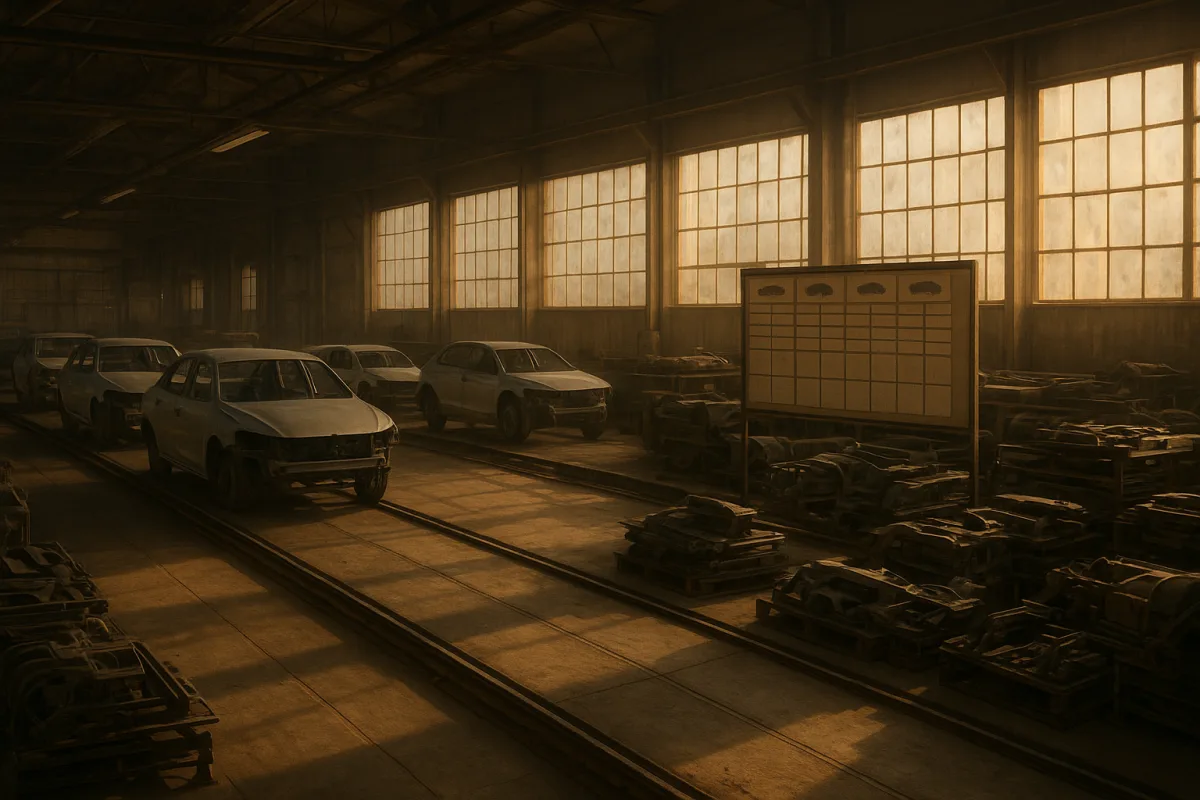
Volkswagen is getting smaller on purpose
Volkswagen Group is planning to become a less complicated company. Its supervisory board has approved Future Plan 2030, a programme combining 50,000 additional job cuts, a reduction of up to half of the group’s model range by 2035, and a 75 percent reduction in offering complexity. [1][6]
That is a substantial reversal for a company built around filling every plausible niche. For years, Volkswagen Group could offer a hatchback, estate, saloon, crossover and coupe-SUV across several brands, often sharing a platform while differing in price, styling and badge.
The evidence is unusually firm because independent reporting, including the Associated Press, The Washington Post, El País and LiveMint, all describes the same board-approved direction: fewer jobs, fewer models, lower production capacity and four German factories without secure future vehicle allocations. [1][3][4][5]
Volkswagen’s own announcement is similarly direct. The group wants annual production capacity reduced from roughly 12 million vehicles to nine million, a level that reflects a more conservative view of future demand rather than a forecast of perpetual volume growth. [6][7]
That matters because manufacturers normally disguise model rationalisation with words such as “portfolio evolution.” Volkswagen has instead put numbers on it. It is targeting roughly half as many models and only a quarter as much trim, powertrain and equipment complexity. [6]
There is still an important unknown. Volkswagen has not published a name-by-name cancellation list, nor has it disclosed a precise saving in euros from removing models and variants. The strategic direction is confirmed, but the eventual victims remain largely unconfirmed.
The jobs figure is not symbolic
The 50,000 positions are additional cuts, not a vague ambition to trim administrative cost. Volkswagen employed approximately 662,942 people worldwide at the end of 2025, including its Chinese joint ventures, so the new number represents roughly 8 percent of that workforce. [9][1]
That scale explains why the supervisory-board approval matters. Volkswagen’s board includes labour representation, and the plan followed difficult negotiations over costs, capacity and the future of German manufacturing. An agreed plan does not make implementation painless, but it makes retreat less likely. [1][5]
The cuts are intended to reach management as well as factory and technical roles. Volkswagen describes leaner leadership, clearer accountability and shorter decision chains, which is management language, but the practical point is that engineering and product decisions should pass through fewer layers. [6]
For an owner, this does not automatically mean worse cars. There is no evidence yet that Future Plan 2030 will directly alter reliability, servicing costs, driving feel or parts quality. Those claims would be speculation until actual future models have accumulated mileage.
What it should mean is fewer combinations. The days of several near-identical power outputs, trim levels, infotainment options and region-specific derivatives are expensive when volumes fall. Every separate calibration, parts catalogue, supplier contract and technician training course costs money.
Anyone who has kept an older Volkswagen Group car on the road knows complexity is not theoretical. A broadly shared engine, gearbox or suspension arrangement is usually easier to diagnose and source parts for than an unusual specification sold in tiny numbers.
China changed from growth engine to competitive problem
China is central to the timing. Volkswagen is not restructuring simply because it wants tidier brochures. The Chinese electric-vehicle market has become more competitive, less predictable and much less forgiving of high European development costs.
In the first half of 2026, Chinese EV sales reportedly fell 9.5 percent year on year to 5.3 million vehicles, amid tapering subsidies, consumer caution and pressure on margins. Domestic manufacturers have become formidable competitors, with Geely’s Star Wish reportedly outselling Tesla’s Model Y. [8]
Volkswagen’s response is not to abandon China. It is to localise harder, with 13 new-energy vehicles planned by the end of 2026 and more than 30 by 2029. The company also intends to use Chinese engineering and production more broadly. [8]
That is a major shift from the old model, where China was principally a huge market for locally built versions of global cars. The new approach treats China as a development centre and potential export base, particularly for markets Volkswagen calls the Global South. [6]
At the same time, Europe has excess capacity. Volkswagen says its European factories can build more than 500,000 additional vehicles a year beyond present demand. Idle capacity is expensive, especially when plants, suppliers and model programmes were sized for a market that has not returned. [1][6]
Four German factories are under real pressure
Emden, Zwickau, Hanover and Audi’s Neckarsulm site are the plants most exposed in the published plan. Volkswagen says they currently have no competitive follow-on production secured in the next five to eight years, placing their vehicle-making futures in doubt between 2031 and 2034. [1][5]
That is not the same as announcing four closures. Volkswagen is considering alternative uses, and discussions with unions, local authorities and workers remain ongoing. The company has not made final closure decisions, so reports describing each site as already shuttered go beyond the established facts. [1][6]
Still, these are not abstract facilities. They build vehicles including the Volkswagen ID.3, ID.4 and ID. Buzz, alongside Audi and Cupra products depending on plant allocation. A factory with no successor product is a warning that affects suppliers long before the gates close. [1]
For existing owners, a plant’s uncertain future should not trigger panic-selling. Volkswagen Group has legal and commercial reasons to maintain parts supply and warranty support. But it is sensible to distinguish routine service parts from low-volume body, trim and model-specific electronic components.
The likely risk is not that an ID.3 or Audi A5 becomes unserviceable overnight. It is that dealer stocks become thinner, specialist training is concentrated in fewer locations and obscure parts take longer to obtain as model volumes and factory support wind down.
Seat is the clearest brand question, not a confirmed death sentence
The future of Seat is particularly uncertain. Autocar reported, from internal documents, that the historic Spanish brand could be retired before 2030 while Cupra continues as Volkswagen Group’s Spanish performance-oriented brand. That report is a useful indication, not final public confirmation.
The wider evidence supports the direction without proving a fixed end date. Seat lacks a fully convincing electrified identity under tightening European emissions rules, while Cupra has been more profitable and more clearly differentiated within the group. Cupra reported €633 million profit in 2024. [5]
Volkswagen has invested €10 billion in electrification infrastructure connected with Seat and Cupra, so this is not a simple case of walking away from Spain. Seat’s future depends on regulation, product decisions and whether Volkswagen sees room for both badges after simplification. [5]
For Seat owners, the sensible reading is measured rather than dramatic. A badge being reduced or retired does not erase the MQB-based hardware beneath many recent cars, and shared Volkswagen Group mechanical parts will remain a major advantage over genuinely orphaned marques.
For a potential buyer, though, it is fair to ask whether a discounted outgoing Seat offers enough saving to compensate for weaker future demand. The answer will depend on price, specification, local dealer support and whether the equivalent Cupra, Skoda or Volkswagen model costs little more.
What fewer models may mean in the used market
The best evidence from previous industry upheaval is cautionary rather than predictive. Research into the used-car market after Volkswagen’s emissions scandal found that reputational and regulatory shocks can affect used values differently across vehicles and markets. [2]
That does not prove Future Plan 2030 will depress values. A model cancellation can sometimes increase enthusiast interest, but it can also reduce buyer confidence if finance companies, dealers and parts networks see it as a dead end. The effect depends on demand.
The practical expectation is uncertainty, not automatic collapse. Discontinued models with a large following, robust independent specialists and shared components often age well. Low-volume derivatives with unique electronics, unusual trim and thin dealer coverage are more exposed to inconvenience.
Finance is another overlooked issue. Lenders generally prefer predictable residual values, and insurers prefer clear repair pathways. If a model is visibly being wound down, dealers may carry more inventory risk, while finance offers can become less generous. That is an informed projection, not Volkswagen policy.
For owners approaching the end of a PCP or lease agreement, it will be worth checking guaranteed future value assumptions more closely than usual. A strong discount on a new car can be attractive, but it may simply shift some of the depreciation pain into the next owner’s hands.
What this means for a project-car plan
If you are buying a Volkswagen Group project now, buy on support network rather than corporate sentiment. A well-supported Golf, Octavia, Leon, A3 or mainstream Audi product has an enormous ecosystem of used parts, independent garages, diagnostic knowledge and online documentation.
That advice applies particularly to cars you expect to keep past 60,000 miles, when warranty protection matters less than access to sensible repairs. Shared engines and gearboxes are useful, but shared electronic modules, body parts and software expertise may matter even more.
Avoid paying a premium because a model is rumoured to be cancelled. Volkswagen has not confirmed the full cut list, and rarity alone does not create value. A rare car with weak demand, expensive trim parts and limited diagnostic support can be a costly garage ornament.
Equally, do not assume newer electric models will become impossible to own if a factory loses production. Battery warranty, software support, charging hardware and accident repair arrangements are the questions to ask. Future Plan 2030 provides no direct answer on any of them yet.
For new-car buyers, simpler ranges could eventually be beneficial. Fewer options may mean clearer pricing, better availability of common parts and less confusion over whether a software update or component applies to one of six nearly identical versions.
But there is a loss as well. Volkswagen Group has historically been good at serving oddly specific needs, from practical estates to compact performance cars and niche electric derivatives. Some of those choices will disappear because the business case is no longer strong enough.
The central lesson is that Volkswagen is prioritising repeatable, high-volume engineering over abundance. That may make the company healthier, but it will make its catalogue less forgiving of the enthusiast who wants the unusual trim, bodystyle or powertrain combination.
Frequently Asked Questions
How will Volkswagen Group's restructuring affect vehicle ownership?
Volkswagen's plan to reduce its model range by up to half and cut complexity by 75% means fewer choices for buyers and less predictable resale values and financing terms for discontinued models. Owners should focus on choosing models with strong independent specialist support, shared mechanical parts, and large owner bases for better long-term ownership experience. Parts support is expected to continue, but dealer attention and financing may become less consistent.
What impact do Volkswagen model cuts have on maintenance and parts availability?
While parts support for discontinued Volkswagen Group models is likely to continue, the reduction in model complexity and range may lead to less dealer attention and challenges in after-sales service quality. Independent specialist support and models sharing common mechanical components will be more reliable for long-term maintenance.
Will Volkswagen's job cuts influence car quality or driving experience?
The 50,000 job cuts include management, factory, and technical roles, aiming for leaner leadership and shorter decision chains. However, there is no evidence yet that these cuts will directly affect vehicle reliability or driving experience. The restructuring focuses on efficiency and clearer accountability rather than reducing product quality.
Which Volkswagen Group models are most affected by the restructuring?
Volkswagen has not published a specific list of model cancellations, so it is unclear which models will be discontinued. The group plans to reduce annual production capacity from about 12 million to 9 million vehicles and cut the model range by up to 50%, but the exact affected nameplates remain unconfirmed.
How does Volkswagen's plan to reduce model range affect long-term owners?
Long-term owners of discontinued models may face lower resale values, tighter financing options, and potential dealer service challenges. Choosing models with strong independent support networks and common mechanical parts can mitigate these risks, as dealer support and parts availability might decline for low-volume or discontinued vehicles.
How we researched this
This article was assembled from 8 published articles, 11 cited references.
Nothing here is based on hands-on testing. Where a figure or finding appears, it belongs to the source cited beside it, and the writing says so rather than implying otherwise. Every source is listed below so you can check it.
Sources
VW Approves Plan to Reduce Lineup by 50 Percent and Cut 50,000 Jobs — Car and Driver
Confirmed: VW Group plans to halve model range as part of huge cuts — Autocar
Volkswagen Supervisory Board Approves Plan to Reduce Model Portfolio by 50%, Cut 50,000 Jobs — Road & Track
Volkswagen Will Cut 50,000 Jobs And Slash Half Its Models By 2035 — Motor1
What VW Group Models Would You Axe? — CarScoops
Car Deals of the Week: Labor Day Savings on Tools, Tires, and More — Road & Track
2028 Kia Sportage Drops Disguise And Looks Like A Smaller Telluride — CarScoops
Mitsubishi’s New Pajero Undercuts The Toyota Land Cruiser By Thousands — CarScoops
Volkswagen board approves cutting 50,000 more jobs and ending production at 4 plants
Sorting on the Used-Car Market After the Volkswagen Emission Scandal
Volkswagen anuncia que reducirá sus capacidades de producción hasta 9 millones de vehículos anuales
Volkswagen to slash 50,000 jobs in ‘far-reaching’ restructuring
Related Articles
Car Maintenance and Repair Insights for Smart Ownership
Get practical car maintenance and repair insights including fuel economy, windshield care, and air-cooled VW belt tips for better ownership.
Classic Car Ownership and Restoration
Explore classic car ownership and restoration with insights on the 1966 Pontiac GTO, Acura Integra 40, and Jaguar D-Type restorations.

Mercedes-AMG CLE 646 Ownership
Explore Mercedes-AMG CLE 646 ownership, including performance, maintenance, costs, and the driving experience of this exclusive V8 coupe.
Monterey Car Week Ownership Costs and Exclusive Car Culture
Explore Monterey Car Week ownership costs, maintenance, and the diverse exclusive car culture behind the event.