
Bentley Torcal Electric SUV Ownership and Maintenance
Explore Bentley Torcal electric SUV ownership, maintenance, and driving experience insights for the 2028 model.
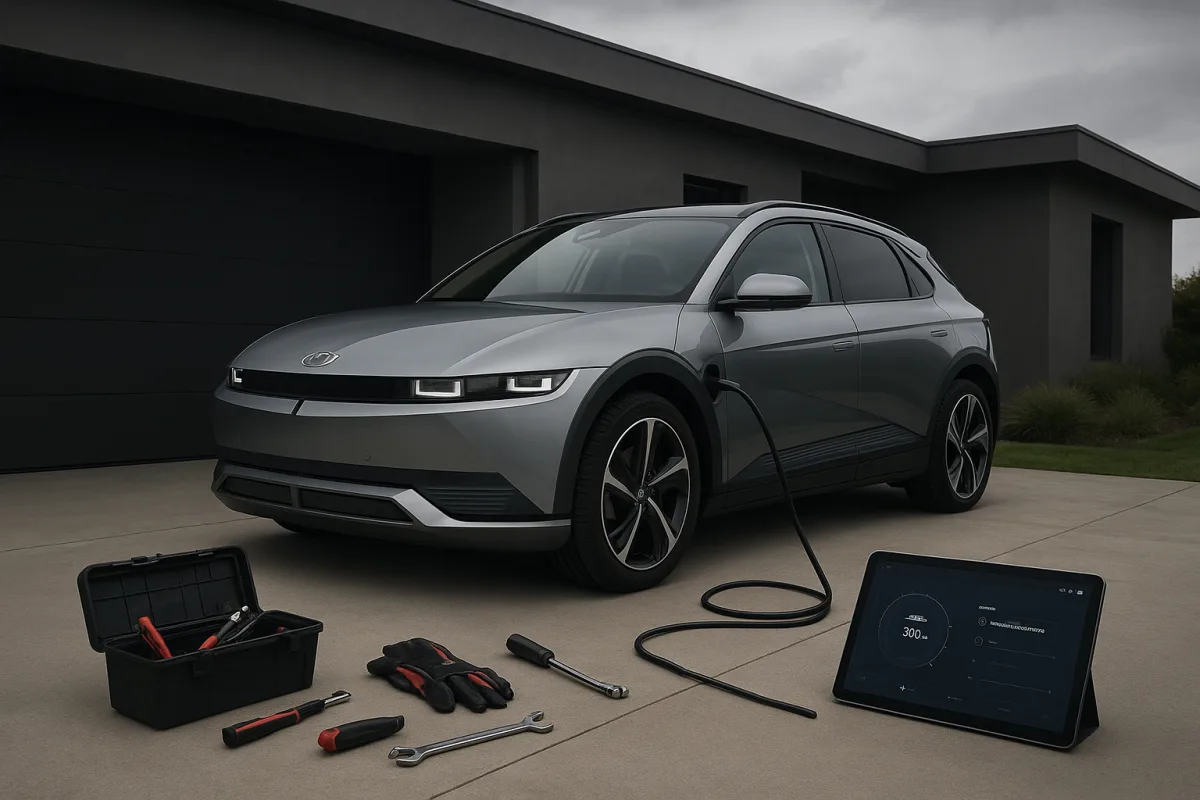
The important Torcal number is not 850 hp
Bentley’s first EV is due to be revealed on September 23, 2026, before arriving as a 2028 model. The Torcal is an electric SUV positioned below the Bentayga, using the Volkswagen Group PPE architecture shared with the Porsche Cayenne Electric. [1][2]
The headline figures are familiar premium-EV material: dual motors, all-wheel drive, around 850 hp and a 113 kWh battery. Bentley is targeting 370 miles on the WLTP cycle, while U.S.-market estimates point to more than 300 miles on the EPA cycle. [1][5]
Those numbers matter, but they do not explain why Bentley has spent so much effort on a synthetic soundtrack. Plenty of EVs are quick, quiet and heavy. A luxury maker needs to make the driver feel something beyond an instant shove.
Bentley calls its system Dynamic Symphony. Carscoops reports that it uses recordings and performances involving drums, bass guitar and viola, arranged to evoke the uneven rhythm and low-frequency presence of Bentley’s older V8s. [5]
That can sound like a gimmick, especially to anyone who has lived with a car whose artificial noises became irritating before its first service. The interesting part is not the instruments. It is the signal that decides when those instruments are heard.
Torque demand is the signal
The Torcal’s sound is linked primarily to torque demand, not simply vehicle speed or accelerator position. In plain terms, the soundtrack responds to how hard the electric motors are being asked to work at that moment. [5]
Torque is turning force. An electric motor develops torque at its output shaft, which is then multiplied through the fixed reduction gear and delivered to the wheels. Unlike a combustion engine, it does not need revs, gearchanges or combustion pulses to make useful force.
That is why an EV can feel strange to someone used to a V8 Bentley. Press the accelerator at 30 mph and the car surges without a downshift, a rising engine note or any obvious mechanical effort. The speedometer moves, but the body receives little warning.
A speed-linked sound system does not solve that properly. At 70 mph on a flat motorway, it might produce a high-pitched or busy soundtrack simply because the car is travelling quickly, even though the motors are doing relatively little work.
Torque demand gives a more relevant result. Hold 70 mph on level ground and the soundtrack can fade away because the motors only need enough torque to overcome air resistance, tyre drag and drivetrain losses.
Ask for a fast overtake at that same 70 mph, and torque demand rises sharply. The motors deliver more turning force, electrical current increases, and Bentley’s programmed drums and bass notes become stronger, deeper and more urgent.
That distinction matters because it connects the noise to the physical action. A driver does not need to see a power meter to understand that the car is working harder. The soundtrack is meant to provide the missing cue that a conventional engine supplies naturally.
Why the Torcal does not need fake gearchanges
Some performance EVs simulate gearshifts, sometimes cutting motor torque briefly and adding a change in pitch. That can be entertaining, but it is a deliberately artificial interruption in a drivetrain that is mechanically capable of uninterrupted acceleration.
Carscoops says Bentley is not currently pursuing simulated shifts for the Torcal. Instead, the company wants the audio response to rise and fall with propulsion demand, while preserving the smooth, direct character of its electric drive. [5]
That fits the brand better than trying to make a 2.7-tonne electric SUV behave like a lightweight sports car. Bentley has traditionally traded in effortlessness: a big engine, plenty of torque and little drama from the driver’s seat.
The soundtrack also works during regenerative braking. Lift off or request deceleration and the motors reverse their role, becoming generators that feed energy back into the battery. That regeneration creates a measurable load, so Bentley can give it an audible character too. [5]
The useful bit is that the driver should hear deceleration effort building before it becomes obvious through body movement alone. In a heavy SUV, that can make smooth driving easier, particularly if the car offers different regeneration settings rather than fixed one-pedal driving.
Bentley has indicated that the Torcal will offer automatic regeneration, a fixed setting and a coast mode. Autocar’s prototype ride report says there will not be steering-wheel paddles for manually stepping between regen levels. That is a comfort-led choice, not a track-car one.
The system still has to avoid becoming tiresome
A sound that works in a short prototype ride can be less appealing after 60,000 miles. That is particularly true in an expensive car, where the owner is paying partly for the ability to shut out traffic, tyre roar and the rest of modern life.
Bentley appears to understand this. In Comfort mode, the soundtrack can be reduced or switched off, while Bentley and Sport modes make it more present. Carscoops found that it generally receded during steady driving and became more prominent with acceleration or regeneration. [5]
That is the right hierarchy. An owner should not need to select a “silent” mode just to have a quiet motorway car. The system ought to be absent when there is nothing useful to communicate, then appear when the driver requests serious performance.
There is another practical reason to tie sound to torque. It should remain intelligible regardless of speed. At urban speeds, wind noise is low and a heavy bass effect can communicate gentle propulsion. At motorway speeds, the system can rise only when overtaking load demands it.
Bentley is also expected to broadcast a discreet version externally. That should not be confused with the legally required pedestrian warning noise fitted to EVs at low speed. The Torcal’s orchestral sound is a brand and driver-feedback system, not merely a safety buzzer.
The battery and charger determine whether the ownership case works
The Torcal’s soundtrack will not change its charging bill or service requirements. The ownership question is still dominated by a 113 kWh battery pack, large tyres, insurance, depreciation and access to reliable charging. [1][5]
Porsche’s related Cayenne Electric supports up to 400 kW DC fast charging and can charge from 10 to 80 percent in under 16 minutes under suitable conditions. It has 11 kW AC charging as standard, with 22 kW optional. [9]
Those Porsche figures are not confirmed Torcal specifications. Bentley has not published its own maximum DC rate, home-charging capability or charge-time claim, so it would be wrong to promise Cayenne results simply because the two SUVs share hardware. [9]
Even if Bentley adopts the Porsche’s charging capability, the charger has to supply it. A 400 kW peak is available only at a compatible high-power DC site, with a warm battery, low enough state of charge and no charging-station faults or throttling.
At home, an 11 kW AC wallbox would theoretically replenish a fully depleted 113 kWh pack in a little over 10 hours, before allowing for charging losses. Real owners rarely arrive empty, but overnight charging remains the part that makes EV ownership convenient.
The federal 30 percent home-charger credit, capped at $1,000, expired on June 30, 2026. The $7,500 federal new-EV credit also no longer applies to purchases after September 30, 2025, so a Torcal buyer should not build either saving into the purchase calculation. [3]
State incentives are still possible, but they are inconsistent. The Tax Foundation notes that state EV programmes vary substantially, and rebates can change with funding or local policy. Check the state programme immediately before ordering equipment, not when configuring the car. [4]
The costs Bentley has not yet disclosed
There is no Torcal service schedule, battery warranty detail, maintenance-price menu or replacement-battery cost yet. That matters more here than it does in a mainstream EV because a Bentley dealer visit is unlikely to be priced like a routine hatchback inspection.
General EV maintenance is usually lower than for an internal-combustion vehicle because there are no oil changes, spark plugs, exhaust systems or conventional multi-speed transmission services. Tyres, brake fluid, cabin filters, coolant circuits and suspension remain. [6]
The Torcal may be especially hard on tyres. It is expected to weigh around 6,000 pounds and use 21- or 22-inch wheels, with wide summer tyres available. Those tyres will determine a surprising amount of real-world range, ride quality and replacement cost. [5]
Regenerative braking may preserve brake pads, but it does not eliminate brake maintenance. Heavy luxury cars can still corrode discs through lack of use, and carbon-ceramic brakes, if specified, are not an economical answer to ordinary ownership.
Battery replacement is the large unknown. Edmunds notes that EV battery replacement costs can range from several thousand dollars to more than $25,000, depending on the pack, the damage and the manufacturer. That is an industry range, not a Torcal estimate. [7]
Resale value is unknowable as well. The Torcal has not reached customers, and existing luxury EV depreciation figures cannot predict its future. iSeeCars data on other electric SUVs is useful evidence that EV resale outcomes vary widely, not a reliable valuation guide for a Bentley. [8]
For now, the sensible reading of the Torcal is not that it will be the fastest Bentley or the quietest EV. It is that Bentley is trying to make electric torque legible and emotionally convincing without pretending there is a V8 under the bonnet.
Frequently Asked Questions
What are the maintenance requirements for the Bentley Torcal electric SUV?
As of August 2026, Bentley has not released specific maintenance schedules or service intervals for the Torcal. Industry averages for electric vehicles suggest maintenance costs may be 30–50% lower than internal combustion engine vehicles, with service intervals often annual or every 10,000 miles, but these may not directly apply to the Torcal.
How much does it cost to own a Bentley Torcal long term?
No official data on long-term ownership costs for the Torcal is available. MotorTrend estimates the price between $250,000 and $300,000, excluding insurance, charging equipment, and options. Battery replacement costs for EVs generally range from several thousand to over $25,000, but Bentley-specific figures have not been disclosed.
What is the expected reliability of the 2028 Bentley Torcal?
There is no information available regarding the reliability or resale value of the 2028 Bentley Torcal, as it has not yet been released or tested in the market.
Are there any unique ownership challenges with the Bentley Torcal electric SUV?
No unique ownership challenges have been reported or disclosed for the Torcal. However, federal EV tax credits and home charger incentives have expired for this model, which may affect the initial cost of ownership. Some state-level incentives may still be available but vary widely.
How does the Bentley Torcal's synthetic soundtrack affect the driving experience over time?
The Torcal’s “Dynamic Symphony” soundtrack is linked to torque demand rather than speed, providing the driver with real-time audio feedback about motor workload. This approach aims to replace the natural engine cues of a combustion vehicle without artificial interruptions like simulated gear changes, potentially offering a more intuitive and less irritating experience over time.
How we researched this
This article was assembled from 5 published articles, 9 cited references.
Nothing here is based on hands-on testing. Where a figure or finding appears, it belongs to the source cited beside it, and the writing says so rather than implying otherwise. Every source is listed below so you can check it.
Sources
2028 Bentley Torcal — Car and Driver
2028 Bentley Torcal First Ride: A Luxury EV that Moves to a Different Beat — The Drive
Feels like a Bentley: On the road in the 370-mile Torcal EV — Autocar
2028 Bentley Torcal Aims To Capture That Tangible Bentley Feeling — Jalopnik
2028 Bentley Torcal Prototype Ride: An Electric New Era — Car and Driver
What Is a Torcal? Bentley's First Electric SUV - Kelley Blue Book
2028 Bentley Torcal Review: Expert Insights, Pricing, and Trims
EV Maintenance Guide: What Electric Cars Need and What They Do Not | EVCalcs
Related Articles
2027 BMW 3 Series M350 vs i3
Compare the 2027 BMW 3 Series M350 and i3 models on performance, ownership costs, and market challenges to find which suits your needs best.
Used Luxury and Sports Cars Reliability and Ownership Guide
Explore reliability, ownership experiences, and costs of used luxury and sports cars under $40K to make informed buying decisions.
Bentley Torcal Electric SUV: Specs, Charging & Ownership
Explore the Bentley Torcal electric SUV's specs, 800V charging, performance, price, and ownership insights for Bentley's first EV SUV.
Electric Vehicle Pricing and Ownership Costs Explained
Explore electric vehicle pricing, ownership costs, tax credit impacts, and key maintenance tips to make informed EV buying decisions.