
BMW Electric Vehicle Sales Milestone and Neue Klasse iX3
Explore BMW's electric vehicle sales milestone and the Neue Klasse iX3's range, ownership, and impact on Europe's EV market.
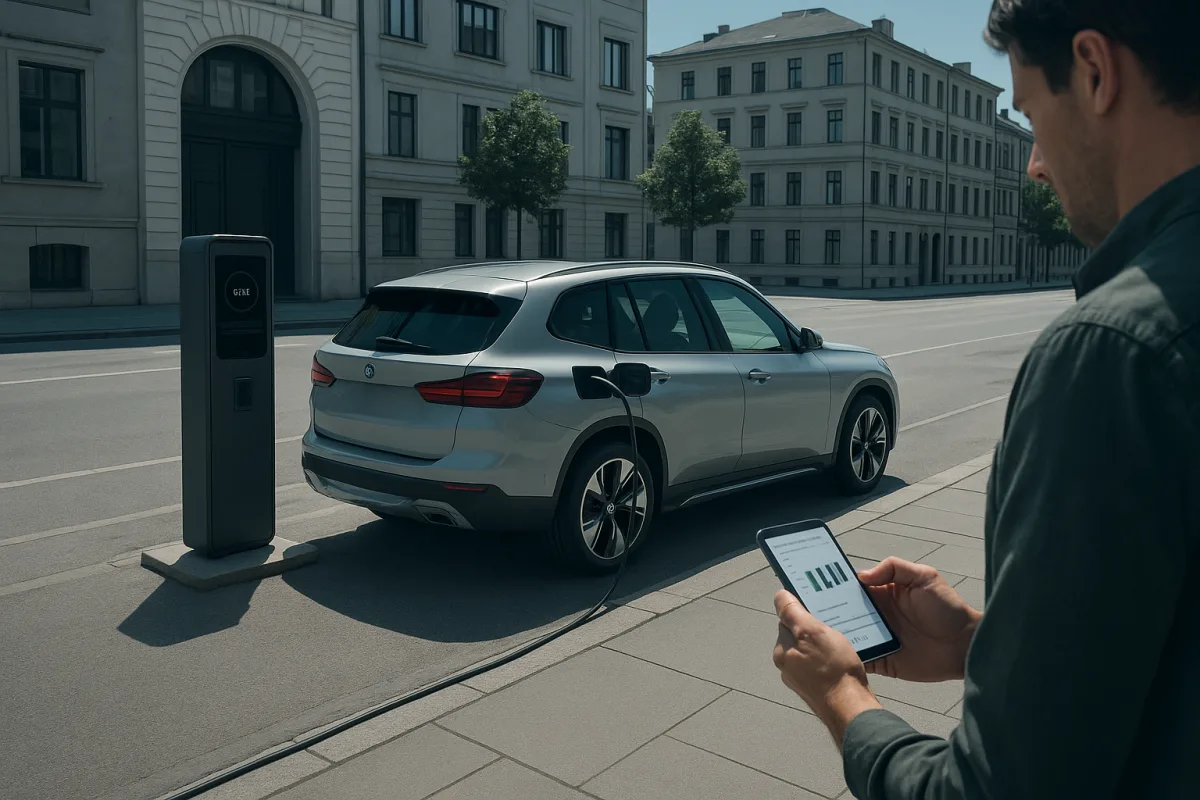
BMW’s two-millionth EV matters, but the iX3’s real test is ownership, not order books
The shift is real, but it is regional
BMW has reached two million fully electric vehicle deliveries, roughly 13 years after the original BMW i3 arrived. Its milestone car was a BMW i5 M60 xDrive built in Dingolfing and delivered in Spain, a suitably European ending to the company’s current EV story. [3]
That number alone is less useful than the direction behind it. BMW passed one million EVs in late 2023, meaning the second million came far faster than the first, even allowing for the broader choice of BMW and Mini electric models now available. [3]
The growth is not evenly spread across BMW’s markets. In Europe, battery-electric vehicles accounted for about 28 percent of BMW sales during the first half of 2026, while more than one in four BMW Group sales worldwide had some electrified powertrain. [3]
European BMW BEV deliveries rose 38 percent in the second quarter to 81,445 cars. That is a large enough movement to take seriously, particularly because broader European electric-car registrations were also growing rather than BMW merely gaining share in a falling market. [3]
Statista’s comparison of the two regions points in the same direction: European BEV sales rose while the US market weakened. BMW’s US EV sales reportedly fell 27 percent in the first quarter of 2026, against a 32 percent increase in Europe. [2]
That agreement between BMW’s sales reporting, broader market reporting and the regional policy picture matters. It suggests this is not simply one successful launch campaign or one manufacturer discounting hard to clear stock.
The Neue Klasse iX3 is the useful barometer
The 2026 BMW iX3 50 xDrive is central because it sits in the premium family SUV class, not a specialist low-volume niche. BMW has long sold the X3 in substantial numbers, and the electric version gives established customers a direct route into a BEV.
BMW says the iX3 accounts for one in three electric BMW orders in Europe, and half of orders across the X3 family are now for the electric model. Those are strong signals, though they remain orders rather than registration data. [3]
That distinction is worth making. A deposit made before a vehicle is driven through a first winter, insured, charged at home and serviced twice tells us about initial demand, not necessarily long-term satisfaction or resale strength.
Still, the order pattern makes sense. The BMW iX3 50 xDrive is quoted with a 108.7 kWh usable battery, dual motors producing 469 hp and 645 Nm, plus an 800-volt electrical system capable of up to 400 kW DC charging. [1]
Those figures are not especially interesting as pub ammunition. They matter because a large usable battery and high DC charging ceiling can make a family EV less dependent on perfect public charging infrastructure, especially for drivers covering regular continental motorway miles.
BMW quotes up to 800 km of WLTP range, approximately 497 miles, for the iX3 50 xDrive. [1] As with every WLTP figure, it is a comparison tool, not a promise that survives 130 km/h cruising, wet roads, winter temperatures, roof boxes and a full cabin.
Some reporting has repeated still higher real-world-looking figures, around 550 miles, but those should be treated cautiously. A practical test result can depend heavily on route, temperature, speed and test method, and should not be used to improve on BMW’s already optimistic laboratory maximum.
The 10 to 80 percent charging claim of 21 minutes is similarly conditional. BMW’s 400 kW maximum requires a suitably powerful charger, a warm battery, an appropriate state of charge and a charging curve that holds up beyond the initial peak. [1]
For an owner, the more meaningful question is whether the car consistently finds working chargers, preconditions properly and maintains respectable charge speeds after 40,000 or 60,000 miles. None of the supplied evidence can yet answer that.
Europe has made the monthly maths easier
Europe’s EV demand is being helped by conditions that go beyond the product. Reuters reporting cited by Motor1 connected the wider European EV increase with high fuel prices and cheaper electric models, while BMW’s premium pricing means incentives remain especially relevant. [3]
Germany is a clear example. A socially graded purchase grant of up to €6,000 began from January 2026, with applications opening in May, subject to income and vehicle-price conditions. [14]
The BMW iX3’s German list price starts at €75,000, according to BMW’s June 2026 price list. [12] That is a serious amount of money before options, insurance, a home charger or finance interest are added.
The grant can therefore change the conversation, but it does not turn a €75,000 BMW into an inexpensive car. Buyers need to check eligibility before ordering, rather than assuming every electric vehicle qualifies for the advertised maximum support. [14]
Company-car taxation may matter even more. Germany applies a 0.25 percent monthly benefit-in-kind rate to fully electric company cars with a list price up to €100,000, a threshold high enough to include the base iX3. [14]
That is the sort of policy lever that moves registrations quickly. A private buyer comparing cash outlay may find the iX3 expensive, while a company-car driver comparing net monthly tax could reasonably see a much more compelling proposition.
There is a counterweight. BEVs registered by the end of 2025 received a 10-year vehicle-tax exemption, but those registered from January 2026 are taxed immediately at 50 percent of the usual weight-based rate. [14]
The charge is unlikely to overwhelm the ownership budget of a €75,000 electric SUV. It does illustrate why broad claims that “EVs are tax-free” age badly, and why an order placed a few months later can have different running costs.
The United States is not telling the same story
The American slowdown should not be read as a verdict on the iX3’s engineering. The available reporting points more strongly to policy uncertainty, the removal of federal tax support and the model’s limited US availability than to evidence of a BMW-specific product failure. [2] [4]
Across the US industry, EV sales reportedly fell by more than 20 percent year-on-year in the second quarter after federal incentives ended, leaving EVs at roughly six percent of the market. [4]
BMW’s own North American position has also softened. CarScoops reported electrified-vehicle sales falling 18.1 percent in the second quarter, while plug-in hybrid sales rose 22.9 percent, a sign that buyers may be choosing a less infrastructure-dependent compromise. [4]
The BMW iX electric SUV was reportedly down almost 50 percent year-to-date, and Cox Automotive data cited by CarScoops put BMW’s US EV decline at 56 percent. Those are uncomfortable numbers, even if they do not forecast the iX3’s eventual performance. [4]
For a buyer, this market split has consequences. Strong European demand may support dealer confidence, charging investment and a larger independent knowledge base, while a slower US market can lead to heavier incentives, changing residual assumptions and patchier model availability.
It also means that BMW’s long-term aim of having EVs make up half its sales by 2030 depends on manufacturing scale, not just attractive launch specifications. Neue Klasse production must ramp in Europe and eventually in Spartanburg and San Luis Potosí at competitive cost. [3]
What an early iX3 buyer should plan for
The iX3 is too new for meaningful 60,000-mile ownership evidence. That is not a criticism of the vehicle. It is simply the point at which a sensible owner separates known specification from unknown durability.
There has already been a recall affecting 145 early-build iX3 vehicles built between November 2025 and February 2026, including 28 in Germany, for an onboard-charger defect with a potential electric-shock risk. [1]
That is a small campaign, not proof of a systemic failure. But it is exactly why buyers should check a vehicle identification number for outstanding recalls, confirm software-update history and ensure charging faults are documented before accepting a used or demonstrator car.
No widespread financing or insurance issue has been identified in the available research. Absence of reports is not proof that premiums or finance rates will be benign, especially for a new, expensive model with unfamiliar repair procedures.
The practical ownership project should begin with the home-charging quote. Include the charger, electrical survey, any consumer-unit work, cable routing and installation, because those costs sit outside BMW’s €75,000 vehicle price and vary wildly by property. [12]
Then price insurance with the actual registration, not a generic comparison estimate. Battery repairs, sensor-packed bodywork, parts availability and approved repair-network capacity can affect premiums, and early-model data often changes faster than owners expect.
Do not buy on the assumption of painless depreciation. Used-car figures cited for earlier BMW iX3 models show a broad German asking-price range from €63,400 to €89,600, while French market estimates span roughly €25,999 to €85,000 across 2021 to 2026 cars. [6] [7]
Those numbers are not a reliable depreciation forecast for the Neue Klasse car. They mix age, mileage, trim, listings and the previous-generation iX3, which is mechanically and commercially different from the new 800-volt model.
One depreciation calculator estimates that a €72,000 iX3 could retain around 45 percent after five years, implying a loss near €39,875. That is an estimate built on limited evidence, not a residual value an owner should treat as guaranteed. [10]
For buyers who change cars every three years, a lease or PCP-style agreement with a transparent mileage allowance may be the more honest way to contain that uncertainty. Read the excess-mileage rate, tyre requirements and return-condition rules as carefully as the monthly payment.
For a buyer intending to keep the car, the case rests more on charging convenience than on BMW’s 0-100 km/h claim. A home charger, predictable longer journeys and enough time to let a new platform establish a service record matter more than 469 hp. [1]
Technology can help, but it does not remove responsibility
The iX3’s Motorway Assistant has approval under UN Regulation No. 171 for Level 2 hands-off driving on suitable motorways up to 130 km/h. BMW says the system can operate without repeated prompts for the driver to hold the wheel. [11]
That is a notable regulatory step, but it remains Level 2 assistance. The driver retains responsibility, must supervise the road and should not treat a hands-off permission as autonomous driving during a wet, busy or poorly marked commute.
As an ownership feature, it may be useful for regular motorway drivers, but it is also another area where software support matters. Ask how long features are supported, whether connected services carry subscriptions and what happens if a sensor or windscreen requires replacement.
BMW’s two-million-EV milestone shows that electric cars are no longer a sideline for the company. The iX3’s European demand shows the premium family EV market is moving, but the uneven US result is a reminder that incentives, infrastructure and price still shape demand as much as the car itself.
Frequently Asked Questions
What is BMW's electric vehicle sales milestone?
BMW has delivered two million battery-electric vehicles globally since 2013. The second million EVs were sold faster than the first million, reflecting accelerated growth, especially in Europe. As of the first half of 2026, about 28 percent of BMW sales in Europe were fully electric vehicles.
How is the BMW Neue Klasse iX3 performing in Europe?
The Neue Klasse iX3 is a key model in BMW’s EV lineup, accounting for one in three electric BMW orders in Europe. Half of all X3 family orders in Europe are now for the electric iX3, indicating strong demand in the premium family SUV segment, though these figures represent orders rather than confirmed deliveries.
What are the real-world range and charging times of the BMW iX3?
BMW quotes a WLTP range of up to 800 km (about 497 miles) for the iX3 50 xDrive, but this figure is a laboratory maximum and may not reflect typical motorway or winter driving conditions. Some reports suggest real-world ranges around 550 miles, though these vary with conditions. The iX3 supports ultra-fast charging up to 400 kW, enabling a 10 to 80 percent charge in about 21 minutes under ideal conditions.
How do German incentives affect BMW electric vehicle ownership?
Germany offers a socially graduated EV purchase grant of up to €6,000 based on income and vehicle price, which started in 2026. Additionally, BEVs registered before the end of 2025 receive a 10-year vehicle tax exemption, while those registered after face a reduced tax rate. Company car tax benefits also improve the financial case for electric BMWs, though these rules are time-sensitive and specific to the country.
Is the BMW iX3 a good long-term electric SUV ownership choice?
There is currently insufficient long-term data on depreciation and repair costs for the Neue Klasse iX3 to definitively assess its risk as a used vehicle. Early buyers are advised to lease or maintain a contingency fund, as resale values and maintenance costs remain uncertain due to the model’s recent launch.
How we researched this
This article was assembled from 3 published articles, 14 cited references.
Nothing here is based on hands-on testing. Where a figure or finding appears, it belongs to the source cited beside it, and the writing says so rather than implying otherwise. Every source is listed below so you can check it.
Sources
BMW Just Hit 2 Million EVs Sold, And The iX3 Is Carrying The Team — InsideEVs
BMW Just Sold Its 2 Millionth EV, And Europe Wants Plenty More Even If America Doesn’t — CarScoops
2026 BMW iX3 Debuts as the First Neue Klasse SUV with 497-Mile Range and 800V Charging
Chart: EV Markets Drift Apart: Europe Accelerates, U.S. Stalls | Statista
BMW Electrified Sales Reach One in Four Worldwide - The EV Report
BMW gets green light for 'hands-off' highway driving in major first - here's how it works
Related Articles
Electric Vehicle Range Tests and New EV Developments
Explore electric vehicle range tests, efficiency, and new EV developments to understand real-world performance and ownership factors.
New Electric and Hybrid SUVs: Reviews and Comparisons
Explore reviews and comparisons of new electric and hybrid SUVs, covering performance, ownership costs, range, and driving experience.
Apartment EV Charging Installation
Learn about apartment EV charging installation costs, permits, mounting options, and managed charging solutions for multi-unit buildings.
Bentley Torcal Electric SUV: Specs, Charging & Ownership
Explore the Bentley Torcal electric SUV's specs, 800V charging, performance, price, and ownership insights for Bentley's first EV SUV.