
Electric Vehicle Range Tests and New EV Developments
Explore electric vehicle range tests, efficiency, and new EV developments to understand real-world performance and ownership factors.
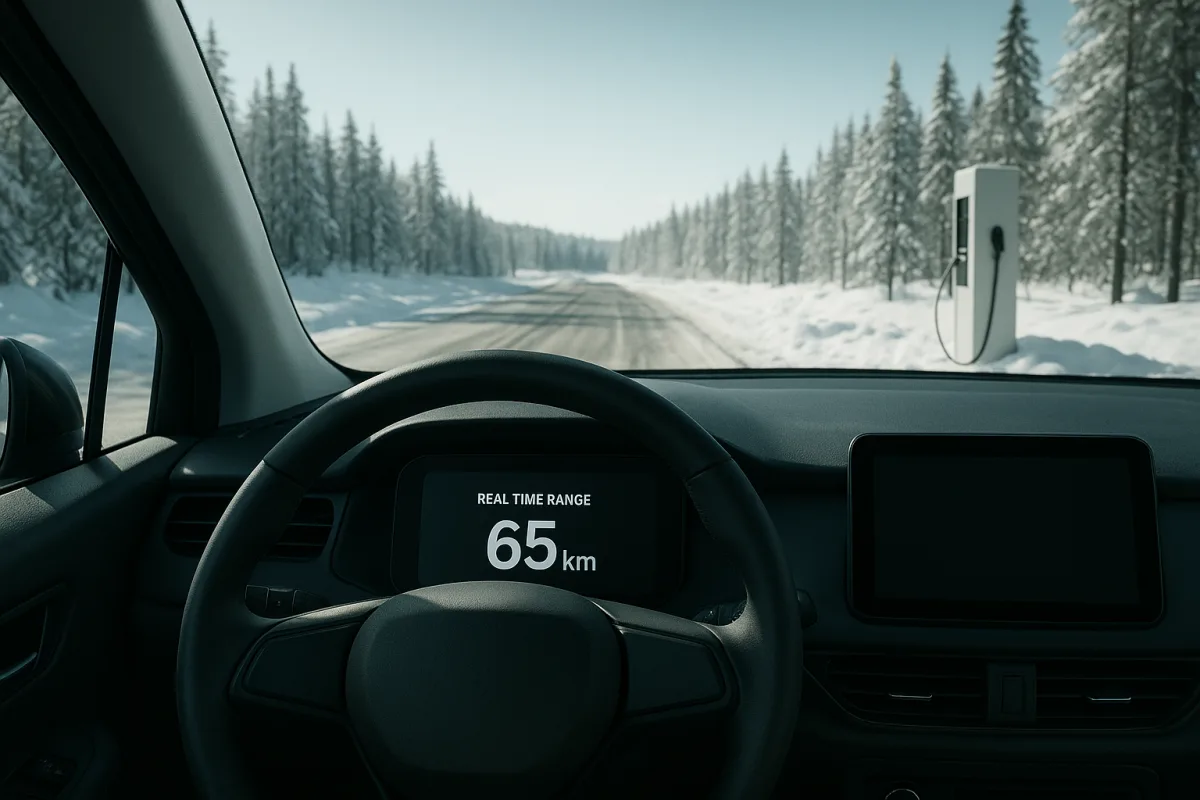
The shift is from headline range to usable energy
The important EV development is not that manufacturers keep announcing larger batteries. It is that efficiency, charging speed and real-world usability are becoming harder to ignore than the big WLTP number on the brochure.
Several independent tests and reports point the same way. Carwow’s cheap-EV range test, InsideEVs’ motorway comparison of premium SUVs, Geely’s charging-system announcement and Rivian’s material-efficiency claims all focus, in different ways, on energy used per mile.
That is a healthier direction than the old arms race for the largest pack. A huge battery can conceal poor efficiency, add weight, hurt tyre wear and make replacement costs uglier later. A well-managed smaller pack can make an EV easier to own.
The caveat is that manufacturers are still setting much of the narrative. Charging claims are often made under ideal temperatures, and lifecycle carbon calculations depend heavily on assumptions. The road test evidence is stronger where cars have actually been driven under comparable conditions.
Cheap EVs are no longer automatically short-trip cars
Carwow’s test of eight small EVs is useful because it did not simply compare WLTP figures. The Microlino, Honda Super-N, Dacia Spring, Leapmotor T03, Citroën e-C3, BYD Dolphin Surf, Fiat Grande Panda and Hyundai Inster were charged to 100% and driven at prevailing higher-speed limits.
That is the test that matters to someone who does not always drive locally. City range is easy for a small EV because speeds are low and regenerative braking helps. A motorway exposes aerodynamic drag, cabin-load consumption and the limits of a modest battery.
The Hyundai Inster covered 212 miles, the furthest distance in the group, although it reached only 95% of its official range. The Fiat Grande Panda managed 202 miles, or 102% of its stated range, while the Microlino reached 115 miles and marginally beat its claim. InsideEVs reported those results.
That does not mean the Grande Panda will reliably deliver 202 miles in ordinary ownership. EVKX lists up to 320 km, or 199 miles, as the electric Grande Panda’s WLTP maximum, but estimates around 180 km, or 112 miles, for winter motorway use. [1]
In warm summer motorway driving, the same source puts the Grande Panda nearer 230 km, or 143 miles. In summer city use it can be closer to 390 km, or 242 miles. [1] That wide spread is more informative than one official number.
Temperature, speed, wheel choice, load and wind matter more than many first-time EV buyers expect. The difference is not a fault unique to Fiat. It is simply more obvious with a 44 kWh battery than with a 90 or 100 kWh pack.
The eight-car test needs reading carefully
The Fiat Grande Panda is the obvious all-rounder in this particular field. Carwow found it to be one of the more enjoyable cars and it delivered the strongest percentage result against its official range. Its price was not supplied in the source material, so it would be wrong to present a current transaction price here.
It suits a buyer wanting a conventional small hatchback that can still do occasional intercity work, provided they accept that cold-weather motorway range will be much lower than its WLTP result. The electric version uses a 44 kWh battery, and the model is also sold in hybrid and petrol forms. [1]
The Hyundai Inster suits the buyer who genuinely needs the longest practical distance from a small EV. Its 212-mile result is more meaningful than a brochure claim because it came from a full-charge, run-to-empty comparison, although no purchase price was provided in the supplied evidence.
The Honda Super-N, listed at £19,000 by Carwow, looks like the better-value city-car proposition than its price initially suggests. It has proper car safety systems, useful interior flexibility and enough performance for normal faster roads, but its quoted 128-mile range makes it less convincing for frequent long runs.
The Dacia Spring was quoted at about £17,000 in the version discussed by Carwow, with used examples around £10,000. It suits a cost-led local buyer, fleet operator or second-car household, not somebody regularly carrying adults in the rear seats or spending hours on dual carriageways.
Carwow’s test vehicle was a pre-facelift Dacia Spring with 65 hp. Later cars have 70 hp or 100 hp options and a front anti-roll bar, so do not assume every Spring drives identically. That is exactly the model-year detail worth checking before buying used.
The Microlino was quoted at £23,000 in Carwow’s specification, which is a serious sum for a niche two-seat quadricycle. It suits someone who wants a compact urban runabout with character and very high efficiency, rather than a cheap substitute for a normal family car.
InsideEVs calculated 7.7 miles per kWh for the Microlino in the test, well above the other entrants. That is impressive, but it comes with a very specific compromise: it is an L7e heavy quadricycle in Europe, not an M1 passenger car. [2]
L7e rules permit lighter, lower-power vehicles with less demanding approval requirements than normal cars, even though they still face structural and safety standards. [2] The Microlino is not homologated for US sale, and its American low-speed-vehicle treatment would be more restrictive still. [3]
Carwow’s Leapmotor T03, Citroën e-C3 and BYD Dolphin Surf also completed the comparison, but the supplied material does not provide dependable prices or complete final-distance figures for them. They suit buyers shopping the growing budget-EV class, but they should be cross-shopped on dealer support, insurance and charging access, not merely sticker price.
That missing information matters. A cheap EV is not automatically cheap to keep if its insurance group is high, its body parts are slow to source, or its rapid-charge curve is weak after the first few minutes. Those are ownership questions, not launch-event questions.
BMW shows why efficiency matters at motorway speed
At the other end of the market, InsideEVs reported a useful motorway comparison involving the BMW iX3, Mercedes-Benz GLC Electric and Volvo EX60. These are premium SUVs, but the lesson applies directly to smaller, cheaper EVs.
Driven around Oslo at a target 120 km/h, approximately 75 mph, the BMW iX3 recorded 19.4 kWh per 100 km. The Mercedes used 20.3 kWh per 100 km and the Volvo 21.1 kWh per 100 km.
That works out at roughly 3.2 miles per kWh for the BMW, 3.06 for the Mercedes and 2.94 for the Volvo. The BMW’s advantage was about 4% over the GLC and 8% over the EX60, enough to matter on a proper journey.
With 108.7 kWh of usable battery capacity, the iX3 achieved a calculated 338-mile result in that test, compared with 279 miles for the Mercedes and 260 miles for the Volvo. The Volvo used 22-inch wheels, while the BMW and Mercedes wore 20-inch wheels, which likely contributed.
The point is not that every buyer needs a BMW iX3. It is that wheel size, aerodynamics and rolling resistance can have a more lasting effect on running costs than an extra few kilowatt-hours of battery capacity.
For anyone choosing a new EV, the sensible specification is often smaller wheels with deeper tyre sidewalls. They generally cost less to replace, ride better on poor roads and tend to consume less energy. The showroom wheel package is rarely the ownership sweet spot.
Megawatt charging is real, but not yet portable
Geely’s fifth-generation Smart Charging System represents the other major change. Geely says its 2.2 MW infrastructure can take a compatible EV from 10% to 70% in four minutes 30 seconds, and from 10% to 97% in eight minutes 40 seconds.
Those are startling figures, but they need proper context. The system requires 1,000-volt vehicle architecture and is currently limited to Geely’s own compatible models, beginning with the updated Galaxy E5 and its battery system.
The infrastructure is primarily in China. The research brief reports more than 11,000 Geely charging piles across 232 Chinese cities as of August 2026, but no confirmed public installations outside China. Announced global ambitions, including the UK, are not the same as a usable charging network.
BYD is further ahead on deployment scale, having installed 10,000 Flash chargers in China by August and targeting 20,000 by year end, according to InsideEVs. BYD has also discussed 3,000 European installations, but deployment timing and local compatibility remain important unknowns.
For a buyer in Britain, Europe or North America, this is not a reason to buy on a promise. It is evidence of where charging is heading, not proof that a five-minute stop will be available on next weekend’s trip.
The more immediate project implication is simpler: buy the car for the charging network it can use now. Check its real peak rate, its charging curve from 10% to 80%, connector standard, route coverage and home-charging arrangement.
Ownership risk has not gone away
Rapid development creates a used-market problem. Older EVs can look dated more quickly when a newer model offers 20% more real range, faster charging and a better software package. That affects depreciation even if the battery remains healthy.
iSeeCars data cited in the research brief puts average five-year EV depreciation at about 58.8%, against 45.6% for petrol cars. Small EVs retain roughly 42.2% on average after five years, while the Nissan Leaf is estimated to lose 62.9% to 66%. [4][5]
That does not mean every used EV is a bad purchase. It means buying lightly used can make more sense than buying new, particularly when battery warranty remains. Check the warranty transfer terms, service record, charge history where available and a battery-health report.
Tesla ownership deserves special caution around accident history. EpicVIN data reported by InsideEVs found salvage-title rates of roughly 18% to 19% among sampled Tesla models, compared with 13.7% for the overall August 2026 sample.
A salvage title does not prove a battery problem, nor does it prove a Tesla is unreliable. It does mean the insurer decided repair costs exceeded the vehicle’s value, and EV repairs can become expensive quickly when structural battery protection, sensors or castings are involved.
Rivian’s R2 points to the next ownership calculation
Rivian says its R2 has half the lifecycle carbon footprint of an R1S Launch Edition. The company attributes that to lower mass, better aerodynamics and 25% recycled or bio-based materials by weight.
The R2’s interior materials include recycled-content trim, floor mats made largely from recovered ocean waste and recycled battery-cell tray resin. Integrated smart charging is intended to favour cheaper, lower-demand grid periods when the vehicle is plugged in.
That is encouraging, but it remains a manufacturer claim. There is no meaningful long-term R2 degradation data yet, and no independent real-world R2 efficiency record comparable with established models. The R1S has reported winter efficiency around 1.85 miles per kWh, which shows how much cold weather can matter in a large electric SUV. [7]
The R2 uses LFP battery chemistry, which should be a positive sign for cycle life and tolerance of regular high state-of-charge use. Still, anyone planning to keep one for eight or ten years should wait for fleet data rather than assuming chemistry alone settles the question.
The common thread across the Grande Panda, iX3, Geely system and Rivian R2 is straightforward. The better EV is increasingly the one that wastes less energy, charges predictably and remains practical when it is no longer the newest thing on the road.
Frequently Asked Questions
How do real-world conditions affect electric vehicle range?
Real-world EV range varies significantly from official WLTP figures due to factors like temperature, speed, terrain, vehicle load, and driving habits. For example, the Fiat Grande Panda’s WLTP range of 199 miles can drop to about 112 miles in winter motorway conditions but increase to 143 miles in summer motorway use. City driving typically yields higher range because of lower speeds and regenerative braking.
Which small electric vehicles perform best on motorway range tests?
In Carwow’s run-to-empty motorway test, the Hyundai Inster achieved the longest distance at 212 miles, reaching about 95% of its official range. The Fiat Grande Panda followed closely with 202 miles, slightly exceeding its WLTP claim. The Microlino also marginally beat its official range but covered a shorter distance of 115 miles.
What factors influence the usable range of an electric vehicle?
Usable EV range depends on temperature, driving speed, wheel choice, vehicle load, and wind conditions. Smaller battery packs show more pronounced range variability under these factors compared to larger packs. Efficiency and energy use per mile are more important than just battery size for real-world usability.
How does temperature impact electric car battery performance?
Battery performance and thus EV range are strongly affected by temperature. Cold weather can reduce motorway range substantially, as seen with the Fiat Grande Panda dropping from 199 miles WLTP to around 112 miles in winter motorway driving. Conversely, warmer temperatures improve range, with the same vehicle reaching up to 143 miles on summer motorways.
What should buyers consider about battery health when purchasing a used EV?
Battery health is a critical factor alongside repairability and vehicle title history when buying a used EV. Since average EV depreciation is steeper than for petrol cars, understanding battery condition helps assess long-term ownership costs. Buyers should not rely solely on range figures but also check battery warranties and maintenance records.
How we researched this
This article was assembled from 1 video source, 6 published articles, 7 cited references.
Nothing here is based on hands-on testing. Where a figure or finding appears, it belongs to the source cited beside it, and the writing says so rather than implying otherwise. Every source is listed below so you can check it.
Sources
Eight Cheap EVs Were Driven Until They Died. One Was A Clear Overachiever — InsideEVs
Geely Can Now Charge An EV Battery In Under 5 Minutes — Jalopnik
Geely's New EV Charger Is Absurdly Powerful: 2.2 Megawatts — InsideEVs
The BMW iX3 Beat Mercedes And Volvo On Efficiency And Range In A Highway Test — InsideEVs
Rivian Says The R2 Has Half The Carbon Footprint Of An R1S — InsideEVs
Teslas Are Way More Likely To Have Salvage Titles: Report — InsideEVs
Fiat Grande Panda – Full Specs, Features, Range & Comparison | EVKX.net
EU Regulation 168/2013: Quadricycle Rules Explained | Quadricycle Cars
Microlino Electric Microcar: Range, Price, and US Availability Explained | AutoEdgeView
Used EV Prices Are Falling - Here's How They Compare to Gas Cars Now
Watch New and Upcoming Electric Vehicle Developments and Range Tests on Youtube
Related Articles
Electric Vehicle Pricing and Ownership Costs Explained
Explore electric vehicle pricing, ownership costs, tax credit impacts, and key maintenance tips to make informed EV buying decisions.
BMW Electric Vehicle Sales Milestone and Neue Klasse iX3
Explore BMW's electric vehicle sales milestone and the Neue Klasse iX3's range, ownership, and impact on Europe's EV market.
2027 Porsche Cayenne Electric Charging and Performance EVs
Explore the 2027 Porsche Cayenne Electric's 400 kW charging, performance specs, and what it means for real-world EV ownership and driving.

2027 Electric SUVs: Volvo EX60, Porsche Cayenne & EV Tech
Explore 2027 electric SUVs like the Volvo EX60 and Porsche Cayenne, plus key EV tech advances and ownership insights.