
Electric Vehicle Market and Warranty Trends in 2026
Explore 2026 trends in the electric vehicle market, charging infrastructure, and warranty coverage to make informed EV ownership decisions.
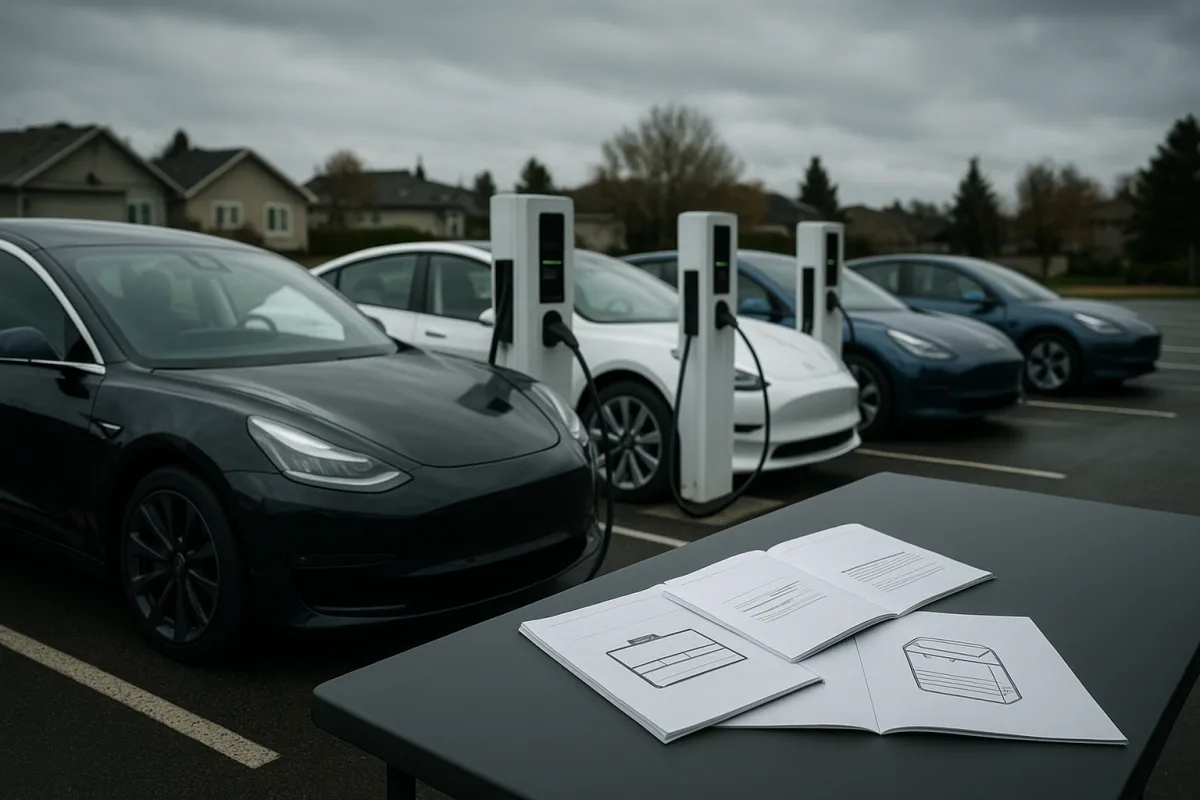
The shift is from range anxiety to ownership anxiety
The EV market is no longer defined mainly by whether electric cars can travel far enough. The new question is whether the charging network, warranty wording, insurance bill and resale value make sense once the novelty has worn off.
That is a real shift, not just a line manufacturers have adopted for brochures. BMW is chasing 450-mile range estimates, charging providers are adding thousands of fast-charge ports, and mainstream brands are using long battery warranties as a sales tool. [2][4][5][7]
Those developments are happening at the same time because the early-adopter phase is fading. Buyers now include people replacing ordinary family crossovers, company cars and commuter vehicles, people who are less interested in explaining battery chemistry to friends.
For that buyer, a claimed range figure matters only until the first long winter journey, public-charge queue or expensive bodyshop estimate. The useful EV is not necessarily the one with the biggest battery. It is the one that fits its owner’s mileage and charging reality.
Charging is growing, but it is not evenly useful
The U.S. had passed 250,000 public charging ports at roughly 81,000 locations by October 2026. That includes more than 73,000 DC fast-charging ports and more than 178,000 Level 2 ports. [2]
Those numbers are substantial, and the direction is clearly positive. More than 800 new DC fast-charging sites arrived in the second quarter of 2026, while the country exceeded 80,000 fast-charge ports during the third quarter. [2]
The catch is that national totals can be misleading when you are choosing a car. A driver with home charging in a well-served metro area experiences a completely different EV life from someone relying on public infrastructure in a rural county.
California alone accounts for around a quarter of U.S. charging stations, with 21,814 sites. [2] That concentration helps explain why ownership stories from Los Angeles or the Bay Area do not always transfer neatly to smaller cities or interstate routes elsewhere.
Tesla’s Supercharger network has roughly 38,000 DC fast-charge ports, while ChargePoint operates 48,998 stations, including 5,017 DC fast chargers and 83,427 Level 2 ports. [2] Those are encouraging figures, but connector access and charger reliability still matter more than logos.
A Level 2 unit is useful when the car will sit for hours at work, a hotel or a shopping centre. It is not a practical substitute for reliable DC charging if the car is regularly asked to cover long motorway distances.
Motor1’s report on iSeeCars data makes the geographical point clearly. San Francisco, Oakland and San Jose had 334 residents per public charger, while Louisville had 2,904 residents per charger. [5]
That gap changes the sensible battery size and even the sensible powertrain. In a charging-rich area, a smaller-battery EV can be a rational ownership choice. In a charger-poor area, a plug-in hybrid or efficient petrol car may remain the lower-stress answer.
Federal money should help, but it will not make the map uniform overnight. The Charging and Fueling Infrastructure Program has allocated $2.5 billion over five years for underserved rural, urban and tribal communities. [2]
For someone planning an EV purchase project, I would map regular journeys before signing anything. Check the chargers near home, work, family, holiday routes and the least convenient destination, then assume one of them will occasionally be occupied or faulty.
Longer warranties are becoming a competitive weapon
The warranty trend is more straightforward. Hyundai and Kia are using unusually long coverage to reduce the risk buyers associate with batteries, motors, electronics and expensive high-voltage repairs. [4][5]
Hyundai offers a five-year, 60,000-mile new-vehicle warranty and a 10-year, 100,000-mile powertrain warranty. Its hybrid and EV battery coverage also runs for 10 years or 100,000 miles. [4]
Kia’s comparable package includes five years or 60,000 miles of basic coverage, plus 10 years or 100,000 miles for the powertrain and EV battery. [5] Both brands include a battery capacity guarantee that requires remaining capacity above 70 percent.
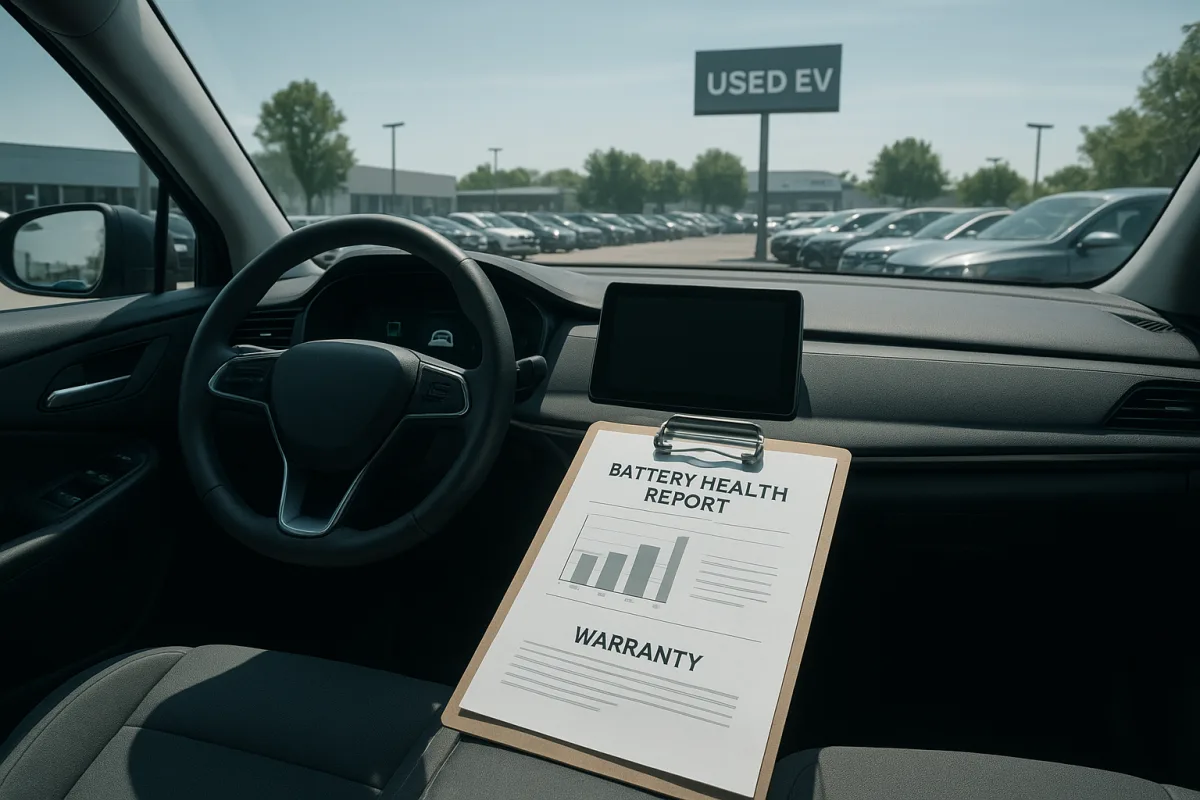
That 70 percent figure deserves more attention than the dramatic warranty duration. A battery warranty is not a promise that the car will retain its original range, and normal degradation is not automatically a claimable failure.
BMW and Volkswagen take the more conventional route. BMW’s EV coverage is four years or 50,000 miles for the vehicle, with eight years or 100,000 miles for the high-voltage battery and a 70 percent capacity threshold. [6]
Volkswagen offers the same four-year, 50,000-mile limited warranty and eight-year, 100,000-mile battery warranty. Its roadside assistance coverage is three years or 36,000 miles. [8]
Neither BMW nor Volkswagen warranty is poor by industry standards. They are simply shorter than Hyundai and Kia’s headline terms, which matters for buyers keeping a car beyond a typical three-year lease cycle.
Read the exclusions as carefully as the duration. Damage from accidents, corrosion, improper repairs, water intrusion and modifications can complicate claims, while tyres, brakes, trim wear and suspension components remain ordinary ownership costs.
This is where a long warranty changes the purchase decision rather than merely decorating an advert. A buyer intending to run an EV to eight years and 90,000 miles has more reason to value Hyundai or Kia coverage than a lessee changing cars at 36 months.
BMW is raising the range bar, but wait for final details
BMW’s incoming iX5 60 xDrive illustrates how quickly premium EV specifications are moving. BMW now projects an EPA range estimate of 450 miles, up from an earlier 435-mile target. [7]
That puts it alongside the 460-mile Cadillac Escalade IQ Luxury and 450-mile Lucid Gravity Grand Touring in the current long-range conversation. [7] It also makes the old assumption that every EV is inherently compromised on a long trip increasingly outdated.
The iX5’s projected range comes from a very large 144-kWh battery pack and 460-kW charging capability. BMW says it should charge from 10 to 80 percent in 22 minutes under suitable conditions. [7]
Those are impressive numbers, but they are not ownership numbers yet. The iX5 is not available in the United States as of October 2026, with an expected early-2027 launch and an anticipated starting price of $81,250. [1]
BMW has not publicly finalized U.S. iX5 warranty terms. Anyone presenting the existing BMW EV warranty as confirmed iX5 coverage is getting ahead of the evidence, because the production model’s documentation has not yet been released.
A prototype reportedly completed a 500-mile journey with estimated charge remaining for another 50 miles. That is interesting, but it is not the same as independent production-car testing through winter, high-speed driving, towing or repeated fast-charge use.
The iX5 suits a buyer who wants a large luxury SUV and regularly covers serious distances, assuming the final price and warranty work. It does not yet suit the buyer who needs a vehicle delivered this year or wants known depreciation data.
BMW ownership costs also need a sober look. BMW iX and i5 maintenance projections are about $4,373 over five years, roughly $875 annually, but depreciation estimates remain much larger than routine service costs. [6]
For the iX, projected five-year depreciation is about $47,683, leaving an estimated residual value of $28,642. [6] That is a reminder that avoiding oil changes does not make a heavy luxury EV cheap to own.
Volkswagen’s ID.4 is the more ordinary test case
The 2026 Volkswagen ID.4 is more relevant to the mainstream market because it is available now. The Pro starts at $39,995 and the Pro S at $44,495, before destination charges, taxes, registration, insurance and any home-charging installation. [8]
It suits the buyer who wants a midsize electric crossover without stepping into luxury-SUV pricing. The key attraction is familiarity: conventional five-door packaging, usable family space and a price that sits closer to well-equipped combustion crossovers.
The ID.4’s 4-year, 50,000-mile limited warranty and 8-year, 100,000-mile battery warranty are reasonable, but they do not match Hyundai and Kia on term length. [8] That difference is worth pricing into a long ownership plan.
There is a research gap here that buyers should not fill with assumptions. Publicly available data does not provide reliable 2026 ID.4 maintenance-cost or depreciation projections, so claims that it will be cheap to run long-term should be treated cautiously.
Volkswagen has not supplied a broad range of U.S. ID-series models for 2026 beyond the ID.4. Do not assume an overseas ID. model will arrive locally, carry the same specification, or share the same warranty.
What this means for an ownership project
The sensible EV project has become less about chasing the newest technology and more about controlling the unknowns. Start with charging, then warranty, then insurance and likely resale exposure, before comparing acceleration figures or touchscreen size.
Home charging remains the dividing line. If you can charge overnight at predictable electricity rates, an EV can be simple and cheap in day-to-day use. If every kilowatt-hour depends on public charging, the arithmetic and inconvenience change.
Get insurance quotes before ordering. EV premiums can sit 10 to 20 percent above comparable petrol cars, largely because battery protection, structural repairs and parts availability can make post-accident repairs expensive.
Used EV prices are falling, and some models now trade below $25,000. [3] That is good news for a buyer willing to accept reduced range and an older infotainment system, but it is less welcome for someone financing a new EV over a long term.
Leasing deserves proper consideration, particularly for premium EVs with uncertain residual values. BMW Financial Services passes the federal Section 30D credit to lessees, which can make a lease more attractive than a purchase even when cash buying looks simpler. [6]
The practical rule is to buy range only when your routes require it. A 450-mile iX5 may make sense for regular interstate mileage, while an ID.4 may suit a household with home charging and ordinary family journeys at far lower entry cost.
The market is improving in the ways that matter: more chargers, longer battery coverage and more choice at lower used prices. It is still uneven, though, and the best EV remains the one whose warranty and charging plan make sense after the first 60,000 miles.
Frequently Asked Questions
How is the electric vehicle market evolving in 2026?
The EV market in 2026 is moving beyond range anxiety toward concerns about charging infrastructure, warranty terms, insurance costs, and resale values. Buyers now include mainstream consumers replacing everyday vehicles, focusing on how well an EV fits their actual mileage and charging access rather than just battery size or range claims.
What are the current trends in EV battery warranties?
Battery warranties commonly cover 8 to 10 years or around 100,000 miles, with capacity guarantees ensuring the battery retains at least 70% of its original capacity. Hyundai and Kia lead with 10 years/100,000 miles coverage, while BMW and Volkswagen offer 8 years/100,000 miles warranties.
How does public charging availability affect EV ownership?
Public charging has expanded to over 250,000 ports nationwide, but availability is uneven, heavily concentrated in areas like California. This disparity influences whether a smaller-battery EV is practical or if a plug-in hybrid or gasoline vehicle remains a lower-stress option, especially in rural or charger-poor regions.
Which automakers offer the longest EV battery warranties?
Hyundai and Kia provide the longest battery warranties in 2026, covering 10 years or 100,000 miles with capacity guarantees. BMW and Volkswagen offer slightly shorter battery warranties of 8 years or 100,000 miles.
What costs beyond electricity should EV owners budget for?
EV owners should budget for insurance, which can be 10 to 20 percent higher than for comparable gasoline cars due to repair costs. Other expenses include tires, depreciation, and potential costs related to charging access and infrastructure reliability.
How we researched this
This article was assembled from 1 video source, 8 published articles, 8 cited references.
Nothing here is based on hands-on testing. Where a figure or finding appears, it belongs to the source cited beside it, and the writing says so rather than implying otherwise. Every source is listed below so you can check it.
Sources
Toyota Camry NUGGET vs BYD: Budget Junk or EV Killer? — Mighty Car Mods
Factory Performance is Just the Starting Line for the 550-HP Charger Scat Pack — Car and Driver
Mom, Dad, and Teenage Son All Charged in Alleged $3 Million Luxury Car Theft Ring — Road & Track
These 7 New Cars Have The Longest And Most Comprehensive Warranties — Jalopnik
The Best (And Worst) Cities For Owning An EV: Study — Motor1
The BMW iX5 Gets A Range Boost Ahead Of U.S. Launch — InsideEVs
MapQuest App Adds Support For Flock Cameras — CarScoops
Subaru’s New Hollow-Camshaft Patent Describes a Better Way to Lock Down Vibration — Car and Driver
Tesla 'Cannot Guarantee' Your Roadster Pre-Order Will Ever Be Delivered — InsideEVs
BMW Reveals All-New 2027 X5 and All-Electric iX5 SUVs - Kelley Blue Book
The U.S. Surpassed 250,000 EV Charging Ports. Is It Enough? | Cars.com
Used EV Prices Are Falling - Here's How They Compare to Gas Cars Now
Kia Warranty: Up to 10-Year/100,000 Miles | Available Best-in-Class Warranty Options | Kia
Watch Electric Vehicle Market and Warranty Trends on Youtube
Related Articles
Electric and Hybrid Vehicle Market Trends and Innovations
Explore electric and hybrid vehicle market trends, innovations, and practical ownership insights including small EVs, charging, and financing.
Rare and Classic Car Market Highlights and Trends 2026
Explore key trends, values, and stories in the rare and classic car market, including auction results and ownership insights for 2026.
Electric Vehicle Range Tests and New EV Developments
Explore electric vehicle range tests, efficiency, and new EV developments to understand real-world performance and ownership factors.
Electric Vehicle Pricing and Ownership Costs Explained
Explore electric vehicle pricing, ownership costs, tax credit impacts, and key maintenance tips to make informed EV buying decisions.