
Off-Road and Adventure SUV Innovations for 2027
Explore key off-road and adventure SUV innovations, including the Ford Bronco RTR, Skoda Kodiaq, and tyre choices for versatile use.
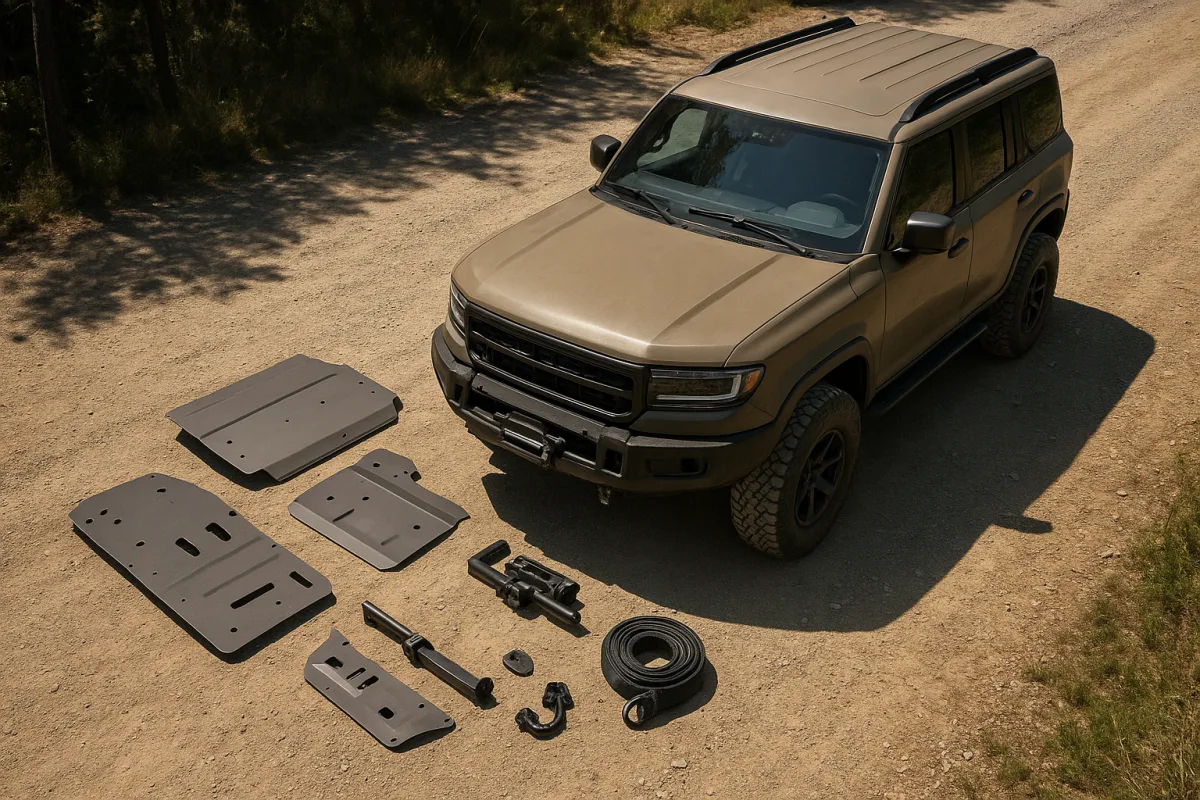
The shift is towards usable adventure vehicles, not simply more extreme ones
The off-road market is moving in two directions at once. One is the factory-built, mid-priced performance 4x4, represented by Ford’s forthcoming Bronco RTR. The other is the family SUV and tyre industry adapting ordinary road vehicles for occasional rough-road use.
That is a real shift because several parts of the market are arriving at the same answer. Ford is creating a Bronco between conventional trims and the expensive Raptor. Skoda is presenting the Kodiaq as a tow-and-explore family car. Tyre makers are selling stronger carcasses without assuming every customer wants a dedicated trail truck.
The important detail is that none of these products turns a commuter into a Baja racer. The useful trend is not limitless capability. It is better-targeted capability, with manufacturers recognising that most owners need a vehicle to work Monday to Friday as well as reach a muddy campsite on Saturday.
For anyone planning a project, that ought to be reassuring. The sensible build is increasingly supported by factory options and better tyre choices. It also means there is less excuse for fitting aggressive parts that make a vehicle tiresome for the other 95 percent of its life.
Ford’s Bronco RTR fills a gap, but wait for ownership evidence
Ford’s 2027 Bronco RTR is the clearest example of the new middle ground. Ford positions it as a factory-developed off-road Bronco rather than an appearance pack, with a wide-track HOSS 1.0 suspension, 33-inch tyres, off-road calibration and upgraded cooling. Ford also offers more serious hardware through available packages. [7]
The basic price is just over $50,000 before destination charges, while a fully equipped RTR is expected to remain below $60,000. That is materially below the 2026 Bronco Raptor’s $79,995 starting price before destination. [7] The gap matters because modifying a standard Bronco with quality suspension, wheels, tyres, armour and cooling hardware gets expensive quickly.
It is also a different proposition from simply buying a Raptor. The Raptor has the bigger visual footprint, 37-inch tyres, more suspension travel and a properly extravagant 418bhp character. Its official EPA rating is only 15mpg combined, with 15mpg city and 16mpg highway. [1]
Do not use those Raptor figures to predict the RTR’s fuel bill, though. Official economy figures for the RTR have not yet been released, and there is no accumulated owner data on servicing, tyre wear, insurance or real fuel consumption. Anyone claiming an exact running-cost advantage is guessing.
There is also conflicting early information around the RTR’s engine specification. Ford’s own preliminary material should be treated as the authority when final production specifications arrive, but the supplied independent research brief identifies the RTR as sharing the 3.0-litre twin-turbo EcoBoost V6 with the Raptor. Either way, wait for the final order guide before choosing wheels, tuning parts or recovery equipment around it.
What is more convincing than the engine argument is Ford’s intent. The RTR has been developed around high-speed dirt use, including cooling capacity and suspension tuning, rather than around a black-wheel package. That makes it more appealing than a dealer-built special, provided dealers do not erase the price advantage with mark-ups.
There are still practical questions that matter more at 60,000 miles than launch-day claims. How expensive will 33-inch and 35-inch replacement tyres be? How well will the dampers tolerate corrugations and winter road salt? Will the anti-lag and additional cooling add complexity? We do not know yet.
The realistic case for the Bronco RTR is therefore straightforward. It suits the buyer who genuinely wants a capable factory 4x4, expects to drive dirt roads and sand regularly, and does not want to spend Raptor money. It does not yet suit the spreadsheet buyer who needs proven maintenance and fuel-cost evidence.
The Kodiaq shows the other side of the adventure trend
At the opposite end sits the Skoda Kodiaq. Autocar’s sponsored assessment pitches it as an adventure SUV because it combines seven-seat practicality, towing ability, selectable four-wheel drive and useful cargo capacity, not because it is intended to crawl over boulders.
That distinction matters. A seven-seat Kodiaq has 340 litres of boot space with every seat in use, expanding to 745 litres with the rear seats folded. The five-seat version has 910 litres. Those are genuinely useful figures for wet walking gear, a dog, camping equipment or a week’s holiday luggage.
Autocar also highlights the Kodiaq vRS, with a 262bhp 2.0-litre turbocharged petrol engine, 400Nm and four-wheel drive. The fast version will reach 62mph in 6.4 seconds, but the more relevant detail is that the range offers petrol, mild-hybrid, diesel and plug-in hybrid choices. [3]
The PHEV’s quoted electric-only range is up to 76 miles, according to Autocar. That may be useful for short commuting, but it should not be confused with off-road range. A loaded vehicle, cold weather, motorway driving and towing all change the result substantially.
Prices need particular care because Kodiaq offers vary sharply by market, dealer and finance package. Autocar says the UK range starts at £39,390, while independent UK market listings identify an SE L 1.5 TSI e-TEC 150 at £31,991 against a £34,499 estimated market value. [3] Neither figure includes fuel, insurance, servicing or optional adventure accessories.
French finance advertising provides a good warning against reading a monthly payment as a vehicle price. Skoda France advertised a Selection 1.5 TSI Hybrid seven-seater at €449 per month for 37 months with a €449 initial payment, but that offer includes a stated €7,500 Skoda discount and is not comparable with a cash purchase. [2]
For an adventure project, the Kodiaq suits towing, snow, gravel tracks, forestry roads and the final few miles to a trailhead. It is a sensible choice for an owner whose priority is carrying people comfortably, then occasionally leaving the tarmac. It is not the answer for repeated deep ruts, rock steps or heavily cambered trails.
The long-term ownership cautions are familiar rather than dramatic. Higher-mileage four-wheel-drive examples with the seven-speed DSG can develop transmission problems around 70,000 miles, with reported repairs in the £800 to £1,800 range. Diesel 2.0 TDI versions can also suffer DPF and AdBlue faults, especially if used for repeated short trips. [3]
Suspension bushes, links and dampers also deserve a close inspection on a Kodiaq that has seen regular rough-road work. These are manageable repairs, but the vehicle’s strong resale value depends on avoiding a history that suggests it has been used beyond its design brief. [3]
Tyres are becoming the meaningful modification
The tyre market is where this trend becomes most useful to ordinary owners. A reinforced sidewall and appropriate tread pattern can change a vehicle’s confidence on loose surfaces more than cosmetic accessories ever will. It can also prevent a weekend ending with a sidewall cut.
The cost is that tougher tyres are rarely invisible in daily use. Independent research places mud-terrain road noise around 77 to 85dB, compared with roughly 71 to 74dB for all-terrain tyres. Mud-terrain life is commonly 20,000 to 40,000 miles, against 40,000 to 60,000 miles for all-terrain designs. [4]
The following prices are per tyre, not a fitted set. They exclude shipping, fitting, balancing, valve sensors, disposal fees, alignment and any suspension or wheel changes required to clear a larger size.
| Tyre | Price cited | What it suits |
|---|---|---|
| BFGoodrich Mud-Terrain T/A KM3 | $340.99 in LT285/70R17 | Dedicated mud, rocks and low-pressure trail use, not packed snow or a quiet commute. |
| Mickey Thompson Baja Boss M/T | $374.99 in LT285/70R17 | Owners wanting a tough three-ply mud tyre with more attention to wet-road behaviour than many rivals. |
| Yokohama Geolandar M/T G003 | $350.99 in LT285/70R17 | Mud and rock use where sidewall protection matters, with a claimed effort toward lower road noise. |
| General Grabber X3 | $365.99 in LT285/70R17 | Mud, dirt and rock routes, especially for buyers wanting snow and wet-weather siping without expecting winter-tyre performance. |
| Goodyear Wrangler Boulder MT | $354.99 in LT285/70R17 | Ford Bronco, Jeep Wrangler and Toyota Tacoma owners needing aggressive traction and three-ply puncture resistance. |
| Firestone Destination M/T2 | $345.99 in LT285/70R17 | Loose terrain and owners considering legal stud fitment for severe winter conditions. |
| BFGoodrich All-Terrain T/A KO2 | $220 to $310 | Mixed daily driving and trail use, with CoreGard sidewalls and a 50,000-mile treadwear warranty. [4] |
| Toyo Open Country A/T III | $200 to $290 | A quieter highway-biased adventure build that still needs durable all-terrain traction. [5] |
| Nitto Ridge Grappler | $249 to $279 | A compromise between all-terrain civility and mud-terrain appearance or traction. [5] |
| Falken Wildpeak A/T4W | $219 to $244 | Drivers seeking off-road ability without making on-road comfort a secondary concern. [5] |
| Yokohama Geolandar M/T G003 | $289 to $325 in broader market pricing | Mud-focused use, with the price varying substantially by size and retailer. [4] |
Jalopnik also includes a Hankook mud-terrain product in its seven-tyre roundup, but the supplied excerpt cuts off before identifying the exact model, size or price. It would be dishonest to invent a comparison for it from an incomplete extract.
The sensible shortlist is therefore shorter than the marketing would suggest. A BFGoodrich All-Terrain T/A KO2, Toyo Open Country A/T III or Falken Wildpeak A/T4W makes more sense for a Kodiaq or a daily-driven SUV. Their stated prices are lower, and their category better matches the vehicle’s normal workload. [4] [5]
A Bronco used on genuinely rocky trails may justify the BFGoodrich KM3, Goodyear Wrangler Boulder MT or Yokohama Geolandar M/T G003. But choose on the terrain you repeatedly drive, not the most dramatic terrain you imagine encountering once a year.
What this means for a new project
Start with the use case, then buy the vehicle and tyres to match it. A Kodiaq on sensible all-terrains, with a full-size spare and recovery points, is a strong family adventure setup. It will remain comfortable, economical relative to a body-on-frame 4x4, and easy to live with.
A Bronco RTR makes sense when rough terrain and faster desert-style tracks are central to the plan. It offers a more coherent factory base than assembling a budget Bronco from aftermarket invoices, but prospective owners should reserve judgement until production pricing and operating data arrive.
Finally, leave money for the unglamorous items. A tyre repair kit, compressor, proper jack, recovery strap, underbody inspection and regular alignment checks are worth more than decorative accessories. Puncture resistance reduces risk, it does not remove the need to carry a spare or know how to use it.
Frequently Asked Questions
What are the key innovations in off-road and adventure SUVs for 2027?
The 2027 off-road SUV market is shifting toward more usable adventure vehicles rather than extreme off-roaders. Ford’s Bronco RTR exemplifies this with factory-integrated desert hardware, including a wide-track HOSS 1.0 suspension and 33-inch tires, positioned between conventional trims and the more expensive Raptor. Meanwhile, family SUVs like the Skoda Kodiaq focus on towing, cargo capacity, and occasional rough-road use, supported by stronger all-terrain tires that balance on- and off-road performance.
How does the Ford Bronco RTR differ from the Bronco Raptor?
The Bronco RTR is priced just over $50,000 (fully equipped under $60,000), significantly less than the Bronco Raptor’s $79,995 starting price. It features a wide-track HOSS 1.0 suspension and 33-inch tires, designed for high-speed dirt use with upgraded cooling, but has less suspension travel and smaller tires than the Raptor’s 37-inch tires. The RTR shares the 3.0-liter twin-turbo EcoBoost V6 engine with the Raptor, but official fuel economy and running-cost data for the RTR are not yet available, so direct comparisons on efficiency or maintenance are premature.
Is the Skoda Kodiaq suitable for serious off-road use?
No, the Skoda Kodiaq is best treated as a towing and access-road SUV rather than a serious off-road vehicle. It offers seven-seat practicality, selectable four-wheel drive, and useful cargo space but lacks the capability to handle routine ruts, rocks, or deep mud like dedicated off-roaders. Its design prioritizes on-road comfort and handling, and it is prone to transmission and suspension issues under heavy off-road use.
What tyre options are best for SUVs used on and off-road?
All-terrain tires are recommended for SUVs that serve both daily driving and occasional off-road use because mud-terrain tires tend to be noisy, have harsher rides, and shorter lifespans. Examples include the BFGoodrich All-Terrain T/A KO2, which offers puncture resistance and a long treadwear warranty, and the Toyo Open Country A/T III, known for a quiet highway ride. Choosing all-terrain tires helps maintain usability and affordability for mixed driving conditions.
What should I budget for when building an adventure SUV?
Before investing in suspension lifts or other major modifications, budget for tires, wheel alignment, underbody protection, and recovery gear. These components are critical to ensuring the vehicle remains usable and affordable over time. Suspension and performance upgrades can be costly, but without proper foundational equipment, the adventure build may not deliver reliable or practical off-road capability.
How we researched this
This article was assembled from 1 video source, 2 published articles, 8 cited references.
Nothing here is based on hands-on testing. Where a figure or finding appears, it belongs to the source cited beside it, and the writing says so rather than implying otherwise. Every source is listed below so you can check it.
Sources
7 Puncture-Resistant Off-Road Tires That Say They Can Take Those Sharp Rocks Over There — Jalopnik
Ford Bronco Raptor Fuel Economy Rated At 15 MPG - CarsDirect
Best Tires for Lifted Trucks & Off-Road Builds in 2026 — PriceHacker
How to Choose the Best Offroad Tires: A No-Nonsense Buyer's Guide
2027 Bronco RTR: Specs, Features, and Everything You Need to Know
Watch Off-Road and Adventure SUV Innovations on Youtube
Related Articles
Ford 2027 Bronco Filson and Fathom EV
Explore Ford's 2027 Bronco Filson and Fathom EV, including specs, pricing, and innovations in EV platform and ownership experience.
Military-Inspired Off-Road SUVs
Explore military-inspired off-road SUVs like the Ford Bronco Filson, Defender Wolf II, and Land Cruiser with insights on ownership and performance.
2027 Off-Road and 4x4 Vehicles Comparison: Defender vs Ram
Compare 2027 off-road and 4x4 vehicles including the Land Rover Defender and Ram Power Wagon diesel for towing, performance, and ownership.
Acura 2028 Off-Road and Large SUVs: What to Expect
Explore Acura's 2028 off-road and large SUVs, including hybrid tech, release timelines, and how they fit into Acura's future lineup.