
Acura 2028 Off-Road and Large SUVs: What to Expect
Explore Acura's 2028 off-road and large SUVs, including hybrid tech, release timelines, and how they fit into Acura's future lineup.
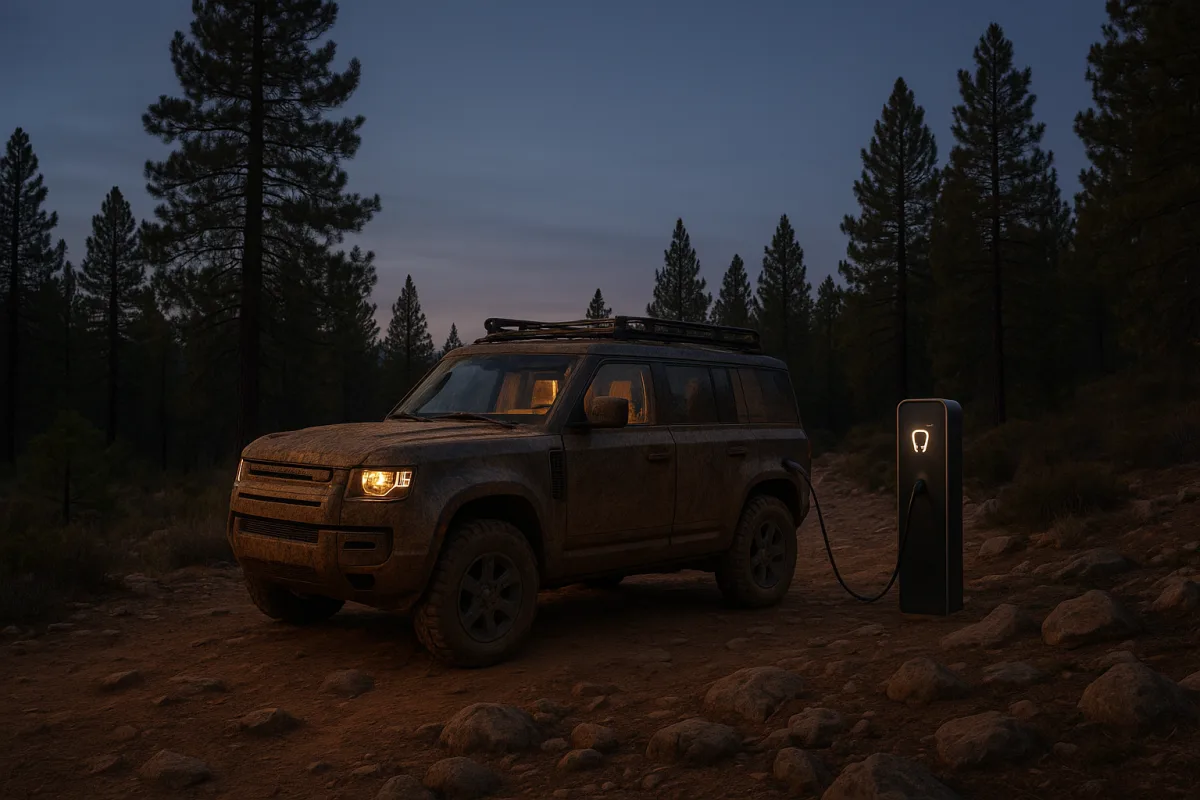
Acura is finally following the market, not leading it
The shift is plain: Acura is preparing to sell two kinds of SUVs it has largely avoided. One is a genuinely rugged, adventure-oriented model, and the other is a bigger-than-MDX family hauler with eight seats. [7]
That is more significant than another grille update or a new infotainment screen. Acura has spent years with the MDX as its largest practical answer, while rivals widened their ranges below, above, and beside their established three-row models.
The evidence is stronger than the usual rumor cycle. Acura’s own October 2026 business roadmap confirms an “adventure-ready” SUV arriving in early 2028, a new RDX Hybrid, and an eight-passenger flagship developed above the MDX. [7]
Independent reporting points in the same direction. Autoblog reports that Acura sees space for a Lexus TX rival, while Carscoops says the larger model is internally referred to as the Acura XL and expected in 2029. [2][3]
Those reports differ slightly on timing from other industry coverage, which has placed the larger Acura closer to 2030. That disagreement matters because Acura itself has not announced a sale date, a production location, or even the vehicle’s proper name.
For a buyer, the useful reading is not that a mystery flagship is coming. It is that Acura has identified two holes in its range: outdoor-image buyers who now leave for TrailSport, Wilderness, Overtrail, TRD Pro, or more serious off-road brands, and larger families outgrowing the MDX.
The rugged SUV is likely related to the Passport, but that is not confirmation
Acura calls the first new model “adventure-ready,” deliberately vague language that leaves room between a soft-roader with all-terrain tires and a properly protected, tow-rated vehicle. The official teaser shows a wheel and dirt, not underbody hardware. [7]
Several outlets expect a close relationship with the Honda Passport TrailSport. That makes commercial sense, since Honda and Acura already share platforms, engineering, factories, and many expensive components across their SUV lineups. [2][3]
The current Passport TrailSport is the obvious donor because it already has the visual stance and equipment theme Acura needs. Its 2026 starting price is $49,900, while the TrailSport Elite Blackout is listed at $55,100, before destination, tax, registration, dealer add-ons, financing, or insurance.
That does not mean the Acura will cost Passport money. Acura has released no price, trim structure, standard-equipment list, or destination charge for the 2028 adventure SUV, so any direct comparison is speculation rather than useful shopping advice.
The better question is how Acura differentiates it. A premium badge alone will not do much when Lexus offers off-road-themed Overtrail variants, Land Rover has decades of image equity, and even Hyundai and Kia have become comfortable selling loaded, outdoorsy crossovers.
A successful Acura version needs more than dark wheels, a skid-plate-shaped bumper, and a roof rack catalog. It needs sufficient tire clearance, a spare-tire strategy, meaningful protection underneath, cooling that survives towing, and software that does not become confused on loose surfaces.
Those are ownership details, not launch-event details. A vehicle can look convincing beside a tent, then prove expensive and irritating at 60,000 miles if its unusual tire size is costly, its accessory wiring is fragile, or its low-profile spare is unsuitable for back-country travel.
None of that is published yet. There are no confirmed approach or departure angles, ground-clearance numbers, tire sizes, drivetrain details, towing ratings, recovery points, or water-fording claims. Until Acura supplies them, this is an SUV plan, not an off-road specification.
The hybrid matters more than the styling package
Acura’s roadmap also confirms a new RDX using Honda’s two-motor hybrid system, making it the first Acura to use that setup. [7] The company also says it is developing a performance-oriented V6 hybrid system for future midsize products. [7]
Reporting around the new adventure SUV and large flagship connects both to that V6 hybrid program. Carscoops reports that Honda’s forthcoming V6 hybrid is intended for larger D-segment vehicles, while Acura’s own announcement establishes that electrified powertrains are central to the expanded lineup. [3][7]
There is a temptation to turn that into a spec sheet before one exists. Resist it. Acura has not confirmed output, torque, battery size, electric range, transmission arrangement, all-wheel-drive layout, curb weight, towing capacity, or EPA consumption for the new V6 hybrid.
That absence makes it impossible to calculate real fuel cost. The current gasoline 2026 MDX, with its 3.5-liter V6, is rated at 19 mpg city, 25 mpg highway, and 21 mpg combined. [6] A hybrid should improve on that, but “should” is not a budget.
The Hyundai Santa Fe Hybrid’s 41-mpg combined figure shows where buyers’ expectations are heading in the less-premium end of the three-row market. Acura’s larger, likely heavier V6 hybrid will not necessarily approach that number, particularly if towing and all-wheel drive are priorities.
What matters is whether Acura tunes its hybrid system for the way SUV owners use these vehicles. A family tow vehicle needs repeatable performance on long grades, usable low-speed control, cooling margin, and predictable brake feel, not simply a strong acceleration claim.
Hybrid ownership also needs time to mature before anyone can call it cheap to run. There are no published service schedules, replacement-part prices, warranty terms beyond normal future expectations, battery repair procedures, or dealer technician experience for Acura’s forthcoming V6 hybrid.
That is not a criticism of hybrid technology itself. It is simply the distinction between a drivetrain announcement and a long-term ownership record. Anyone who has paid for an out-of-warranty electronic module knows that “Honda-derived” is reassuring, not an itemized repair estimate.
The Acura XL is aimed squarely at the Lexus TX
The bigger story may be the eight-passenger SUV. Acura says the model will be its largest ever and is intended to meet growing premium demand for family-friendly vehicles. [7] That is corporate wording, but the competitive target is easy to see.
Autoblog identifies the Lexus TX as the key rival, and Carscoops likewise reports that Acura’s planned XL is positioned to challenge it. [2][3] The TX is important because it offers a more useful packaging answer than many traditional luxury three-row SUVs.
The current MDX is a seven-seat midsize SUV, and its third row is adequate for occasional use rather than a place most adults will volunteer to occupy. An eight-passenger Acura implies a different mission: school runs, airport trips, grandparents, friends, and luggage all at once.
That segment is already crowded. The Genesis GV80 starts at $57,700, while the Infiniti QX80 can move well beyond that, with one tested example listed at $106,955. [4] The price spread shows why “premium three-row” is not a single market.
At one end, buyers want a near-luxury family vehicle with sensible running costs and enough warranty support to reduce risk. At the other, they want a large statement vehicle with lavish materials, a big engine, and a monthly payment that bears little relation to practicality.
Acura’s traditional opportunity is the middle: more polished than a mainstream Honda, less financially theatrical than an expensive full-size luxury SUV. The risk is that the middle has become much harder to own, because buyers now expect large screens, premium audio, assisted driving, captain’s chairs, and hybrid economy together.
The Lexus TX has found an audience because it answers some of those practical demands directly. Lexus sold 28,112 TX models in the first half of 2026, a meaningful signal that the category is not merely a product-planning spreadsheet exercise. [2]
Acura cannot simply enlarge the MDX and expect that sales response. The XL will need genuinely useful access to the third row, sensible cargo space with all seats occupied, and a cabin that does not force families to choose between passengers, prams, coolers, and sports equipment.
Why this is happening now
The timing reflects Acura’s narrow current lineup as much as it reflects broader SUV demand. The brand has the Integra, ADX, and MDX, while the RDX is scheduled to return in 2028 as a redesigned hybrid model. [7]
That leaves a conspicuous gap above the MDX and no dedicated rugged offering. Acura has not had an off-road-focused SUV since the SLX era, a model remembered more for its rarity than for establishing a lasting segment within the brand. [7]
The wider market is also leaning toward Asian and Korean manufacturers, particularly where hybrids and fuel efficiency are concerned. Detroit brands hold just over 36 percent of the U.S. market, while Asian and Korean brands account for more than half, according to the market context behind Acura’s move.
Acura’s response is logical: add hybrids, add body styles where it currently has none, and use Honda’s scale rather than starting from a blank page. It is a lower-risk product plan than attempting a low-volume halo car or an all-electric SUV before buyers settle on what they want.
For someone planning a purchase, though, the logic behind a future model is not a reason to delay indefinitely. If you need a three-row SUV in the next two years, the Acura XL is not a product you can test, price, insure, or place in a service bay.
The same applies to the adventure SUV. There is no information yet on financing programs, insurance premiums, residual values, accessory availability, or dealer allocations. Those are the things that decide whether a rugged crossover is manageable after the showroom excitement has faded.
What to watch before placing any deposit
The first meaningful release will be the mechanical specification, not the reveal photographs. Look for the engine designation, hybrid architecture, battery warranty, curb weight, official towing limit, wheel and tire sizes, and whether a full-size spare is standard.
Then wait for EPA ratings and trim-by-trim pricing. A favorable combined mpg number means little if the desirable model requires expensive low-profile tires, premium fuel, a costly maintenance plan, or options bundled into an upper trim that pushes the monthly payment beyond competitors.
For the large SUV, scrutinize the third-row dimensions and cargo volume with every seat in use. Brochures frequently emphasize maximum cargo capacity with rows folded, which tells a family of six almost nothing about whether luggage fits on a holiday trip.
Finally, give the first model year time. Acura’s existing reputation and Honda engineering resources are useful starting points, but a new V6 hybrid and a new flagship SUV will establish their own maintenance history. The sensible ownership plan is to let warranties, service data, and parts pricing become real before treating either one as a known quantity.
Frequently Asked Questions
What new off-road SUVs is Acura launching in 2028?
Acura plans to launch an "adventure-ready" SUV in early 2028. This model is expected to be rugged and off-road capable, though specific details such as its name, price, and final specifications have not been released. It is likely related to the Honda Passport TrailSport but will feature premium-brand equipment.
When will Acura release its large eight-passenger SUV?
Acura's larger eight-passenger SUV, tentatively called the Acura XL, is expected around 2029. However, the company has not confirmed an official sale date, production location, or final specifications for this model.
How does Acura's 2028 adventure-ready SUV compare to the Honda Passport TrailSport?
The 2028 Acura adventure SUV is expected to share a close relationship with the Honda Passport TrailSport in terms of platform and engineering. However, Acura has not released pricing or equipment details, so direct comparisons are speculative. Acura aims to differentiate its model with premium features beyond the TrailSport's offerings, but specifics are not yet available.
What hybrid technology will Acura use in its upcoming SUVs?
Acura plans to introduce a new V6 hybrid powertrain for its 2028 adventure-ready SUV. No technical specifications, such as horsepower, battery capacity, or fuel economy, have been disclosed at this time.
What features are expected in Acura's new large and off-road SUVs?
Details on features are limited, but the adventure-ready SUV is expected to have off-road capabilities such as sufficient tire clearance, meaningful underbody protection, and towing-capable cooling systems. The larger eight-passenger SUV will serve as a flagship model above the MDX, targeting families needing three rows of seating. Specific equipment lists and pricing have not been announced.
How we researched this
This article was assembled from 6 published articles, 7 cited references.
Nothing here is based on hands-on testing. Where a figure or finding appears, it belongs to the source cited beside it, and the writing says so rather than implying otherwise. Every source is listed below so you can check it.
Sources
Acura’s Developing an Off-Road ‘Adventure Ready’ SUV and Large Three-Row SUV: TDS — The Drive
Acura Confirms Three New SUVs, Including Adventure-Ready and Three-Row Models — Road & Track
GM Defense Is Making a Driverless Silverado-Based Military Vehicle — Car and Driver
Acura Promises Three New SUVs, Including An 'Adventure-Ready' Model — Motor1
Lia Block’s First ARA Championship Was Just a Single Power Stage Away — Road & Track
Acura’s New ‘Adventure-Ready’ SUV Could Resemble Honda’s TrailSports — Car and Driver
Acura Sees Room for a Bigger SUV to Rival the Lexus TX - Autoblog
Acura Plans A Bigger SUV Than The MDX And Is Calling It The XL | Carscoops
I drove the Infiniti QX80 for a week - here's how it compares to other 3-row SUVs I've tested
Acura Shares Business Roadmap: Includes Three New Models Beginning with Adventure-Ready SUV in 2028
Related Articles
New Hybrid Off-Road SUVs: 2026-2027 Models and Features
Explore new hybrid off-road SUVs for 2026-2027, including fuel economy, AWD features, and suitability for family and light off-road use.
2027 Hybrid Pickup Trucks and SUVs
Compare the 2027 Lincoln Corsair hybrid and Volkswagen Amarok plug-in hybrid pickups and SUVs on performance, ownership, and maintenance.
2027 New SUV and Pickup Models: Features and Ownership Guide
Explore 2027 new SUV and pickup models with insights on performance, ownership costs, maintenance, and driving experience.
Jeep Wrangler Rubicon vs Family SUVs
Compare Jeep Wrangler Rubicon with Hyundai Palisade and Honda Pilot for off-road capability, clearance, maintenance, and real-world use.