
Porsche Pricing and Ownership Challenges Explained
Explore Porsche pricing, dealer allocations, and financing to understand true ownership costs beyond MSRP.
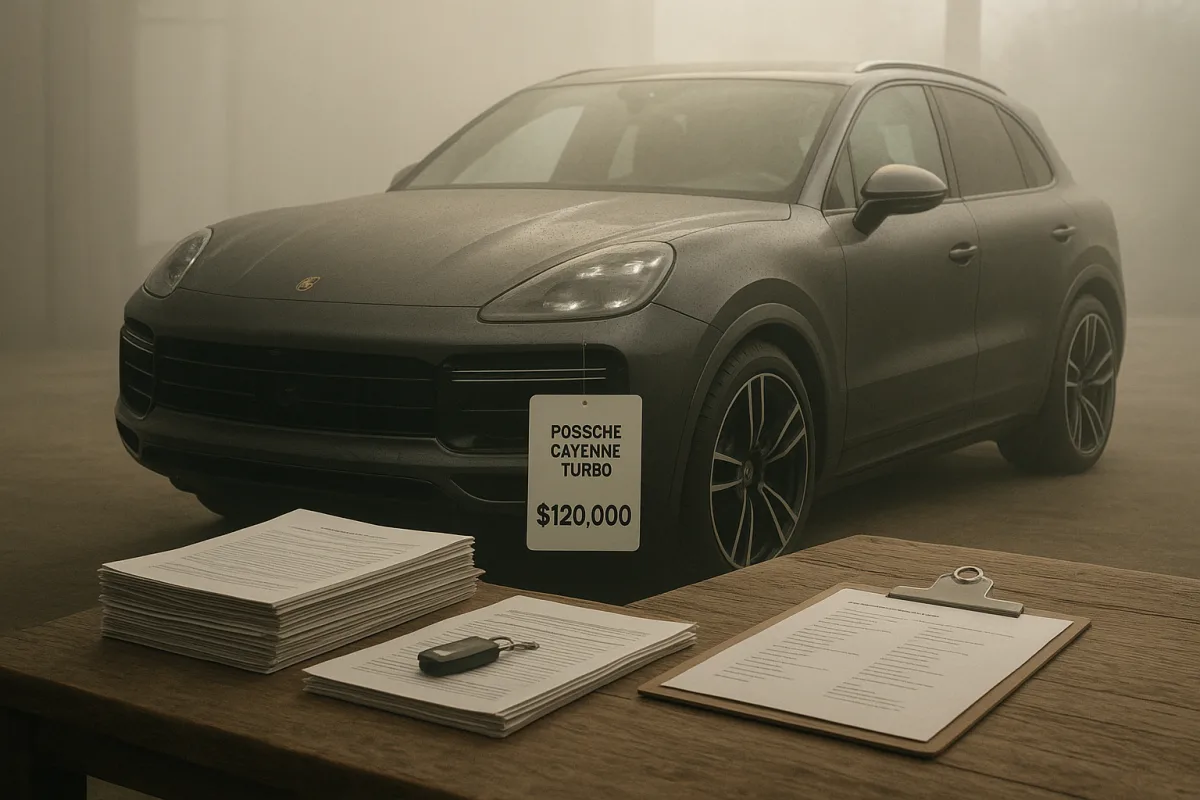
Porsche’s Real Price Problem Is Not the Sticker
The number that explains the new Porsche: transaction price
The useful number is no longer MSRP. It is transaction price: the total cost required to get the particular Porsche you want, configured as you want it, from a dealer willing to sell it to you.
That distinction sounds obvious, but it explains much of Porsche’s changing identity. The old appeal was expensive, certainly, but legible. You saved, chose a car, specified it, and accepted that some options were indulgent.
The newer model has layers. There is the published base price, the specification price, the dealer’s actual inventory price, the finance cost, and, for limited models, the less visible cost of proving you are worth allocating a car to.
Ideal, the enthusiast channel whose presenter owns two Porsches, frames this as Porsche becoming more status-conscious. That is overstated if applied to every model, but the underlying complaint has substance: ordinary Carreras remain buyable, while GT cars can become relationship-driven products.
That is a different ownership proposition from simply being expensive. A 911 has always been a professional-class purchase, not a cheap enthusiast secret. But a buyer who can afford a car should not necessarily have to buy several other cars first.
MSRP is the least useful Porsche number
The Porsche Cayenne Turbo Electric is a good illustration. Porsche’s official base MSRP is $163,000, but current dealer listings cited in the research brief start around $176,780 and run to roughly $199,670 with equipment and fees. [11]
That extra $13,780 to $36,670 is not necessarily a markup. It can be paint, wheels, interior trim, assistance systems, charging equipment, destination, documentation fees, and the sort of options that are easy to add one click at a time.
The Porsche Macan Turbo Electric makes the same point at a lower rung. Its $112,700 base MSRP becomes roughly $128,530 to $149,920 in real listed examples once equipment and fees appear. [12]
Neither number includes registration, sales tax, insurance, home-charging installation, electricity, tyres, or depreciation. It also does not tell you whether the dealer has that particular car in stock, or whether you actually want its specification.
Carwow’s drag-race film muddles this issue by referring to a “KN Turbo EV.” Porsche does not sell a model under that name as of October 2026. The relevant electric SUVs are the Cayenne Turbo Electric and Macan Turbo Electric.
That correction matters because modern Porsche names now carry huge financial weight. A Turbo badge can mean an emotionally compelling flagship, but the difference between base price and the car people actually order is usually much larger than the brochure suggests.
How allocation becomes part of the price
With a Cayenne or Macan, the transaction-price problem is mostly about equipment and dealer stock. With a Porsche 911 GT3, the more complicated issue is allocation, the dealer’s limited right to order or deliver a scarce model.
An allocation is not merely a place in line. Dealers generally decide which customers receive their limited build slots. Automonitor reports that GT3 access can favor customers with $150,000 to $300,000 in prior Porsche purchases. [2]
That prior spend is not a formal surcharge printed on the window sticker. It is more like an informal membership fee, paid through previous cars, service loyalty, repeat business, and a dealer’s confidence that the buyer will not immediately flip the car.
A buyer may therefore face two entirely different prices for the same GT3. One is the factory invoice and options list. The other is the effective price, including prior purchases or a used-market premium, needed to get one now.
This is why enthusiasts are increasingly irritated by the brand’s luxury positioning. Porsche can reasonably build limited cars in limited numbers. The uncomfortable part is when a long-term enthusiast with cash is less attractive than a buyer with a stronger purchase history.
Dealer relationships matter beyond the top-end cars. Quintegia’s 2026 automotive customer study found that 74 percent of customers identify more with dealerships than with the manufacturer itself. [3] For Porsche, that makes the retail network part of the product.
The relationship can be positive. A good dealer can source parts, explain warranty decisions, keep service history tidy, and help a serious owner get the right car. It becomes harder to defend when supply is used to reward loyalty selectively.
Carscoops reported that a Miami Porsche retailer filed a $300 million lawsuit in late 2025, alleging that Porsche pressured it to build a standalone facility and restricted vehicle supply after it refused. [1] Those are allegations, not proven findings.
Still, the case illustrates the tension. Porsche’s pursuit of a more exclusive retail image does not affect only wealthy customers seeking halo cars. It also affects the independent dealer relationships that ordinary owners rely on for servicing and future purchases.
Finance can hide a price problem, not solve it
The second misunderstood number is the monthly payment. Porsche Downtown LA promotes the familiar 20/4/10 guideline: 20 percent down, a four-year term, and payments no higher than 10 percent of gross monthly income. [13]
Use the Cayenne Turbo Electric’s $163,000 MSRP as a clean example. A 20 percent down payment is $32,600, leaving $130,400 to finance before tax, registration, options, or add-ons such as warranties and wheel protection.
Specialist lenders may offer terms up to 144 months, or 12 years, and well-qualified buyers in 2026 may see rates around 6.0 to 9.5 percent. [4] That is where a car becomes deceptively affordable on paper.
At 6 percent over 12 years, financing $130,400 works out at roughly $1,274 a month and about $53,000 in interest. At 9.5 percent, it is roughly $1,515 a month and nearly $88,000 in interest.
Those calculations exclude tax and the realistic options that push the purchase price well above MSRP. They also assume the buyer’s credit remains strong enough to secure those rates, which generally means a FICO score above 740 for the favorable end. [4]
The danger is not that long finance is inherently immoral. It is that it separates the monthly payment from the ownership risk. The car may depreciate while the loan balance falls slowly, especially if electric-SUV values weaken faster than expected.
The Week has described the wider market as a rise in “permanent car debt,” where lengthening terms normalize loans that outlast sensible ownership cycles. [5] In a Porsche context, that is especially risky because insurance and consumables remain premium-car expenses.
The coming sports cars, and who they actually suit
Porsche has confirmed a 2027 Porsche 911 GT3 S/C, an open-top manual model with a naturally aspirated 4.0-liter flat-six making 502 horsepower and 331 lb-ft. [14] Porsche had not published a price in the supplied material.
The GT3 S/C suits the buyer who values manual shifting and open-air use over maximum lap-time efficiency. It is not a sensible commuter-value proposition, and it will likely be subject to the allocation dynamics surrounding other desirable GT 911s.
The 2027 Porsche 911 Challenge is a different thing entirely. It is a customer-motorsport car derived from the 911 GT3 road car, fitted with racing safety equipment for professional competition. [15] No public retail price is supplied.
That Porsche 911 Challenge suits professional racers and properly funded track competitors, not someone looking for a fast road car. Its cost is not limited to the purchase: transport, entries, tyres, brakes, crew support, damage, and track time dominate quickly.
Porsche has also confirmed a rear-wheel-drive, six-speed-manual Porsche 911 Carrera S for North America, offered in coupe and cabriolet forms from August 2026. [16] Porsche had not announced a price in the supplied information.
For an owner who wants to drive rather than collect, the manual Carrera S may be the most important new Porsche. It should deliver much of the interaction people want from a special 911 without requiring the track-focused compromises of a GT3.
The electric Porsche 718 Boxster and Porsche 718 Cayman replacements are confirmed for 2027 production, according to TechTimes’ reporting on comments from Porsche’s chief executive. [10] Prices, range, battery specifications, and service schedules are not yet confirmed.
Those electric 718 models suit an entry-level sports-car buyer willing to accept electric propulsion but still wanting a compact Porsche rather than an SUV. They may eventually restore a lower sports-car rung that disappeared when combustion 718 production ended.
Porsche’s Sportwagenschmiede ’35 plan also includes a mid-engined super sports car positioned above the 911. That is a strategy statement, not a released electric supercar. There is no confirmed launch date, base price, battery specification, or service-cost record.
It would be irresponsible to invent a running-cost figure for it. Existing 911 data gives only a rough reference: VinExposed estimates average 911 maintenance at $1,072 annually, while Edmunds estimates five-year insurance for a 2026 911 Targa 4S at about $8,023. [7] [8]
Electric cars generally need less routine maintenance, since there are no oil changes, spark plugs, or exhaust systems. But Kiplinger notes that EV insurance can be 10 to 49 percent higher because battery, electronic, and collision repairs are costly. [9]
I have not driven or owned these new models, and neither a launch event nor a drag race can answer the questions that matter at 60,000 miles. Until owners accumulate real mileage, the electric supercar’s battery durability, tyre spend, insurance exposure, and repairability remain unknown.
Frequently Asked Questions
Why is Porsche's transaction price higher than the MSRP?
The transaction price includes more than the base MSRP; it accounts for added equipment, options, destination and documentation fees, and dealer-specific inventory pricing. For example, the Cayenne Turbo Electric has a base MSRP of $163,000, but real-world listings range from about $176,780 to $199,670 due to these factors. Thus, the MSRP is only a starting point, not the final purchase price.
How does Porsche allocation affect the price of a 911 GT3?
Allocation limits the number of 911 GT3 models dealers can order and deliver, and dealers often prioritize customers with $150,000 to $300,000 in prior Porsche purchases. This creates an informal "membership fee" through loyalty and previous spending, which can effectively raise the price for buyers without that history. As a result, two buyers may face very different effective prices for the same GT3 model.
What are the hidden costs of owning a Porsche?
Beyond the purchase price, owners face costs such as registration, sales tax, insurance, home-charging installation for electric models, electricity, tires, and depreciation. These expenses are not included in the MSRP or dealer listing prices but significantly impact total ownership costs.
How does financing impact the total cost of a Porsche?
Financing a Porsche often involves long loan terms, sometimes up to 12 years, which can make monthly payments manageable but add tens of thousands of dollars in interest. Well-qualified buyers typically need a credit score of 740 or higher and may face interest rates between 6.0% and 9.5%. Extended loans also expose buyers to depreciation risks over time.
What challenges do Porsche buyers face with dealer allocations?
Buyers of limited models like the 911 GT3 often must build strong relationships with dealers and demonstrate prior Porsche spending to secure allocations. This system can disadvantage new buyers with cash but little purchase history, making access to certain models more about dealer loyalty than just price. Additionally, dealer tensions over supply and showroom requirements have led to legal disputes, indicating ongoing challenges in the allocation process.
How we researched this
This article was assembled from 2 video sources across 2 channels, 3 published articles, 16 cited references.
Nothing here is based on hands-on testing. Where a figure or finding appears, it belongs to the source cited beside it, and the writing says so rather than implying otherwise. Every source is listed below so you can check it.
Sources
This 245-HP Farm Tractor Just Set a Lap Record at the Red Bull Ring — The Drive
GM Defense Turns A Chevrolet Silverado Into A Driverless Logistics Truck — Motor1
California EV Rebate Applies Almost Exclusively To The Mustang Mach-E — Jalopnik
The ‘Ferrarification’ Of Porsche Triggered A $300 Million Dealer Lawsuit | Carscoops
Where Can I Buy a Porsche 911 GT3? Allocations, Dealer Markups & Markets | Automonitor
Automotive Customer Study: Dealers Carry More Weight Than Brands
Supercar Buyers Guide 2026: Everything You Need to Know Before Buying — Supercars.Lifestyle
EV Supercar Ownership in 2026: Real Costs, Range & Buying Guide | AutoEdgeView
Porsche 911 Maintenance & Repair Cost — Average Per Year | VinExposed
Used EV Prices Are Falling - Here's How They Compare to Gas Cars Now
Porsche CEO Confirms Electric 718 for 2027; No New Sports Car Until Late Next Year
New Porsche Cayenne Turbo Electric for sale at Porsche Arlington
New Porsche Macan Turbo Electric for sale at Porsche Fremont
Porsche Financing Tips: Using the 20/4/10 Rule | Porsche Downtown LA
The new 911 Challenge – for professional motorsport without compromise - Porsche Newsroom USA
Three pedals. Six speeds. Endless smiles. The manual 911 Carrera S returns. - Porsche Newsroom CAN
Watch Porsche’s Changing Brand Identity and New Models on Youtube
Also from the sources
Related Articles
Electric Vehicle Pricing and Ownership Costs Explained
Explore electric vehicle pricing, ownership costs, tax credit impacts, and key maintenance tips to make informed EV buying decisions.
Porsche 911 Used Value, Performance, and Racing Heritage
Explore Porsche 911 used value, performance differences, ownership costs, and its rich racing heritage for informed buying decisions.
Electric and Hybrid SUV Comparison
Compare electric and hybrid SUVs with a detailed look at Tesla Model Y and Toyota RAV4 PHEV performance, ownership, maintenance, and driving experience.
High-Performance Exotic Car Ownership
Explore high-performance exotic car ownership costs, maintenance, modifications, and financing to make informed decisions about your dream vehicle.