
Porsche 911 Used Value, Performance, and Racing Heritage
Explore Porsche 911 used value, performance differences, ownership costs, and its rich racing heritage for informed buying decisions.
The quick list
- Best overall: 2017 to 2019 Porsche 911 Carrera, for the buyer who wants a usable, lower-anxiety 911 rather than the most romantic engine.
- Best value: 2013 to 2016 Porsche 911 Carrera S, for the driver willing to pay for a thorough inspection to get the last naturally aspirated Carrera experience.
- Best for track-only 911 buyers: Manthey Racing 911 GT3 Cup MR 30, for funded racers wanting a rare, 560 PS Cup car rather than a road car.
- Best for GT4 racing: Manthey Racing 718 Cayman GT4 RS Clubsport MR 30, for racers who want a mid-engined track car at a lower entry price than the MR 30 911.
The decision is not really “which 911?”
For most people, this choice begins and ends with a used 991-generation Carrera. The Manthey anniversary cars are fascinating and historically important, but they are track-only competition machines priced beyond normal ownership logic.
A used 991 asks a more practical question: do you want the earlier naturally aspirated engine, or the later turbo engine and a cleaner mechanical risk profile? The answer matters more than the badge on the decklid.
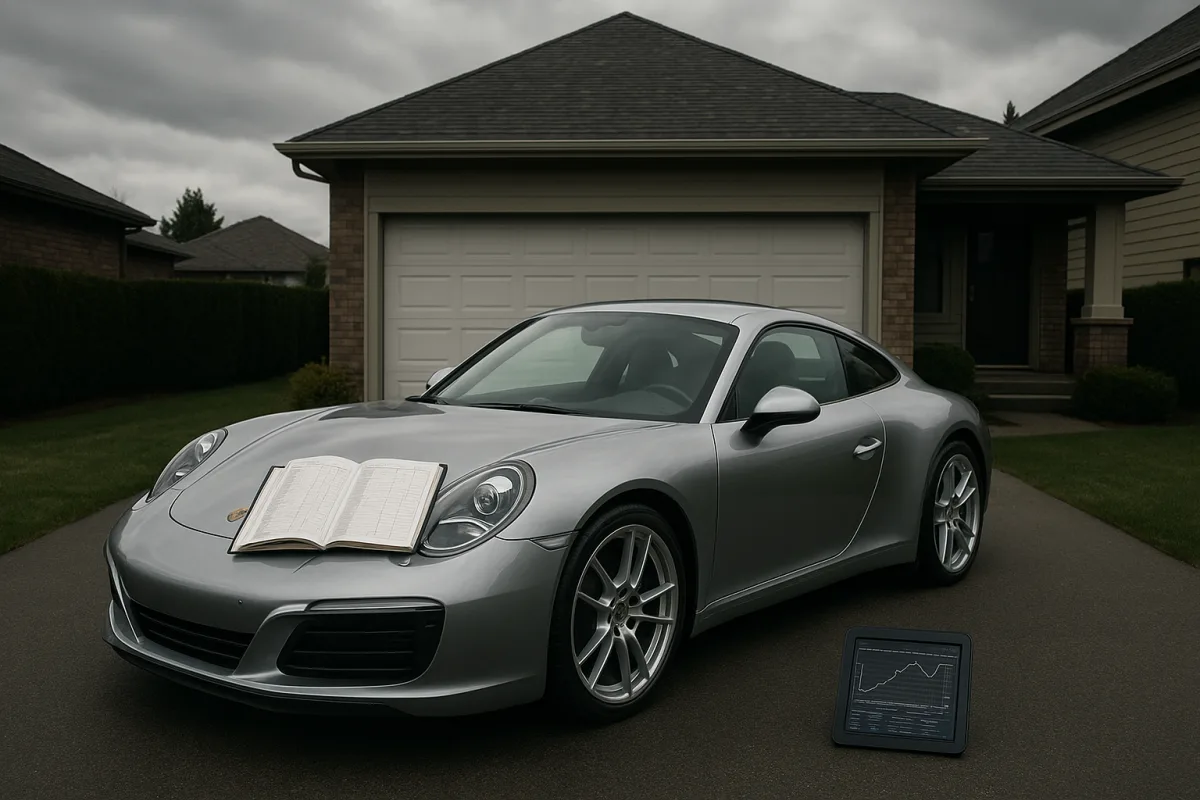
CarSearch.Pro puts the October 2026 median asking price for a 991 at $83,900, across roughly 1,000 active listings and sales, with a $71,998 to $95,980 range. [1] That is real money for a decade-old sports car.
It is also nearly double the price of a fully loaded 2026 Honda Accord Touring at $40,645. The 991 may have absorbed its worst depreciation, but calling it “Honda Accord money” is not supported by current market data.
The reason it remains compelling is not a launch-control number. It is that the 991 is modern enough to use, widespread enough for independent Porsche specialists to understand, and old enough that condition matters more than option-list theater.
Comparison table
| Option | Typical price | Engine and layout | What it does best | Main trade-off | Ownership or use case |
|---|---|---|---|---|---|
| 2013-2016 Porsche 911 Carrera S, 991.1 | Used 991 market median: $83,900, all 991 variants [[1]](https://carsearch.pro/market/991-911/?utm_source=openai "Porsche 911 (991) Price Guide 2026 — Values, Prices & Market Data | CarSearch.Pro") | Rear-engine, 3.8L naturally aspirated flat-six, 400 hp | High-rev response and traditional Carrera sound | Bore-scoring risk demands inspection |
| 2017-2019 Porsche 911 Carrera, 991.2 | Used 991 market median: $83,900, all 991 variants [[1]](https://carsearch.pro/market/991-911/?utm_source=openai "Porsche 911 (991) Price Guide 2026 — Values, Prices & Market Data | CarSearch.Pro") | Rear-engine, 3.0L twin-turbo flat-six, 370 hp | Everyday torque, later engine design, usable pace | Less distinctive sound and induction character |
| Manthey Racing 911 GT3 Cup MR 30 | $580,000 in the US, including duties and freight, before running costs [[5]](https://www.manthey-racing.com/porsche-911-gt3-cup-mr-30?utm_source=openai "Porsche 911 GT3 Cup MR 30 | Manthey") | Rear-engine, 4.2L racing flat-six, 560 PS, sequential six-speed | GT3-class customer racing and serious circuit work | Track-only, 15 built, expensive to operate |
| Manthey Racing 718 Cayman GT4 RS Clubsport MR 30 | $390,000, before track support and running costs [[5]](https://www.manthey-racing.com/porsche-911-gt3-cup-mr-30?utm_source=openai "Porsche 911 GT3 Cup MR 30 | Manthey") | Mid-engine, 4.0L naturally aspirated flat-six, 493 hp, PDK | GT4 competition, lower purchase price, Cayman balance | Also track-only, 15 built, no road usability |
Used 991: the ownership case
The 991 ran from the 2012 model-year launch through 2019, and it was a meaningful usability step over the 997. The wheelbase grew, the cabin became less cramped, and the car became calmer at speed.
That does not mean it became numb. It means it stopped asking its driver to manage every old-school rear-engine trait on an ordinary wet road. For a buyer covering real miles, that distinction is worth more than a brochure claim.
The 991.1 cars, sold broadly from 2013 through 2016, use naturally aspirated 9A1 flat-sixes. The Carrera has a 3.4-liter engine with 350 hp, while the Carrera S gets 3.8 liters and 400 hp.
Ideal’s 991 guide makes the useful point that these are not merely early and late versions of one car. The 991.1 is the rev-hungry choice, building power toward a 7,800-rpm redline rather than delivering its best shove at low revs.
The 2017 facelift brought the 991.2 and its 9A2-series 3.0-liter twin-turbo engines. Output rose to 370 hp in the Carrera and 420 hp in the Carrera S, but the bigger change on public roads is torque from roughly 1,700 rpm.
That makes the 991.2 easier to drive quickly without working it hard. It is the quicker everyday car, particularly when passing, leaving junctions, or carrying two people and luggage across a long route.
There is no need to pretend the turbo motor sounds as special. The earlier engine has the more memorable top end, and that is why a sound 991.1 Carrera S will continue to attract buyers who value character over outright ease.
The failure points that decide a purchase
No 991 buyer should lose sleep over the intermediate shaft bearing, or IMS, issue associated with some older water-cooled 911 generations. The 991 has no IMS shaft, so that particular internet horror story does not apply. [3]
The early car does have a more relevant concern: bore scoring. Porsche specialists and buyer guides advise checking 991.1 cylinder walls with a borescope before purchase, particularly where service history suggests repeated short journeys or poor oil-change discipline. [3][4]
A seller saying the engine “sounds fine” is not evidence. A proper pre-purchase inspection should include cold-start behavior, diagnostic scans, oil leaks, suspension condition and a cylinder inspection where the specialist considers it appropriate.
The 991.2’s revised engine architecture is generally the lower-anxiety route. That is not a guarantee against costly faults, and it should not excuse skipping inspection, but it is a rational reason to favor a later turbo Carrera.
PDK servicing is another line item buyers often avoid discussing until after the purchase. Car Collector International places PDK service at four-year intervals and estimates $1,500 to $2,500, depending on location and provider. [3]
A manual avoids PDK fluid-service concerns but introduces its own expensive wear items, chiefly the clutch and dual-mass flywheel. Neither transmission is automatically cheaper, so buy condition and records rather than a gearbox ideology.
Stuttcars estimates routine annual maintenance at $2,000 to $4,000, insurance at $2,000 to $4,500, fuel and miscellaneous spending at $1,500 to $3,000, plus occasional repairs of $1,000 to $2,500. [2]
That produces a realistic annual ownership band of $6,000 to $12,000 before depreciation, financing, tyres for aggressive use, track days, or an unexpected major repair. Major engine rebuilds are uncommon, but uncommon is not the same as impossible. [2][3]
Financing also deserves more skepticism than dealership monthly-payment language allows. Used-Porsche loan rates average around 11.43 percent in the research brief, compared with 6.39 percent for new-car loans, although an individual rate depends on credit and lender.
Traditional used-car terms tend to run 48 to 72 months, with 15 to 25 percent down commonly expected. [6] On an $83,900 991, borrowing too much at a double-digit rate can turn a sensible used-car purchase into a very expensive one.
Manthey’s racing heritage, without the mythology
Manthey’s significance is not simply that it makes wings and decals for expensive Porsches. Porsche now owns 67 percent of the company, following a larger 2026 stake, reflecting Manthey’s role in race operations and factory-supported performance development. [8]
The history behind that focus is older and more uncompromising than current dealer-installed road-car kits. Jalopnik’s account of Porsche’s 1968 909 Bergspyder illustrates the company’s extreme hillclimb thinking before Manthey existed.
The 909 weighed just 826 pounds ready to race and used a pressurized titanium fuel tank rather than a conventional fuel pump. It raced only twice, but its ruthless weight-saving approach fed later Porsche chassis and weight-distribution ideas.
Its beryllium brake rotors are a reminder that racing history should not be romanticized wholesale. The material was exceptionally light, but its dust is carcinogenic, and beryllium was eventually banned from international competition.
That experimental mentality became more disciplined in the later customer-racing cars Manthey develops today. The MR 30 pair marks the company’s 30th anniversary, with only 15 examples of each built. [5]
The Manthey MR 30 pair: choose the race category
The Manthey Racing 911 GT3 Cup MR 30 starts with a 992.1-generation GT3 Cup chassis, then expands its water-cooled flat-six from 4.0 to 4.2 liters. Official output is 560 PS at 8,500 rpm and 500 Nm of torque. [5]
It sends that power to the rear wheels through a six-speed sequential transmission. Carbon-fiber aerodynamic parts, revised cooling, lightweight 18-inch wheels and adjustable coil-over suspension make clear this is not a weekend road-and-track toy. [5]
Manthey recorded a 7:58.605 lap on the 24.358-kilometer Nürburgring NLS configuration with a development version. [5] That is an impressive standalone figure, but no official equivalent times are published for standard 992.1 or 992.2 GT3 Cup cars.
So it is fair to call the MR 30 a substantial engineering upgrade. It is not fair to invent a verified seconds-per-lap advantage over the standard Cup car, because the direct comparison has not been supplied.
Car and Driver reports the US price at $580,000 including import duties and freight. [5] It does not include race-entry fees, tyres, fuel, spares, transport, insurance, crew, consumables, or the inevitable cost of repairing contact damage.
The Manthey Racing 718 Cayman GT4 RS Clubsport MR 30 is $390,000, according to Car and Driver’s launch report. [5] It retains its naturally aspirated 4.0-liter flat-six, quoted at 493 hp, and its seven-speed dual-clutch transmission.
Rather than chasing extra displacement, Manthey focused on cooling, aerodynamics and a 12.5-pound weight reduction through carbon-fiber panels and lightweight hardware. [5] Its mid-engine layout makes it the more logical choice for a buyer committed to GT4-category racing.
There is a minor reporting discrepancy worth noting. CarScoops quoted the Cayman at 500 hp, while Car and Driver reported 493 hp. The latter is used here because it matches the more detailed launch specification available in the supplied reporting.
Neither MR 30 is street legal in the sense that matters to a normal 911 buyer. They are competition cars, and their sticker prices are merely the admission ticket to an operating budget that will dwarf ordinary 991 maintenance.
Road-car Manthey kits are a separate proposition
Road & Track’s testing of Manthey-equipped 992.2 GT3 and GT3 RS road cars shows why the company’s packages matter. The changes are largely aero, suspension, brakes and wheel weight, not engine modifications.
The reported gains at Valencia were measurable, including 0.6 seconds per lap for the GT3 RS MR over the standard RS with professional driver Timo Bernhard. The road-car GT3 kit was said to bring roughly a second per lap at that circuit.
Those gains come with different compromises. Road & Track found the regular GT3 kit adds confidence and curb compliance, while the GT3 RS MR is harsher, less forgiving and requires more driver skill to exploit.
Official Porsche Center installation preserves factory warranty coverage for Manthey road-car upgrades. [9] That is valuable, especially compared with independent modifications, but published 2026 kit prices are unavailable, so no responsible comparison can call them a bargain.
Who each option suits
The 2013 to 2016 991.1 Carrera S suits the buyer who wants the final naturally aspirated Carrera formula and accepts that the purchase process must be forensic. Budget for a specialist inspection, not just a clean Carfax-style history.
The 2017 to 2019 991.2 Carrera suits the owner who will use the car often, perhaps even daily. It gives up some engine theatre but offers stronger low-rev response and avoids the early car’s most discussed cylinder concern.
The Manthey Racing 911 GT3 Cup MR 30 suits a serious racer or collector with the budget, licensing, support network and intent to run a rare 4.2-liter Cup car properly. Its $580,000 price is before the expensive part begins.
The Manthey Racing 718 Cayman GT4 RS Clubsport MR 30 suits a GT4 competitor who values a mid-engined chassis and a lower $390,000 entry price. It is the sensible anniversary race-car choice only in comparison with the even costlier 911.
Frequently Asked Questions
What is the used value of a Porsche 911 991 in 2026?
The median asking price for a used Porsche 911 991 in October 2026 is approximately $83,900, with a typical range from about $72,000 to $96,000. This price reflects listings across all 991 variants and is substantially higher than comparable mainstream cars, such as a fully loaded 2026 Honda Accord Touring priced at $40,645.
How does the Porsche 911 991.1 compare to the 991.2 in performance?
The 991.1 Carrera S (2013–2016) features a naturally aspirated 3.8-liter flat-six engine producing 400 hp, known for its high-revving character and traditional Carrera sound. The 991.2 Carrera (2017–2019) uses a 3.0-liter twin-turbo flat-six with 370 hp, offering more everyday usable torque and a cleaner mechanical profile but with less distinctive induction sound.
What are common issues to check when buying a used Porsche 911 991?
For the 991.1 models, a key concern is bore scoring in the cylinders, so a thorough pre-purchase borescope inspection is recommended. The 991.2 models avoid this issue due to their later turbocharged engines. Routine maintenance and condition remain important considerations for all 991 cars.
What are the ownership costs of a used Porsche 911 Carrera?
Annual ownership costs, including routine maintenance, insurance, fuel, and occasional repairs, typically range from $6,000 to $12,000 before finance payments. Routine maintenance can cost $2,000–$4,000 per year, insurance $2,000–$4,500, fuel and miscellaneous expenses $1,500–$3,000, and occasional repairs $1,000–$2,500. Major repairs like engine rebuilds are rare but should be budgeted for.
How does Porsche’s racing heritage affect the 911’s value?
Porsche’s racing heritage, exemplified by models like the Manthey Racing 911 GT3 Cup MR 30, enhances the 911’s appeal among enthusiasts and collectors. The MR 30 is a track-only, customer race car with advanced racing technology and limited production, commanding a much higher price and serving as a demonstration of Porsche’s motorsport pedigree. Porsche’s majority stake in Manthey Racing also improves integration and warranty retention for official performance upgrades.
How we researched this
This article was assembled from 1 video source, 6 published articles, 9 cited references.
Nothing here is based on hands-on testing. Where a figure or finding appears, it belongs to the source cited beside it, and the writing says so rather than implying otherwise. Every source is listed below so you can check it.
Sources
Manthey Racing Debuts Two Legendary Porsche Models, Limited to 15 Each — Car and Driver
Is Manthey’s Magic Worth It? — Road & Track
Porsche's Most Uncompromising Race Car Had Carcinogenic Brakes — Jalopnik
Porsche's Manthey Celebrates 30 Years With Two Wild Race Cars — Motor1
Manthey Celebrates 30 Years Of Faster Porsches With Special 911 GT3 Cup And 718 Cayman GT4 RS — CarScoops
Manthey Shows Off 30th Anniversary Porsche 911 GT3 Cup and 718 GT4 RS Clubsport — Road & Track
Porsche 911 (991) Price Guide 2026 — Values, Prices & Market Data | CarSearch.Pro
Porsche 911 (991) Buyer’s Guide: Everything You Need to Know
Porsche 911 (991) Buyer's Guide (2011–2019) | Car Collector International
Porsche Financing Costs: Rates, Terms, and Tips for Your Next Porsche | Porsche West Palm Beach
What Are the Maintenance Costs Like for a Porsche 911? | Porsche Lincolnwood
Porsche AG increases its stake in Manthey Racing GmbH - Porsche Newsroom
Manthey Performance Upgrades | Porsche Burlingame | Porsche Burlingame
Watch Porsche 911: Used Value, Performance, and Racing Heritage on Youtube
Related Articles
Electric Vehicle Pricing and Ownership Costs Explained
Explore electric vehicle pricing, ownership costs, tax credit impacts, and key maintenance tips to make informed EV buying decisions.
Affordable Used Cars Buying Guide
Explore our affordable used cars buying guide with practical tips on ownership costs, maintenance, financing, and choosing the right vehicle for your
2027 BMW 3 Series M350 vs i3
Compare the 2027 BMW 3 Series M350 and i3 models on performance, ownership costs, and market challenges to find which suits your needs best.
Exotic Car Restoration Stories and Ownership Insights
Explore exotic car restoration stories, ownership challenges, and costs for high-performance rebuild projects like Ferrari and Lamborghini.