
Electric and Hybrid SUV Comparison
Compare electric and hybrid SUVs with a detailed look at Tesla Model Y and Toyota RAV4 PHEV performance, ownership, maintenance, and driving experience.
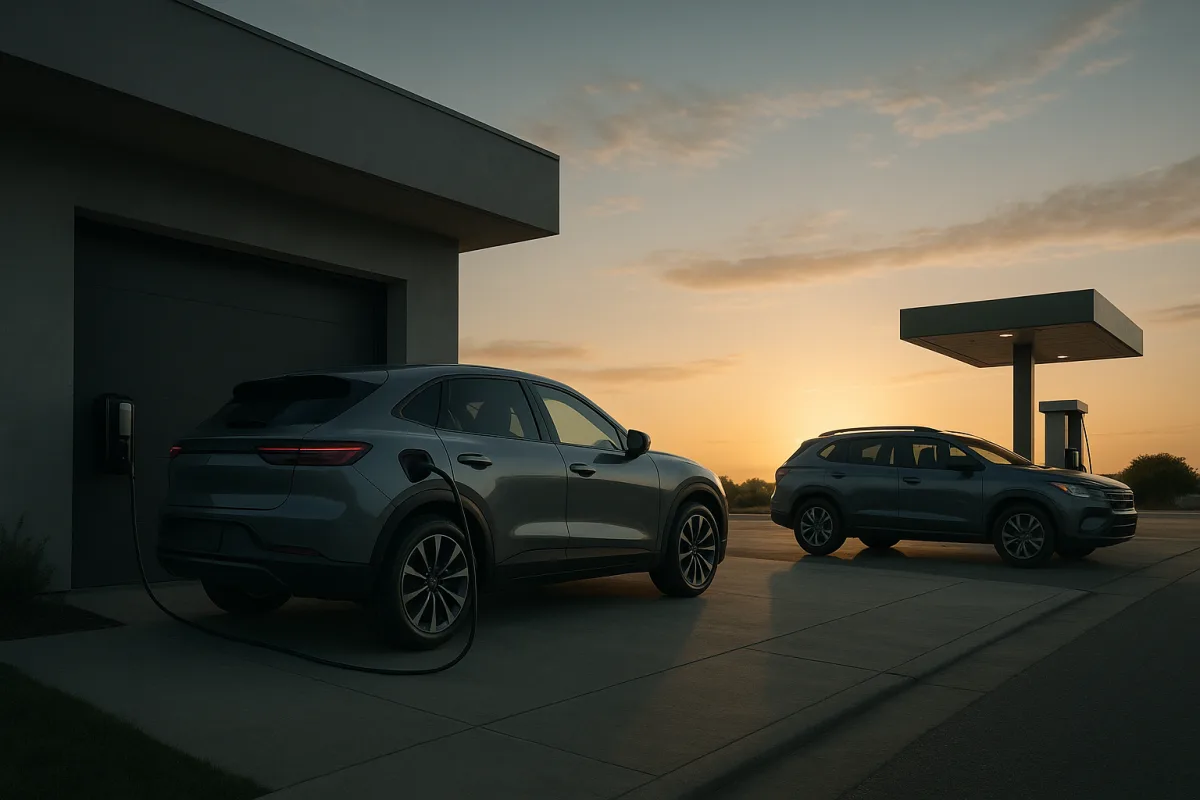
The decision: Tesla Model Y or Toyota RAV4 Plug-in Hybrid?
This is not really a contest between two similarly powered SUVs. It is a decision about whether your life supports a battery-electric car, or whether a plug-in hybrid is the sensible bridge between electric commuting and petrol-road-trip freedom.
The choice here is the 2026 Tesla Model Y All-Wheel Drive Premium against the 2026 Toyota RAV4 Plug-in Hybrid. The Model Y is the better answer for an owner with dependable home charging. The RAV4 PHEV is the better answer for everyone else.
That verdict is less exciting than a drag-race result, but it matters far more after the initial novelty has worn off. At 60,000 miles, charging routine, tyre bills, servicing access and family practicality will count more than a tenth of a second at the lights.
The Model Y tested by The Fast Lane Car carried an EPA range rating of 327 miles and a 123 MPGe combined rating. The RAV4 in that particular test was the regular hybrid rather than the plug-in, but it shows the underlying Toyota proposition clearly: a 2.5-litre hybrid with an e-CVT, ordinary petrol refuelling and no dependence on a charger. [4]
The RAV4 PHEV changes the equation by adding a meaningful electric-only range. Autocar’s UK test of the latest model recorded 74 miles indicated after charging, against a quoted 78-mile figure for the Excel version, while its front-wheel-drive entry model is claimed to reach as much as 85 miles. [5]
That is unusually useful PHEV range, but a plug-in hybrid still asks more of the owner. You need to plug it in routinely. If you do not, it becomes a petrol SUV hauling a 22.7kWh battery pack around.
Head-to-head comparison
| Criteria | Tesla Model Y All-Wheel Drive Premium | Toyota RAV4 Plug-in Hybrid | Better choice |
|---|---|---|---|
| Up-front price | The Model Y Performance tested by MotorTrend stickered at $66,880, including an $8,000 Full Self-Driving package. The tested price without that option would be lower, but trim and option details matter. [3] | The 2026 RAV4 PHEV starts at $41,500 according to the research brief. Higher trims, taxes, registration, insurance and charging installation are additional. | Toyota for entry price |
| Daily electric driving | EPA-rated at 327 miles in the All-Wheel Drive Premium tested by The Fast Lane Car. Highway speed, cold weather, roof accessories and wheel choice will reduce that. [[4]](https://www.kbb.com/tesla/model-y/2026/maintenance-schedules/?utm_source=openai "2026 Tesla Model Y Service Schedules & Maintenance Pricing | Kelley Blue Book") | Latest UK-spec models claim 78 to 85 miles of EV range depending on trim. Autocar’s test car indicated 74 miles after charging. [5] |
| Long-distance travel | Requires charging stops, although Tesla’s route planning and Supercharger network reduce the hassle considerably. Not every journey matches the brochure range. | Petrol station convenience remains the point. Once the battery is flat, Autocar saw roughly 50-55mpg in hybrid operation. [5] | Toyota |
| Charging and refuelling | Best if charged overnight at home. Public charging can be quick, but it is still a stop that needs planning. | Home charging takes roughly three hours on an 11kW AC supply. Its 0-80% DC charge took 40 minutes in Autocar’s test, but petrol remains the easier trip-backup. [5] | Toyota without home charging |
| Routine maintenance | Kelley Blue Book lists Tesla’s recommended annual attention around inspections, tyre rotation and wheel alignment. The research brief estimates five-year maintenance at $2,830, before repairs. [[4]](https://www.kbb.com/tesla/model-y/2026/maintenance-schedules/?utm_source=openai "2026 Tesla Model Y Service Schedules & Maintenance Pricing | Kelley Blue Book") | Needs EV-type items plus oil, filters and engine-related maintenance. The research brief puts oil changes at $70-$120 and tyre rotations at $20-$50, depending on location. [5] |
| Driving character | Strong, quiet and easy to operate. The Fast Lane Car found the driver-assistance system capable on highway use, but responsibility remains with the driver. [[4]](https://www.kbb.com/tesla/model-y/2026/maintenance-schedules/?utm_source=openai "2026 Tesla Model Y Service Schedules & Maintenance Pricing | Kelley Blue Book") | Comfortable and relaxed rather than entertaining. Autocar found the steering accurate but short on feedback, and the e-CVT can still sound strained at full throttle. [5] |
| Controls and cabin use | Screen-led interface. This suits owners happy to learn Tesla’s way of doing things, less so those who want obvious physical controls. | Physical climate buttons and secondary controls remain. Autocar also found the cabin plain, with hard plastics and some fittings that felt flimsy. [5] | Toyota for usability |
| Family and cargo role | A large, useful rear cargo area and front trunk give it an advantage in packaging, according to MotorTrend’s EV-SUV comparison. [3] | Spacious rear seating, sensible cabin storage and a 446-litre boot. That boot is smaller than the Volkswagen Tiguan PHEV’s, but it remains adequate for normal family work. [5] | Tesla for load space |
| Ownership risk | Fewer routine service items, but body repairs, tyres and out-of-warranty electronic faults can still be expensive. Service access varies by area. | More mechanical complexity than a pure EV, but familiar Toyota hybrid hardware and widespread dealer support make it easier for many households to live with. | Toyota for conventional support |
| Best use case | Owner with driveway charging, regular commuting, and a willingness to plan the occasional long trip. | Apartment dweller, rural driver, frequent long-distance traveller, or family needing one vehicle that works regardless of charger availability. | Toyota for broader use |
Price and running costs, without the brochure optimism
The RAV4 PHEV begins at $41,500 in 2026, according to the research brief. That is the vehicle price before tax, title, registration, dealer fees, insurance and any home-charging equipment. It is not a fully installed, on-the-road ownership figure.
The Model Y comparison is messier because Tesla pricing changes frequently. MotorTrend’s Model Y Performance test vehicle listed at $66,880, although $8,000 of that was Full Self-Driving hardware, a feature Tesla now offers as a $99-per-month subscription in that test context. [3]
Do not buy either on manufacturer consumption figures alone. The Fast Lane Car’s 106-mile highway loop, run at roughly 65-75mph in warm weather, is useful because it treated both vehicles like normal transport rather than a hypermiling exercise. [4]
Its regular RAV4 hybrid returned 41.5mpg calculated at the pump over that route, costing $10.47 for 106 miles at the local fuel price. That is not a RAV4 PHEV result, but it demonstrates how efficiently Toyota’s hybrid system can operate after battery charge is gone. [4]
The Model Y used roughly 25kWh over 100 miles in the same test, or about 4.0 miles per kWh by the car’s display. The decisive missing number is your electricity tariff. Cheap overnight home electricity makes the Tesla very inexpensive; expensive public rapid charging narrows the advantage sharply. [4]
At five years, the research brief estimates Model Y maintenance at $2,830 and repair costs at $2,314. Those are estimates, not a promise, and tyres deserve special attention because instant torque and heavy EV curb weights can consume them faster than cautious owners expect. [4]
The Toyota needs oil changes, engine air filters and eventually the usual combustion-engine attention, but regenerative braking can reduce brake wear. A brake service is estimated at $250-$500 in the research brief, while replacement 12-volt batteries and filters remain normal ownership costs. [5]
Performance and the alternatives worth understanding
The 2027 Audi RS5 PHEV is not an SUV, but it belongs in this group as the performance plug-in alternative. Audi quotes more than 80km, or 50 miles, of WLTP electric range, while Throttle House reported a 630hp system output and roughly 40 miles of EV range. [1]
Those numbers need restraint. US EPA ratings were not available as of September 2026, real-world range remains unverified, and even the car’s final weight has not been confirmed. The RS5’s price was also not confirmed in the supplied research, so treating it as a direct purchase alternative would be guesswork.
What it suits is the driver who wants a rapid long-distance performance car and can charge regularly. Throttle House praised its composure and damping over broken roads, but also found the drive-mode structure fussy and the acceleration less dramatic than the power number suggests. [2]
The 2027 Genesis GV60 Magma is a different kind of indulgence: a 640hp, dual-motor electric performance crossover with an 84kWh battery, simulated gear changes, synthetic V6-style sound and a stated 5,000lb weight in TheStraightPipes’ test. [6]
Genesis pricing for the GV60 Magma was not supplied in the available material, so there is no responsible exact price to quote here. It suits an enthusiast who wants theatrical EV performance and does not mind that fake sound and shifting remain an acquired taste, not an objective improvement.
The Rivian R2 is the most interesting all-electric alternative to the Model Y if you need a more upright, traditional SUV shape. MotorTrend’s Performance AWD test vehicle cost $61,485, including the launch package, a $2,000 paint option, towing equipment and Rivian’s driver-assistance package. [3]
That price is for the tested vehicle, not a universal R2 starting price. The R2 suits drivers who value a boxy cargo area, useful front trunk and more conventional SUV proportions. MotorTrend found its interface approachable, but noted that voice recognition was not yet fitted at test time. [3]
MotorTrend recorded an 11.3-second quarter-mile for the 656hp R2 Performance AWD, ahead of the 510hp Model Y Performance’s 11.5 seconds. Neither result should decide a family-car purchase, but it confirms that the Rivian is not merely the slower, outdoorsy option. [3]
Who each option suits
Tesla Model Y All-Wheel Drive Premium
Choose the Model Y if you have off-street parking and can charge at home most nights. Its lower scheduled-maintenance burden, large cargo areas and straightforward electric range make the most sense when electricity is reliably available where the car sleeps.
It falls down for owners who rely on expensive public charging, dislike touchscreen-first controls or regularly travel routes with weak charging coverage. It is also not automatically cheap to repair after a collision, even if its routine servicing looks inexpensive.
Toyota RAV4 Plug-in Hybrid
Choose the RAV4 PHEV if it must be the household’s one dependable vehicle. It can cover many commutes electrically, then handle an unplanned 400-mile day with fuel stops rather than charging strategy, while retaining familiar controls and dealer support.
It falls down when never plugged in. The latest car’s long EV range makes it unusually capable, but its financial and environmental case relies on using that battery. Its cabin is also more durable-looking than genuinely premium. [5]
Audi RS5 PHEV
The Audi RS5 PHEV suits the driver seeking performance first and electric commuting second. Its official WLTP range and quoted power are promising, but US-range, consumption, weight and price data remain insufficiently settled for a clear ownership-cost recommendation. [1]
Genesis GV60 Magma
The Genesis GV60 Magma suits the buyer who genuinely wants a high-performance EV crossover with personality. It offers huge power, adjustable regenerative braking and simulated shifting, but its price is unconfirmed here and its 5,000lb mass remains unavoidable. [6]
Rivian R2
The Rivian R2 suits a family wanting EV running without giving up the square load bay and upright seating of an old-fashioned SUV. Its tested $61,485 specification is not cheap, but its packaging and strong performance make it a credible Model Y alternative. [3]
Frequently Asked Questions
What are the pros and cons of electric vs plug-in hybrid SUVs?
Electric SUVs like the Tesla Model Y offer lower routine maintenance and benefit from established fast-charging networks, making them ideal if you have reliable home charging and predictable daily trips. Plug-in hybrids like the Toyota RAV4 PHEV provide more flexibility for long trips and situations without dependable charging, as they can refuel quickly with petrol but require regular plugging in to maximize efficiency. However, if a PHEV is not plugged in often, it carries the weight of a large battery without using its electric capability efficiently.
Which is better for long trips: Tesla Model Y or Toyota RAV4 PHEV?
The Toyota RAV4 PHEV is generally better for long trips because it can refuel quickly at petrol stations and does not depend solely on charging infrastructure. While the Tesla Model Y benefits from a fast-charging network, long-distance travel requires planning for charging stops, which can be less convenient than petrol refuelling.
How do maintenance costs compare between electric and hybrid SUVs?
The Tesla Model Y has lower routine maintenance costs, with an estimated five-year maintenance cost of about $2,830, covering inspections, tire rotations, and alignments. The Toyota RAV4 PHEV requires additional maintenance typical of petrol engines, such as oil changes ($70–$120) and filter replacements, which can increase overall upkeep costs compared to a fully electric vehicle.
What is the real-world electric range of the 2026 Tesla Model Y?
The 2026 Tesla Model Y All-Wheel Drive Premium is EPA-rated at 327 miles of electric range. However, real-world range can be reduced by factors such as highway speeds, cold weather, roof accessories, and wheel choices.
Is a plug-in hybrid SUV practical without home charging?
A plug-in hybrid SUV like the Toyota RAV4 PHEV is more practical than a fully electric SUV if you cannot reliably charge at home, as it can run on petrol and refuel quickly. However, to achieve the best running costs and efficiency, it still needs to be plugged in regularly; otherwise, you carry the extra weight of the battery without benefiting from electric driving.
How we researched this
This article was assembled from 5 video sources across 4 channels, 2 published articles, 7 cited references.
Nothing here is based on hands-on testing. Where a figure or finding appears, it belongs to the source cited beside it, and the writing says so rather than implying otherwise. Every source is listed below so you can check it.
Sources
2027 Audi RS5 Review — Throttle House
LIQUID HOT! 2027 Genesis GV60 MAGMA Review — TheStraightPipes
Rivian R2 vs. Tesla Model Y vs. Hyundai Ioniq 5 vs. Ford Mustang Mach-E: Can Rivian Beat the Best? — MotorTrend Channel
2026 Toyota RAV4 vs Tesla Model Y MPG Battle: Which One Of These Best Sellers Is Cheaper To Run? — The Fast Lane Car
Mazda CX-50 vs Toyota RAV4 Towing Test: One Is CLEARLY Better Than the Other! — The Fast Lane Car
2027 Audi RS5 Review, Specs, Pricing, and Warranty - Autoblog
2026 Tesla Model Y Service Schedules & Maintenance Pricing | Kelley Blue Book
2026 Toyota RAV4 Maintenance Guide: Service Schedule, Costs & Ownership Tips - RAV4Life
Watch Electric and Hybrid SUV Comparisons and Innovations on Youtube
Also from the sources
Related Articles
Supercar Drag Race Comparison and Ownership Insights
Compare top supercars in drag races with insights on performance, quarter mile times, and ownership costs for informed buying decisions.

New Electric and Hybrid SUVs: Reviews and Comparisons
Explore reviews and comparisons of new electric and hybrid SUVs, covering performance, ownership costs, range, and driving experience.
High-Performance Exotic Car Ownership
Explore high-performance exotic car ownership costs, maintenance, modifications, and financing to make informed decisions about your dream vehicle.

Mercedes-AMG CLE 646 Ownership
Explore Mercedes-AMG CLE 646 ownership, including performance, maintenance, costs, and the driving experience of this exclusive V8 coupe.