
Plug-in Hybrid Pickup Truck Comparison
Compare the Ford Ranger PHEV and BYD Shark plug-in hybrid pickups on performance, towing, off-road ability, and ownership considerations.
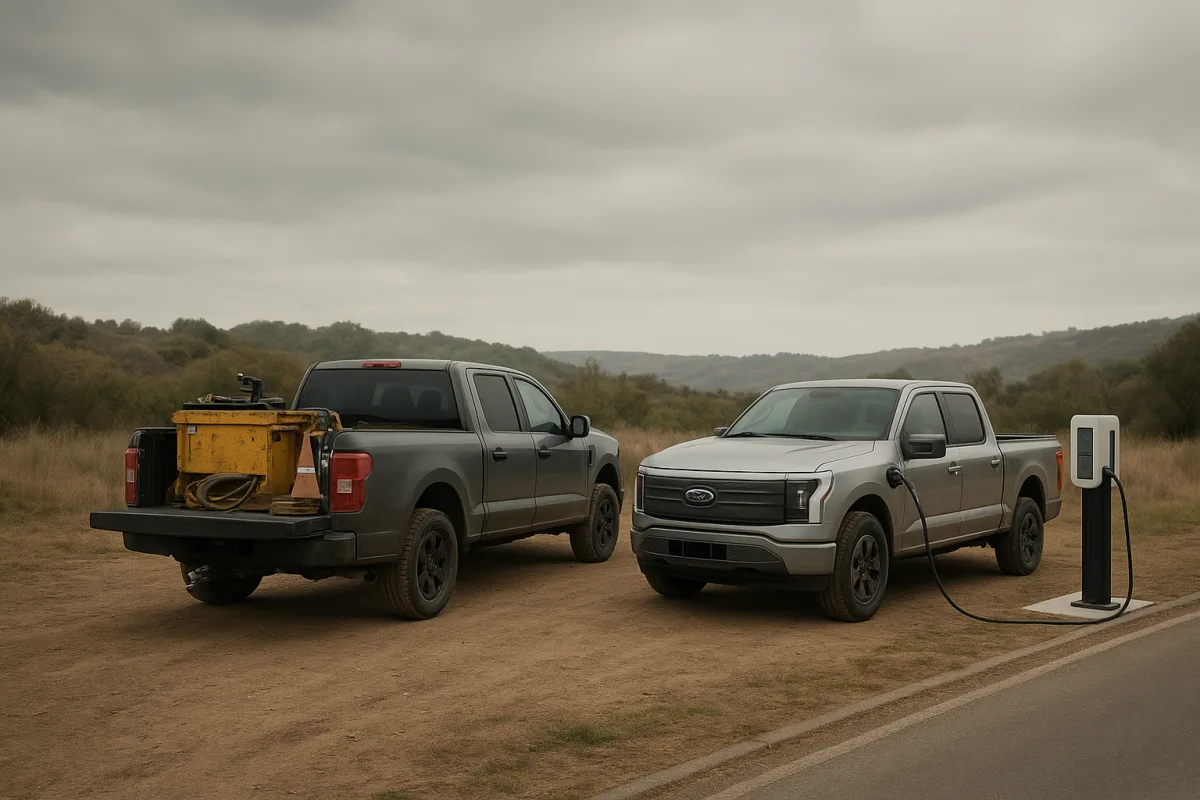
The decision: Ford Ranger PHEV or BYD Shark?
The sensible head-to-head here is the Ford Ranger PHEV against the BYD Shark. Both are plug-in hybrid pickups arriving in a market once defined by diesel workhorses, and both promise enough electric assistance to make a large truck feel less agricultural.
I have not driven either vehicle, so this is not a claim of personal road testing. It is a decision based on published specifications and on what independent testers have reported, including Carwow’s off-road comparison and road impressions from MotorTrend and Cinch.
The Ranger is the known quantity in this pairing, at least as a pickup. The Shark is the more disruptive one: a Chinese-built plug-in hybrid with serious power figures, a claimed electric range, and a price intended to undercut Ford.
That does not automatically make the BYD the better buy. A pickup is not a hot hatch with a bed. Its useful life is defined by towing, clearance, tyres, suspension wear, dealer access and whether it still works after years of muddy access roads.
Price and what the sticker does not cover
In the UK, the BYD Shark is listed at £47,290 including VAT, according to Gumtree’s comparison, putting it £1,639 below the Ford Ranger PHEV. That implies a Ranger PHEV price of roughly £48,929 on the same VAT-inclusive basis. [3]
That narrow gap matters. The Shark is not a bargain-basement unknown priced £10,000 below the established choice. It is a slightly cheaper alternative, which means buyers should judge it on suitability, not just novelty.
Neither figure should be treated as a complete ownership bill. Registration, delivery, optional equipment, insurance, finance, accessories, home charging installation and local taxes can all change the actual transaction price considerably. Dealer quotes remain essential.
Australian pricing tells a different story, as it often does with pickups. The Ranger PHEV XLT is reported at about A$72,000, while supply shortages have also been noted, so a theoretical recommended retail price may not equal what is sitting on a dealer forecourt. [3]
Ford Credit offers Ranger PHEV finance, but published comparison material does not establish equivalent specific finance terms for the Shark. That does not mean BYD finance is unavailable in every market, only that a buyer should not assume matching monthly payments. [3]
Powertrain and performance
The Ranger PHEV combines a 2.3-litre turbocharged four-cylinder petrol engine with an electric motor, producing 280 hp and 700 Nm in Carwow’s comparison. The impressive torque figure is useful in a pickup, particularly when setting off uphill with a trailer. [Carwow]
The BYD Shark uses a 1.5-litre turbocharged petrol engine and two electric motors. It is quoted at about 430 hp, or 320 kW, and 650 Nm, with 0-100 km/h claimed in 5.7 seconds. [4]
On the road, the Shark’s power advantage appears real enough in feel, even if its quoted torque figure remains a manufacturer claim rather than an independently measured output. MotorTrend and Cinch both found it brisk and notably agile for a pickup. [5] [6]
That makes the BYD appealing for owners coming from SUVs, who want a truck that does not feel lethargic when joining a fast road. It also means it may be easier to drive smoothly in ordinary traffic, where electric-motor response can mask the usual unloaded-pickup hesitation.
The Ford’s case is less about outright acceleration. Its 700 Nm quoted torque output and more familiar pickup architecture make more sense for sustained towing and slower technical work, where controllable response and established four-wheel-drive systems count more than a 5.7-second sprint.
Manufacturer outputs are not the same thing as how a truck will feel after five years. Battery condition, software updates, tyre choice and payload all affect response. Neither model yet has the long ownership record needed to say which system ages more gracefully.
Off-road hardware and trail reality
Carwow put a Toyota Hilux, Ford Ranger PHEV and BYD Shark through a series of off-road challenges. The Hilux took the uphill contest, with the Ranger second and the Shark third, although driver settings and an initial low-range selection mistake complicated the first run. [Carwow]
That result should not be exaggerated into a permanent league table. It does, however, show the distinction between power and usable traction. The Shark’s 430 hp does not substitute for a rear differential lock or the slow, controlled gearing that matters on loose climbs.
In the same Carwow filming, the Ranger’s firm suspension led to hard impacts and it was disqualified from one manoeuvrability run after contact underneath. The Shark also bottomed out, while the Hilux emerged as the more composed tool for that particular course. [Carwow]
For a buyer, the lesson is straightforward. Neither plug-in hybrid should be bought on power figures alone if regular work involves rutted forestry tracks, deep washouts or steep ground with a loaded trailer. Tyres, ground clearance and low-speed traction strategy matter more.
The Ranger remains the safer recommendation for proper off-road use because Ford has a mature pickup platform and conventional off-road expectations behind it. The Shark is likely adequate for farm lanes, wet fields and occasional trail use, but its hardware limitations need acknowledging.
The absence of a rear differential lock in the Shark, as identified by Carwow, is not a trivial detail. It may never matter on gravel tracks, but it can be the difference between progress and wheelspin when diagonal articulation leaves one wheel unloaded. [Carwow]
Towing, payload thinking and everyday work
The Shark’s stated 2,500 kg towing limit is the figure that should stop a buyer from making assumptions. It is enough for many trailers, boats, small plant loads and recreational use, but it is below what many traditional one-tonne pickups are bought to handle. [3]
That limitation does not make the BYD unsuitable. It makes it specific. For an owner whose trailer rarely exceeds that figure, it may be entirely acceptable. For someone who tows near the limit weekly, it leaves too little margin and too many unanswered durability questions.
The Ranger PHEV is the more sensible choice for regular commercial use, especially if the truck must replace a diesel Ranger rather than supplement an SUV. Ford’s broader pickup dealer familiarity, finance availability and established accessory ecosystem have real value beyond the brochure. [3]
There is also a practical point about charging. A plug-in hybrid pickup delivers its best case only if it is plugged in frequently. Owners without reliable home, workplace or depot charging may carry battery weight while gaining less of the quiet electric running they paid for.
Running costs at 60,000 miles
This is where both trucks require caution. The Shark is new enough that published long-term servicing, battery-degradation, repair-cost and resale data are not mature. A short road test can establish that it accelerates well, not what an inverter or battery-cooling repair costs in year six.
The Ranger PHEV is less of a blind bet because the Ranger platform and Ford dealer network are established, but its plug-in hybrid system is still a newer ownership variable than the familiar diesel Ranger. Early supply constraints do not help establish residual values either. [3]
The likely savings case for either is highly dependent on use. Regular charging and short commutes should favour the plug-in hybrid approach. Long motorway trips, heavy trailers and constant payload will reduce the benefit, because petrol engine use rises and the battery’s assistance becomes less decisive.
Tyres deserve more thought than most launch coverage gives them. Heavy pickups wear expensive tyres, and off-road-biased rubber can increase noise, reduce efficiency and accelerate suspension or alignment complaints. A cheaper purchase price can disappear quickly if a truck gets through tyres unusually fast.
For context, Jeep Gladiator ownership estimates put annual maintenance for standard versions at roughly $1,200 to $2,800, depending on use. [2] That is not a direct forecast for either hybrid pickup, but it is a useful reminder that off-road trucks are not low-cost appliances.
Where the established legends fit
The Toyota Hilux remains the benchmark for buyers who prioritise dependable, uncomplicated off-road work over electric novelty. Carwow’s filmed course showed why its rear locking differential, low-range transfer case and familiar 2.8-litre diesel formula still matter. [Carwow]
No price was supplied in the available material for the Hilux used by Carwow, so it would be misleading to invent a market comparison. It suits remote-area, fleet and hard-use owners, but gives up the BYD’s pace and the appeal of plug-in commuting.
The 2027 Ram 1500 TRX SRT is a different category entirely. Its 777 hp supercharged 6.2-litre V8 and near-three-tonne mass make it an extravagant high-speed desert truck, not a rational alternative to either plug-in hybrid. [Seen Through Glass]
Its US starting MSRP is $99,995 before destination, or $102,790 including the $2,795 destination fee, before tax and dealer charges. Imported examples can become far more expensive after tariffs, compliance work, registration and local taxes. It suits a wealthy enthusiast, not a cost-conscious working owner.
Jeep’s 2027 Gladiator 35-inch Tire Launch Edition is the factory-backed answer for buyers who would otherwise modify a Gladiator immediately. It brings 35-inch all-terrain tyres, a one-inch lift, Dana axles, 4.56 gearing and a 4:1 transfer case. [1]
Jeep had not published a price for that package in the supplied reporting, so there is no honest all-in figure to quote. It suits committed trail users who value factory-backed hardware, while its long wheelbase remains a disadvantage on tighter routes.
The Jeep Shortcut concept featured by Road & Track is not a purchasable alternative at all. It is a shortened JK Wrangler Rubicon-based concept, built for Jeep’s Easter Safari, with a two-inch Fox lift and 35-inch tyres. [Road & Track]
Its value is as a reminder that compact dimensions, visibility and wheel placement often matter more off-road than output. That is also why the production Gladiator, despite its serious equipment, cannot fully replicate a short-wheelbase Wrangler’s confidence on tight obstacles.
| Criteria | Ford Ranger PHEV | BYD Shark |
|---|---|---|
| Entry price | Approximately £48,929 in the UK including VAT, inferred from the reported Shark price difference. [3] | £47,290 in the UK including VAT. [3] |
| Powertrain | 2.3-litre turbo petrol four-cylinder plus electric motor, 280 hp and 700 Nm. [Carwow] | 1.5-litre turbo petrol plus dual electric motors, about 430 hp and 650 Nm. [4] |
| Straight-line response | Adequately powerful, but not the performance choice. | Faster on paper, with 0-100 km/h claimed in 5.7 seconds. [4] |
| Off-road equipment | More conventional pickup approach and the safer choice for regular serious use. | No rear differential lock in Carwow’s test vehicle. [Carwow] |
| Towing | Better fit for frequent heavy-duty towing. | 2,500 kg limit is adequate for lighter duties but restrictive for some work. [3] |
| On-road character | More traditional pickup feel. | Independent testers describe brisk acceleration and agile handling. [5] [[6]](https://www.cinch.co.uk/used-cars/byd/shark/review?utm_source=openai "BYD SHARK review 2026 |
| Ownership unknowns | Hybrid-system resale and long-term costs remain uncertain. | Even greater uncertainty around service support, residual value and long-term battery costs. |
| Best buyer | Working owner, regular tow vehicle user, mixed-road fleet buyer. | Home-charging private owner wanting a quick, modern lifestyle pickup. |
Who each option suits
The Ford Ranger PHEV suits the buyer who needs a pickup first and a plug-in hybrid second. It is the more conservative answer for towing, access tracks, commercial use and buyers who need a familiar dealer and accessory network.
The BYD Shark suits the owner whose pickup use is more lifestyle-led but still genuine: commuting, family use, weekend towing below 2,500 kg, occasional muddy lanes and a reliable place to charge. Its lower price and stronger performance are real advantages, not gimmicks.
The Toyota Hilux suits hard-use buyers who would rather have proven diesel simplicity and credible off-road hardware than plug-in sophistication. The Ram 1500 TRX SRT suits a very different buyer, one paying six figures for noise, speed and spectacle.
The Jeep Gladiator 35-inch Tire Launch Edition suits trail-focused owners who want factory-supported modifications rather than an aftermarket build. The Jeep Shortcut suits nobody as a purchase, because it is a concept, but it makes a useful case for smaller dimensions on difficult trails.
Frequently Asked Questions
How does the Ford Ranger PHEV compare to the BYD Shark plug-in hybrid pickup?
The Ford Ranger PHEV is a known quantity with a focus on towing, off-road capability, and conventional low-range hardware, making it suitable for varied and demanding use. The BYD Shark offers higher power and quicker acceleration, with a lower UK entry price, but it lacks the Ranger’s off-road hardware and towing capacity, making it better suited for mostly on-road driving and where charging is available.
What are the towing limits of hybrid pickup trucks like the BYD Shark?
The BYD Shark has a towing limit of 2,500 kg, which is a significant compromise compared to traditional pickups like the Ford Ranger PHEV. Buyers who regularly tow heavy loads such as plant machinery, horseboxes, or large trailers should not consider the BYD Shark a replacement for more capable trucks like the Ranger.
Are plug-in hybrid pickups suitable for serious off-road use?
Neither the Ford Ranger PHEV nor the BYD Shark should be chosen solely on power figures if serious off-road use is required. The BYD Shark lacks features like a rear differential lock and low-speed gearing critical for loose or steep terrain, while the Ranger has better off-road hardware but still showed some limitations in suspension and ground clearance during tests. Tyres, ground clearance, and traction aids are more important than power for serious off-road work.
What are the price differences between the Ford Ranger PHEV and BYD Shark?
In the UK, the BYD Shark is priced at £47,290 including VAT, which is £1,639 less than the Ford Ranger PHEV’s approximate price of £48,929. This price gap is narrow, making the Shark a slightly cheaper alternative rather than a budget option. Additional costs like registration, delivery, insurance, and optional equipment can affect the final purchase price for both models.
How do hybrid pickups perform in terms of power and electric range?
The BYD Shark has a combined output of about 430 hp and 650 Nm torque, with a claimed 0-100 km/h time of 5.7 seconds, making it brisk and agile for a pickup. The Ford Ranger PHEV produces 280 hp and 700 Nm torque, favoring controllable response and sustained towing power over outright acceleration. Both offer electric assistance that improves drivability, but long-term battery performance and electric range data remain limited due to their recent introduction.
How we researched this
This article was assembled from 2 video sources across 2 channels, 4 published articles, 6 cited references.
Nothing here is based on hands-on testing. Where a figure or finding appears, it belongs to the source cited beside it, and the writing says so rather than implying otherwise. Every source is listed below so you can check it.
Sources
Driving The 777hp RAM 1500 TRX SRT — Seen Through Glass
Vol 23 California — Road & Track
Bring a Trailer Started as a Craigslist Blog. It Created an Industry — The Drive
The Jeep Gladiator Has Just Become An Even More Capable Off-Roader — CarScoops
The Jeep Shortcut Concept Is the Brand Incarnate — Road & Track
2027 Jeep Gladiator Adds Factory 35-Inch Tire Launch Edition | TruckDaily
Jeep Gladiator Maintenance Costs: What You Should Expect Yearly | Everyday Jeep
New BYD Shark 2026 review: Ford Ranger PHEV has a real rival
2026 BYD Shark PHEV Pickup: 430 hp, 90 km EV Range, 675 km WLTP
2025 BYD Shark Pickup Truck First Drive: More Power, More Tech, Less Money
Watch Off-Road and Pickup Truck Innovations and Comparisons on Youtube
Also from the sources
Related Articles
2027 SUVs and Trucks Updates
Explore key updates on 2027 SUVs and trucks including Ford Ranger, BMW X5, Kia Sorento PHEV, and Volvo EX60 EV. Get insights on features and ownership.
Electric and Hybrid SUV Comparison
Compare electric and hybrid SUVs with a detailed look at Tesla Model Y and Toyota RAV4 PHEV performance, ownership, maintenance, and driving experience.
Slate Truck Towing and Hitch Details Explained
Learn about the Slate Truck's towing setup, hitch installation, wiring, and how it compares to Ford pickups for trailer use.
2027 New SUV and Pickup Models: Features and Ownership Guide
Explore 2027 new SUV and pickup models with insights on performance, ownership costs, maintenance, and driving experience.