
2027 SUVs and Trucks Updates
Explore key updates on 2027 SUVs and trucks including Ford Ranger, BMW X5, Kia Sorento PHEV, and Volvo EX60 EV. Get insights on features and ownership.
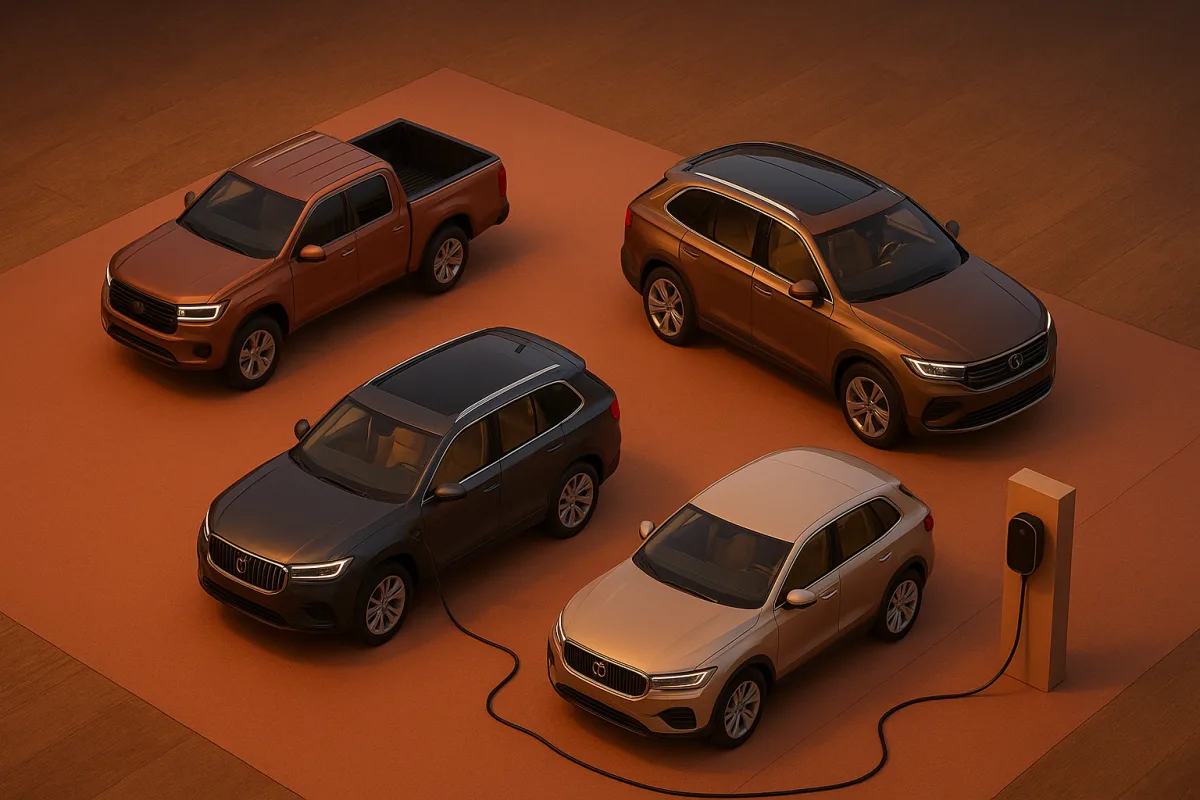
The quick list
- Best overall: 2027 BMW X5 40 xDrive, for the buyer wanting a premium two-row SUV with a proven six-cylinder layout and all-weather traction.
- Best truck: 2027 Ford Ranger 3.0 EcoBoost, for owners who genuinely need a bed, towing capability, and manageable midsize-truck dimensions.
- Best value plug-in: 2027 Kia Sorento PHEV X-Line SX-Prestige AWD, for a household that needs three rows and can charge often, despite the sharp price rise.
- Best EV for long trips: 2027 Volvo EX60 P10 AWD, for drivers with dependable home charging who want usable highway range without moving to a huge SUV.
- Best for small spaces: 2027 BMW X5 sDrive40, for warm-climate buyers who want X5 space and road manners but do not need all-wheel drive.
The decision is less about power than the shape of your life
The useful question is not whether a 570-hp electric BMW or a 670-hp Volvo sounds appealing. It is whether you need a pickup bed, a third row, regular towing capacity, home charging, or simply an easy daily vehicle that will still make sense after the novelty has worn off.
This group is unusually varied. The Ford Ranger is a body-on-frame midsize truck. The BMW X5 and Volvo EX60 are two-row premium SUVs. The Kia Sorento PHEV is a three-row plug-in hybrid. Comparing their claimed acceleration figures would tell you little about which one fits in your garage, carries your family, or costs least to keep fueled.
The 2027 updates also arrive at different levels of certainty. BMW has published pricing and powertrain details for the new X5 range.[1] Ford has not formally confirmed final outputs for the Ranger’s incoming 3.0-liter twin-turbo V6.
Kia’s price increase is clear, but incentive eligibility is not. Volvo has published ambitious range and charging claims, while independent highway testing has already given buyers a more useful reality check.
Comparison table
| Model | Starting price | Layout and size role | Powertrain | Practical strength | Main trade-off |
|---|---|---|---|---|---|
| 2027 Ford Ranger XL | $35,445 for the 2026 benchmark, including $1,896 destination | Midsize pickup, four-door cab and bed | 2.3-liter turbo four standard, 3.0-liter twin-turbo V6 expected | Bed utility and truck-based towing capability | New V6 price, output, economy, and long-term reliability are not final |
| 2027 BMW X5 sDrive40 | $69,800 including $1,450 destination | Two-row midsize luxury SUV, rear-wheel drive | 394-hp mild-hybrid turbo inline-six | Premium long-distance family vehicle without AWD cost | Rear-drive layout is less useful in snow-country |
| 2027 BMW X5 40 xDrive | $72,100 including $1,450 destination | Two-row midsize luxury SUV, AWD | 394-hp mild-hybrid turbo inline-six | Best-balanced X5 for mixed climates | New interface shifts routine functions into screens |
| 2027 BMW X5 50e xDrive | $77,500 including $1,450 destination | Two-row AWD plug-in hybrid luxury SUV | 483 hp combined | Electric commuting with gasoline-trip flexibility | More complex powertrain and no established 2027 ownership record |
| 2027 BMW iX5 60 xDrive | $81,250 including $1,450 destination | Two-row AWD electric luxury SUV | 570 hp, 435-mile estimated range | Long claimed range in an X5-shaped package | Highest entry cost and public-charging dependence |
| 2027 Kia Sorento PHEV X-Line SX-Prestige AWD | $53,890 plus $1,495 destination | Three-row midsize SUV | Plug-in hybrid AWD | Seven-seat versatility and short-trip electric potential | $5,600 price rise and only one expensive trim |
| 2027 Volvo EX60 P10 AWD Ultra | $68,745 as tested by Car and Driver | Two-row electric SUV | 503 hp, 91-kWh battery | 290-mile tested 75-mph range and fast charging | Running-cost and reliability history do not yet exist |
| 2027 Volvo EX60 P6 | Price not supplied | Two-row electric SUV, rear-wheel drive | 369 hp, 80-kWh battery | Lower-complexity EV choice with up to 307 miles claimed | Less towing capacity than AWD P10 |
| 2027 Volvo EX60 P12 | Price not supplied | Two-row electric SUV, AWD | 670 hp, 112-kWh battery | Volvo’s claimed 400-mile range leader | Price and real-world range remain unconfirmed |
Ford Ranger: the practical choice, provided the V6 story holds up
Motor1 reports that the 2027 Ford Ranger will replace the current optional 2.7-liter EcoBoost V6 with a detuned version of the Ranger Raptor’s twin-turbocharged 3.0-liter EcoBoost V6. The 2.3-liter turbocharged four-cylinder, with 270 hp and 310 lb-ft, remains standard on XL, XLT, and Lariat trims.
The likely attraction is torque, not bragging rights. Reports suggest roughly 380 hp and 440 lb-ft, reflecting the 2027 Ford Bronco application. Ford had not announced the Ranger’s official horsepower, torque, fuel economy, pricing, or towing figures as of October 20, 2026, so those numbers should be treated as informed expectations, not purchase-contract specifications.
That distinction matters because a 3.0-liter twin-turbo truck can get expensive quickly. Motor1 notes that on the 2026 Ranger, moving an XLT to four-wheel drive and the 2.7-liter V6 costs $7,545, while the equivalent Lariat upgrade costs $5,794. The new engine may land in similar territory, but there is no announced 2027 price.
Ford is at least improving the basic cabin. The entry Ranger XL reportedly moves from a 10.1-inch display to a 12.0-inch screen, and dual-zone climate control becomes standard. XLT and Lariat trims receive revised grilles, while the Lariat and Raptor can gain a Luxury Package with a memory driver’s seat, folding mirrors, rain-sensing wipers, ambient lighting, and a 10-speaker B&O system.
The ownership concern is not that this particular V6 is known to fail, because it is too new in the Ranger for that claim. It is that turbocharged engines, extra cooling hardware, and four-wheel-drive systems add cost and complication over time. Earlier Ranger 2.3-liter EcoBoost applications have had reports of turbocharger and cooling-system issues, but that does not prove the new 3.0-liter will repeat them.
Buy the Ranger if the bed is central to your week: bikes, building materials, muddy equipment, a trailer, or regular towing. If your truck bed mostly carries air and your rear seat carries people, the X5, Sorento, and EX60 make more efficient use of their overall footprint.
BMW X5: the conventional premium SUV choice, with an increasingly unconventional cabin
BMW’s redesigned 2027 X5 is offered with an unusually broad powertrain spread. The rear-drive X5 40 starts at $69,800, the all-wheel-drive 40 xDrive is $72,100, the 50e xDrive plug-in hybrid is $77,500, and the electric iX5 60 xDrive is $81,250. Those figures include BMW’s $1,450 destination charge.[1]
The mainstream X5 40 models use BMW’s B58 turbocharged inline-six with mild-hybrid assistance, rated at 394 hp. This is the sensible engine in the lineup for buyers intending to keep an X5 beyond its warranty period.
The B58 family has a better established reputation than an all-new engine, although a good reputation does not remove the cost of BMW parts, dealer labor, cooling-system work, or electronic diagnosis.
The Fast Lane Car’s early walkaround makes the central ownership warning clear: BMW has moved a great deal into the 17-inch central display. The outlet praised the cabin materials, responsive infotainment, panoramic windshield display, comfortable optional seats, and physical stalks. It was less impressed by touchscreen-operated air vents, multiple climate-control menus, and the electronic door releases.
That matters more at 60,000 miles than a dramatic launch-event feature. A physical knob that still works is easier to live with than a software menu that requires attention every time someone wants air directed differently. BMW’s iDrive system may be fast, but owners should sit in the vehicle and adjust mirrors, ventilation, drive modes, navigation, and phone pairing before committing.
There is no meaningful 2027 reliability record yet, and Consumer Reports has not issued a reliability rating for the refreshed model.[2] The preceding G05-generation X5 has a record of relatively minor electronics and software complaints alongside normal cooling and oil-maintenance needs, rather than a clearly established single catastrophic flaw.[3] That is encouraging, but not a guarantee for the redesigned cabin electronics.
The 50e xDrive PHEV makes sense only when charging is routine. It offers 483 hp combined and preserves gasoline-trip convenience, but adds high-voltage hardware to an already complicated luxury SUV. The iX5 60 xDrive’s claimed 435-mile range is impressive, but its $81,250 starting point means buyers should calculate charging access, insurance, tires, and depreciation before assuming it is cheaper to own.
Kia Sorento PHEV: still useful, no longer inexpensive
The 2027 Kia Sorento PHEV has become a much narrower proposition. Kia has removed the EX trim, leaving the X-Line SX-Prestige AWD as the only plug-in hybrid version. Its MSRP rises by $5,600 to $53,890, before the additional $1,495 destination charge.
That puts the Kia’s effective starting sticker at $55,385 before tax, registration, dealer fees, accessories, financing, or any market adjustment. It remains cheaper than the BMW X5 range and likely less costly to insure and service, but it is no longer a low-cost route into a plug-in family SUV.
Its advantage is seating layout. The Sorento gives buyers three rows, which neither the X5 nor EX60 provides. For parents who occasionally carry grandparents, teammates, or visiting family, that flexibility may outweigh the premium-brand appeal of the two-row alternatives.
The calculation only works if the plug-in part gets used. Charging at home can turn short local driving into low-fuel-use travel. Never charging it leaves you carrying a battery system and hybrid hardware without extracting much of its intended benefit.
No specific federal or state incentive effect on the 2027 Sorento PHEV was established in the available reporting, so buyers should not assume tax credits will erase the price increase.
Volvo EX60: the EV option with the most useful early evidence
Car and Driver positions the 2027 Volvo EX60 as Volvo’s mainstream electric SUV, parallel to the combustion-powered XC60. The P6 rear-drive model makes 369 hp and uses an 80-kWh battery for an estimated 307 miles. The P10 AWD has 503 hp, a 91-kWh battery, and an estimated 330-mile range.
The P10 is the version with the best early real-world information. Car and Driver recorded 290 miles in a 75-mph highway range test, considerably more useful than a best-case dashboard estimate for buyers who regularly cover interstate miles. It also recorded a 10-to-90-percent DC fast-charge time of 23 minutes and an average charging rate of 204 kW.
The P12 expands output to 670 hp and carries a 112-kWh battery, with Volvo claiming up to 400 miles of range. That figure remains an estimate, and Car and Driver had not yet tested the P12. Unless long-range travel is routine, the P10 looks like the less extravagant version to wait for.
The EX60 is 189.1 inches long and offers 20 cubic feet behind the rear seats, 64 cubic feet with them folded, plus a 3-cubic-foot front trunk. Volvo rates the P6 to tow 3,600 pounds and the P10 to tow 4,500 pounds. That makes the P10 a plausible light-trailer vehicle, though frequent towing will reduce range significantly.
There is not yet reliable published information on EX60 insurance costs, repair patterns, or real energy spending. The gasoline XC60 B5 AWD provides only rough context: its EPA combined figure is 26 mpg, with estimated annual fuel cost around $3,150 at 15,000 miles using October 2026 fuel prices.
That is not a direct cost comparison, because electricity pricing and charging habits vary far more by household.
Who each option suits
2027 Ford Ranger: The buyer who needs a bed and uses it. Choose the four-cylinder if cost control matters, and wait for Ford’s confirmed V6 figures before paying the expected premium for the 3.0-liter.
2027 BMW X5 40 xDrive: The buyer wanting a two-row luxury SUV for long trips, winter weather, and daily comfort. It is the safest broad recommendation only after you have decided the screen-led controls will not irritate you for years.
2027 BMW X5 sDrive40: The warm-climate buyer who wants the same six-cylinder X5 experience without paying for all-wheel drive. It is the most sensible X5 if snow, steep driveways, and unpaved roads are not part of the routine.
2027 BMW X5 50e xDrive: The owner with reliable overnight charging who still takes frequent long road trips. It is not the best choice for someone unable or unwilling to plug in consistently.
2027 BMW iX5 60 xDrive: The affluent EV buyer who wants X5 familiarity and a claimed 435 miles of range. It makes most sense with home charging and a clear tolerance for high purchase price and potentially expensive premium-EV repairs.
2027 Kia Sorento PHEV X-Line SX-Prestige AWD: The family that truly needs a third row, values plug-in capability, and accepts a $55,385 starting sticker before tax and fees. It is the practical layout winner, even if it is no longer the value winner.
2027 Volvo EX60 P10 AWD: The driver who can charge at home, wants strong real-world highway range, and does not need a third row or a truck bed. The tested 290-mile highway result makes it the most evidence-backed EV choice here.
2027 Volvo EX60 P6: The buyer prioritizing lower complexity, rear-drive efficiency, and everyday EV use over maximum towing. It is likely the EX60 to watch for value, although final pricing remains necessary before calling it a bargain.
2027 Volvo EX60 P12: The long-range, high-performance EV buyer willing to pay for a larger battery and wait for independent range and ownership data. It is the least rational version for most households, but potentially the right one for frequent long-distance EV travel.
Frequently Asked Questions
What are the key updates for 2027 SUVs and trucks?
The 2027 model year introduces a new 3.0-liter twin-turbo V6 engine for the Ford Ranger, though official horsepower and torque figures remain unconfirmed. BMW has refreshed the X5 lineup with updated pricing and a screen-heavy cabin design. Kia’s Sorento PHEV has seen a significant price increase after dropping its less expensive trim. Volvo’s EX60 electric SUV offers strong range claims with independent testing confirming about 290 miles at highway speeds.
How does the 2027 Ford Ranger compare to other midsize pickups?
The 2027 Ford Ranger is positioned as a practical midsize pickup with a focus on bed utility and towing capability. It replaces the previous 2.7-liter V6 with a new twin-turbo 3.0-liter V6 expected to produce around 380 hp and 440 lb-ft torque, but these figures are not yet officially confirmed by Ford. Pricing and fuel economy details for the new engine are also pending, so buyers should consider these factors carefully.
What are the new features of the 2027 BMW X5?
The 2027 BMW X5 40 xDrive offers a 394-hp mild-hybrid turbo inline-six engine and all-wheel drive, priced at $72,100 including destination. The cabin features a screen-heavy interface that shifts many basic controls into digital displays, which may not appeal to drivers who prefer physical buttons. The X5 range also includes rear-wheel drive and plug-in hybrid variants, with the electric iX5 60 xDrive offering up to 435 miles of estimated range.
Is the 2027 Kia Sorento PHEV still a good value?
The 2027 Kia Sorento PHEV is no longer as affordable as before, with a starting price of $53,890 plus $1,495 destination after dropping the lower-priced EX trim. It remains a practical choice for households needing three rows and frequent charging capability, but the sharp price increase reduces its value proposition compared to previous model years.
What is the real-world range of the 2027 Volvo EX60?
The Volvo EX60 P10 AWD electric SUV claims up to 330 miles of range, with Car and Driver independently testing a 290-mile range at a steady 75 mph. This makes it a strong contender for an electric family SUV if dependable home charging is available. However, running costs and long-term reliability data for the EX60 are not yet available.
How we researched this
This article was assembled from 1 video source, 8 published articles, 3 cited references.
Nothing here is based on hands-on testing. Where a figure or finding appears, it belongs to the source cited beside it, and the writing says so rather than implying otherwise. Every source is listed below so you can check it.
Sources
2027 BMW X5 Review & Walkaround: The Good, Bad, & Ugly — The Fast Lane Car
2027 Volvo EX60 — Car and Driver
Base Mercedes-AMG EV Gets Fake Six-Cylinder Noises. V8 Sounds Cost Extra — The Drive
The Ford Ranger Is Getting A Bigger V6 For 2027: Report — Motor1
Hyundai Recalls 95,000 Genesis G80s Because Their Seats Might Catch Fire, And There's No Fix Yet — Jalopnik
Here's What It's Like To Take Delivery Of A Rivian R2 — InsideEVs
The 25 Bestselling Cars, Trucks, and SUVs of 2026 — Car and Driver
BMW Already Has A Deal On The New i3. But It's Not Cheap — Motor1
RIP: Subaru's Boxer Engine Is Dead In Europe After 2027 — Motor1
Watch New and Updated 2027 SUVs and Trucks on Youtube
Related Articles

2027 Electric SUVs: Volvo EX60, Porsche Cayenne & EV Tech
Explore 2027 electric SUVs like the Volvo EX60 and Porsche Cayenne, plus key EV tech advances and ownership insights.
2027 Hybrid Pickup Trucks and SUVs
Compare the 2027 Lincoln Corsair hybrid and Volkswagen Amarok plug-in hybrid pickups and SUVs on performance, ownership, and maintenance.
Electric and Hybrid SUV Comparison
Compare electric and hybrid SUVs with a detailed look at Tesla Model Y and Toyota RAV4 PHEV performance, ownership, maintenance, and driving experience.
2027 Off-Road and 4x4 Vehicles Comparison: Defender vs Ram
Compare 2027 off-road and 4x4 vehicles including the Land Rover Defender and Ram Power Wagon diesel for towing, performance, and ownership.