
Rising Car Repair Costs: Why Ownership Is Becoming Pricier
Explore why rising car repair costs are increasing ownership expenses and how technology and labor affect your maintenance budget.
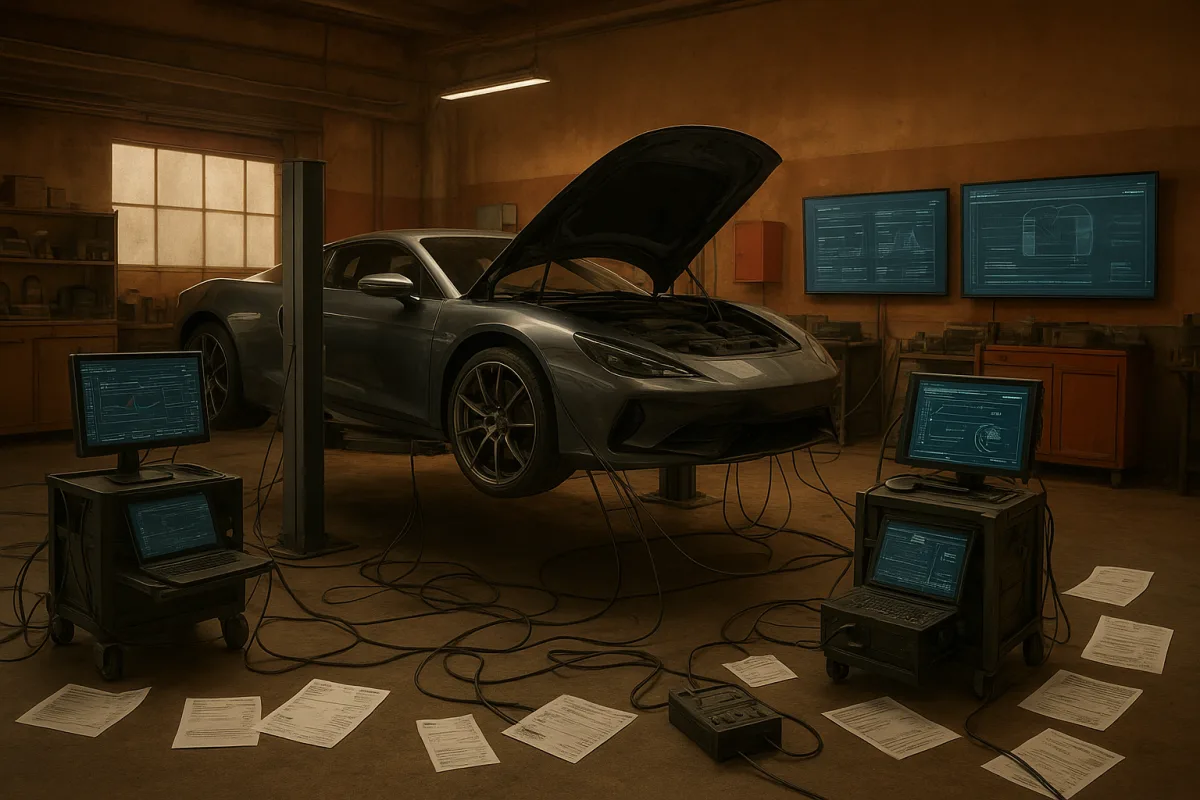
The ownership-cost shift is real
The cost of keeping a car on the road has moved into a different category of expense. This is not just enthusiasts complaining that Porsche parts are expensive or that a V10 needs more oil than a four-cylinder hatchback.
The broader numbers support the feeling. Data cited by Stick Shifting, drawing on St. Louis Federal Reserve figures, puts vehicle repair costs up 60 percent since January 2019, while overall inflation rose 32 percent. [11] That is not a small fluctuation.
The important point is that the increase is visible from more than one direction. Repair-cost reporting identifies software and electronic complexity as a major contributor, while dealer-versus-independent comparisons show a widening dollar impact once higher labor rates and specialized tooling enter the invoice. [1][12]
For ordinary cars, that means a formerly routine repair can now have a four-figure ending. For performance, luxury and exotic cars, it changes the logic of buying altogether. The purchase price is increasingly just the admission charge.
That does not mean every old sports car has become impossible to own. A simple, well-supported platform can still be a sensible weekend project. It does mean that a buyer needs to price the systems around the engine, not merely the engine itself.
Why repairs are rising faster than inflation
Parts, labor and insurance are all more expensive than they were five years ago, but electronics are the structural change. A modern car can require paid software access, a factory-compatible scan tool and a calibration procedure after work that used to be purely mechanical.
Jalopnik reported an example from a Brooklyn repair shop where access needed to reset a luxury-car service indicator added about $75 to a service. [11] That figure should be treated as an example, not a universal published rate.
There is no solid industry-wide figure for the software cost attached to every oil service, especially on exotic cars. Still, the direction is clear: a basic maintenance job can now involve a license, an online connection and a technician time charge.
The workshop equipment is more serious still. Reporting summarized by Business Bearings notes that ADAS calibration hardware can cost a shop as much as $90,000 once machines, computers and vehicle-specific targets are included. [12]
That investment has to be recovered somehow. It appears in labor rates, diagnostic fees, calibration charges or the simple fact that some independent shops decline certain cars because they cannot justify buying another proprietary tool.
Advanced driver-assistance systems are not limited to expensive cars anymore. Cameras in windscreens, radar behind bumpers and sensors in mirrors mean a minor collision can demand programming and alignment, not merely paint and replacement plastic.
AAA data cited in the repair-cost reporting found that ADAS can increase collision-repair costs by 36.7 percent. [11] A cracked windscreen is therefore no longer reliably a glass claim, it can be a glass claim plus a calibration appointment.
That reality matters even if you are shopping for a used performance car with no exotic badge. A late-model BMW M car, Porsche, Mercedes-AMG or Audi RS model may have the service needs of a computer network wrapped around a fast engine.
The independent-shop advantage is real, but conditional
The dealership is still usually the expensive answer. PulsCar’s 2026 comparison places dealership labor around $150 to $250 per hour, against about $90 to $140 at an independent mechanic. [1]
That difference is substantial on a suspension refresh, cooling-system job or clutch replacement. A specialist that knows the platform can also be better value than a general repair shop learning a complicated car at your expense.
But lower hourly labor is not the same as lower total cost. The independent specialist still needs scan tools, software subscriptions, technical information, trained staff and, for collision-related work, access to calibrations that may be brand-specific.
For a 1990s car with an OBD-II port and modest electronics, this is manageable. For a newer exotic with multiple control modules and encrypted manufacturer systems, the labor-rate saving can disappear under diagnostic and programming charges.
Right-to-repair policy is trying to improve that situation. The U.S. REPAIR Act and Europe’s Delegated Regulation 2026/699 are intended to improve independent access to vehicle data, tools and repair information. [9][10]
Those changes are worth watching, but they are not a reason to budget optimistically today. Better legal access does not instantly make factory software cheap, nor does it put $90,000 of calibration equipment into every neighborhood garage.
The honest position is that the cost impact of the 2026 rules is not yet measurable. There is no credible before-and-after dataset showing that exotic-car repair bills have fallen because of them. [9][10]
The performance-car trap: depreciation invites buyers before maintenance does
The danger is greatest when a desirable car becomes cheap enough to look attainable. Depreciation lowers the purchase price, but it does not make its parts, specialist knowledge or original engineering complexity cheaper.
The 2005 to 2010 BMW E60 M5 is a good illustration. The Fast Lane Car featured a 2008 manual example with 117,000 miles, bought for $35,500, and identified the S85 5.0-liter V10’s rod bearings as a major concern. [2]
The channel’s owner put a preventative rod-bearing job at at least $5,000. [2] That is roughly 14 percent of the stated purchase price before considering the throttle actuators, VANOS high-pressure oil systems, cooling, suspension, tires or fuel.
Independent BMW ownership guides broadly support the underlying point, though not every car fails in the same way or at the same mileage. Estimated annual maintenance and repair spending for an E60 M5 is about $2,000 to $4,000 at an independent specialist. [7][8]
Add insurance, fuel, taxes and routine consumables, and the estimated total annual ownership range becomes roughly $7,400 to $12,800. [7] That is the number a buyer needs to understand, not the monthly payment alone.
A well-maintained S85 car is not automatically a bad purchase. The problem is buying one because it costs the same as a newer, ordinary performance sedan, then discovering that the ownership model remains that of a complicated flagship M car.
The same reasoning applies to exotics. Digital AutoFi and Automonitor note that many lenders impose constraints around age, mileage, title status and modifications, while rates can land roughly between 5.5 and 12 percent depending on credit and lender. [4][5]
A modified, salvage-title or older-than-20-years car may be hard to finance at all. That can sound irrelevant to a cash buyer, until the same factors restrict the next buyer and affect resale liquidity. [4][5]
Even the enthusiast parts market is getting harder
Repair inflation is only half the story. The enthusiast market has also turned certain original parts into collectibles, which means a restoration can be derailed by trim, seats or hardware rather than an engine rebuild.
Tj Hunt’s Mazda RX-7 FD project makes the point clearly. He described original Recaro Spirit R seats as selling north of $10,000, while the specialist from Tiltworks suggested the market can reach $15,000 to $20,000. [1]
That is anecdotal rather than a formal market index, and the quoted range is wide. Still, it shows what owners of rare Japanese performance cars already know: unobtainable original equipment can become vastly more expensive than the vehicle’s mechanical needs.
The detail that matters is the seat rails. The factory rails and tilt hardware are difficult to source, so an aftermarket reproduction solution exists. [1] It is a small example of a big ownership lesson.
A project is never just the headline component. Before committing to a restoration, list the mounting hardware, trim clips, electronics, glass, weather seals, wheels, brakes and model-specific service parts that make the major component usable.
This is particularly important with imported, limited-production and final-edition cars. The original part may exist somewhere online, but availability is not the same as a stable, repeatable parts supply at a rational price.
How to plan a project without being frightened away from it
Start with a known-failure budget, not a generic contingency. On an E60 M5 with the S85, that means pricing rod bearings, throttle actuators and VANOS-related work before deciding whether the car is affordable. [2][8]
Then separate maintenance into three pots: scheduled services, age-related renewal and failure risk. Oil, filters, brake fluid and tires are scheduled. Hoses, bushings, batteries and cooling parts are age-related. Gearboxes, electronics and engines are risk.
Do not pad the spreadsheet with manufacturer service intervals and call it realistic. A manufacturer interval tells you what the factory expects during a warranty-period ownership cycle, not necessarily what makes sense for a 15-year-old performance car at 80,000 miles.
For oil service, the research suggests a broad 2026 luxury and exotic range of about $100 to $200 or more, depending on oil, capacity and provider. The number can rise with special access requirements, but the software-reset portion is not well documented.
Use a pre-purchase inspection from a marque specialist, with diagnostics included, and ask for scanned invoices rather than verbal assurances. “Dealer maintained” has value only when the records show what was actually replaced and why.
Also ask the shop what it cannot do. A good independent specialist will tell you whether it can calibrate the car’s cameras, code modules, program keys, update control units and diagnose the specific generation you are considering.
Finally, leave cash untouched after purchase. For a modern performance car, a reasonable reserve is enough to handle the first serious surprise without financing it. On an older exotic, that reserve should be larger than the first year’s routine maintenance budget.
The point is not to buy only boring cars. It is to buy the version of the interesting car whose failures, parts pipeline and specialist support you can afford when the novelty has worn off and the odometer reads 60,000 miles.
Frequently Asked Questions
Why are car repair costs rising faster than inflation?
Car repair costs have risen 60 percent since January 2019, nearly twice the 32 percent rise in general inflation. This increase is largely driven by the growing complexity of vehicle electronics and software, which require paid software access, factory scan tools, and specialized calibration procedures that add to parts, labor, and insurance expenses.
How does vehicle technology affect car repair prices?
Modern cars often need factory-compatible software licenses, diagnostic subscriptions, and calibration equipment, especially for advanced driver-assistance systems (ADAS). These requirements increase repair complexity and costs, as shops must invest in expensive tools and technicians must spend time on software-related tasks that were not necessary on older mechanical vehicles.
Is it cheaper to use an independent mechanic for modern cars?
Independent mechanics generally charge lower labor rates—about $90 to $140 per hour compared to $150 to $250 at dealerships. However, for newer performance or exotic cars, the need for costly diagnostic software subscriptions and ADAS calibration equipment reduces this cost advantage, and some independent shops may decline certain repairs due to tool expenses.
What are the hidden costs of owning a performance or exotic car?
Beyond the purchase price, performance and exotic cars often require expensive maintenance and repairs involving software licenses, factory diagnostic tools, and ADAS calibrations. One major engine or transmission repair can cost a significant portion of the car’s value, and financing these cars can involve high interest rates and restrictions on mileage, age, and modifications.
How do ADAS systems increase collision repair costs?
ADAS features such as cameras, radar, and sensors require specialized calibration after collisions. AAA data shows that ADAS can increase collision repair costs by about 36.7 percent because repairs often involve programming and alignment in addition to traditional body and paint work. Even minor damage like a cracked windshield may require recalibration appointments.
How we researched this
This article was assembled from 2 video sources across 2 channels, 8 published articles, 12 cited references.
Nothing here is based on hands-on testing. Where a figure or finding appears, it belongs to the source cited beside it, and the writing says so rather than implying otherwise. Every source is listed below so you can check it.
Sources
Is This My Worst Financial Decision? — Tj Hunt
I Just Bought My Dream Car and I'm Already Terrified By How Much It WILL Cost to Run! — The Fast Lane Car
Car Repair Costs Have Risen Twice As Fast As Inflation — Jalopnik
Car Repair Costs Have Risen Twice As Fast As Inflation — Jalopnik
Car Repair Costs Have Risen Twice As Fast As Inflation — Jalopnik
Car Repair Costs Have Risen Twice As Fast As Inflation — Jalopnik
Car Repair Costs Have Risen Twice As Fast As Inflation — Jalopnik
Car Repair Costs Have Risen Twice As Fast As Inflation — Jalopnik
Car Repair Costs Have Risen Twice As Fast As Inflation — Jalopnik
Car Repair Costs Have Risen Twice As Fast As Inflation — Jalopnik
Dealership vs Independent Mechanic (2026): $150-$250/hr vs $90-$140, Repair by Repair | PulsCar
Independent Mechanic vs. Dealership 2026 — Cost Comparison and When to Use Each | Wealthvieu
Exotic Car Financing: Rates, Terms & How to Qualify | Digital AutoFi
How to Finance an Exotic Car: Lenders, Rates & Strategies for 2026 | Automonitor
BMW M5 E60 Maintenance Cost: What Owners Should Expect In 2026
The Definitive BMW E60 M5 Guide|S85 V10 Weak Points, SMG, Running Costs and Buying (2026) – BIMMER+
New EU Rules on Access to Vehicle Data and Repair Information – What OEMs Need to Know Now
High-Tech Cars Are Driving Up Repair Bills for Shops and Drivers — Business Bearings
Watch Rising Car Repair and Ownership Costs on Youtube
Also from the sources
Related Articles
Electric Vehicle Pricing and Ownership Costs Explained
Explore electric vehicle pricing, ownership costs, tax credit impacts, and key maintenance tips to make informed EV buying decisions.

Automotive Legal and Regulatory Issues Affecting Ownership
Explore key automotive legal and regulatory issues, recalls, lawsuits, and maintenance rules impacting vehicle ownership and buyer decisions.
Rare Exotic Car Ownership: Stories, Costs, and Restorations
Explore rare exotic car ownership stories, restoration costs, and maintenance insights for models like Ferrari, Porsche, and Toyota Supra.

Monterey Car Week Ownership Costs and Exclusive Car Culture
Explore Monterey Car Week ownership costs, maintenance, and the diverse exclusive car culture behind the event.