
Rare Exotic Car Ownership: Stories, Costs, and Restorations
Explore rare exotic car ownership stories, restoration costs, and maintenance insights for models like Ferrari, Porsche, and Toyota Supra.
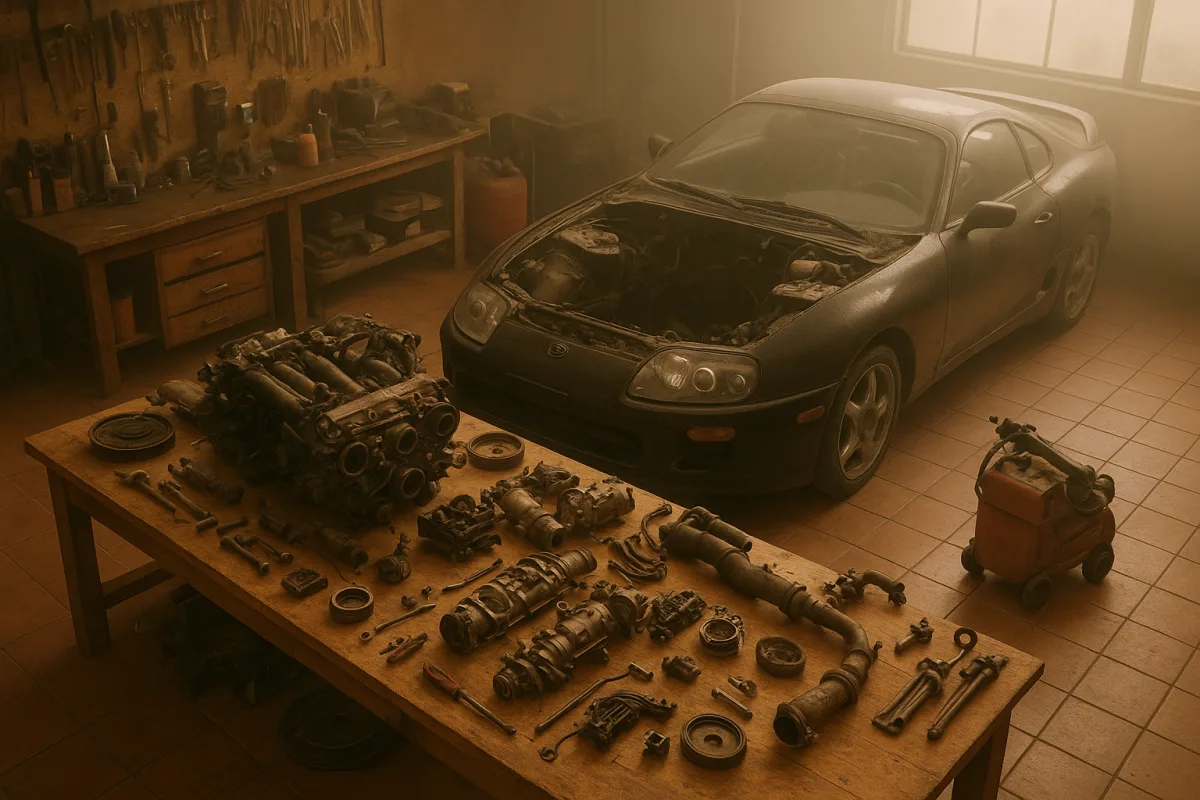
The quick list
- Best overall: Ferrari 550 Maranello, for the buyer wanting a manual V12 Ferrari with usable road manners and less restoration exposure than an F40.
- Best value: 1994 Toyota Supra Turbo, for the enthusiast who wants a culturally important classic they can realistically use, service and occasionally carry children in.
- Best restoration project: Porsche 996 GT3, for a hands-on buyer who understands that “driver condition” can mean a six-figure paint and parts bill.
- Best dream purchase: Ferrari F40 barn find, for a very well-funded collector willing to restore and maintain a landmark supercar properly.
- Best for commercial practicality: Slate electric truck with the reported cargo kit, for a business buyer rather than an exotic-car collector, and only if the claimed $3,000 kit reaches production.
The real decision in rare-car ownership is not whether an F40 is more dramatic than a Supra, because it plainly is. It is whether you want to drive a car, restore a car, preserve an asset, or fund a specialist workshop relationship.
These examples span the whole uncomfortable range. Doug DeMuro’s 1994 Toyota Supra Turbo is an unusually clean, low-mileage dream purchase being put into ordinary family use. Vin_tra’s 2004 Porsche 996 GT3 shows how quickly a promising flip becomes a restoration. Michael Jordan’s Ferrari 550 Maranello and Lewis Hamilton’s Ferrari F40 are collector-grade cases where provenance and condition change the numbers substantially.
I have not owned, driven, inspected or restored any of these cars. The judgments here rest on the ownership accounts, reporting and market research supplied, not on a launch-event lap or a speculative spec-sheet comparison.
Comparison table
| Option | Reported price or financial starting point | Layout and practical role | Restoration risk | Routine running-cost picture | Best trade-off |
|---|---|---|---|---|---|
| 1994 Toyota Supra Turbo | Roughly $56,500 to $151,200 in 2026, depending heavily on mileage, originality and condition [[1]](https://driveindex.com/cars/toyota/supra-turbo/1994?utm_source=openai "1994 Toyota Supra Turbo Value: $100,000 | Price History & Sales | DriveIndex")[[2]](https://classiccarsarena.com/valuation/toyota/supra/1994?utm_source=openai "1994 Toyota Supra Value (2026) — Real Market Data | Classic Cars Arena")[[3]](https://carsearch.pro/market/supra-a80-1994-2002/?utm_source=openai "Toyota Supra (A80) Price Guide 2026 — Values, Prices & Market Data | CarSearch.Pro") |
| 2004 Porsche 996 GT3 | Purchase price not disclosed, restoration estimates run $20,000 to $120,000-plus [4][5] | Rear-engine, manual, track-oriented two-seat sports car | High, especially where paintwork, old modifications and unavailable parts overlap | Exact annual figure not supplied | Great driver focus, poor cost certainty |
| 1997 Ferrari 550 Maranello | Michael Jordan-owned example estimated at $700,000 to $1.3 million [[11]](https://carcostbreakdown.com/car/ferrari/550-maranello?utm_source=openai "Ferrari 550 Maranello Cost in 50 Countries — Full Comparison | CarCostBreakdown") | Front-engine manual V12 grand tourer | Moderate if records are strong, provenance raises the stakes | $3,000 to $8,000 annually, $12,000 to $25,000 for major work [10][[11]](https://carcostbreakdown.com/car/ferrari/550-maranello?utm_source=openai "Ferrari 550 Maranello Cost in 50 Countries — Full Comparison |
| Ferrari F40 barn find | Low-mileage examples estimated at $2.8 million to $3.5 million in April 2026 | Mid-engine, twin-turbo supercar, two-seat collector car | Extremely high after 30-plus years stored | Fuel-tank replacement and associated work can approach €70,000 [9] | The ultimate collectible, with the least financial forgiveness |
| Slate electric truck with reported cargo kit | Cargo kit reportedly starts at $3,000, full vehicle price not confirmed in the supplied reporting | Compact electric truck convertible to SUV or high-roof cargo form | Not a restoration case, production and final specification remain uncertain | Running-cost evidence not supplied | Useful contrast if practicality matters more than rarity |
The 1994 Toyota Supra Turbo: the car to use, not worship
Doug DeMuro’s 1994 Toyota Supra Turbo is the most relatable ownership story because he bought it for errands, children, a dog and school runs. That sounds almost irresponsible when the car is an original, one-owner, 31,000-mile manual in Renaissance Red.
Yet that is also the right argument for the A80 Supra. A clean factory-spec Turbo is rare precisely because many were modified, raced, stolen, rebuilt or otherwise absorbed by the tuner culture that made them famous.
The key mechanical distinction is important. The naturally aspirated Supra used a 3.0-litre straight-six making about 220 horsepower, while the Turbo used the twin-turbocharged 2JZ-GTE version rated at 320 horsepower in North America.
The 2JZ-GTE’s reputation for strength and tuning potential is genuine, but that does not mean every Supra Turbo is automatically reliable. A standard, documented car is a fundamentally different ownership proposition from one with an unknown single-turbo conversion, aftermarket management and several previous owners.
Current values explain why the buying decision needs discipline. Aggregated 2026 figures place 1994 Turbo sales from about $56,500 to $151,200, while median estimates cluster around $74,000 to $78,000. [1][2][3]
That spread is not noise. It is the price of originality, mileage, transmission, colour, accident history and modifications. DeMuro specifically wanted a manual, unmodified Turbo in Renaissance Red, which is why he chose a better example rather than wait for a cheaper, rougher one.
For a buyer who wants to use the car, the sensible move is not necessarily finding the cheapest one. It is finding one whose condition you can understand. No specific 2026 trade-in figures are available for the 1994 Supra Turbo, and dealer bids should not be assumed to mirror auction results.
The Supra also wins this group on usable packaging. It has rear seats, even if they are child-sized rather than adult accommodation, and DeMuro fitted child seats. That is a practical advantage neither Ferrari story nor the 996 GT3 restoration can claim from the supplied evidence.
The 2004 Porsche 996 GT3: restoration scope is the real purchase price
Vin_tra’s Guards Red 2004 Porsche 996 GT3 is a useful warning against the phrase “just needs sorting.” It arrived as a 52,000-mile driver-grade car with useful performance hardware, including Moton three-way coilovers, spherical-joint suspension arms, headers, exhaust and close-ratio gearbox work.
It was also one of just 852 North American 996 GT3s, with only 85 reported in Guards Red. It uses Porsche’s naturally aspirated 3.6-litre Mezger engine, a six-speed manual and the three-pedal format enthusiasts expect.
On paper, the car looked like a good project. It had prior paintwork, mismatched brake rotors, imitation GT3 RS graphics and a visibly tired finish. The intention was to clean it up and sell it, not conduct a ground-up concours restoration.
Then a lifting stripe damaged clearcoat on the door. Proper repair required blending adjacent panels, and the body shop explained that red paint fade made a local spot repair visibly risky. The door, trim, bumper, wing and tailgate began coming apart.
This is exactly why a restoration budget needs a contingency, not merely an estimate. Current research puts restoration spending anywhere from $20,000 for a driver-quality job to $120,000 or more for comprehensive work. [4][5]
The 996 GT3’s issue is not that it is a bad car. It is that rarity, age and prior modification mean a buyer can discover problems only after dismantling begins. Parts availability and labour shortages can lengthen the timeline as well as the bill. [4][5]
Buy this route if you want the process and can absorb a changing scope of work. Do not buy it as an affordable GT3 simply because the initial purchase looks less frightening than a sorted, documented example.
The Ferrari 550 Maranello: the V12 ownership case for records over romance
Hagerty’s report on Michael Jordan’s 1997 Ferrari 550 Maranello illustrates how history changes a conventional collectible. Chassis 108712 was delivered new in Rosso Barchetta, carried Jordan’s “MJ 5” registration, and has a modified driver’s seat with extended rails and thinner padding for his 6ft 6in frame.
The car had around 6,400 miles when Jordan sold it in 2002. Its second owner kept it in a private collection, and it resurfaced with fewer than 19,000 miles, service records and its Ferrari-branded cassette player still present.
Joopiter and Curated estimated $700,000 to $1.3 million for that particular car. That is provenance pricing, not a number to apply blindly to every 550. The former public-auction record cited by Hagerty was $648,500 for a 527-mile 1998 example.
For an ordinary buyer, the important detail is that this is a manual V12 grand tourer rather than a fragile racing homologation special. It will still consume money, fuel and specialist attention, but it is the least intimidating Ferrari ownership route in this comparison.
Research estimates 550 routine maintenance at $3,000 to $8,000 per year, with major services from $12,000 to $25,000. [10][11][12] Reported insurance averages about $2,014 annually, while fuel use is approximately 14 L/100 km. [11][13]
Those are planning numbers, not guarantees. Condition, country, mileage and workshop choice will dominate the actual invoice. Still, they make the 550 more legible than the F40, where a single mandatory age-related job can exceed a year of 550 maintenance.
The Ferrari F40 barn find: restoration is only the entry fee
Road & Track and The Drive both report that Lewis Hamilton acquired a Ferrari F40 after it had sat in storage for more than 30 years. Ferrari’s Maranello specialists spent weeks returning the dusty Rosso Corsa car to running condition through the factory’s Classiche process.
That makes for a romantic story, but long storage is not benign preservation. Rubber hardens, fluids degrade, seals dry, fuel systems corrode and old repairs become harder to assess. On an F40, access to correct specialists matters as much as the purchase itself.
The fuel tanks are the headline item. Research supplied for this guide says the F40’s synthetic tanks require replacement every 10 years because of material degradation, and the replacement, inspection and refurbishment work can cost about €70,000. [9]
That is not an optional enhancement for a collector seeking perfection. It is a basic example of why an F40 cannot be treated like a conventional 1980s performance car with an expensive annual service.
Low-mileage F40s were estimated at $2.8 million to $3.5 million in April 2026. The model’s value reportedly rose from about $1.1 million in 2014 to roughly $3.2 million in 2024, making condition and originality especially financially consequential.
No reliable insurance or fuel-consumption figure was supplied for the F40, so it would be misleading to invent one. The prudent buyer should arrange specialist agreed-value insurance and obtain a pre-purchase inspection from an F40-capable shop before discussing finance.
Financing, and the danger of mistaking a loan approval for affordability
Ferrari Financial Services, specialist lenders and conventional banks can finance older exotics, but qualification standards tend to be stricter than for ordinary cars. Research indicates credit expectations around 720 or above, down payments from 10 to 30 percent and terms up to 180 months. [6][7][8]
Specialist lending can sometimes accept 10 to 15 percent down on exceptional vehicles. [6][8] That may help liquidity, but it does not reduce the cost of tires, storage, transport, inspection, insurance or the unexpected restoration work that follows ownership.
The sensible approach is to separate purchase funding from repair funding. A buyer financing a $700,000 Ferrari 550 should still retain enough accessible cash for a five-figure major service. An F40 buyer needs considerably more margin than that.
The Slate electric truck cargo kit: useful, but not a substitute for an exotic
Road & Track reported that Slate may offer a panel-van-style cargo kit for its electric truck, in standard SUV and taller high-roof forms. The report says the kit could be offered with or without side and rear glass, starting at $3,000.
It belongs here only as a practical contrast. The Slate is not a rare or exotic ownership story, its full production specification remains unconfirmed, and the supplied report does not establish the truck’s final price, maintenance cost or delivery certainty.
For someone tempted to buy a special car because they need utility, this is the reminder to separate jobs. A Supra can handle occasional family use. A 550 can tour. An F40 and GT3 restoration are not cargo solutions.
Who each option suits
The 1994 Toyota Supra Turbo suits the buyer who values cultural significance, mechanical familiarity and real-world use. Pay extra for an original manual car with documentation, and accept that low-mileage examples carry a collector premium.
The 2004 Porsche 996 GT3 suits the experienced project buyer who wants a focused analogue performance car and can manage body shops, parts delays and changing repair scopes. It is the least suitable choice for someone with a fixed all-in budget.
The 1997 Ferrari 550 Maranello suits the buyer seeking a manual V12 Ferrari with road-going manners, meaningful history and a serviceable ownership plan. The Michael Jordan car particularly suits a provenance collector, not a buyer chasing the cheapest 550.
Lewis Hamilton’s Ferrari F40 barn find suits an established collector with specialist contacts, secure storage and a large restoration reserve. It is a dream-car purchase only after the buyer has accepted that the purchase price is not the expensive part.
The Slate electric truck with the reported cargo kit suits a small business or utility-focused buyer who needs configurable cargo space. Its reported $3,000 starting kit price is not a substitute for confirmed vehicle pricing, production details or ownership-cost data.
Frequently Asked Questions
What are the costs involved in restoring rare exotic cars?
Restoration costs can vary widely depending on the car and its condition. For example, restoring a Porsche 996 GT3 can range from about $20,000 for cosmetic and mechanical tidying to over $120,000 when including paint, scarce trim, suspension, and labor. Ferrari F40 restorations are particularly costly, with specialist overhauls reaching around €70,000 mainly due to fuel tank replacements every decade.
How do maintenance expenses vary among exotic cars like Ferrari and Porsche?
The Ferrari 550 Maranello typically requires $3,000 to $8,000 annually for routine maintenance, with major services costing between $12,000 and $25,000. In contrast, the Ferrari F40 demands far higher maintenance costs, with comprehensive specialist overhauls costing about €70,000, largely because of expensive parts like fuel tanks. Maintenance costs for Porsche 996 GT3 are not specified but restoration can be expensive due to parts and labor.
What should I know before owning a rare exotic car?
Ownership involves more than purchase price; restoration risk, maintenance costs, and provenance significantly affect total investment. Exotic car financing usually requires a credit score around 720 or better, with down payments between 10% and 30%. Owners should also maintain a separate repair reserve fund, as ongoing maintenance and restoration can be costly and unpredictable.
Which rare exotic cars are best for restoration projects?
The Porsche 996 GT3 is highlighted as the best restoration project for hands-on buyers who understand the potential for high restoration costs and parts scarcity. It offers a driver-focused experience but comes with significant cost uncertainty. Other cars like the Ferrari F40 are better suited for well-funded collectors due to their high restoration and maintenance demands.
How does financing work for rare and exotic car ownership?
Exotic car loans generally require a credit score of about 720 or higher and a down payment ranging from 10% to 30%. Loan terms can extend up to 180 months, and financing may be available through manufacturer financial services, specialty lenders, or traditional banks. Despite financing, owners still need to budget separately for repair and maintenance costs.
How we researched this
This article was assembled from 2 video sources across 2 channels, 4 published articles, 13 cited references.
Nothing here is based on hands-on testing. Where a figure or finding appears, it belongs to the source cited beside it, and the writing says so rather than implying otherwise. Every source is listed below so you can check it.
Sources
I Bought a Toyota Supra! — Doug DeMuro
Flipping Cars Gone Wrong- 996 GT3 Full Restoration — Vin_ tra
Michael Jordan’s 1997 Ferrari 550 Maranello Could Set a New Auction Record — Hagerty
Lewis Hamilton Adds Barn Find Ferrari F40 to His Stable — Road & Track
Lewis Hamilton Scored a Huge Ferrari F40 Barn Find — The Drive
Slate Might Be Adding a Panel Van-Style Body to Its Mix of Options — Road & Track
1994 Toyota Supra Turbo Value: $100,000 | Price History & Sales | DriveIndex
1994 Toyota Supra Value (2026) — Real Market Data | Classic Cars Arena
Toyota Supra (A80) Price Guide 2026 — Values, Prices & Market Data | CarSearch.Pro
Car Restoration Cost: Labor, Bodywork, and Hidden Fees - LegalClarity
How to Finance an Exotic or Sports Car (2026): Rates & Terms | Digital AutoFi
Can You Get Zero Percent Financing on an Exotic Car? Reality Check | Automonitor
Classic Ferrari Loans in 2026: What Your Car Is Worth as Collateral and How Borro Values It - Borro
Is Ferrari Maintenance Really Expensive? Cost Breakdown Explained
Ferrari 550 Maranello Cost in 50 Countries — Full Comparison | CarCostBreakdown
Ferrari Maintenance Costs in 2026: Realistic Annual Estimates
Ferrari 550 maranello: 92% MOT Pass Rate, Reliability & Running Costs | Free Check | CarCostCheck
Watch Rare and Exotic Car Ownership Stories and Restorations on Youtube
Also from the sources
Related Articles
Exotic Car Restoration Stories and Ownership Insights
Explore exotic car restoration stories, ownership challenges, and costs for high-performance rebuild projects like Ferrari and Lamborghini.
Classic Car Restomods: Unique Restored and Modified Classics
Explore classic car restomods, comparing restored originals and modernized classics with insights on ownership, maintenance, and usability.
Exotic Car Ownership and Modifications
Explore exotic car ownership and modifications, including costs, challenges, and real-world examples of high-performance exotic cars.
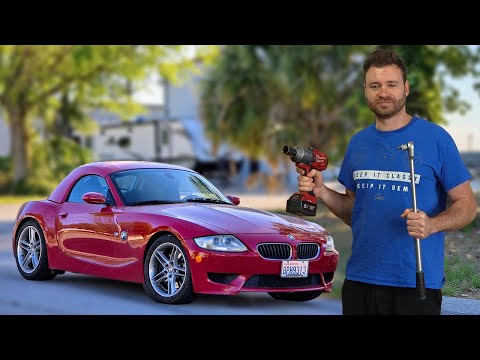
Unleashing Power: Transforming BMW Z4M Roadster with S54 Engine
Join M539 Restorations as they transform a BMW Z4M Roadster with an iconic S54 power plant. From uncovering oil leaks to upgrading to a Euro-spec exhaust, follow the journey to unleash the full potential of this automotive masterpiece.