
2027 Range Rover Electric Review: Performance and Ownership
Explore the 2027 Range Rover Electric review covering performance, range, price, off-road ability, and ownership insights.
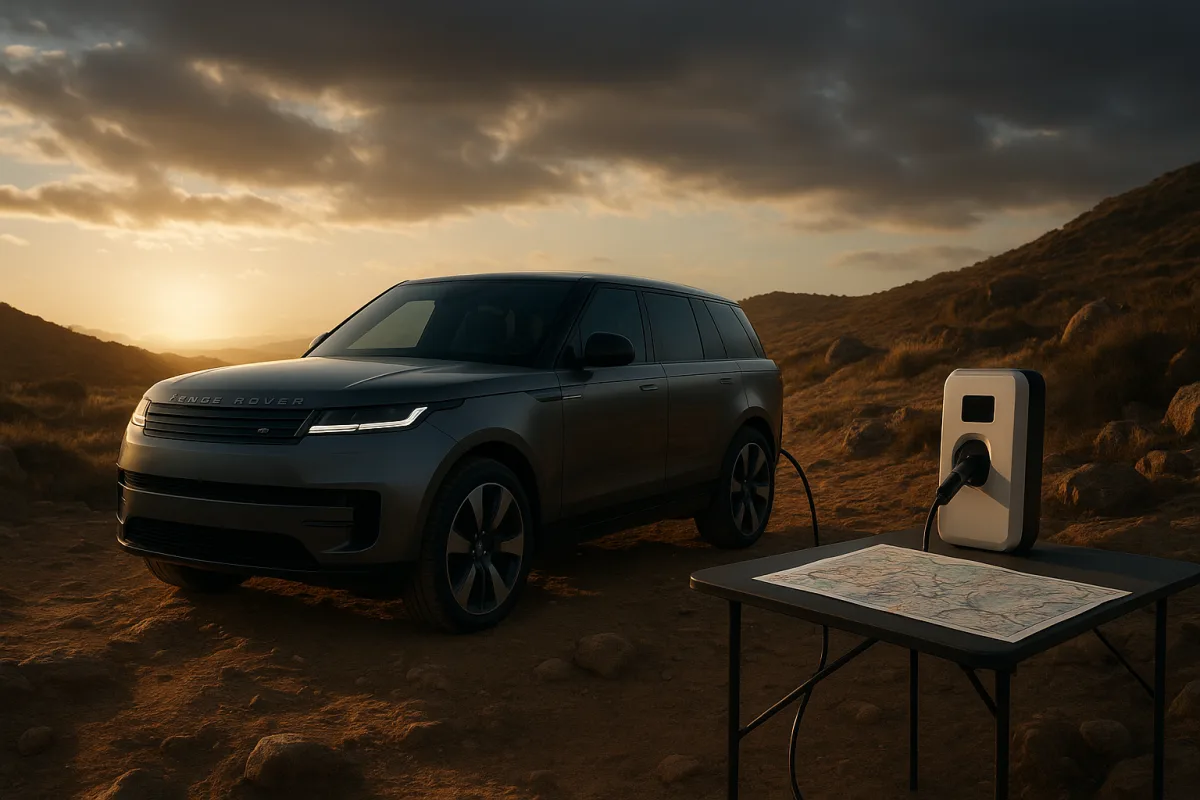
The electric Range Rover arrives as a very expensive normal Range Rover
The 2027 Range Rover Electric is deliberately not a new-looking electric flagship. It is the familiar fifth-generation L460 Range Rover with a charging port, revised grille, aero-focused wheels and a smoother underbody. That restraint is probably the point. [3][12]
Range Rover has spent decades selling a particular kind of luxury: tall seating, calm ride quality, serious towing and genuine rough-ground ability beneath a very polished cabin. A silent electric drivetrain suits much of that brief better than another high-output petrol engine.
It will be offered in short- and long-wheelbase forms, with SE, Autobiography, SV and SV Ultra versions available. The First Edition adds Light Cloud Ultrafabrics trim and selected paint choices, while bespoke ordering remains available for buyers who want to spend further. [12]
The starting price is $138,000 in the United States, before destination, tax, registration and options. That is a base-vehicle number, not an on-the-road ownership figure, and options on a Range Rover can move the final transaction price substantially. [2][12]
For context, Tom’s Guide lists the Cadillac Optiq V-Series at $79,270, with 519 horsepower, a claimed 3.5-second 0-60 mph time and 250 miles of EPA range. It suits someone wanting fast electric luxury in a much smaller, more road-oriented package. [4]
Wallpaper lists the Rivian R1S from $83,990, with 835 horsepower, a 3.0-second 0-60 mph claim and 314 miles of EPA range. It suits buyers who want a three-row electric SUV with stronger published off-road geometry and a far lower entry price. [5]
Neither alternative is really a direct social or practical replacement for a long-wheelbase Range Rover Autobiography. Still, their prices show how much the Range Rover buyer is paying for cabin ambience, badge, build personalization and established flagship-SUV positioning.
The numbers that matter, and the ones that need scepticism
The sole announced EV550 powertrain uses two 260 kW permanent-magnet motors, one at each axle. Combined output is 542 horsepower and 627 lb-ft of torque, with all-wheel drive as standard and a 0-60 mph claim of 4.3 seconds. [3][12]
That makes it faster than a large luxury SUV needs to be, but speed is not the ownership story here. The more relevant figure is the 118.5 kWh usable battery, mounted beneath the passenger compartment in an 800-volt electrical system. [2][12]
Range Rover quotes up to 333 miles of EPA range. That is a respectable result for a very large, heavy SUV, but it is not class-leading, and it should be treated as a laboratory-derived reference rather than a promise for every journey. [2][3]
Speed, cold weather, large wheels, cabin heating, steep terrain, luggage and towing all increase consumption. A motorway journey at American interstate speeds will not resemble an urban EPA cycle, and towing a horsebox or large trailer is especially punishing for range.
Range Rover says its thermal-management system helps preserve range and charging performance in extreme temperatures. The company claims ThermAssist can reduce heating energy consumption by up to 40 percent, but that remains a manufacturer claim awaiting independent winter testing. [12]
The 800-volt architecture supports up to 350 kW DC charging. Range Rover claims a 10-80% charge in approximately 22 minutes, or 125 miles of added range in 10 minutes, when using a suitable high-power charger. [3][12]
Those claims need translating into the real world. Moving from 10% to 80% means adding roughly 83 kWh to the 118.5 kWh usable pack, before charging losses. Averaging that in 22 minutes requires excellent conditions and a charger that can actually sustain high output.
A 350 kW charger sign does not guarantee a 350 kW session. Battery temperature, charger sharing, site voltage, state of charge and the vehicle’s own charging curve all control the outcome. This is why independent charging tests matter more than peak-rate headlines.
For home use, Range Rover says a 22 kW AC charger can recharge the battery from empty in around seven hours. Most American homes cannot simply provide 22 kW without appropriate electrical capacity and installation work, so buyers need an electrician’s assessment first. [2]
The U.S.-market vehicle has a native NACS charging port and Plug & Charge compatibility at selected networks. Tesla Supercharger access should make long-distance routing easier, but it does not eliminate the usual EV variables of occupied stalls, trailer access and faulty equipment. [2][12]
Why millisecond traction control matters more than horsepower
The most interesting part of the Range Rover Electric is its integrated traction-management system. Range Rover says the electric drive units can react to wheel slip in as little as one millisecond, far faster than a conventional engine, gearbox and brake-based system. [11][12]
Here is how that changes a muddy climb. In a combustion Range Rover, the driver requests torque with the accelerator, then the engine responds, the transmission takes up load and brake-based traction control intervenes when a wheel begins spinning.
In the Electric, each axle motor is governed by an inverter that can alter electrical current almost immediately. If a wheel starts to accelerate faster than vehicle speed suggests it should, the system reduces that motor’s torque before the spin becomes dramatic.
That does not mean the vehicle has four independent wheel motors. It has one motor per axle, with an open differential at the rear, so it still uses selective braking to control a spinning wheel and direct useful torque toward the wheel with grip. [11]
The practical gain is smoother control rather than magic. An open differential naturally sends torque along the easiest path, usually to the wheel slipping. Braking that wheel creates resistance, allowing torque to reach the wheel that is actually pressing into firm ground.
Range Rover’s Intelligent Torque Management can vary rear-axle torque distribution from zero to 100 percent, while the electric motors respond more quickly than an engine can. The system should make loose rocks, snow and sand less jerky, especially for inexperienced drivers. [10][12]
Edmunds found the single-pedal mode useful during a brief off-road drive, reporting controlled progress on steep terrain. The system can hold the vehicle on an incline and meter acceleration without the driver moving repeatedly between brake and accelerator. [10]
Range Rover claims the mode can pull away on a 33-degree slope and control descents as steep as 45 degrees. Those are impressive development-site figures, but they are not a substitute for tyre choice, surface assessment, ground clearance and sensible driving. [12]
This is also where electric propulsion fits the Range Rover better than its on-paper range suggests. On a slow technical trail, precise torque from zero rpm is valuable. It removes the lag, gearbox shifting and driveline slack that make smooth progress harder in an engine-powered SUV.
Off-road capability has one important compromise
The Range Rover Electric can wade through 35.4 inches, or 900 mm, of water, provided the driver does not exceed the vehicle’s limits or lose traction through buoyancy. The battery enclosure and propulsion hardware are sealed for this purpose. [2][10][12]
That is meaningful capability, not decorative SUV marketing. It also retains adjustable air suspension, although the Electric has 10.3 inches of ground clearance, 1.2 inches less than the V8 model because the battery has changed the packaging underneath. [2][10][11]
This difference matters most at the crest of a steep rise, where breakover clearance determines whether the underbody touches. No amount of fast torque control can lift the centre of a 2.8-tonne SUV clear of a rock or a sharp rut.
Range Rover’s published testing includes extreme cold, desert heat and significant off-road development. That is encouraging, but it is not the same as long-term independent use in winter salt, repeated deep-water crossings, damaged charging infrastructure and years of battery ageing. [12]
The Electric is also rated to tow up to 2,500 kg, less than the 3,500 kg maximum of the combustion Range Rover. Buyers who routinely tow heavy caravans, boats or horse trailers should consider that reduced limit and expect a major range penalty. [2]
Ownership at 60,000 miles remains the unanswered question
There are no owner reports, independent reliability surveys or meaningful repair-cost histories for the 2027 Range Rover Electric yet. Anybody presenting a precise five-year ownership bill today is filling in gaps with assumptions, not reporting established facts.
The battery and electric propulsion system carry an eight-year, 100,000-mile warranty. That is useful protection for the most expensive new hardware, but it does not tell us what happens after warranty, or what smaller electrical, suspension and infotainment faults may cost. [3][12]
Range Rover’s Battery Digital Twin monitors hundreds of battery data points and can flag potential issues through over-the-air systems. Remote diagnosis may prevent some inconvenient failures, but it also means owners will depend heavily on dealer software capability and manufacturer support. [2][12]
Routine EV servicing should remove oil changes, spark plugs, exhaust repairs and conventional automatic-transmission servicing. It does not remove tyre costs, brake-fluid changes, cabin filters, alignment needs, air-suspension wear, cooling-system work or the risk of expensive luxury-electronics repairs.
Depreciation deserves just as much caution. Ridekick estimates that a 2016 Range Rover lost roughly 80.6% to 87.5% of its value over ten years, while iSeeCars puts five-year retained value around 52.5% for the Lexus RZ 450e and 53.1% for the Porsche Taycan. [7][8]
Those are not forecasts for this model. They are a warning that luxury EV residual values can move quickly when new-car incentives, charging technology and used supply change, while Range Rover depreciation has historically been severe enough to matter more than electricity savings.
The sensible early buyer is someone who can charge at home, does not regularly tow near the maximum limit, values near-silent progress and wants real all-weather capability. The sensible cautious buyer waits for independent range, charging and reliability evidence after deliveries begin.
Frequently Asked Questions
What is the driving range of the 2027 Range Rover Electric?
The 2027 Range Rover Electric has a claimed EPA estimated range of up to 333 miles per full charge. This figure is based on manufacturer estimates under ideal conditions, and real-world range may vary significantly depending on factors such as speed, temperature, and load.
How fast does the 2027 Range Rover Electric accelerate?
The vehicle claims a 0-60 mph acceleration time of 4.3 seconds. This performance is delivered by dual 260 kW motors producing a total of 542 horsepower and 627 lb-ft of torque.
What is the starting price of the 2027 Range Rover Electric?
The starting price in the United States is $138,000 before destination fees, taxes, registration, and options. This base price reflects the full-size Range Rover body and luxury positioning, which is higher than comparable electric SUVs like the Rivian R1S and Cadillac Optiq V-Series.
How does the 2027 Range Rover Electric perform off-road?
The electric Range Rover features advanced electric traction control that can adjust motor response in milliseconds, improving slow off-road driving precision. It has 10.3 inches of ground clearance—1.2 inches less than the V8 combustion model—and a substantial 35.4-inch wading depth, supporting serious off-road use despite some limitations due to battery packaging.
What maintenance is required for the 2027 Range Rover Electric?
Specific maintenance requirements for the 2027 Range Rover Electric are not yet available. It is expected to be quieter and potentially lower-maintenance than combustion models, but there is no model-specific data on maintenance costs, reliability, or depreciation at this time.
How we researched this
This article was assembled from 8 published articles, 12 cited references.
Nothing here is based on hands-on testing. Where a figure or finding appears, it belongs to the source cited beside it, and the writing says so rather than implying otherwise. Every source is listed below so you can check it.
Sources
Electrifying an Icon: Range Rover Finally Adds an EV to Its Roster — Car and Driver
Can Range Rover succeed where other luxury EVs are failing? — Autocar
2027 Range Rover Electric Finally Revealed Looking Identical To The Gas-Powered Range Rovers — Jalopnik
I Drove The $138,000 Range Rover Electric Off-Road. It Was Exceptional — InsideEVs
Range Rover Electric Debuts With 333 Miles Of Range And Serious Off-Road Chops — Motor1
View Interior Photos of the 2027 Land Rover Range Rover Electric — Car and Driver
Range Rover goes electric: £154k, 372 miles of range and 2885kg — Autocar
View Exterior Photos of the 2027 Land Rover Range Rover Electric — Car and Driver
Here's our first look—and drive—of the 2027 Range Rover Electric - Ars Technica
I drove the Cadillac Optiq for a week - and it makes other compact electric SUVs look tiny
Rivian updates its flagship R1 electric SUV with new colours, trim and interior options
Used EV Prices Are Falling - Here's How They Compare to Gas Cars Now
Land Rover Range Rover 10-Year Depreciation: Value by Trim | Ridekick
Land Rover Range Rover Depreciation — Loses ~95% in 17 Model Years
Can the Range Rover Electric Off-Road Like a Proper Land Rover? I Took a Brief Drive to Find Out
Range Rover Electric Debuts at Goodwood: 800V Charging, One Key Trade-Off
RANGE ROVER ELECTRIC: A NEW ERA FOR THE ORIGINAL LUXURY SUV | Range Rover Media Newsroom
Related Articles
2027 BMW 3 Series M350 vs i3
Compare the 2027 BMW 3 Series M350 and i3 models on performance, ownership costs, and market challenges to find which suits your needs best.

Mercedes-AMG CLE 646 Ownership
Explore Mercedes-AMG CLE 646 ownership, including performance, maintenance, costs, and the driving experience of this exclusive V8 coupe.
2027 New SUV and Pickup Models: Features and Ownership Guide
Explore 2027 new SUV and pickup models with insights on performance, ownership costs, maintenance, and driving experience.
Volkswagen ID.3 GTI Review: Electric Performance and Updates
Explore the Volkswagen ID.3 GTI's electric performance, key updates, and what to expect from ownership and driving experience.