
Volkswagen ID.3 GTI Review: Electric Performance and Updates
Explore the Volkswagen ID.3 GTI's electric performance, key updates, and what to expect from ownership and driving experience.
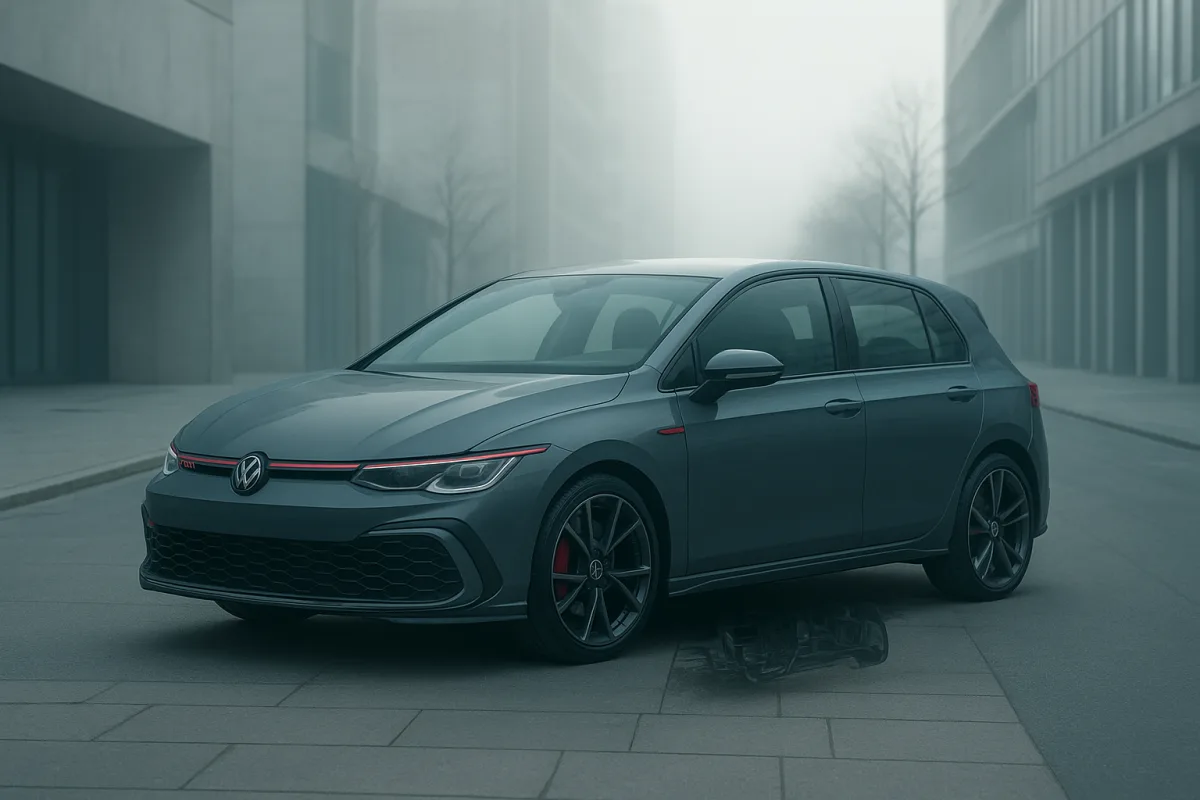
Volkswagen has changed what GTI means
The shift is plain: Volkswagen is turning GTI from a front-wheel-drive petrol formula into a performance label that can sit on electric cars with different layouts. The 2027 Volkswagen ID.3 GTI is the decisive example, because it sends 322bhp and 402lb ft to its rear wheels. [1]
That matters more than the extra horsepower. The traditional Golf GTI idea was always specific, a practical hatchback, a turbocharged four-cylinder, a manual gearbox in earlier generations, and driven front wheels managed by a clever differential.
Volkswagen is not merely adding red trim to an existing electric hatch. It has retired the GTX badge from the top ID.3, retained the rear-motor MEB layout and replaced the old performance sub-brand with GTI branding. [7]
There is supporting evidence that this is a wider policy rather than an isolated badge exercise. The smaller Volkswagen ID. Polo GTI also carries the GTI name, although that car uses front-wheel drive, closer to the historic formula. [7]
The two cars point in different directions. The ID. Polo GTI preserves the front-driven hot hatch convention, while the ID.3 GTI uses the packaging Volkswagen already has, then asks buyers to accept that rear drive can belong under the same badge.
That is pragmatic product planning, not heritage purity. Volkswagen needs to make performance EVs out of its existing platforms, and the ID.3’s motor has always lived at the rear axle, so converting it to front drive simply for badge consistency would be costly and unnecessary.
The mechanical case for rear drive
The Volkswagen ID.3 GTI uses a rear-mounted 240kW electric motor, a one-speed gearbox and a 79kWh usable battery. Volkswagen quotes 0-62mph in 5.6 seconds and limits top speed to 124mph. [1]
Those figures are brisk, but acceleration is not the interesting bit. An electric hatchback with 402lb ft can expose a poor chassis very quickly, particularly when that torque arrives without the progressive build-up of a turbocharged petrol engine.
Rear drive gives the front tyres a simpler job. They steer rather than simultaneously trying to steer, transmit several hundred pound-feet of torque and manage wheelspin, which should remove the torque steer and steering corruption familiar in powerful front-driven cars.
There are theoretical benefits when accelerating out of a corner too. Weight transfers rearward under power, loading the driven tyres, while the front axle remains available to place the car accurately. That is a sound engineering case, not a guarantee of involvement.
Volkswagen says the ID.3 GTI has MacPherson front suspension, a five-link rear axle, progressive steering and adaptive DCC dampers. A dedicated GTI mode changes motor response, steering and damping, and enables launch control. [1]
The important qualification is that nobody outside Volkswagen’s development operation has yet produced a meaningful back-to-back comparison with a current Golf GTI. There are no independent handling figures, no tyre-temperature data and no credible road-test consensus yet.
So the claim that rear drive will make the ID.3 GTI more engaging remains plausible rather than proven. It ought to feel cleaner when accelerating hard through a tight bend, but engagement also depends on steering feel, brake consistency, damping control and weight.
That last point is worth remembering. A Golf GTI is not loved because it is the quickest hot hatch on paper. It works because it communicates clearly at ordinary speeds, rides well enough for daily use and does not make a commute feel like a compromise.
More power does not automatically mean a better GTI
The ID.3 GTI’s 322bhp exceeds the Golf GTI Edition 50’s output by one horsepower. [7] That makes a tidy headline, but it does not make the electric car a direct replacement for the petrol anniversary model.
Hagerty’s assessment of the Golf GTI Edition 50 identifies what the electric car has to match in the real world. The petrol car’s appeal is its breadth, credible everyday comfort, sharp front-end response, strong traction and track-day ability in one usable hatchback.
That Edition 50 uses the long-running EA888 turbocharged petrol four-cylinder, producing 321hp and 310lb ft. Hagerty also notes the awkward truth for purists: it is DSG-only, despite Volkswagen engineers apparently having built a manual prototype. [1]
The ID.3 GTI makes that transmission argument obsolete because it has no conventional gearbox at all. There will be immediate response and smooth thrust, but no clutch pedal, no rev-matching and no choice of gear to settle the car before a corner.
Volkswagen is attempting to fill part of that emotional gap with a synthesised combustion-engine soundtrack in GTI mode. [1] Some drivers will enjoy the theatre, while others will reasonably regard it as a software layer over an otherwise quiet drivetrain.
The better evidence of intent is in the detail rather than the artificial sound. Volkswagen has given the car GTI-specific chassis tuning, sports seats, a GTI steering-wheel button and an instrument display mode inspired by the original Mk1 Golf GTI. [1]
Still, these are not substitutes for long-term character. The ID.3 GTI will need to show that its steering retains useful weight and texture away from maximum-attack mode, and that its adaptive dampers do not become tiring on poor British roads.
The ID.3 update fixes some daily-use problems
Anyone who has lived with a car knows small interface irritations become disproportionately important after six months. The pre-update ID.3’s cabin gained a poor reputation for touchscreen dependence, unlit sliders and awkward steering-wheel touch controls.
The revised ID.3 interior appears to address much of that. Motor1 reports proper steering-wheel buttons, a volume knob, dedicated rear-window switches and a conventional control strip beneath the 12.9-inch central screen. [7]
Those changes should matter more at 60,000 miles than a new lighting signature. Physical controls can be operated without taking eyes off the road, and they are less likely to turn a simple adjustment into a menu-diving exercise.
Volkswagen has also enlarged the driver display to 10.25 inches and retained the 12.9-inch infotainment screen. [7] More screen area is not automatically progress, but a clearer instrument display helps when the car’s range, charging state and navigation are central to ownership.
The GTI adds tartan-inspired Superclark upholstery and red details, which is appropriate without being especially important. More useful is whether the sport seats remain supportive after several hours, because many modern performance seats impress in a showroom but punish a long motorway run.
Range needs a reality check
Volkswagen quotes up to 373 miles of WLTP range, or 601km, and a combined consumption forecast of 14.5kWh per 100km. [1] Those are official-cycle numbers, useful for comparing cars but not a sensible promise for winter commuting.
A more realistic mixed-driving expectation is about 480-490km, roughly 300 miles, allowing for the typical gap between WLTP testing and real conditions. Cold weather, cabin heating, motorway pace, hills and enthusiastic use will all pull that lower.
No independent ID.3 GTI range test exists because the car is not on sale yet. That absence matters, particularly because 322bhp, rear-drive traction and an optional wider 235-section tyre package invite exactly the sort of use that worsens consumption. [7]
Charging is quoted at up to 183kW, with a manufacturer claim of 10 to 80 percent in 29 minutes. [1] As ever, that is a best-case peak-rate figure, dependent on battery temperature, charger capability and a sufficiently low starting state of charge.
There is at least encouraging longer-term evidence from the broader ID.3 family. An ADAC-tested ID.3 Pro S Tour reportedly retained 91 percent battery capacity after 107,000 miles, which suggests the underlying battery can age respectably. [2]
That is not a promise for the GTI, whose use profile may be very different. It does, however, weaken the lazy assumption that an electric hot hatch is automatically a disposable five-year proposition once the battery warranty ends.
Price and running costs are the uncomfortable questions
Volkswagen has not confirmed broad European pricing or trim structure for the ID.3 GTI. A Danish dealer expectation puts the starting price at 364,995 Danish kroner, approximately €49,000, while the regular ID.3 Neo begins at €32,990 in Germany. [3][4]
The old ID.3 GTX Performance was priced above £46,000 in Britain, according to CarScoops. [7] If the GTI lands around that mark, it will cost more than many buyers expect for a compact Volkswagen hatchback.
That price also places it close to the petrol Golf GTI Edition 50, which Hagerty puts at around £50,000 with its essential Performance Pack. The petrol car offers a known EA888 drivetrain and traditional GTI behaviour, even if its price is hard to call affordable.
The electric car should need less routine mechanical servicing. There are no engine-oil changes, spark plugs, DSG fluid services or exhaust-system concerns, but that does not mean running costs will be negligible.
Tyres, brakes, suspension joints, wheel bearings, climate-control components and accident repairs still exist. In fact, a heavy, high-torque rear-driven hatch may be harder on rear tyres than owners of a conventional front-driven Golf GTI expect.
Volkswagen has not yet published ID.3 GTI-specific maintenance schedules, ownership costs or warranty terms. It would be wrong to borrow Golf GTI figures and present them as an EV forecast, because the wear items and labour patterns are materially different.
For context only, published estimates put a petrol Golf GTI’s 10,000-mile service at $130-$220, a 40,000-mile service at $450-$750 and a 60,000-mile service at $400-$650. [5] Those costs are driven partly by combustion-engine maintenance the ID.3 will not require.
Volkswagen’s current US coverage lists an eight-year, 100,000-mile high-voltage battery warranty for EVs, alongside four years or 50,000 miles of new-vehicle coverage. [8] European-market ID.3 GTI terms must be confirmed locally before treating those figures as applicable.
What this means for a buyer planning ahead
The sensible project is not to chase an early build slot because the badge says GTI. It is to work out whether home charging, regular journey length, winter range and insurance costs suit an electric hatch before deciding between ID.3 GTI and Golf GTI.
A driver with dependable overnight charging, mostly local and regional mileage, and an interest in a rear-driven chassis has a credible reason to wait for the ID.3 GTI. Its likely 300-mile mixed range should cover most normal weeks comfortably.
A driver who does repeated long motorway journeys, lacks home charging or enjoys manual interaction should be cautious. The Golf GTI remains the more familiar proposition, while the ID.3 GTI’s long-distance charging performance and road manners need independent confirmation.
For used buyers, patience is even more sensible. The first cars should establish whether the revised cabin electronics are durable, how quickly the rear tyres disappear, whether DCC dampers remain reliable and what insurers make of battery and body repairs.
Volkswagen’s trend is real: GTX is giving way to GTI, electric performance is moving beyond front drive, and familiar enthusiast badges are being reused to make EVs legible. Whether the ID.3 GTI earns that badge will depend less on 322bhp than on its behaviour after several winters and many charging stops.
Frequently Asked Questions
What are the key features of the Volkswagen ID.3 GTI?
The ID.3 GTI features a rear-mounted 240 kW (322 bhp) electric motor delivering 402 lb ft of torque to the rear wheels. It uses a 79 kWh usable battery, has a one-speed gearbox, and can accelerate from 0-62 mph in 5.6 seconds with a top speed limited to 124 mph. The car includes MacPherson front suspension, a five-link rear axle, progressive steering, adaptive DCC dampers, and a dedicated GTI mode that adjusts motor response, steering, damping, and enables launch control.
How does the ID.3 GTI compare to the traditional Golf GTI?
Unlike the front-wheel-drive Golf GTI with a turbocharged petrol engine, the ID.3 GTI is rear-wheel drive and fully electric. It produces slightly more horsepower than the Golf GTI Edition 50 but lacks a manual gearbox or multi-gear transmission. The ID.3 GTI aims to deliver cleaner acceleration and reduced torque steer due to its rear-drive layout, but independent comparisons on handling and driver engagement are not yet available.
What is the driving experience of the Volkswagen ID.3 GTI?
The ID.3 GTI’s rear-wheel-drive setup should reduce torque steer by separating steering and drive tasks between front and rear wheels. This layout may improve traction and chassis balance, especially when accelerating out of corners. However, the overall driving engagement depends on factors like steering feel, brake consistency, and suspension tuning, which have yet to be independently verified.
What updates does the new ID.3 model include?
Volkswagen has returned to physical cabin controls in the ID.3 GTI, moving away from the touchscreen-first interior of earlier ID.3 models. The car also features a GTI-specific driving mode with a synthesized combustion-engine soundtrack to simulate traditional GTI sounds. These updates aim to improve daily usability and preserve some emotional connection to the GTI heritage.
What are the expected range and performance specs of the ID.3 GTI?
Volkswagen’s official WLTP range is up to 373 miles (601 km), but real-world range is expected to be closer to 300 miles (480–490 km) under mixed driving conditions. The ID.3 GTI accelerates from 0-62 mph in 5.6 seconds and has a top speed limited to 124 mph. Real-world range and performance data will be clearer after the model’s 2027 launch and subsequent independent testing.
How we researched this
This article was assembled from 1 video source, 7 published articles, 8 cited references.
Nothing here is based on hands-on testing. Where a figure or finding appears, it belongs to the source cited beside it, and the writing says so rather than implying otherwise. Every source is listed below so you can check it.
Sources
The best VW Golf GTI ever? Driving the brilliant "Edition 50" | Henry Catchpole - The Driver’s Seat — Hagerty
The Volkswagen ID.3 GTI Is a Rear-Wheel Drive Hot Hatch for Europe — Road & Track
McLaren to add SUV and second factory in major UK expansion — Autocar
Nissan Kicks Heads To Europe With Hybrid Power Alongside Two New EVs — CarScoops
The New Volkswagen ID.3 GTI Is The Most Powerful GTI Ever — Motor1
New 322bhp Volkswagen ID 3 is first rear-driven GTI — Autocar
VW’s Most Powerful GTI Ever Is A RWD Electric Hot Hatch — CarScoops
Porsche 550 Spyder: The $95,000 Electric Tribute With One Catch — Motor1
Volkswagen ID.3 Neo te bestellen vanaf 32.990 euro – Autointernationaal.nl
Volkswagen GTI maintenance schedule, costs & known repairs - Carlyle
Volkswagen Golf GTI Maintenance Schedule and Costs | CarEdge
Volkswagen ID.3 GTI Debuts as Most Powerful GTI - The EV Report
Watch Volkswagen's New Electric GTI and ID.3 Updates on Youtube
Related Articles

Mercedes-AMG CLE 646 Ownership
Explore Mercedes-AMG CLE 646 ownership, including performance, maintenance, costs, and the driving experience of this exclusive V8 coupe.
2027 Range Rover Electric Review: Performance and Ownership
Explore the 2027 Range Rover Electric review covering performance, range, price, off-road ability, and ownership insights.
High-Performance Exotic Car Ownership
Explore high-performance exotic car ownership costs, maintenance, modifications, and financing to make informed decisions about your dream vehicle.

Volkswagen Group Restructuring
Explore Volkswagen Group restructuring impact on ownership, model cuts, maintenance, and driving experience in this detailed analysis.