
Automotive Legal and Regulatory Issues Affecting Ownership
Explore key automotive legal and regulatory issues, recalls, lawsuits, and maintenance rules impacting vehicle ownership and buyer decisions.
The quick list
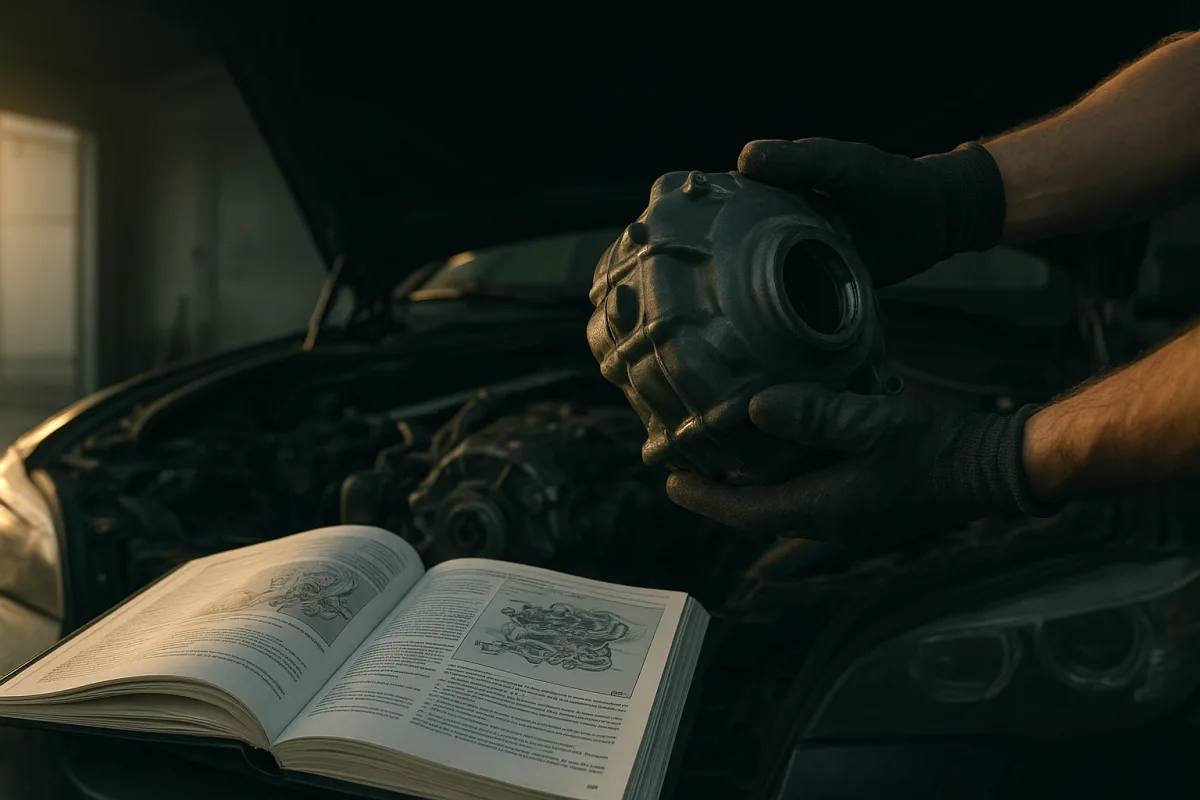
Best overall ownership precaution: BMW xDrive SUV front-differential service, for owners planning to keep a G05 X5, G06 X6 or G07 X7 past 50,000 miles.
Best value recall fix: 2023-2025 Ford Mustang Mach-E with the affected LFP battery and replacement BECM, for owners who can confirm the free software remedy has been completed. [4][5]
Best for low-risk EV buying: Chevrolet Bolt EV with documented battery-recall completion, for used-EV shoppers who want a known settlement backdrop and paperwork rather than unresolved battery history. [6]
Best for family-car caution: Chrysler Pacifica Hybrid, for buyers who will verify recall status, charging-system history and buyback eligibility before treating a discounted example as a bargain. [7]
Best for drivers who need broadcast reception: An EV retaining AM and FM hardware, for rural drivers, emergency-preparedness buyers and anyone unwilling to depend entirely on phone coverage or streaming. [1]
The question is not whether a lawsuit, recall or bill makes a car automatically bad. The practical question is simpler: what can actually strand you, cost you money after the warranty expires, reduce resale value, or leave you arguing with a dealer?
That matters more than the press-release version of “lifetime” fluids, over-the-air fixes and advanced driver assistance. Most owners meet regulation through an envelope, a dealer appointment, a denied goodwill claim or a lower trade-in offer.
Comparison table: the ownership exposure that matters
| Issue or vehicle | Model years or scope | What can go wrong | Known cost or remedy | What a buyer should verify | Best suited to |
|---|---|---|---|---|---|
| BMW xDrive front differential | G05 X5, G06 X6 and G07 X7 through 2025 in the Pennsylvania proposed class | Alleged premature front-differential failure after fluid degradation | One plaintiff paid $6,199.01, though liability has not been established | Service records showing front-differential fluid changes around 40,000-60,000 miles | Long-term luxury-SUV owners willing to maintain beyond the dashboard schedule |
| Ford Mustang Mach-E LFP BECM recall | Certain 2023-2025 cars, 86 vehicles | Incorrect battery health and charge calculation, possible power loss or overheating | Free software update, with no crashes, injuries or fires reported at filing | VIN recall status and completion of BECM update | Owners of affected cars who can get the update promptly [[4]](https://www.cars.com/research/ford-mustang_mach_e-2025/recalls/?utm_source=openai "2025 Ford Mustang Mach-E Recalls |
| Tesla Model S Autopilot litigation | 2014 Model S in the reported California case | Driver overreliance allegations following a fatal collision | Settlement confidential, separate Florida verdict was $243 million | Driver-assistance limitations, warnings, insurance and crash history | Buyers who understand Level 2 systems require supervision |
| Chevrolet Bolt EV battery litigation | 2017-2022 Bolt EV | Battery-fire allegations | $150 million GM and LG Energy Solution settlement remains subject to appeal | Battery replacement or recall documentation | Used-EV buyers prioritising a paper trail [6] |
| Chrysler Pacifica Hybrid lawsuit | 67,000 vehicles named in buyback claim | Hybrid-system and related ownership complaints alleged | Buyback sought, outcome unresolved | Recall work, charging history and warranty position | Families comfortable with extra due diligence [[7]](https://www.carcomplaints.com/news/2026/chrysler-pacifica-hybrid-issues-class-action-lawsuit.shtml?utm_source=openai "Chrysler Pacifica Hybrid Issues Cause Class Action Lawsuit |
| AM-radio legislation | Future new U.S. passenger vehicles if enacted | Loss of AM access as manufacturers remove tuners | No buyer surcharge permitted by the House bill, but it is not law yet | Whether the actual trim has AM and FM reception | Rural and emergency-conscious buyers [1] |
The BMW dispute is really about maintenance language
Road & Track reported that Heckler v. BMW of North America centers on the front differential in xDrive-equipped G05 BMW X5, G06 BMW X6 and G07 BMW X7 models built through 2025. It remains a proposed class action, not a finding that BMW is liable.
The plaintiff bought a used 2020 BMW X5 M50i with around 10,000 miles, then reportedly encountered front-axle noise at roughly 47,000 miles. A mechanic diagnosed front-differential failure, and the stated repair bill was $6,199.01.
That is the sort of bill that changes the economics of a used luxury SUV. It is not comparable with a routine oil service, and it arrives at precisely the age when many cars are outside their original warranty.
There is an important qualification to the “lifetime fluid” framing. The independent research supplied for this roundup says BMW officially recommends front-differential fluid replacement every 50,000 to 60,000 miles in the United States, while European guidance for the G06 X6 specifies 50,000 miles or 60 months. [3]
That does not establish a universal global BMW policy, and owners should use the schedule applicable to their VIN and market. But it does make the phrase “lifetime fluid” a poor basis for skipping preventative work on an expensive all-wheel-drive driveline.
For someone comparing a rear-wheel-drive vehicle with an xDrive BMW, the extra front differential is not merely a layout advantage for winter traction. It is another high-value mechanical assembly with fluid, seals, gears and heat cycles to account for.
The sensible buying move is not to assume every xDrive unit is defective. It is to budget for the service, ask for invoices rather than verbal assurances, and have a specialist inspect for noise, leaks and metallic debris before purchase.
Ford’s Mach-E recall is small, but its fault is not trivial
CarScoops reported Ford’s September 2026 recall of 86 2023-2025 Mustang Mach-Es fitted with LFP batteries and replacement Battery Energy Control Modules. Ford estimated that all 86 affected vehicles had the defect. [5]
The issue is not the LFP battery pack itself wearing out unusually quickly. After a BECM replacement, the module may initialise battery state of health at 100 percent rather than reading the actual health of the battery installed.
That error can make the indicated state of charge look healthier than reality. In plain ownership terms, the displayed remaining range can be overly generous, then the car can limit power or eventually lose motive power as the mismatch catches up.
Ford also said inaccurate battery-health calculation could contribute to lithium plating after repeated DC fast-charging, creating a potential thermal-venting and fire risk. At the time of the filing, however, Ford knew of no linked crashes, injuries or fires. [5]
The remedy is a software update, which is the good version of a modern-car recall. It should be free, does not require a new battery, and is materially less disruptive than a pack replacement, but it still needs to be completed and documented. [4]
For a used Mach-E shopper, this is not a reason to reject every 2023-2025 car. It is a reason to run the VIN, confirm whether the car has an LFP pack and establish whether a BECM was replaced previously.
Battery lawsuits are not interchangeable
The industry’s battery cases are easy to flatten into one scary headline, but they have different practical meanings. The Chevrolet Bolt EV case concerns 2017-2022 cars and battery-fire allegations, with a reported $150 million GM and LG Energy Solution settlement pending appeal. [6]
A Bolt EV with recall work fully recorded is a different proposition from one with unclear battery history. Its used price was not provided in the source material, so there is no honest way to call it cheap or expensive here.
The Chrysler Pacifica Hybrid case is different again. CarComplaints.com reports a lawsuit seeking buybacks covering 67,000 vehicles, which makes the core ownership concern less about an individual repair invoice and more about disruption, confidence and exit options. [7]
For family buyers, the Pacifica’s appeal is obvious: minivan space and plug-in hybrid running potential. The trade-off is that a hybrid system adds battery, charging and high-voltage components to an already complex family vehicle, so records matter unusually much.
The 2026 legal picture also includes a September lawsuit over 2023-2025 Volkswagen ID.4 battery-fire allegations, a Cadillac Lyriq electrical-defect suit and Jeep 4xe battery-fire disputes. These are claims and proceedings, not final judgments about every vehicle affected.
The useful distinction is between a settled case, an active recall, and an allegation awaiting court action. Treating all three as identical either exaggerates risk or misses an opportunity to negotiate price, warranty coverage or a pre-purchase inspection.
Autopilot terminology is now a legal ownership issue
CarScoops reported that Tesla settled confidentially in a California wrongful-death lawsuit involving a 2014 Model S that struck a fire truck at 70 mph in 2023. Data reportedly showed Autopilot had been engaged about 12 minutes before impact.
The case was headed for trial after Judge Vince Chhabria found the name “Autopilot” plausibly misleading and ruled that statements by Tesla chief executive Elon Musk could be legally actionable. Tesla continued to argue that warnings had been ignored.
The settlement does not prove fault in that individual case because its terms are confidential. It does, however, sit beside a 2025 Florida jury verdict requiring Tesla to pay $243 million after a separate Autopilot-related fatal crash.
For buyers, the rule is not complicated: Level 2 assistance is not self-driving capability. A car can steer, brake and adapt speed impressively, while still requiring eyes on the road, hands ready and a driver capable of correcting its mistakes.
This affects insurance, liability and everyday driving habits more than it affects the spec sheet. A system that is technically available is not necessarily one you should use in rain, complicated construction zones, poor lane markings or heavy emergency-vehicle activity.
AM radio has become a surprisingly practical EV regulation fight
The U.S. House passed the AM Radio for Every Vehicle Act in September 2026. If it becomes law, new passenger vehicles sold in America would need AM radio fitted without a separate charge above the base price. [1]
It has not passed the Senate or become a final rule. The bill would require the Department of Transportation, FEMA and FCC to produce rules within a year, so this is a pending equipment requirement rather than something to assume is already fitted.
The argument is not nostalgia alone. AM radio remains part of the Emergency Alert System, particularly where a mobile signal is patchy, a data plan has failed, or drivers are travelling outside the coverage footprint that streaming audio assumes.
Automakers’ objection has a technical basis. EV motors and their high-voltage power electronics can create electromagnetic interference that makes AM reception buzz, whine or become unusable unless manufacturers add shielding, filtering or revised antenna placement.
Tesla removed AM and FM reception from 2026 Model 3 and Model Y Standard trims beginning in October 2025, according to the research brief. Mazda, Polestar and Volkswagen have also removed broadcast tuners from some EVs in favour of app-based audio.
That creates a clear trade-off. Streaming offers choice and sound quality where mobile data works, while conventional radio needs no subscription, no phone pairing and no signal from a cellular network. Buyers should examine the trim-level equipment list, not just the model badge.
Regulation reaches further than dealerships and recalls
Not every development lands directly in a service bay. Motor1 reports that Audi’s planned A4 E-Tron production date has slipped to no earlier than March 2029 because of delays to Volkswagen Group’s Scalable Systems Platform.
That means shoppers waiting for an electric Audi A4-format saloon or Avant could be waiting longer than expected. It also means existing MEB- and PPE-platform EVs will remain the practical choice through much of the decade, rather than temporary placeholders.
Motorsport has also felt geopolitical risk. Jalopnik reported that the 2026 World Rally Championship cancelled its Saudi Arabian finale, shifting its season ending to Rally Italia Sardegna after regional developments and manufacturer travel restrictions.
For ordinary owners, that is not a repair issue. But it is a reminder that automakers, dealers, suppliers and racing programmes now operate under trade, travel and supply-chain pressures that can affect parts availability, model timing and contractual obligations.
Who each option suits
BMW xDrive owners and buyers: Best for people who accept the running-cost reality of a complex premium AWD SUV. The sensible approach is preventative front-differential servicing and a substantial repair reserve, not blind faith in “lifetime” terminology.
Ford Mustang Mach-E owners: Best for owners of unaffected cars and affected cars with recall paperwork. The specified software fix is straightforward, but anyone buying used should confirm battery configuration and BECM history rather than relying on dashboard range alone.
Chevrolet Bolt EV shoppers: Best for value-focused used-EV buyers who can verify recall completion and understand the settlement remains subject to appeal. The source material provides no vehicle price, so condition and documentation should drive the decision.
Chrysler Pacifica Hybrid families: Best for buyers who need minivan packaging and can tolerate added research. Do not let a lower asking price substitute for checking recall status, warranty coverage, charging behaviour and the legal case’s eventual outcome.
Tesla Model S shoppers interested in Autopilot: Best for drivers who see driver assistance as a backup, not a chauffeur. The system’s legal disputes make clear that the person in the driver’s seat still carries the responsibility.
EV buyers who need radio resilience: Best for rural motorists, long-distance travellers and anyone planning for emergencies. Until federal legislation is enacted and implemented, AM and FM availability remains a trim-by-trim question, not a guaranteed feature.
Frequently Asked Questions
What are common legal issues affecting car owners today?
Common legal issues include class-action lawsuits and recalls related to vehicle components such as BMW xDrive front differentials, EV battery defects in Chevrolet Bolt and Chrysler Pacifica Hybrid, and driver-assistance system liabilities like Tesla’s Autopilot cases. These issues often arise from alleged misrepresentations, premature failures, or safety risks that can affect warranty coverage, repair costs, and resale value.
How do recalls and lawsuits impact vehicle ownership?
Recalls and lawsuits do not mean every affected vehicle will fail, but they can lead to costly repairs, reduced resale value, and potential safety risks. Owners should verify recall completion, repair documentation, and warranty coverage to avoid unexpected expenses or liability, especially when buying used vehicles with known issues.
What maintenance is legally required for BMW xDrive SUVs?
BMW officially recommends replacing front-differential fluid every 50,000 to 60,000 miles or 60 months for xDrive models like the G05 X5, G06 X6, and G07 X7. Independent experts suggest more frequent changes at 40,000 to 50,000 miles to prevent premature failures, challenging BMW’s “lifetime” fluid claims.
What should buyers know about EV battery recalls and settlements?
Buyers should confirm recall completion and review settlement documentation, such as the $150 million Chevrolet Bolt EV battery settlement and Chrysler Pacifica Hybrid buyback lawsuits. These actions indicate known battery issues but also provide a legal framework for repairs or compensation, reducing ownership risks.
How does AM radio legislation affect new car equipment?
The U.S. House passed the "AM Radio for Every Vehicle Act" mandating AM radio tuners in all new passenger vehicles at no extra cost. However, Senate approval and rule implementation by federal agencies are still pending, so the requirement is not yet in effect for new cars.
How we researched this
This article was assembled from 8 published articles, 7 cited references.
Nothing here is based on hands-on testing. Where a figure or finding appears, it belongs to the source cited beside it, and the writing says so rather than implying otherwise. Every source is listed below so you can check it.
Sources
BMW Said a Differential Fluid Was Good for Life, Now It's Being Sued Over It — Road & Track
They Don’t Make ’Em Like They Used To, and Maybe That’s OK — Hagerty
Congress Advances Bill That Would Force Your EV To Have AM Radio — InsideEVs
Ford Recalls Mustang Mach-E Because A Battery Repair Can Make Things Worse — CarScoops
WRC Cancels Finale In Saudi Arabia, Season Will End In Italy — Jalopnik
Audi's Next A4 Delayed Until 2029 As VW's New EV Platform Falls Behind — Motor1
They Don’t Make ’Em Like They Used To, and Maybe That’s OK — Hagerty
Tesla Settles Potentially Costly Lawsuit Over Autopilot Death — CarScoops
Two drivers of Mercedes AMG cars file class action lawsuit over an alleged burn hazard in its logo
BMW X6, G06 / F96 (EU) (2020-2023) Differential fluid capacity & service interval
Ford Recalls Mustang Mach-E Because A Battery Repair Can Make Things Worse | Carscoops
Chevy Bolt EV Lawsuit: Class Action and $150M Settlement - LegalClarity
Chrysler Pacifica Hybrid Issues Cause Class Action Lawsuit | CarComplaints.com
Related Articles
Electric Vehicle Pricing and Ownership Costs Explained
Explore electric vehicle pricing, ownership costs, tax credit impacts, and key maintenance tips to make informed EV buying decisions.
Hypercar Ownership Challenges
Explore hypercar ownership challenges, costs, and maintenance insights for McLaren P1, SSC Tuatara, and Lamborghini Gallardo owners.
2026 Honda CRV and CRV Trail Sport Review: Off-Road Style and Refined Hybrid Performance
Savagegeese reviews the 2026 Honda CRV and CRV Trail Sport, highlighting the Trail Sport's off-road aesthetics and the CRV's refined hybrid drivetrain. The midcycle update maintains the CRV's competitive edge in the midsize SUV market.
2025 Lexus GX 550 Overt Trail Plus Review: Off-Road Adventure Await
Explore the 2025 Lexus GX 550 Overt Trail Plus in this review. Discover its off-road capabilities, interior design, and future adventures with the team.