
Rare Exotic Car Ownership Stories and Auction Insights
Explore rare exotic car ownership stories, auction values, and key risks for collectors and enthusiasts considering these unique vehicles.
The quick list
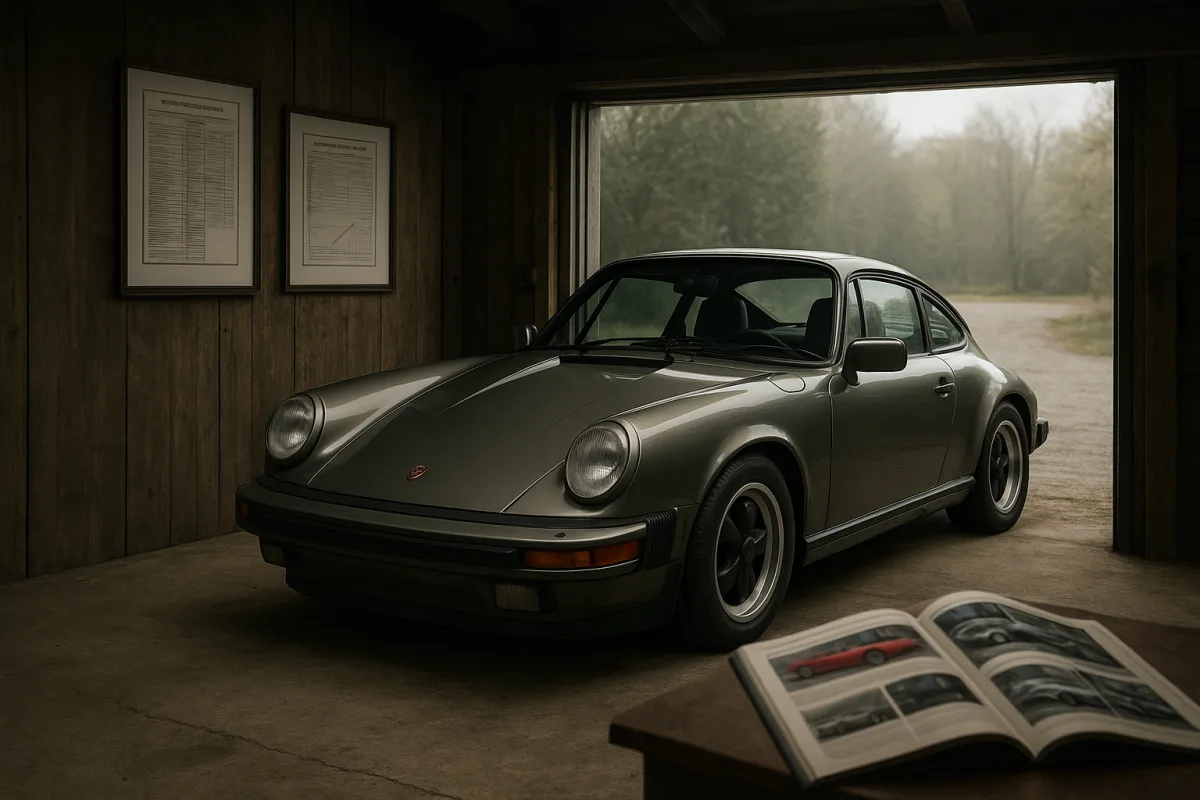
- Best overall: Porsche 911 Carrera S, 997 generation, for the enthusiast who wants a usable 911 with a real market, independent specialists and understandable ownership risks.
- Best value: High-mileage Porsche 911 SC, as documented by Vin_tra, for a hands-on buyer who values condition and service history above odometer reading.
- Best collector gamble: 1990 MCA Centenaire, offered through Broad Arrow’s Zoute auction, for a buyer comfortable with a seven-figure purchase and almost no parts-market safety net.
- Best for established ultra-rare support: Mercedes-Benz CLK GTR, for the collector who can tolerate an unverified eight-figure value and specialist-only maintenance.
- Best watched rather than bought: McLaren MCL-6GT, mentioned by Road & Track, for McLaren followers interested in the company’s new direction, because no purchase price or practical ownership data is supplied.
The useful question is not which of these cars produces the best dinner-party story. It is which ownership risk you are actually equipped to carry: a known mechanical bill, a disputed history, an impossible-to-source part, or an asset that may not be legally transferable for years.
That separates the Porsche examples from the CLK GTR and MCA Centenaire. The Porsches can be expensive, but they have a broad community of owners, workshops and parts suppliers. The Mercedes and Monaco-built supercar are closer to movable collections, where provenance and access to the right people matter as much as the machinery.
The numbers that matter
| Option | Price or estimate | Layout and mechanical character | Rarity and market depth | Ownership trade-off | Best suited to |
|---|---|---|---|---|---|
| Porsche 911 SC, Vin_tra’s 2020 purchase | Bought for $25,000, later found to have over 400,000 miles | Rear-engined, air-cooled flat-six, manual-era 911 | Common relative to the exotic cars here, with substantial specialist support | Odometer fraud risk, age-related work, prior repairs matter more than mileage | DIY-capable buyer who can inspect records and mechanical condition |
| Porsche 911 Carrera S, 997 generation | Recent average $63,443, range $42,997 to $100,997 [[5]](https://porschestats.com/faq/911/carrera-s/997?utm_source=openai "911 Carrera S (997) FAQ — Prices, Mileage, Buying Guide | Porsche Stats") | Rear-engined, water-cooled flat-six sports car | Deepest buyer and workshop market in this group | IMS work can cost $3,000 to $7,000, bore-scoring rebuilds $15,000 to $25,000 [[6]](https://www.carcollectorinternational.com/research/buyers-guides/porsche/997?utm_source=openai "Porsche 911 (997) Buyer's Guide (2005–2012) |
| Porsche 911 Turbo, 997 generation | Recent average $144,605, range $74,500 to $225,000 [[5]](https://porschestats.com/faq/911/carrera-s/997?utm_source=openai "911 Carrera S (997) FAQ — Prices, Mileage, Buying Guide | Porsche Stats") | Rear-engined, turbocharged 911 | Strong collector and enthusiast market | More money tied up, higher-performance hardware adds financial exposure |
| Mercedes-Benz CLK GTR | Original MSRP $1,547,620, current estimates around $10 million to $13 million, not recently verified [2][[3]](https://www.marque.cars/en-US/m/mercedes-clk-gtr?utm_source=openai "Mercedes-Benz CLK GTR Prices & Market Data — United States | Marque") | Mid-engined GT1 homologation road car, based closely on racing hardware | Extremely thin market, including six roadsters according to Mr JWW | Bespoke parts, specialist preservation, uncertain market value |
| 1990 MCA Centenaire | €900,000 to €1.2 million estimate, roughly $967,000 to $1.29 million when published [7] | Rear-wheel drive, 5.2-litre Lamborghini V12, ZF six-speed manual | Five built between 1990 and 1991 [7] | No published running-cost history or dependable parts data | Boutique-supercar collector or small museum |
| McLaren MCL-6GT | No price supplied by Road & Track | Stick-shift McLaren announced at Monterey Car Week | Production, servicing and resale evidence unavailable in the supplied material | Too little ownership evidence to assess | McLaren follower willing to wait for real-world data |
Auction estimates and private-market figures should not be treated as all-in prices. The supplied reporting does not state buyer’s premium, transport, insurance, tax, registration costs or any recommissioning work required after delivery. At this level, those omissions can amount to far more than a routine annual service.
The high-mileage Porsche lesson: paperwork beats the odometer
The strongest actual ownership story comes from the air-cooled Porsche 911 SC bought by the Vin_tra channel in 2020. The buyer paid $25,000 after finding what seemed to be a cheap 911 on Craigslist, then discovered that the advertised 115,000-mile reading was not credible.
The previous owner’s son identified the car and explained that it had covered roughly 402,000 miles before the odometer was removed or rolled back. The seller had reportedly bought it for $8,000 and resold it two days later for $25,000.
That is an ugly transaction, but it is not the same thing as proof the mechanical car was worthless. A compression and leak-down test reportedly found the flat-six healthy, while service records later surfaced covering work from 200,000 through 400,000 miles.
Those records included transmission rebuilding, top-end work, clutch replacement and suspension parts. That is the ownership point many buyers miss when shopping old 911s: a 400,000-mile car with documented major work can be less frightening than a 120,000-mile car with missing history.
The car also illustrated a smaller but useful air-cooled Porsche ownership lesson. Its smoke on startup initially suggested an engine about to demand a rebuild, but repeated short starts had allowed oil to collect in the cylinders. Proper warm-up cleared the problem.
None of that makes every smoky 911 safe. It does show why a pre-purchase inspection should include compression, leak-down, stud condition, oil leaks, gearbox operation and a review of invoices, rather than a quick glance at paint and an odometer.
For buyers who prefer a more modern 911, the 997 Carrera S is the more sensible comparison. The recent $63,443 average and $42,997 to $100,997 range offer a clearer market than either ultra-rare supercar. [5]
The catch is that a 997 is not a cheap Porsche merely because it is common. IMS bearing replacement is cited at $3,000 to $7,000, while cylinder-bore scoring can turn into a $15,000 to $25,000 rebuild. An engine replacement after IMS failure can exceed $25,000. [6]
The 997 Turbo sits in a different financial bracket, averaging $144,605 recently, with reported sales between $74,500 and $225,000. [5] It may be the stronger collector proposition, but a buyer should still assess service evidence and insurance as seriously as performance.
Insurance deserves more attention than it usually gets in enthusiast classifieds. The recent California case involving false luxury-car damage claims, including costumes used to imitate bear attacks, is a reminder that insurers are actively dealing with sophisticated fraud. [1]
That does not prove a particular Porsche costs more to insure. It does mean immaculate photographs, overly convenient damage stories and apparently generous agreed-value policies deserve scrutiny. A serious buyer should confirm cover terms before transferring money, not afterwards.
CLK GTR: ownership beyond the headline valuation
Mr JWW uses the Mercedes-Benz CLK GTR to explore the seizure of an exceptionally rare roadster allegedly connected with Canadian former snowboarder Ryan Wedding. The surrounding criminal allegations are dramatic, but the ownership issue is more mundane and more important: who keeps a rare car safe while its legal status is contested?
The channel describes the roadster as one of six, and explains the car’s GT1 roots. Mercedes created the road-going CLK GTR because FIA GT1 rules required homologation versions, producing a machine far closer to a race car than the CLK badge suggests.
That closeness is why a CLK GTR is not simply an old Mercedes with an expensive badge. Its race-derived architecture, unusual bodywork and tiny production volume mean even straightforward preservation can require specialist knowledge. Firms such as Mechatronik provide support, but there is no broad dealer-network fallback.
The $13 million figure attached to the seized example needs a large asterisk. Research available for 2026 finds no recent tracked US sale that confirms it. Historical auction results, from roughly £522,500 to £3.5 million, are too old to establish a present value. [2][3][4]
A $10 million estimate circulated in 2025, while the $13 million claim is better understood as a rarity-based estimate than a completed transaction. [2] On a car with almost no liquidity, a single exceptional sale could move expectations sharply in either direction.
The seizure adds another layer. Under 18 U.S.C. § 983, owners can be notified within 60 days and the government generally has 90 days to file a forfeiture complaint if a claim is contested. The legal process can involve substantial cost and an innocent-owner defence requires evidence.
There is no supplied evidence of a directly comparable FBI CLK GTR forfeiture case or of a standard protocol for preserving such cars during impoundment. That uncertainty matters. A collector should not assume an impounded exotic is regularly exercised, climate-controlled or serviced on its ideal schedule.
MCA Centenaire: the auction car with the bigger parts question
Motor1 reports that Broad Arrow will offer an early 1990 MCA Centenaire at the Zoute Concours Auction in Belgium on 9 October 2026. Its estimate is €900,000 to €1.2 million, which makes it comparatively inexpensive next to speculative CLK GTR money. [7]
That does not make it the lower-risk ownership proposition. Just five Centenaires were built between 1990 and 1991, using a carbon-fibre monocoque, a 455-hp Lamborghini 5.2-litre V12 and a rear-wheel-drive ZF six-speed manual. [7]
The auction example has unusually useful provenance. It reportedly served as a development and presentation car, spent about a decade at Lamborghini’s Sant’Agata factory, and comes with the original Lamborghini engine-supply contract, period factory photographs and restoration documentation. [7]
Those papers matter because the Centenaire’s value rests heavily on its story. It was created by Monte Carlo Automotive under former racer Fulvio-Maria Ballabio, with technical input from Carlo Chiti, and was presented as Monaco’s own supercar.
The physical specification is appealing, especially to anyone tired of automated modern hypercars. A naturally aspirated V12, manual gearbox and compact boutique manufacture have collector appeal. But no public maintenance-cost record or dependable parts-supply map is available for the model.
That absence changes the purchase calculation. A Countach-related engine may be more intelligible than the chassis, body panels, trim, glazing, electrical components and model-specific fittings. A buyer should budget for bespoke fabrication and lengthy searches, not merely Lamborghini routine-service prices.
The estimate is also modest in the context of 2026’s headline auction results. Monterey Car Week saw a 1964 Shelby Cobra Daytona Coupe sell for $42.9 million, while the first Ferrari Luce reportedly brought $40 million. [8]
Those figures do not make the Centenaire undervalued. They show how segmented the collector market is. The Centenaire has rarity, Monaco provenance and pioneering construction, but it lacks the global recognition and established buyer base of the most famous Ferrari and Shelby lots.
McLaren’s story is brand history, not yet ownership evidence
Road & Track’s report on McLaren’s revised identity is not an auction result or a maintenance report, but it is relevant to how exotic-car stories are sold. The new wordmark draws on lettering from the New Zealand service station owned by Bruce McLaren’s parents.
That origin is more useful than a generic heritage slogan because it connects the brand’s racing mythology to actual mechanical work. Road & Track also notes McLaren’s continuing use of the Heritage Shield, Speedy Kiwi, Speedmark, papaya, Ember and Midnight design cues.
The same report mentions the stick-shift MCL-6GT revealed at Monterey Car Week, alongside McLaren’s planned SUV and more than $600 million investment in the Woking technology centre. It supplies no price, production volume, service schedule or real-world reliability data.
For now, then, the MCL-6GT is a brand-development story rather than an ownership recommendation. Anyone tempted by a new exotic should wait for warranty terms, parts pricing, independent workshop access and evidence from cars that have accumulated meaningful mileage.
Who each option suits
The high-mileage Porsche 911 SC suits the capable owner who can separate fraud in a listing from condition in the metal. Its story argues for buying inspections and invoices, not mileage claims. It is not suited to anyone who needs predictable, dealership-style ownership.
The Porsche 997 Carrera S suits the enthusiast who wants to drive rather than curate. It has known faults, but they are known faults with market prices, specialists and enough sales evidence to establish what a fair car costs. The Turbo suits the same buyer with more capital.
The Mercedes-Benz CLK GTR suits a collector already comfortable with specialist transport, secure storage, bespoke insurance and limited liquidity. Its appeal is extraordinary, but its headline value is not confirmed by a current public sale, and seized-car provenance adds legal uncertainty.
The MCA Centenaire suits the buyer who wants something genuinely obscure, technically significant and manual. It is for a collector who sees ownership as stewardship, can commission bespoke work when necessary and understands that five-car rarity limits both parts supply and resale comparables.
The McLaren MCL-6GT suits nobody seeking an evidence-based ownership recommendation yet. It may become an important McLaren, but the supplied reporting offers no usable cost, reliability or maintenance information. For now, it belongs on a watchlist rather than a purchase list.
Frequently Asked Questions
What are the risks of owning rare exotic cars?
Owning rare exotic cars involves several risks including high maintenance costs, difficulty sourcing parts, and uncertain market liquidity. Forfeiture or seizure cases add legal and financial complexities, with unclear responsibilities for upkeep during impoundment. Preservation, documentation, and a clean legal title are crucial to maintaining value.
How do auction prices reflect the value of rare exotic cars?
Auction prices for rare exotic cars can be speculative and may not accurately reflect current market value, especially for ultra-rare models like the Mercedes-Benz CLK GTR. Some headline figures, such as the $13 million estimate for the CLK GTR, lack recent verified sales data and should be treated cautiously. Market depth and recent transaction history heavily influence price reliability.
What should buyers know about high-mileage Porsche 911 ownership?
High-mileage Porsche 911s, like the air-cooled 911 SC with over 400,000 miles, can still be sound buys if supported by thorough records, compression tests, and prior rebuild history. Buyers should prioritize condition and service history over odometer readings, as falsified mileage is a known risk. For 997 generation models, maintenance issues such as IMS bearing replacement and bore scoring can lead to significant repair costs.
How reliable are market estimates for ultra-rare cars like the Mercedes-Benz CLK GTR?
Market estimates for ultra-rare cars like the CLK GTR are often speculative due to extremely thin markets and lack of recent verified sales. Estimates around $10 million to $13 million are based on rarity and historical significance rather than current transaction data. Valuation and liquidity depend heavily on specialist collector interest and provenance.
What makes the MCA Centenaire a unique collector's car?
The MCA Centenaire is unique due to its extremely limited production of only five cars and its status as Monaco’s first supercar. It features a Lamborghini V12 engine and a ZF six-speed manual transmission. However, its rarity means uncertain availability of parts, expertise, and future resale prospects, making it suitable mainly for boutique collectors or small museums.
How we researched this
This article was assembled from 2 video sources across 2 channels, 2 published articles, 8 cited references.
Nothing here is based on hands-on testing. Where a figure or finding appears, it belongs to the source cited beside it, and the writing says so rather than implying otherwise. Every source is listed below so you can check it.
Sources
Buying My First Porsche- I GOT SCAMMED — Vin_ tra
McLaren's New Logo Started at Bruce McLaren's Family Service Station — Road & Track
Monaco's First Supercar Targets $1.29 Million At Auction — Motor1
California bear-suit luxury car scam ends in insurance fraud sentences for 3
Mercedes-Benz CLK GTR Prices & Market Data — United States | Marque
911 Carrera S (997) FAQ — Prices, Mileage, Buying Guide | Porsche Stats
Porsche 911 (997) Buyer's Guide (2005–2012) | Car Collector International
We report from the world's most moneyed automotive event, Monterey Car Week 2026
Watch Rare and Exotic Car Ownership Stories and Auctions on Youtube
Also from the sources
Related Articles
Luxury Exotic Car Market Trends and Ownership Insights 2026
Explore 2026 luxury exotic car market trends, auction prices, and ownership costs to make informed buying decisions.

Exotic Car Ownership Experience: Challenges and Insights
Explore the exotic car ownership experience, including maintenance, modifications, insurance, and financing for high-performance vehicles.
High-Performance Exotic Car Ownership
Explore high-performance exotic car ownership costs, maintenance, modifications, and financing to make informed decisions about your dream vehicle.
Rare Exotic Car Ownership: Stories, Costs, and Restorations
Explore rare exotic car ownership stories, restoration costs, and maintenance insights for models like Ferrari, Porsche, and Toyota Supra.