
GTA 6 Car Culture and Realistic Racing Features Explained
Explore GTA 6's embrace of car culture with realistic racing features, circuits, and vehicle customization options.
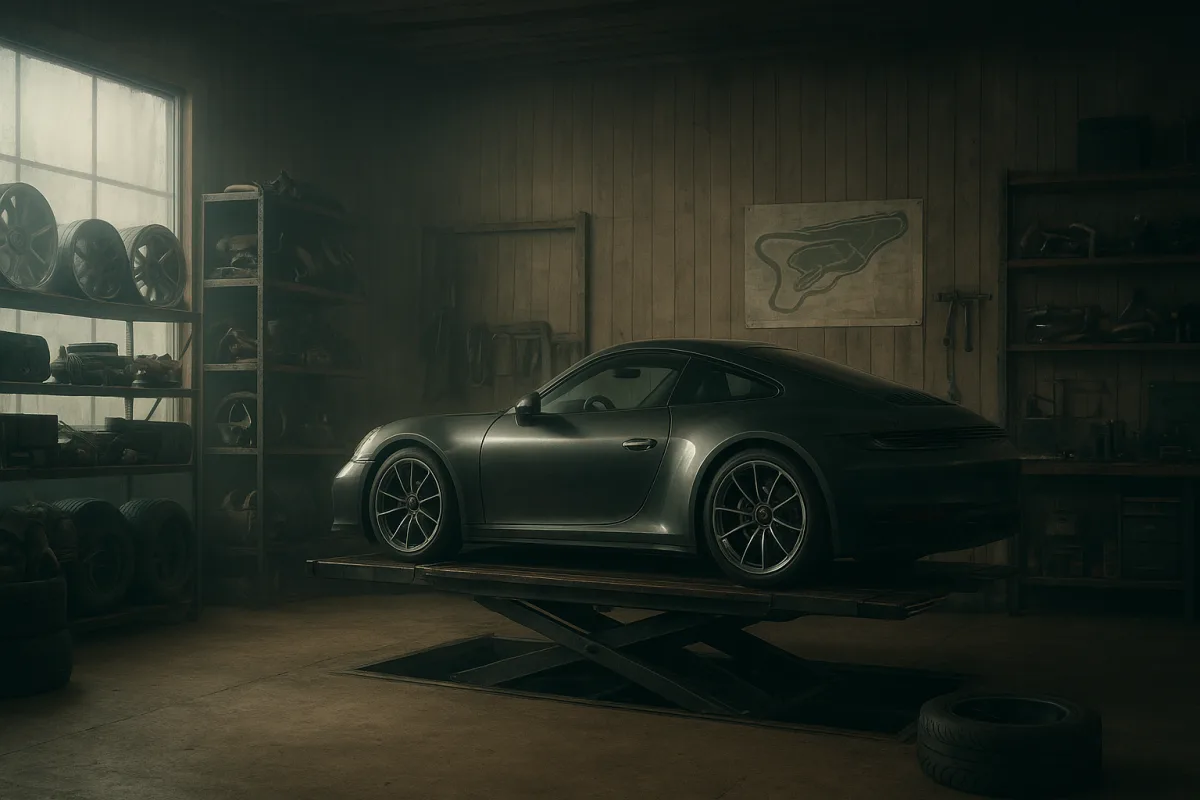
The shift is towards car culture, not simply more cars
GTA 6 appears to be moving from cars as disposable transport and plot equipment towards cars as places, scenes and activities. That is a meaningful shift for a series named after car theft, but which has rarely asked players to care how a car actually behaves.
The evidence is visible in the material Rockstar has allowed out, and in the way several car-focused publications have reacted to it. Road & Track identified street-race imagery, track racing, lowrider-style donks, side-by-sides and a broader spread of recognisable enthusiast subcultures rather than a generic supercar parade.
The Drive separately focused on what it called an actual race event, noting a lap counter, timer, position display and competitors shown on the mini-map during footage of circuit racing. Those are mundane features in a racing game, but they matter in GTA because they imply organised competition rather than another checkpoint sprint. [6]
Motor1 reached a similar conclusion from the same general body of leaked and official material, reporting both asphalt and dirt racing. Its more interesting point was not the speculative circuit comparison, but the possibility of a larger motorsport facility rather than a single throwaway race location.
That convergence is the real trend. Car publications are not merely saying, “there are cars in Grand Theft Auto,” which would be a silly headline. They are seeing a game world apparently designed to accommodate different ways enthusiasts use cars.
A proper circuit would change the use case
Previous GTA games have offered races, including street, off-road and air events through Rockstar’s established racing modes. [6] What they have not offered is the sort of permanent asphalt road course where you can return with different cars and learn the same braking zones.
That distinction will make sense to anyone who has spent time modifying a road car. A fast pull along a highway tells you almost nothing beyond power, gearing and whether the car stays pointed vaguely forward.
A repeatable circuit exposes the unglamorous bits. Does the car rotate under trail braking? Is the rear axle nervous over kerbs? Does a supposedly quick car run out of breath after the first two gears? Are the brakes consistent after several laps?
GTA will not suddenly become Assetto Corsa or iRacing simply because there is a circuit. Motor1 makes that point indirectly when it says enthusiasts should not expect a racing simulator. That is the sensible reading: a venue can improve the activity without transforming the underlying handling model.
Still, a dedicated course would give Rockstar something its open-world racing has always lacked, a place where driving precision has a purpose. It could also make modest cars more interesting, because a well-sorted hatchback or old coupe is more fun when there are corners to connect.
The track is plausible, but the detail is not settled
This is where the current coverage needs a little restraint. The Drive reported that the August 27 extended-look footage showed wheel-to-wheel circuit racing, and identified the location as what it assumed was Gellhorn International Raceway. It also saw a modern-looking circuit with bridges.
That is useful visual evidence. It is not, however, a published specification. Rockstar has not formally confirmed Port Gellhorn International Raceway, provided a map, stated its length, listed corner count, or explained whether every player will be able to use it freely.
The Sebring comparison should therefore be treated as atmosphere, not engineering. Sebring is a 3.74-mile, 17-turn circuit in the real world, but there is no credible basis for claiming GTA 6 has recreated it or matched its layout.
Motor1’s discussion of Sebring, Monza and the Nürburgring reflects community layout analysis, not a Rockstar technical briefing. The Drive itself reported that the leaked map was zoomed out and lacked detail. A circuit cannot be accurately assessed from a few pixels and a cinematic camera angle.
There is also a contradiction worth stating plainly. The Drive’s update treats track racing as officially confirmed by the trailer, while the research available as of August 28 says Rockstar has not officially confirmed a dedicated circuit by name or supplied detailed information.
Both things can be true in a narrow sense. Official footage may show organised circuit racing, while the precise venue, layout, accessibility and gameplay role remain unannounced. For anyone planning to play seriously, that difference is not pedantry.
Why this is happening now
Car culture has become more fragmented and more visible since GTA V launched. The old hierarchy, exotic car at the top, ordinary car at the bottom, no longer describes what people actually watch, build or share.
A clean E30 BMW, a Honda CRX, a full-size pickup, a donk, an old Fox-body Mustang and a side-by-side can all belong in the same online car feed. Road & Track’s trailer reading is notable because it spotted that breadth, from 1980s shapes to modern performance saloons.
That does not mean GTA 6 will model every niche with equal depth. It means Rockstar seems to understand that automotive identity is now built around combinations of vehicle, wheels, stance, location and social setting, not just the badge on a hypercar.
The game’s Leonida setting helps. Florida carries associations with Miami-style excess, drag racing, lowriders, lifted trucks, all-terrain machines and informal street scenes. Port Gellhorn is described as a coastal industrial heist hub, a useful counterweight to Vice City’s more obvious neon image. [5]
There is a commercial reason too. GTA Online established that players will spend considerable time accumulating, displaying and modifying virtual vehicles. A stronger automotive world gives Rockstar more reasons for players to keep cars, tune them and organise activity around them, rather than simply replacing them after a crash.
That is not an accusation that the feature set exists only to sell additions. It is a reminder that the attractive bit of car culture, collecting and personalisation, is much easier to monetise than the tedious bit, diagnosing faults or paying a bill for deferred maintenance.
Customisation looks real. Maintenance does not.
The confirmed automotive infrastructure is vehicle customisation. The available research identifies Rideout Customs and One-Eyed Willie’s as modification shops, although their pricing, catalogue depth and progression restrictions have not been disclosed. [8]
That is enough to expect cosmetic and performance changes of some kind. It is not enough to assume the garage experience will resemble ownership. Rockstar has not confirmed fuel consumption, tyre wear, oil changes, scheduled servicing, repair invoices, insurance friction or a meaningful parts economy.
Rumours about fuel and maintenance are exactly that. VicePulse has published discussion of whether cars need fuel, but it does not amount to official confirmation of a fuel system. [7] A game can show fuel stations and still treat them as scenery.
This matters because “realistic” is doing too much work in the GTA 6 conversation. More authentic car culture means recognisable scenes and better reasons to drive. It does not necessarily mean realistic weight transfer, drivetrain damage, alignment settings or six-month consumables.
Anyone who has owned an older project knows the difference. A car can look perfect for one evening, then need a wheel bearing, a battery, a coolant hose and an awkward argument with a parts supplier. That slow accumulation is ownership. No evidence says GTA 6 intends to simulate it.
The vehicles are more legible, but licensing remains unknown
Road & Track saw obvious real-world inspirations in the trailers, including cars resembling the BMW E30, Honda CRX, Dodge Charger, Mercedes-AMG E63 and Ram 1500. Its observation is fair: GTA 6’s vehicles appear less visually anonymous than the broad pastiche often associated with the series.
But do not turn that into a claim that GTA 6 has licensed BMWs, Hondas or Mercedes-Benz models. Rockstar has not announced vehicle licensing, and historically uses fictional brands such as Declasse, Grotti, Vapid and Shitzu that borrow cues without becoming official replicas.
The familiar examples remain useful. GTA’s 1995 Grotti Cheetah is associated with the Ferrari Testarossa, while the Vapid Ganado resembles a Ford Ranchero. Those relationships communicate the intended flavour, not a manufacturer-approved specification. [2] [3]
That ambiguity may actually suit the game. A fictional badge gives Rockstar room to exaggerate proportions, combine model-year details and make a car instantly readable without being trapped by a real company’s heritage rules. It also lets players enjoy the parody.
For project-minded players, the better question is not whether a digital car carries a licensed badge. It is whether the game gives it a distinct enough character to justify building one, using it repeatedly and noticing the compromises.
What to plan for, and what not to plan for
If you are thinking about GTA 6 as a place to build a virtual garage, start with a modest expectation: choose a vehicle type you already enjoy and budget time for visual customisation. The evidence supports that far more strongly than it supports deep mechanical simulation.
An 1980s-style coupe, compact front-drive hatch, pickup, muscle car or Japanese-inspired performance saloon should have more context than in earlier GTA games. Road & Track’s reading of the trailer suggests Rockstar is deliberately placing these cars among recognisable scenes, not treating every vehicle as interchangeable.
Do not assume tuning will be balanced, meaningful or inexpensive within the game economy. The modification shops are known, but Rockstar has not explained upgrade pricing, unlock requirements, race-class rules or whether a fully modified car will simply dominate everything.
Likewise, do not assume Port Gellhorn will become a virtual track-day substitute. If the circuit arrives as the footage suggests, it could be excellent for learning a car’s in-game limits and for organised multiplayer racing. Its physics, penalties, damage model and matchmaking remain unknown.
The sensible approach is the same one used with a real project advert. Buy the evidence, not the story around it. GTA 6 appears to be taking car culture more seriously, but the maintenance schedule, parts bill and exact handling balance are still hidden under the bonnet.
Leaks have muddied the picture, not changed the direction
The recent leak cycle has made separating evidence from fan fiction harder. Tom’s Hardware reported fake GTA VI ISO downloads padded with empty data and carrying malware, which is a security issue rather than a dispute about the game’s depiction of cars. [9]
There is no meaningful backlash so far against GTA 6’s automotive direction. The debate is mostly about what players think they can infer from footage, maps and branding. That is a healthier disagreement than pretending a blurry leak is a workshop manual.
For now, the strongest conclusion is modest. GTA 6 looks likely to offer a richer automotive backdrop, more formal racing and more credible enthusiast variety than its predecessors. The claim that it will deliver realistic car ownership remains unsupported.
Frequently Asked Questions
What realistic racing features does GTA 6 include?
GTA 6 appears to feature organised circuit racing with elements like lap counters, timers, position displays, and competitor tracking on the mini-map. These features suggest more structured competition than previous GTA checkpoint sprints, but Rockstar has not confirmed detailed physics or mode structures, so it is not a full racing simulator.
How does GTA 6 embrace car culture in gameplay?
The game shifts focus from cars as mere transport to cars as cultural scenes and activities, reflecting diverse enthusiast subcultures such as street racing, lowriders, and off-road vehicles. This broader representation aligns with modern automotive identity, emphasizing vehicle looks, modification, and social context rather than just high-end supercars.
Are there dedicated racing circuits in GTA 6?
Official confirmation of a dedicated race circuit has not been provided by Rockstar. While footage shows what appears to be circuit racing at a location presumed to be Port Gellhorn International Raceway, no official track layout, vehicle list, or access details have been released, so the existence and role of such a circuit remain unconfirmed.
What vehicle customization options are available in GTA 6?
Customization shops like Rideout Customs and One-Eyed Willie’s are confirmed, allowing players to modify their vehicles’ appearance and identity. However, details on customization costs, progression barriers, or the depth of modification options have not been disclosed.
Does GTA 6 simulate car maintenance and fuel systems?
There is no official information on whether GTA 6 includes vehicle maintenance features such as fueling, repairs, or realistic wear and servicing costs. Rumors exist but remain unverified, so these systems should not be expected based on current knowledge.
How we researched this
This article was assembled from 4 published articles, 9 cited references.
Nothing here is based on hands-on testing. Where a figure or finding appears, it belongs to the source cited beside it, and the writing says so rather than implying otherwise. Every source is listed below so you can check it.
Sources
‘Grand Theft Auto VI’ Trailer Shows How the Game Embraces Car Culture Beyond Crime — Road & Track
GTA 6 Drivers Can Finally Take It to the Track, Leaked Map Shows — The Drive
Max Verstappen to Race 100 Karters at Once in Made-for-TV Special at Silverstone — Road & Track
GTA VI Vehicles — Cars, Bikes & Boats Seen in the Trailers | GTA VI Base
GTA 6 Cars List: Every Vehicle Confirmed So Far · GTA6 Cartel
GTA 6 Vehicle Customization: Every Mod Shop Explained | 6cheats
Related Articles

Ultimate Off-Road Showdown: 80 Series vs. LC250
Donut compares the iconic 80 series Land Cruiser to the modern LC250, exploring suspension, engines, and history to determine the ultimate off-road champion.
Discovering Tokyo's Car Culture: From Meet-Up Spots to Street Racing
Explore Tokyo's vibrant car culture with Donut as they uncover legendary meet-up spots, tuning shops, street racing nuances, and the thriving low rider scene, showcasing the passion and innovation driving Japan's automotive world.
French Cars in the US: Rise, Fall, and Potential Comeback
Discover the rise and fall of French cars in the US market, from Renault's Dauphine success to Citroën's innovative DS model. Explore why French automakers struggled against American giants and their potential comeback today.
From $500 to Baja Blaster: Donut's Epic Ranger Transformation
Follow Donut's epic journey transforming a $500 Ranger into a desert racing machine. From testing stock performance to overcoming challenges in California City, witness the team's determination and upgrades for the ultimate Baja adventure.