
Lucid Air Recall Software Update: Fire Risk Explained
Learn how the Lucid Air recall software update reduces fire risk and what owners must do to stay safe with their affected vehicles.
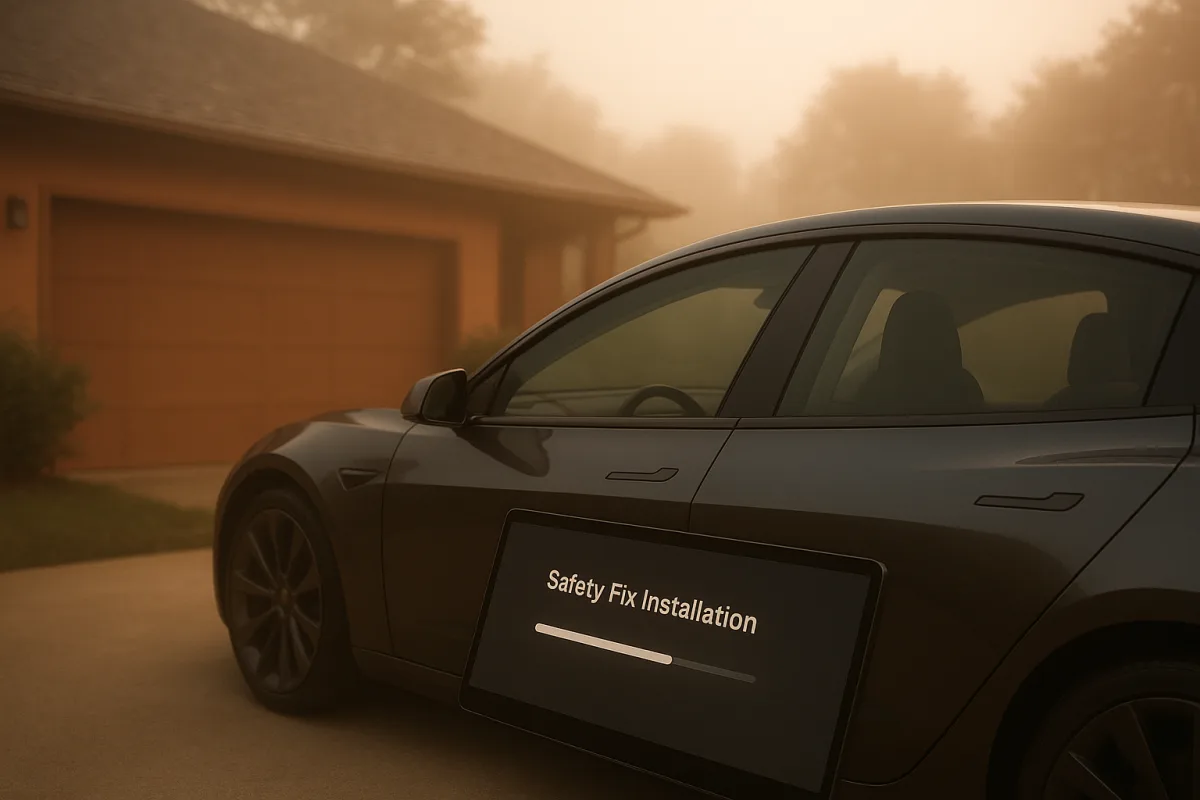
Lucid Air Recall and Fire Risk: Why a Software Update Matters More Than a Fuse Box
The important number is not 27,185. It is the fuse threshold
The headline number is large. Lucid is recalling 27,185 Air sedans from model years 2022 through 2026, built between October 11, 2021 and July 27, 2026. [6] But the useful way to understand this recall is not as an EV-battery story.
It is a story about electrical current, and about what happens when a modern car replaces a simple sacrificial fuse with an electronically controlled one. The affected circuit serves exterior lighting, including front lighting and the center high-mounted stop lamp. [8]
Lucid has instructed owners whose cars have not received the remedy to park outside and away from structures. That is deliberately cautious wording, but it should be taken literally. A car that might overheat wiring is not one to leave in an attached garage overnight. [6]
The risk also has two outcomes. Heat in the wiring can produce smoke or, in the worst case, fire. A malfunctioning exterior-light circuit can also remove lighting or brake-light function, creating a separate visibility and crash risk. [5]
What a conventional fuse actually does
A conventional automotive fuse is wonderfully unsophisticated. Current passes through a deliberately thin piece of metal. If the circuit draws more current than that fuse is designed to tolerate, the metal heats up and melts.
Once the strip melts, the circuit opens. Power stops flowing. The vehicle loses whatever function was on that circuit, perhaps a lamp or accessory, but the wiring should stop receiving the current that was making it hot.
That is the trade-off. A conventional fuse is cheap, dumb, and single-use. If it blows, somebody needs to identify the fault, replace the fuse, and ideally repair the cause before the replacement fuse also blows.
An electronic fuse, usually shortened to eFuse, does the same safety job without relying on a strip of melting metal. It monitors current electronically and can command a solid-state switching device to turn the circuit off when the current exceeds its programmed limit.
That means an eFuse can be more flexible than a conventional fuse. The manufacturer can set its threshold in software, distinguish brief normal current spikes from sustained overloads, record a fault, and potentially restore power after a temporary issue.
Those are useful functions in a complicated vehicle. They also introduce a less old-fashioned failure mode: the physical wire can be sound, but the protection strategy can make the wrong decision or wait too long to stop current.
How an overcurrent becomes a heat problem
The underlying physics are not unique to an electric vehicle. Electrical wiring gets hot when current flows through resistance. More current means more heat, and the relationship is severe because heating rises with the square of current.
A modest increase in current can therefore create a disproportionately larger heat load in a connector, damaged wire section, lamp assembly, or harness. The vulnerable point is often not a long run of healthy copper cable but a connection with added resistance.
If a circuit has a fault, such as damaged insulation, a compromised connector, or an abnormal electrical load, the protective device must shut it down promptly. Leaving it energized turns the fault from an inconvenience into a potential overheating event.
According to the recall reporting published by Cars.com, the relevant Lucid software logic could provide insufficient overcurrent protection by allowing an exterior-lighting circuit to remain energized at excessive amperage. [5] That is the central defect, not a defective battery cell.
Carscoops reports that Lucid found three fire events involving front lighting over three years, four smoke reports associated with overheating in the center brake-light circuit, and 33 warranty reports of potentially related wiring-harness damage. [8]
Those numbers should be read with care. Three reported fires among 27,185 recalled cars does not mean every Air is about to ignite, but a known mechanism involving wiring heat is enough to justify parking precautions until the protection is updated.
Why the software could keep a bad circuit alive
An eFuse must make two judgments: how much current is too much, and whether it is safe to turn a circuit back on after shutting it off. The Lucid recall addresses both parts of that decision.
Lucid’s version 2.10.0 reduces the eFuse’s protection threshold. In plain English, it tells the system to intervene at a lower current level, before an abnormal load has as much opportunity to generate damaging heat. [8]
The update also disables retry logic that could re-energize a faulted circuit more than once during the same key cycle. [6] That detail matters because automatic retries can be useful only when the problem was brief and harmless.
Imagine a temporary electrical spike from switching on a lamp. A retry might restore normal operation, avoiding an unnecessary trip. But if the fault remains present, reapplying power simply gives the same defective section another chance to heat up.
That is why the remedy is properly described as a safety fix rather than a feature update. It changes the rules governing when power remains available to a circuit that appears to be demanding too much current.
It also explains why a dealer visit is not necessarily needed. The component being changed is the control strategy, not necessarily the wiring harness or lamp unit itself. Lucid can send revised software over the air without charging the owner. [6]
An over-the-air repair is convenient, not automatically complete
The strongest practical advantage of this remedy is that it can arrive while the car is parked at home. No appointment, transport, loan car, or workshop labour bill should be involved if the vehicle receives the update normally.
But “available over the air” and “installed on every affected car” are different things. Carscoops reported that 20,719 affected Airs had version 2.10.0 or newer when Lucid prepared its report, while 6,466 remained outstanding. [8]
That is roughly 76 percent completed and 24 percent unfinished. For a safety recall, the unfinished group is the one that matters, because those cars remain subject to the instruction to park away from structures.
The rollout also appears uneven. Lucid Owners forum posts cited in recall coverage indicate that some cars were still operating earlier versions, including 2.8.30. [4] An owner should verify the installed version in the vehicle rather than trusting an assumed automatic update.
Lucid has said it will notify remaining owners by mail, with remedy notifications due to begin October 16, 2026. [8] That mailing timetable should not be treated as permission to wait if the car can receive the update sooner.
What an owner should do now
First, determine whether the vehicle falls within the affected build period, then check its installed software version. The recall covers every model year from 2022 to 2026, so the model year badge alone does not narrow it much. [6]
If the car has version 2.10.0 or a later version installed, Lucid considers the software remedy applied. Keep the recall documentation and confirm that the car’s recall status shows completion when Lucid or NHTSA records update. [8]
If the update is not installed, follow the parking instruction exactly: outside, away from a house, garage, carport, or other structure. This is awkward for an EV owner who normally charges at home, but it is temporary risk management. [6]
Do not treat the lack of dashboard warnings as a clearance signal. Lucid has said affected owners may observe smoke, a burning smell, or exterior-lighting malfunction, but waiting for any of those symptoms means waiting until the fault is already visible. [6]
If smoke, an electrical burning smell, or malfunctioning exterior lights appear, stop using the car if it is safe to do so, move away from structures where possible, and contact Lucid roadside assistance or emergency services as circumstances require.
What this recall does, and does not, say about the Air
Calling this a battery-fire recall would be inaccurate. The issue is in the low-voltage exterior-lighting electrical system, not the Air’s high-voltage traction battery or charging hardware. That distinction matters for both diagnosis and owner precautions. [5]
It is nevertheless Lucid’s largest recall to date. The total exceeds Lucid’s 15,841 vehicle deliveries during 2025, because the campaign includes several model years as well as cars that may not yet have reached retail owners. [9]
The scale is also a reminder that software-defined protection is not magic. It can improve a car after sale, and that is a real advantage, but it means safety performance depends partly on code deployment and owners accepting updates.
There is not yet credible public evidence to put a dollar figure on this event. No reliable 2026 data shows a specific effect on Lucid Air resale values, insurance premiums, routine service costs, or the driving experience after version 2.10.0.
That absence is worth saying plainly. A free OTA remedy should be much less disruptive than replacing battery modules or major electrical hardware, but it does not justify claiming that the recall has no ownership consequences for every individual Air owner.
The sensible ownership response is therefore straightforward. Confirm the version, install the remedy, park outside until it is complete, and keep an eye on lighting operation afterward. The software may be the fix, but verifying its presence remains the owner’s job.
Frequently Asked Questions
How do I check if my Lucid Air has the recall software update?
You should check the installed software version on your Lucid Air rather than assuming the update has arrived. As of late August 2026, about 20,719 of 27,185 affected vehicles had received the update version 2.10.0, but 6,466 cars still required it. Confirming your vehicle’s software version is the only reliable way to know if the recall fix is installed.
What does the Lucid Air recall software update fix?
The software update lowers the electronic fuse threshold for the exterior lighting circuits and prevents a faulty lighting circuit from being repeatedly powered during one key cycle. This fix addresses a software logic issue that could allow excessive current to flow, potentially causing wiring to overheat and increasing fire risk.
Is the Lucid Air fire risk related to the battery?
No, the fire risk is not related to the high-voltage battery. Instead, it involves low-voltage wiring serving exterior lights, where the software controlling the electronic fuse may allow excessive current to flow, leading to overheating in the wiring or connectors.
How does the Lucid Air over-the-air update improve safety?
The over-the-air update adjusts the software controlling the electronic fuse to better detect and respond to overcurrent conditions in the exterior lighting circuits. It prevents prolonged powering of a faulty circuit, reducing the chance of wiring overheating, smoke, or fire, and also helps maintain proper lighting function to avoid visibility and crash risks.
What precautions should Lucid Air owners take before the software update?
Owners of affected Lucid Air vehicles that have not yet received the software update should park their cars outside and away from buildings or structures. This precaution is advised because the risk of wiring overheating could lead to smoke or fire, and parking outside reduces potential damage to property and improves safety.
How we researched this
This article was assembled from 4 published articles, 9 cited references.
Nothing here is based on hands-on testing. Where a figure or finding appears, it belongs to the source cited beside it, and the writing says so rather than implying otherwise. Every source is listed below so you can check it.
Sources
Tested: Porsche Macan GTS Electric vs. Hyundai Ioniq 5 N are More Similar than Different — Car and Driver
Lucid Air Hit With Fire Risk Warning, Over 27,000 Cars Subject to Recall — Road & Track
Lucid Recalls 27,185 Air Sedans Over Fire Risk, Tells Owners To Park Outside — InsideEVs
Lucid Air Recall Has Owners Parking Outside While Software Plays Firefighter — CarScoops
Lucid Recalls Over 27,000 Vehicles, Issues "Park Outside" Order - Kelley Blue Book
Lucid Air Recall: Check Software Update Requirements | Newsr
Air: Software & Firmware | Lucid Owners - Lucid Motors Forum
Lucid Recalls 27,000-Plus Air Sedans for Fire Risk | Cars.com
Lucid Air Recall Shows the Limits of an OTA Safety Fix | RecallWire
Lucid Air Recall Has Owners Parking Outside While Software Plays Firefighter | Carscoops
Lucid Announces Operational Reset and Second Quarter 2026 Results | Lucid Group, Inc.
Related Articles
Jeep Grand Cherokee Suspension Recall: Coil Spring Updates
Learn about the Jeep Grand Cherokee suspension recall, affected models, and how to check and fix coil spring issues for 2021-2023 SUVs.
Electric SUV Software Updates: Features and Ownership Impact
Explore electric SUV software updates, including RivianOS 2 and Volvo EX60 features, and how they affect performance and ownership.
2028 Volvo XC40 Refresh and EV Strategy Explained
Explore the 2028 Volvo XC40 refresh, mild hybrid updates, and Volvo's US EV strategy including EX40 discontinuation and new tech features.
2027 Lexus NX Hybrid Refresh
Explore the 2027 Lexus NX hybrid refresh, including new battery, e-axle, and ownership details for hybrid and plug-in models.