Jeep Grand Cherokee Suspension Recall: Coil Spring Updates
Learn about the Jeep Grand Cherokee suspension recall, affected models, and how to check and fix coil spring issues for 2021-2023 SUVs.
The shift is not another routine recall, it is a recall of prior recall work
The important change is simple: Jeep is not merely recalling early WL-generation Grand Cherokees for rear coil springs again. It is calling back vehicles that may already have received two earlier fixes for the same basic safety concern. [4][6]
That distinction matters to an owner. A completed recall line on a service-history report is normally reassuring. In this case, it is not proof that the current issue has been closed, because Chrysler says vehicles repaired under earlier campaigns require the latest remedy too. [4][6]
The third campaign is NHTSA recall 26V562000 and Chrysler recall 89D. It applies to 328,381 vehicles: 2021-2023 Grand Cherokee L models, plus 2022-2023 two-row Grand Cherokees and Grand Cherokee 4xe plug-in hybrids with conventional coil-spring suspension. [2][3][6]
Several independent outlets have arrived at the same central point from the recall paperwork. Car and Driver, Cars.com, Consumer Reports, CarComplaints.com, and specialist recall trackers all identify improperly installed rear coil springs, rather than failed spring steel, as the underlying concern. [2][3][4][5][6]
That is the trend worth watching. Jeep has moved from an initial campaign in June 2023, through another recall in February 2026, to a third campaign in September 2026 that supersedes confidence in the earlier repair strategy. [4][6]
What is actually going wrong
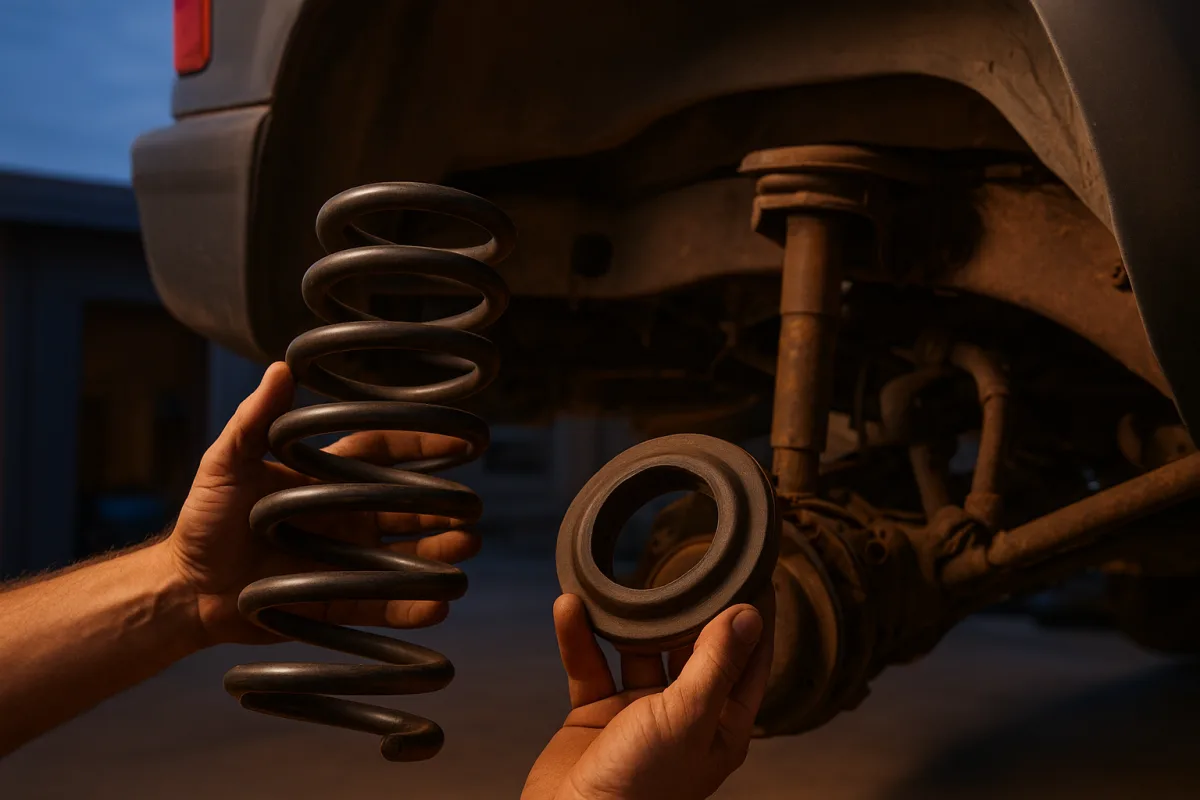
The rear coil springs themselves are not reported as defective components. The issue is their installation and retention at the lower mounting point, where an incorrectly seated spring can move out of position and, in the worst case, detach while the vehicle is moving. [2][6]
A coil spring is not a minor trim part that can be ignored until the next oil change. It locates the rear ride height and supports the body through the suspension. If one comes loose, the vehicle can suddenly sit incorrectly and behave unpredictably. [5][6]
The recall remedy is specific. Dealers are to replace the rear coil-spring lower isolators with revised parts, identified in the recall material as part number 68668244AA, at no charge to the owner. [6]
For someone used to maintaining older Jeeps, this is a useful distinction. It is not a general instruction to replace tired springs, worn shocks, control arms, or air-suspension parts. It is a manufacturer campaign tied to spring location and assembly on particular coil-sprung WL vehicles. [2][6]
The affected production window runs from December 5, 2020 to May 31, 2023. That covers a large slice of early production, particularly the three-row Grand Cherokee L, which accounts for 215,433 of the recalled vehicles. [6]
The two-row Grand Cherokee accounts for 97,477 vehicles and the Grand Cherokee 4xe accounts for 15,471. Those numbers are useful when shopping used because a conventional 2022 or 2023 model cannot be assumed clear merely because it is not a Grand Cherokee L. [6]
Why the third recall matters more than the defect rate suggests
Jeep estimates that only 0.1 percent of the 328,381-vehicle population has the actual defect. On paper, that is roughly one vehicle in 1,000, a low rate and a reminder not to confuse the total recall population with confirmed failures. [2][3]
There are also no confirmed accidents or injuries connected to the issue in the available reporting. Jeep had recorded 29 customer-assistance cases and 409 warranty claims associated with the springs, but those figures do not establish that each involved a detached spring or a crash. [2][3]
That absence of reported injuries should temper the rhetoric around this recall. There is no evidence here of a widespread field failure producing a known crash record. Owners should not assume their Grand Cherokee is about to shed a spring on the motorway. [2][3]
But the potential consequence still justifies prompt action. A rear spring that comes out of position can alter ride height and rear-axle behavior without a useful warning light, and can create a hazard for occupants and other road users if it separates from the vehicle. [5][6]
This is why manufacturers recall faults with very low projected defect rates. The probability can be small while the severity remains high. The correct response is neither panic nor delay, it is a VIN check and an appointment when the dealer can perform the specified repair.
The repeated campaigns are also a quality-control story, not necessarily a broader verdict on every part of the WL Grand Cherokee’s suspension. The evidence supports concern about the spring installation process and the effectiveness of earlier remedies, not a claim that all rear suspension hardware is unreliable. [2][4][6]
What owners should do now
First, run the VIN through NHTSA’s recall lookup tool, rather than relying on model year, trim level, or what a previous owner says. Recall eligibility is vehicle-specific, and the latest campaign can apply even where a prior spring recall was marked completed. [1][6]
Second, establish which suspension the vehicle has. This campaign excludes Grand Cherokees equipped with Quadra-Lift air suspension because the defect concerns standard rear coil springs. That means suspension option matters more here than engine choice or whether the truck is two- or three-row. [2][3]
Third, keep the repair record. For a vehicle you plan to own beyond the warranty period, a dealer invoice showing recall 89D completed is worth retaining with routine service paperwork. It will be useful to a future buyer and helps avoid confusion if another notice arrives.
Owners should not expect an out-of-pocket bill for the recall repair. The lower isolator replacement is free, as federal recall work should be, and the available reporting identifies no owner charge for parts or labor. [2][3][6]
The current schedule calls for interim owner letters beginning September 29, 2026, with final remedy communication to follow once the full repair program is ready. Chrysler customer service can be reached at 800-853-1403 for campaign questions. [6]
There is no solid published information yet on dealer wait times, parts availability, or completion rates for this specific third campaign. That is worth saying plainly, because a recall being searchable does not necessarily mean every dealer can immediately book and complete the job. [1][6]
If the rear of the vehicle sits visibly unevenly, makes a sudden new suspension noise, or feels unstable, that moves beyond ordinary recall scheduling. Arrange inspection promptly and avoid treating a possible spring-location fault as a harmless squeak from an ageing SUV.
What it means when buying a used Grand Cherokee
For a used-car buyer, the best reading of this news is more measured than the headlines. A 2021-2023 Grand Cherokee is not automatically a bad purchase because it appears in a 328,381-vehicle recall, especially when Jeep estimates the defect affects only 0.1 percent. [2][3]
It does mean the vehicle needs better paperwork than usual. Ask for the VIN before travelling, check open recalls yourself, and request repair orders for campaigns 23V413, 26V051, and now 26V562000 or 89D where applicable. [4][6]
A dealer listing that says “all recalls completed” should be verified against the current NHTSA result. This is exactly the sort of case where an earlier completed campaign can coexist with a newly open one, and a generic inspection checklist can miss that administrative detail. [1][4]
There is no reliable evidence in the available research that the repeated spring campaigns have lowered Grand Cherokee resale values or raised insurance premiums. It would be easy to assume they must, but no published 2026 data establishes either effect.
That lack of data matters. A buyer should negotiate based on the individual vehicle’s condition, maintenance history, open recalls, tyres, brakes, battery condition on a 4xe, and signs of hard towing or off-road use, not on invented assumptions about a recall discount.
The 2024 model year is outside this campaign. Available recall reporting indicates Jeep corrected the relevant installation process and isolator arrangement, so later vehicles do not carry this particular coil-spring recall population. [2][6]
That does not make a 2024 Grand Cherokee categorically trouble-free, nor does it make every earlier vehicle suspect. It simply gives shoppers a clear dividing line for this specific defect: early coil-sprung WL production deserves a VIN check; 2024-onward vehicles are not included. [2][6]
The ownership lesson is broader than one Jeep recall
Repeated recalls are frustrating because they ask owners to spend time on a problem they did not create. In a family SUV, inconvenience matters: arranging transport, taking time off work, and trusting that the latest repair is finally the lasting one.
Still, the evidence does not support treating this as an epidemic of springs falling from Grand Cherokees. The documented failure estimate is low, no confirmed injuries or crashes have surfaced in the reviewed sources, and the recall remains precautionary in the sensible safety-engineering sense. [2][3][5]
What has changed is the standard for diligence. If you own an affected Jeep, do not file the first recall letter and assume the matter ended there. Check the VIN now, complete campaign 89D when available, and keep the receipt with the rest of the vehicle’s maintenance record.
Frequently Asked Questions
Which Jeep Grand Cherokee models are affected by the suspension recall?
The recall affects 328,381 Jeep Grand Cherokee, Grand Cherokee L, and Grand Cherokee 4xe models from the 2021 to 2023 model years. Specifically, it covers 2021-2023 Grand Cherokee L models and 2022-2023 two-row Grand Cherokees and Grand Cherokee 4xe plug-in hybrids with conventional rear coil spring suspension.
What is the cause of the Jeep Grand Cherokee coil spring recall?
The recall is due to improperly installed rear coil springs at the lower mounting point. This incorrect installation can cause the coil spring to move out of position and potentially detach while driving, posing a serious safety risk.
How can I check if my Jeep Grand Cherokee suspension recall has been completed?
Owners should check their vehicle identification number (VIN) with a dealer, even if earlier coil spring recall repairs were done, because this latest recall supersedes previous fixes. There is no public data on recall completion rates, so dealer verification is the best way to confirm.
What does the Jeep Grand Cherokee suspension recall repair involve?
The repair involves replacing both rear lower spring isolators free of charge at a dealership. This remedy addresses the improper seating of the coil springs to prevent detachment.
Are 2024 Jeep Grand Cherokee models affected by the suspension recall?
No, 2024 Jeep Grand Cherokee models are not affected. Jeep changed the assembly process for the coil springs and replaced the isolators in these redesigned models, effectively eliminating the defect.
How we researched this
This article was assembled from 3 published articles, 7 cited references.
Nothing here is based on hands-on testing. Where a figure or finding appears, it belongs to the source cited beside it, and the writing says so rather than implying otherwise. Every source is listed below so you can check it.
Sources
Jeep Recalls 328,381 Grand Cherokees over Detaching Coil Springs — Car and Driver
Jeep Grand Cherokees Fixed Wrong Again, Third Time's A Charm For 328,381 SUVs — Motor1
Scout Motors’ Latest Legal Battle Isn’t Over A Car, It’s Over An $875 Watch — CarScoops
Jeep Recalls 328,381 Grand Cherokees over Detaching Coil Springs
More Than 328,000 Jeep Grand Cherokees Recalled for Rear Coil Springs | Cars.com
Another Jeep Grand Cherokee Rear Coil Spring Recall | CarComplaints.com
Jeep Grand Cherokee Recall Because Suspension Parts Might Fall Off - Consumer Reports
Related Articles
Lucid Air Recall Software Update: Fire Risk Explained
Learn how the Lucid Air recall software update reduces fire risk and what owners must do to stay safe with their affected vehicles.
EV Incentives and Market Challenges in 2026
Explore 2026 EV incentives, market challenges, and new models including California rebates, UK leasing, and used EV ownership risks.
2027 New SUV and Pickup Models: Features and Ownership Guide
Explore 2027 new SUV and pickup models with insights on performance, ownership costs, maintenance, and driving experience.
Aston Martin DBX GT Suspension Updates for 2027 Performance
Discover the 2027 Aston Martin DBX GT suspension updates that enhance luxury and performance in this high-powered SUV.