
Aston Martin DBX GT Suspension Updates for 2027 Performance
Discover the 2027 Aston Martin DBX GT suspension updates that enhance luxury and performance in this high-powered SUV.
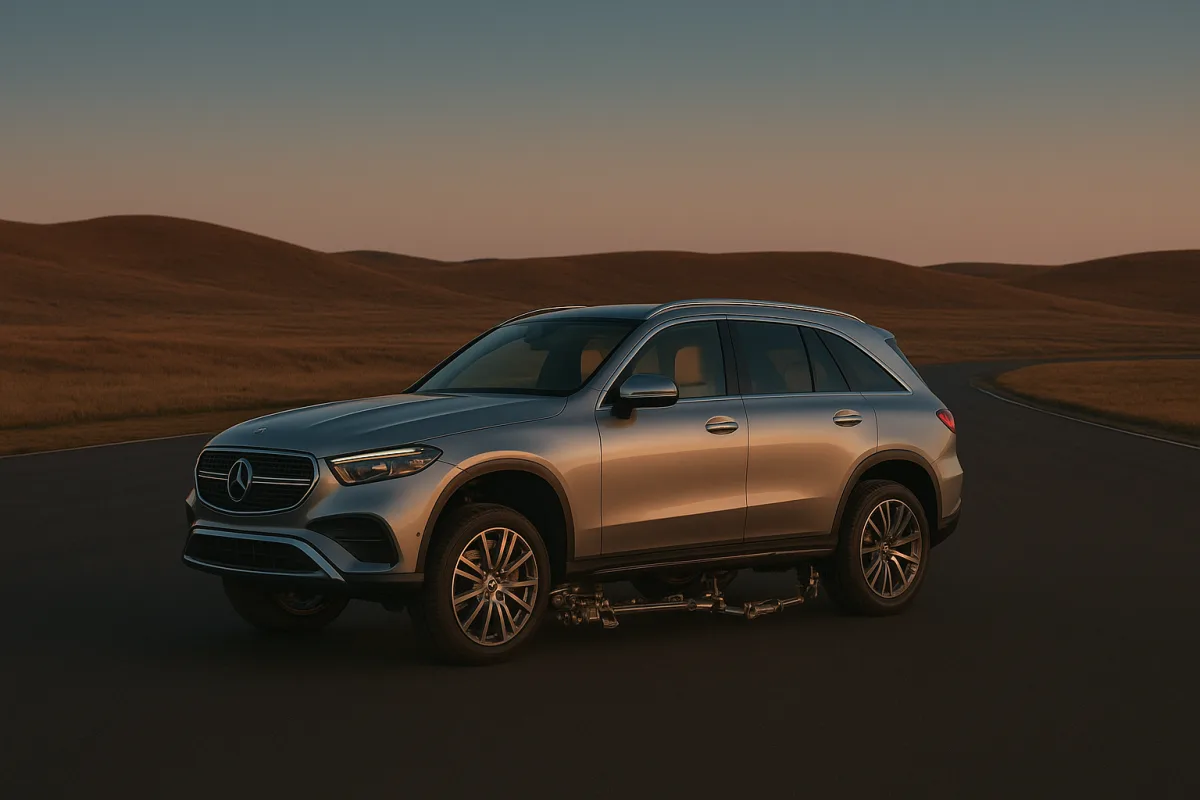
The GT is not a slower DBX S
The 2027 Aston Martin DBX GT is easy to misunderstand because its headline hardware scarcely changes. It uses the DBX S’s 4.0-litre twin-turbocharged V-8, rated at 717 hp and 664 lb-ft, driving all four wheels through a nine-speed wet-clutch automatic transmission. [8]
That means the GT is not Aston Martin’s economy-minded or entry-level SUV. It remains a 717-hp, carbon-ceramic-braked performance SUV, but one aimed at the buyer who wants to cover distance without being reminded of the chassis every time a road surface deteriorates. [8]
Aston Martin says the GT reaches 60 mph in 3.1 seconds and has a 193-mph maximum speed, matching the DBX S. Those are extraordinary numbers, although they tell us little about what distinguishes these two versions during ordinary ownership. [8]
The meaningful difference is that the DBX S is the harder-edged model. It has a steering ratio 4 percent quicker than the regular setup and a firmer, more overtly performance-led suspension tune. The GT retains rapid steering but changes the way its chassis manages vertical movement. [10]
I have not driven either version, and no independent back-to-back GT-versus-S ride data is available yet. That matters because Aston Martin has published no measurable ride-frequency, body-control or cabin-noise comparison to show exactly how large the GT’s comfort advantage is.
The suspension system is the whole point
The DBX GT’s most important upgrade is not its double-vaned grille, memory-foam seats or polished trim. It is the calibration of a complicated chassis system that has to perform two conflicting jobs: isolate occupants from broken pavement, yet stop a tall, heavy SUV leaning excessively in corners.
A conventional suspension has springs, dampers and anti-roll bars. Springs carry the vehicle and determine much of its fundamental ride character. Dampers control how quickly the suspension moves, stopping the body from repeatedly bouncing after a bump or pitching sharply under braking.
Anti-roll bars, also called stabiliser bars, link the left and right suspension at each axle. When both wheels rise together over a smooth crest, the bar barely twists. When one wheel rises relative to the other in a corner, it twists and resists body roll.
That resistance is useful when driving quickly, but it can make a car less supple on an uneven road. Hit a pothole with one wheel and a stiff conventional anti-roll bar transmits some of that disturbance to the opposite side. A chassis can feel tied down in corners and fidgety everywhere else.
The DBX platform uses a 48-volt electronic active anti-roll control system, known as eARC, capable of applying up to 1,400 Nm of counteracting torque. Rather than relying solely on a fixed steel bar, electric actuators can actively decide how much roll resistance to apply. [2]
In a fast corner, the system can apply torque to oppose the body’s inclination to roll. The benefit is not merely flatter cornering for appearance’s sake. Keeping the body more level helps maintain tire loading and gives the driver a more stable platform for steering inputs.
Over a one-wheel bump, however, the same system can reduce the effective cross-linking between sides. That is the principle behind the DBX’s off-road “zero-load” function, where the system allows greater wheel independence rather than forcing an axle to behave like a rigid beam. [2]
The 48-volt supply matters because this work needs more electrical muscle than a traditional 12-volt system comfortably provides. It lets the actuators respond quickly, and the system can regenerate electrical energy when suspension forces drive the motors rather than the other way around. [2]
Regeneration should not be mistaken for meaningful fuel saving. Its practical purpose is managing the electrical energy used by the active chassis hardware. The gain for a GT buyer is the potential for a softer response to poor surfaces without surrendering roll control entirely.
What Aston Martin has changed for the GT
Aston Martin says the GT has a unique adaptive-damper calibration and revised internal valve system. The intention is to better absorb small, sharp impacts, such as patched asphalt and expansion joints, while retaining enough damping to avoid loose body motions at speed. [8]
Inside a damper, oil is forced through controlled passages as the wheel moves. Restrict that oil flow and the damper resists movement more strongly. Open the passages and the wheel can react more freely, which can improve comfort but risks less body discipline.
An adaptive damper changes that restriction electronically. The GT’s new calibration therefore does not mean it has simply been fitted with “soft shocks.” It means Aston Martin has changed how the valves respond to wheel speed, body movement and selected drive mode. [8]
The company has also altered spring rates, though it has not published the figures. That omission is important. Spring-rate numbers alone would not settle the question anyway, because tire sidewalls, damper tuning, anti-roll intervention and body stiffness all shape the ride felt from the driver’s seat.
The GT also adds a revised transmission mount bushing and two longitudinal dampers between the body and rear subframe. Those parts sound obscure, but they are relevant to refinement because they control how drivetrain and rear-suspension movements reach the cabin. [8]
This is often where expensive SUVs distinguish themselves at motorway speeds. A car can have genuinely plush seats and still feel busy if the rear axle sends low-frequency shudders through the floor or the transmission rocks against its mounts during throttle changes.
The GT’s 22-inch forged wheels and Pirelli Scorpion Zero all-season tires are also part of the suspension decision, not merely an aesthetic choice. Aston Martin specifically chose the combination to improve compliance and reduce road noise, with 23-inch wheels and sportier tires optional. [8]
That option deserves caution. Big wheels generally mean lower-profile tires, and the tire sidewall is the first spring a bump encounters. A DBX GT on standard 22-inch wheels may be the version that best delivers its stated mission, regardless of how tempting the 23-inch package looks.
Quietness is more than sound deadening
Aston Martin has added insulation in the doors, wheel arches and rear cargo area, used acoustic laminated rear side glass, and made body-structure revisions intended to lower noise intrusion. It claims a 13 percent improvement in articulation index, a measure related to speech intelligibility. [8]
That claim should be read carefully. An articulation-index improvement does not tell us the cabin’s decibel level at 70 mph, nor does it establish that the GT is 13 percent quieter than the DBX S. Aston Martin has not published comparative noise measurements.
Still, the engineering target makes sense. Road noise in a large SUV is not just tire roar. It includes suspension vibration, air leaks, rear-wheel turbulence, exhaust boom and the low-frequency resonance that makes passengers raise their voices without realizing why.
The GT’s exhaust is quieter in its gentler setting, while Sport and Sport Plus restore more of the V-8’s character. Aston Martin also says revised throttle and transmission calibrations make pedal inputs and shifts less abrupt. [8]
That may be more valuable in daily use than another tenth in an acceleration test. The wet-clutch nine-speed is designed for quick, direct shifts, but any such transmission can feel sharper at parking-lot speeds than a conventional torque-converter automatic. Calibration determines much of that character.
Luxury changes that may matter after the novelty wears off
The GT receives a 10-mm, or roughly 0.4-inch, memory-foam layer in the front and outer rear seats, plus revised bolstering and contours. It remains technically a five-seater, although the rear outboard positions are more distinctly shaped as individual chairs. [8]
Memory foam is not automatically better. It spreads pressure and can feel more accommodating during long stints, but its success depends on foam density, seat-base angle and the driver’s build. The real test will be whether it remains supportive after several hours, not the thickness quoted.
Other GT changes are more straightforward: semi-aniline leather, deep-pile carpets, distinctive embroidery, an anodized-metal drive-mode controller and a panoramic glass roof. They suit a buyer who sees the DBX as an alternative to a Bentley Bentayga rather than a substitute for a track-oriented SUV. [8]
The 2027 Bentley Bentayga starts at $232,450 and extends to $343,000 in higher trims, giving an indication of the price territory Aston Martin is targeting. [5] The DBX GT’s own US base price has not been announced, despite estimates around $262,000 circulating elsewhere.
Aston Martin’s DBX S starts at $232,450, so it is reasonable to expect the GT to cost more, but it is not reasonable to present an estimate as a confirmed transaction price. Options, taxes, dealer charges and country-specific equipment will matter substantially at this level. [4]
The ownership numbers are not available yet
There is no GT-specific real-world fuel economy, insurance record or maintenance history because customer deliveries have not begun. The closest official reference is the DBX S, rated by the EPA at 15 mpg city, 20 mpg highway and 17 mpg combined. [4]
The shared V-8 suggests the GT will not be cheap to fuel, but its wheel-and-tire choice, driving mode, climate, journey length and how often its 717 hp is used will all determine actual consumption. Manufacturer economy figures are a baseline, not an ownership budget.
The research brief’s DBX S proxy estimates annual insurance at $5,000 to $8,000, maintenance at $3,500 to $5,500 and fuel at approximately $4,000 to $5,000. Those are not DBX GT figures, and insurance varies sharply by driver, location and coverage.
The fuel assumption needs scrutiny as well. At 16 mpg and $3 per gallon, fuel alone reaches roughly $2,813 over 15,000 miles. Spending $4,000 to $5,000 implies either higher annual mileage, dearer fuel or worse consumption than that simple estimate.
Prospective GT owners should also budget beyond scheduled services. Carbon-ceramic brakes are standard, with 16.5-inch front and 15.4-inch rear discs, and they should last well under favorable use, but replacement is an expensive specialist event rather than an ordinary consumable purchase. [8]
The sensible reading of the DBX GT is therefore not “DBX S performance for free, plus luxury.” It is a different chassis priority. The buyer pays for Aston Martin’s attempt to make a 717-hp SUV less tiring on the roads where it will spend most of its life.
Frequently Asked Questions
What are the suspension changes in the 2027 Aston Martin DBX GT?
The DBX GT features a retuned adaptive-damper system with a revised internal valve design aimed at better absorbing small, sharp impacts like patched asphalt and expansion joints. Spring rates have also been modified to improve ride comfort, although exact figures have not been disclosed. Additionally, it uses a 48-volt electronic active anti-roll control system (eARC) capable of applying up to 1,400 Nm of counteracting torque.
How does the DBX GT's ride comfort compare to the DBX S?
The DBX GT is calibrated to provide a quieter, more compliant long-distance ride compared to the DBX S, which has a firmer, more performance-oriented suspension setup and a 4% quicker steering ratio. However, no independent ride data or measurable comparisons have been published yet, so the exact degree of comfort improvement remains unconfirmed.
What makes the DBX GT's active anti-roll system unique?
The DBX GT uses a 48-volt electronic active anti-roll system (eARC) that actively controls body roll by applying torque through electric actuators rather than relying on a fixed steel bar. This system can reduce roll in fast corners while allowing greater wheel independence over uneven surfaces, such as potholes, improving both handling and ride comfort. It also features regenerative capability to manage electrical energy efficiently.
Does the DBX GT sacrifice performance for comfort?
No, the DBX GT maintains the same 717-hp 4.0-liter twin-turbo V-8 and matches the DBX S’s 0–60 mph time of 3.1 seconds and top speed of 193 mph. The suspension changes aim to improve ride comfort without compromising the SUV’s high-performance capabilities.
What are the key chassis upgrades on the Aston Martin DBX GT?
Key chassis upgrades include a unique adaptive damper calibration with a revised internal valve system for improved bump absorption, modified spring rates for better ride compliance, and the 48-volt eARC active anti-roll system that balances body control with wheel independence. These changes are designed to separate bump absorption from body control, enhancing both comfort and handling.
How we researched this
This article was assembled from 8 published articles, 11 cited references.
Nothing here is based on hands-on testing. Where a figure or finding appears, it belongs to the source cited beside it, and the writing says so rather than implying otherwise. Every source is listed below so you can check it.
Sources
View Exterior Photos of the 2027 Aston Martin DBX GT — Car and Driver
Revealed: New Aston Martin DBX GT focuses on long-distance luxury — Autocar
The Aston Martin DBX GT Turns Up the Luxury — Road & Track
Aston Martin DBX GT Wields Soft Power — Hagerty
Aston Martin’s DBX GT Bets Big On Luxury And Power — CarScoops
2027 Aston Martin DBX GT Is a More Elegant Spin on the Super SUV — Car and Driver
View Interior Photos of the 2027 Aston Martin DBX GT — Car and Driver
The new DBX GT is a more comfortable take on Aston Martin’s V8 SuperSUV | Top Gear
2027 Aston Martin DBX GT First Look: The Aston SUV More Rich People Should Buy
How Much Does an Aston Martin DBX Cost? Pricing Guide 2026 | Automonitor
How Much Is Insurance for a Aston Martin DBX? (2026) | ForCar
2027 Aston Martin DBX GT Is a More Elegant Spin on the Super SUV
Comfort-focused Aston Martin DBX GT revealed with 717bhp - Magneto
Related Articles

2026 Honda CRV Trail Sport Hybrid Review: Quiet Ride & Continental Tires
TheStraightPipes review the 2026 Honda CRV Trail Sport Hybrid, praising its quiet ride and Continental tires. They critique the lackluster Trail Sport features and high price, suggesting opting for a non-hybrid CRV instead.

2025 Chevy Tahoe Z71 Review: Comfort, Power, and Off-Road Capabilities
TheStraightPipes review the 2025 Chevy Tahoe Z71, highlighting its comfort, powerful engine, child seat compatibility, and off-road capabilities.

2025 Lexus IS-500 Review: Power, Design, and Performance Highlights
TheStraightPipes review the 2025 Lexus IS-500, praising its 472 horsepower V8 engine, sleek design, comfortable interior, and impressive performance features.

2025 Kia K4 GT Line Review: Pros, Cons, and Alternatives
The 2025 Kia K4 GT Line is reviewed by TheStraightPipes, critiquing its unappealing exterior, poor interior climate control layout, but praising its smooth driving experience and tech features. Consider alternatives like the Jetta GLI or Civic SI for a more engaging drive.