
Ford Return to World Rally Championship as Factory Team
Ford returns to the World Rally Championship as a factory team in 2028 with M-Sport and a new rally car under WRC27 rules.
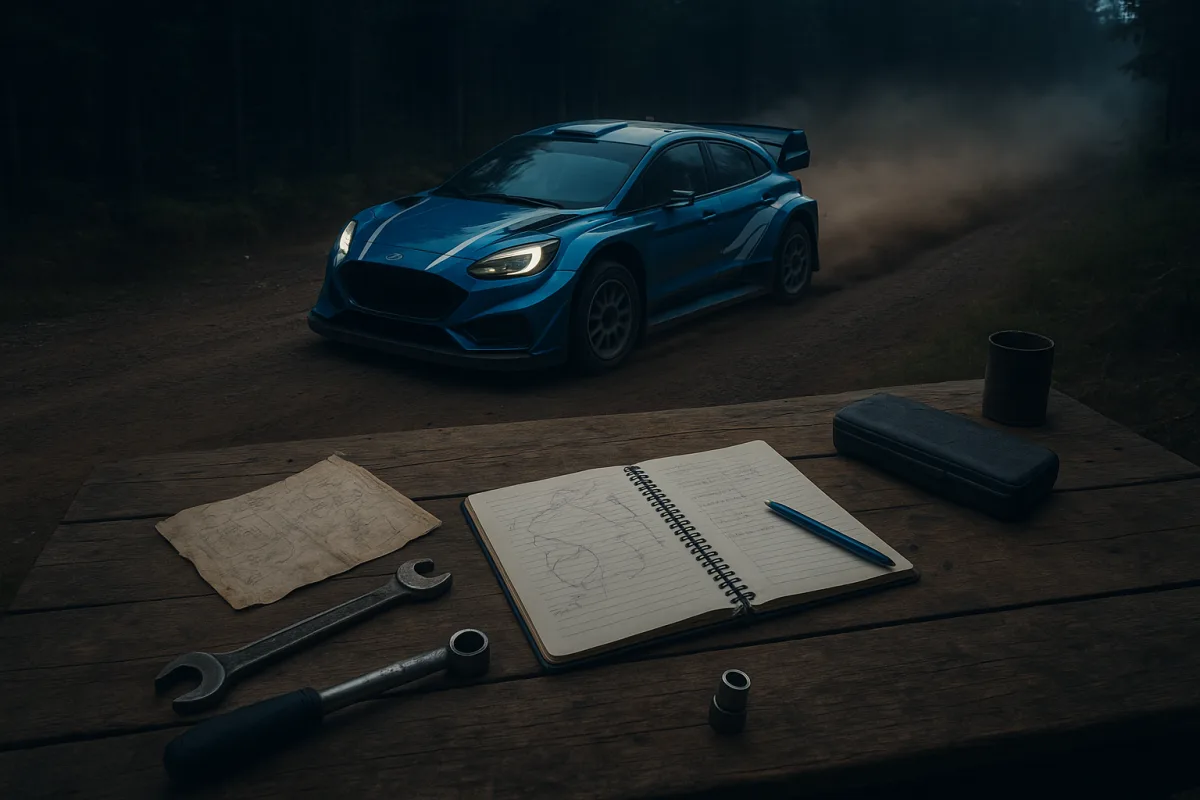
Ford is returning to the WRC as a manufacturer, not merely lending its name
Ford is making a full factory return to the World Rally Championship in 2028. That is the significant shift. M-Sport has continued to run Ford-branded rally cars for years, but Ford itself will again provide direct works support and development resource. [5]
This is more than a nostalgic photo opportunity with Escort and Focus rally cars parked behind a podium. Ford has tied the WRC announcement directly to a planned European passenger-car range, saying rally competition will influence the responsiveness and handling of future models. [3] [9]
The evidence is unusually consistent for an announcement this far ahead. Ford’s own European communications, the FIA, Road & Track, The Drive, Motorsport.com and Autocar all report the same broad sequence: Ford becomes directly involved, returns to full works status in 2028, then introduces a new rally car in 2029. [2] [5] [8]
That distinction matters because factory involvement is what pays for proper engineering programmes, testing, spares support and development staff. A privateer can achieve remarkable things, as M-Sport has done, but it operates under very different financial constraints from a manufacturer-backed team.
Ford’s relationship with M-Sport is also an important sign that this is not a paper programme. The Cumbria-based team has run Ford machinery in top-level rallying for roughly three decades, including the current Puma Rally1 effort. [3] [5]
The existing Ford Puma Rally1 programme will not suddenly become a new works car in 2028. Ford is expected to support the team first, then introduce the new vehicle a year later. That staged approach is more believable than promising an all-new car immediately. [5]
Why Ford is coming back now
The short answer is that WRC is becoming cheaper to enter, at least in theory, and far more flexible in what a rally car can look like. The incoming WRC27 rules are designed around a lower-cost common framework that should remain stable for a decade. [2] [7]
The FIA puts the cost cap for a ready-to-compete tarmac-spec WRC27 car at €345,000. That is still serious money, especially before transport, staffing, testing and rebuilds, but it is a substantial reduction against the outgoing Rally1 formula. [2] [7]
The rules also use a tubular safety cell and permit much greater freedom in exterior design. A hatchback, saloon, SUV-shaped machine or a more bespoke silhouette can compete, provided it fits the defined regulatory volume and safety requirements. [2]
That makes the programme more useful to Ford’s product planners. The old expectation that a works World Rally Car had to clearly resemble a showroom supermini limited what could be marketed. Under WRC27, Ford can connect a rally car to a broader future range.
There is an important caveat here. Flexible silhouette rules make branding easier, but they do not make the rally car mechanically similar to a road car. A WRC27 car will be a purpose-built competition machine with a tubular structure, specialised suspension and expensive components. [2] [7]
Ford’s return also comes as it expands its wider competition commitments. The company is involved across Formula 1 through Red Bull Ford Powertrains, rally-raid competition, NASCAR and sports-car racing, with a planned top-class World Endurance Championship entry for 2027. [3] [8]
That spread can look excessive from the outside, but each series serves a different purpose. Formula 1 is about global technology and brand visibility. Dakar supports Ford’s truck and Raptor identity. WRC is the obvious European counterpart for steering response, chassis control and accessible performance.
Ford Europe has been especially explicit about that last point. Its stated aim is to build cars that work on the continent’s “perfectly imperfect roads”, meaning patched tarmac, cambers, cobbles, poor surfaces and mountain routes rather than idealised proving-ground asphalt. [9]
That language is marketing, certainly, but it points toward a real market problem. Modern cars often feel impressively composed on smooth roads while becoming brittle, vague or overly busy on broken British and European surfaces. A rally programme gives Ford a useful story around solving that.
What will actually change under WRC27 rules
The current Puma Rally1 is not a guide to the precise specification of Ford’s 2029 car. The current-generation car uses a 1.6-litre turbocharged EcoBoost engine, a 100 kW electric motor and a 3.9 kWh battery, with combined output above 500 hp. [1]
It is an extraordinary machine, but it belongs to the outgoing hybrid Rally1 era. The WRC27 framework initially focuses on sustainably fuelled internal-combustion power, at around 290 to 300 hp, and targets an approximate 1,230 kg car weight. [2] [7]
The FIA’s longer-term rules permit different powertrain concepts, including hybrid and fully electric systems, as the category develops. That flexibility is strategically useful, though it does not mean Ford has announced an electric or hybrid WRC car for 2029. [4] [7]
Ford has not published output, weight, wheelbase, drivetrain layout, gearbox type, suspension details or aerodynamic data for its 2029 challenger. Anyone presenting a specific 2029 Ford Rally1 specification today is joining dots that Ford has not supplied.
Some early reporting has suggested Ford’s next rally car could take visual direction from a future Fiesta-sized model. That is plausible, given Ford’s history and the new silhouette regulations, but it remains speculation rather than a confirmed product plan. [5]
The sensible reading is simpler: Ford will develop a new WRC car around the WRC27 rules, and it will link its appearance and brand story to one of the upcoming European passenger cars. That is all the company has firmly committed to. [5] [9]
The road-car link is real, but it needs translating carefully
Ford says its next European passenger-vehicle portfolio will include five rally-inspired models. The disclosed outline includes a compact Bronco SUV to be produced in Valencia from 2028, a small electric hatchback, a small electric SUV and two multi-energy crossovers. [9] [10]
“Multi-energy” matters. Ford is not presenting this as an all-electric performance revival, nor as a return to the old RS formula. The forthcoming range is intended to mix electric and hybrid powertrains, which reflects both regulation and the uneven appetite for battery vehicles across Europe. [9]
At present, there are no published kerb weights, battery sizes, power outputs, suspension layouts, tyre sizes, prices or maintenance schedules for these vehicles. There are also no confirmed ST, RS or Raptor versions attached to the WRC programme.
That means a buyer should separate the direction of travel from the specification sheet that does not yet exist. Ford may produce cars with better body control and more durable wheel-and-tyre choices, but no evidence yet proves that it will.
The phrase “rally-bred” has been used so often that it can mean little more than black wheels and a drive-mode button. The credible bits to watch for are mundane: damper tuning, compliant bushings, steering calibration, brake cooling, underbody protection and realistic wheel sizes.
Those are also the parts owners live with at 60,000 miles. A sharp initial turn-in is nice, but badly chosen low-profile tyres, fragile alloys and expensive adaptive dampers can make a supposedly engaging car tiresome to own after the warranty expires.
Ford has good historical material to work with. The Escort, Sierra, Focus and Fiesta rally programmes created road cars with genuine enthusiast followings, although those reputations came from specific models and engines, not from a Ford badge applied universally. [3] [5]
The future cars need to earn that association on their own merits. A 1980s Escort RS and a modern electrified crossover share a manufacturer and a marketing heritage, but their service requirements, mass, parts supply and ownership risks will be completely different.
What this means for your own road-car project
For anyone building a fast road car, Ford’s WRC return is a reminder that usable pace comes from confidence and repeatability. The glamorous parts are easy to buy. The difficult work is making a car tolerate poor surfaces without overheating, bottoming out or eating tyres.
Start with the condition of the base car. Fresh control-arm bushes, correctly functioning dampers, aligned subframes, decent engine mounts and accurate geometry will do more for a tired project than an intake kit or a loud exhaust ever will.
Then choose tyres according to the roads you actually drive. A slightly taller sidewall and a quality performance tyre will often give better wet-road grip, ride quality and wheel protection than chasing the biggest possible wheel diameter.
Suspension needs the same restraint. Lower is not automatically better, especially on a road car that sees potholes, passengers and luggage. A rally-inspired setup should mean controlled wheel movement and useful bump absorption, not simply stiff springs and cosmetic ride height.
Cooling and braking deserve priority where mileage is involved. More power raises thermal load, and a project that works for one quick run can become unreliable on a hot motorway climb or after repeated back-road stops. Proper fluid, pads and ducting are rarely exciting, but they matter.
Avoid assuming motorsport success will make parts cheaper or easier to obtain. Competition programmes can improve a manufacturer’s engineering knowledge, but a limited-production road-car suspension arm, battery module or LED lamp can still be expensive once the warranty has ended.
The practical buying lesson is to wait for the information that marketing cannot provide at launch. Look for workshop manuals, service intervals, tyre prices, insurance groups, common fault reports, parts back-order stories and independent alignment figures after the cars have reached real owners.
The commercial risk Ford still has to manage
Ford’s rally history can attract attention, but it cannot guarantee demand for expensive performance-oriented European cars. The collectible market offers a useful warning: desirable historic Fords can command serious money, but condition, originality and documentation determine value far more than nostalgia alone. [6] [11]
An Escort RS2000 sold at auction for £493,821 in August 2023, according to British Classic Cars. That is evidence of how strongly the right Ford can resonate, not evidence that every future rally-themed Ford will become collectible. [11]
Black Book’s 2026 collectible-market update also describes a market that is selective rather than indiscriminately rising. Buyers are increasingly sensitive to quality, provenance and condition, which is a useful principle for modern special editions as well. [6]
For the new European line-up, the bigger question is whether Ford can pair rally character with ownership discipline. Buyers will forgive a firm ride if the car is robust, accessible to service and reasonably priced to repair. They will not forgive avoidable fragility.
The WRC commitment gives Ford a credible engineering and branding platform. It does not yet give buyers a reason to place deposits, modify existing projects around imagined parts compatibility, or assume the next small Ford will recreate the old Fiesta ST formula.
For now, this is a meaningful motorsport trend rather than a finished road-car story. The next useful evidence will be the 2027 regulations in action, Ford’s 2029 rally-car reveal, and eventually the unglamorous information that owners need: reliability, repairs, servicing and parts availability.
Frequently Asked Questions
When is Ford returning to the World Rally Championship?
Ford will return as a full factory-backed entrant in the World Rally Championship in 2028. The new Ford-developed rally car is planned to debut in 2029, following a year of factory support for the existing M-Sport-run Puma Rally1 program.
What is the role of M-Sport in Ford's WRC return?
M-Sport will continue to operate Ford’s WRC program, as it has for nearly three decades. Ford’s factory return involves providing direct works support and development resources while M-Sport manages the running of the rally cars.
What are the new WRC27 rules affecting Ford's rally car?
The WRC27 regulations, effective from 2027, introduce a cost cap of €345,000 for a ready-to-compete Rally1 car and allow flexible body shapes within a defined reference volume. The rules support various powertrains, including sustainably-fueled internal combustion engines and hybrids, and emphasize improved safety with refined tubular frame cells.
How will Ford's WRC return influence its road cars?
Ford intends to transfer lessons from the WRC program into its future European passenger vehicles, focusing on areas such as damping, tire choice, wheel protection, cooling, brakes, and steering feel rather than just power figures. This approach aims to enhance the responsiveness and handling of upcoming Ford road cars.
Will Ford's new rally car be based on existing production models?
No definitive information has been released about the new rally car’s design, and it should not be assumed to be based on existing production models like the Fiesta, Puma, or Bronco. The WRC27 rules allow flexible body shapes, and Ford has not disclosed technical details of its specific rally car.
How we researched this
This article was assembled from 6 published articles, 11 cited references.
Nothing here is based on hands-on testing. Where a figure or finding appears, it belongs to the source cited beside it, and the writing says so rather than implying otherwise. Every source is listed below so you can check it.
Sources
Ford Returns to the World Rally Stage to Build Better Road Cars — Hagerty
Ford Is Returning to WRC as Full Factory Team in 2028 — The Drive
Ford’s WRC Team Is Returning to Full Factory Status — Road & Track
Ford returns to World Rally Championship with factory team in 2028 — Autocar
Ford Returns To The WRC In 2028 To Make Road Cars More Responsive — Motor1
Honda Just Raised The Passport TrailSport Price By $1,645 — Motor1
Ford tilbake i WRC fra 2028: Skal bidra til å forme fem nye personbilmodeller | Ford Motor Norge AS
What a classic Ford sells for at auction | British Classic Cars
Related Articles
Ford Product Strategy 2026
Explore Ford's 2026 product strategy, badge use, ownership costs, and challenges with Mustang, Bronco, and the upcoming Ranger model.
Fuel Economy Regulation Rollback and Its Impact
Explore how the 2026 fuel economy regulation rollback affects automakers, vehicle design, and regulatory compliance.
Electric Vehicle Range Tests and New EV Developments
Explore electric vehicle range tests, efficiency, and new EV developments to understand real-world performance and ownership factors.
GM 8.3-Liter Duramax Diesel Engine for 2027 Heavy-Duty
Explore GM's 8.3-liter Duramax diesel engine specs, torque, and impact on 2027 Silverado HD and Sierra HD heavy-duty trucks.