
Dodge Return to NASCAR: Charger Debuts in 2027 Season
Learn about Dodge's 2027 NASCAR return with Kaulig Racing, Charger body, engine partnerships, and driver lineup for the Daytona 500 debut.
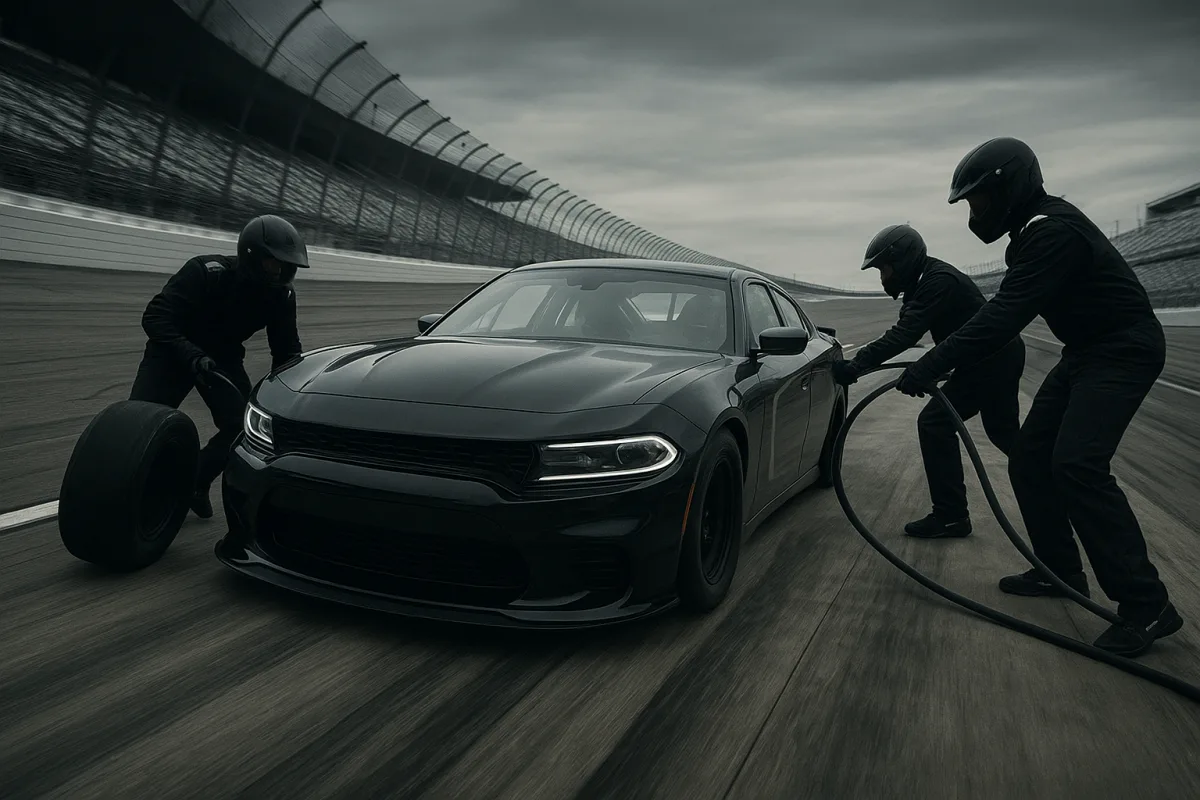
Dodge is back for Daytona 2027
Dodge’s return is no longer rumor or a show-car tease. The brand will re-enter the NASCAR Cup Series with Kaulig Racing at the 2027 Daytona 500, fielding two Charger-bodied cars in stock car racing’s top championship. [1]
That ends Dodge’s absence from Cup competition after the 2012 season. Jalopnik framed the result plainly: the Big Three will again be represented in Cup racing, with Ford, Chevrolet, and Dodge competing under the same NASCAR umbrella.
Car and Driver reported that Stellantis performance chief Tim Kuniskis confirmed the initial Dodge effort would begin with two Kaulig Racing entries. He also confirmed the competition car will carry Charger identity, not a revived Challenger or a purpose-built halo nameplate.
The date is aggressive. Dodge announced its 2027 program at the beginning of November 2026, leaving roughly three months before Speedweeks and the season-opening Daytona 500, depending on the final NASCAR calendar.
Kuniskis told Car and Driver that people around the program advised allowing at least three years to develop a Cup effort. Dodge instead plans to develop the car, team relationships, and competition program in public, during the 2027 season.
That is a choice, not a shortcut around physics. A Cup team can arrive at Daytona with legal hardware, experienced people, and a known supplier network, but it cannot manufacture the accumulated setup notes and race data that established programs own.
Several outlets are seeing the same bigger change
The news landed alongside a broader Stellantis return to NASCAR. Ram came back to the NASCAR Craftsman Truck Series in 2026, and Kaulig Racing fielded five Ram trucks as part of that renewed factory-backed relationship.
The Drive viewed the Cup announcement as part of Dodge’s effort to put gasoline-powered performance back at the center of its message. That timing matters because the new Charger’s launch has been dominated by debate around electrification and the missing V8.
Dodge is therefore using NASCAR to make a cultural argument before it has released the technical detail that would let buyers judge the argument mechanically. The race program is real, but the street-car implications remain incomplete.
Jalopnik, Car and Driver, and The Drive each arrived at the same central point from different angles: Dodge is returning quickly, doing so with Kaulig, and tying the move closely to its performance-car identity.
The evidence for a direct benefit to Charger values, maintenance costs, or long-term parts availability is thin. No manufacturer or independent publication has produced figures showing that Cup participation raises resale values or reduces ownership costs for Dodge performance cars.
That is important if you already own a late LX-platform Charger, Challenger, or a newer Charger Daytona. A NASCAR decal package may become popular, but it will not make a neglected transmission, tired suspension bushings, or an overheated engine cheaper to repair.
Kaulig and ECR explain how Dodge can move this quickly
Kaulig Racing is the race-team half of the plan. The organization already has a working relationship with Stellantis through the Ram Truck Series program, so Dodge is not starting from zero on staffing, sponsorship conversations, or garage procedures.
The engine side is the more consequential part. NASCAR confirmed that Dodge is collaborating with Earnhardt Childress Racing, commonly called ECR, to develop Dodge-specific Cup engines. [2]
ECR is an established NASCAR engine operation with Chevrolet connections, and that relationship provides Dodge with a running start on manufacturing, dyno work, calibration, and trackside engine support. It avoids the cost and delay of building a new engine department from scratch.
Jalopnik initially reported that Dodge had not announced its engine supplier and that ECR was a possible route requiring approval. NASCAR has since identified ECR as Dodge’s development partner, though detailed 2027 engine-supply rules have not been published. [2]
Dodge has also not released horsepower, torque, displacement, compression ratio, or a production-car equivalent for the 2027 Cup engine. Calling the race car proof of a specific V8 street Charger would go beyond what Dodge has announced.
The gasoline-performance message is clear. The exact mechanical link between the Cup engine and anything you can buy at a Dodge dealer is not.
The Charger body is still a work in progress
A Charger silhouette on a NASCAR grid does not mean the race car shares much with a showroom Charger underneath. Modern Cup cars use NASCAR’s common Gen 7 architecture, with manufacturer-specific bodywork fitted over standardized competition hardware.
That bodywork is where Dodge’s compressed timeline becomes visible. AutoWeek reported that Dodge had not yet produced its final Cup body panels at the time of the announcement, even as it was preparing for a February debut. [3]
Dodge’s Charger panels have gone through wind-tunnel and computational-fluid-dynamics work, while final production panels were expected in mid-November 2026 to meet the Speedweeks schedule. [3] That leaves little room for a slow approval process or a failed correlation test.
Jalopnik reported that NASCAR expected Dodge’s wind-tunnel work to be completed and production body panels available later in November. The difference is timing, not direction: the body is advancing through approval, but it was not a finished customer-ready package at announcement.
For a project-car owner, this is the right lesson to take from a racing program. Aerodynamics is never a matter of bolting on a big wing and assuming it helps, especially if the car sees highway speed, track days, or extended hot-weather running.
A wing, splitter, hood vent, or widebody conversion needs to work with airflow through the radiator, around the tire, and under the car. Dodge is using wind tunnels and CFD because appearance alone cannot answer those questions.
Drivers give the team a baseline, not a guaranteed result
Dodge’s two Kaulig entries are expected to be driven by A.J. Allmendinger and Ty Dillon. Allmendinger is the stronger established road-course and all-around benchmark, while Dillon offers a familiar full-season Cup presence inside the Kaulig organization. [1]
Allmendinger’s 2026 season included a fifth-place finish at Watkins Glen on August 8 and a 12.4 average finish across 36 races. Dillon’s best 2026 result was 15th at Talladega on April 25, with an 18.7 average finish over 36 races. [1]
Those numbers give you a realistic starting point for expectations. This is not a new program arriving with an unknown driver lineup, but it is also not a finished championship operation with years of manufacturer-specific data.
The temptation will be to measure Dodge’s success by its first Daytona result. We would not. Restrictor-plate racing, drafting partners, cautions, and late-race positioning can make one February finish look much better or worse than the underlying program.
A more honest test will be whether Kaulig’s Dodge cars become credible across intermediate ovals, short tracks, road courses, and the long midseason stretch where cooling, handling balance, engine durability, and pit execution all show up.
Why Dodge is doing this now
Dodge has a performance identity problem that a Cup return addresses quickly. The previous Charger and Challenger built loyalty around Hemi V8s, simple rear-wheel-drive muscle-car proportions, and a broad aftermarket that owners understood.
The new Charger arrived into a different market, with electric versions, turbocharged inline-six versions, and strong resistance from buyers who wanted a direct successor to the old V8 formula. The Drive reported that Dodge’s early relaunch has been uneven.
NASCAR gives Dodge a large, traditional audience for its gasoline-performance message. It also gives the Charger name a weekly presence that does not depend on a dealer lot, a lease payment, or an online debate about which powertrain counts as muscle.
That does not mean racing will cure a weak retail product. Motorsport can create attention, but it cannot fix poor pricing, limited dealer support, expensive insurance, unavailable replacement parts, or a drivetrain that misses what repeat buyers actually want.
Dodge is also taking advantage of a structure that makes a quick return possible. Kaulig supplies an operating team, ECR supplies engine-development capacity, and NASCAR’s standardized Cup framework limits how much of the car Dodge must invent alone.
Toyota’s Cup entry took years of preparation, and manufacturer programs normally arrive after long development cycles. Dodge’s fast return is unusual, which is why Kuniskis openly described the effort as harder than waiting three years. [1]
What this means for your Charger project
If you are choosing a Charger project because you expect NASCAR to make every Dodge collectible, skip that reasoning. There are no published resale projections, and racing exposure does not erase mileage, accident history, corrosion, or deferred maintenance.
We would buy the best-supported mechanical package you can afford, with service records and available parts, before paying extra for a NASCAR-themed special edition or speculative cosmetic conversion. The right car is the one you can keep running.
For an older Hemi-powered Charger or Challenger, start with cooling-system condition, oil leaks, suspension wear, brake fluid, tire age, and transmission service history. A loud exhaust or Superbird-style wing does nothing for a car that cannot finish a summer commute without overheating.
For a newer Charger, confirm exactly which drivetrain you are buying and what local dealer support looks like. Do not assume the Cup program means a production V8, a race-derived engine, or cheaper performance parts will appear on a timetable that suits your build.
The race car will wear Charger bodywork, but it is not a blueprint for a street build. Its body, engine support, chassis, safety systems, tires, and operating budget belong to NASCAR, not to the ownership reality of a 60,000-mile road car.
Dodge’s 2027 return is meaningful because it restores a factory-backed muscle-car name to Cup racing after 14 seasons away. For your own garage, it is a reason to watch closely, not a reason to buy ahead of the facts.
Frequently Asked Questions
When is Dodge returning to NASCAR?
Dodge will return to the NASCAR Cup Series at the 2027 Daytona 500, ending a 14-season absence from Cup competition.
Which team will run Dodge cars in NASCAR 2027?
Kaulig Racing will run two Dodge Charger-bodied entries in the 2027 NASCAR Cup Series.
Who are the drivers for Dodge's NASCAR return?
The confirmed drivers for Dodge’s 2027 NASCAR Cup Series entries with Kaulig Racing are A.J. Allmendinger and Ty Dillon, with formal confirmation expected during NASCAR’s championship weekend in Homestead, Florida.
How is Dodge developing its NASCAR program?
Dodge is collaborating with Earnhardt Childress Racing (ECR) to develop Dodge-specific Cup engines, leveraging ECR’s established NASCAR engine operations. The program is moving quickly, with bodywork still undergoing approval and development happening publicly during the 2027 season.
What impact does Dodge's NASCAR return have on Charger performance?
There is no current evidence that Dodge’s NASCAR involvement will directly affect Charger resale values, maintenance costs, or parts availability. The race program emphasizes brand performance identity but does not guarantee mechanical or economic benefits for street Charger owners.
How we researched this
This article was assembled from 3 published articles, 3 cited references.
Nothing here is based on hands-on testing. Where a figure or finding appears, it belongs to the source cited beside it, and the writing says so rather than implying otherwise. Every source is listed below so you can check it.
Sources
Dodge Confirms It Will Return to the NASCAR Cup Championship in 2027, Car and Driver
Dodge Is Returning to NASCAR Touting Gasoline-Powered Performance Is Back, The Drive
Dodge Rejoins NASCAR Cup Series After 14-Year Absence, Jalopnik
Dodge announces its return to the NASCAR Cup Series beginning at the Daytona 500
Dodge Has No NASCAR Cup Body Panels Yet. It Still Plans to Race in February.
Related Articles
2028 Dodge Charger Hellcat Return: What We Know So Far
Explore the 2028 Dodge Charger Hellcat return, rumored specs, ownership costs, and what to expect from this upcoming muscle car.
V10 Performance and Muscle Car Drag Racing Comparison
Explore V10 performance and muscle car drag racing with comparisons, maintenance costs, and best builds for quarter-mile speed.
Toyota GR Celica Rally1 Returns as 2027 Rally Car
Discover the Toyota GR Celica Rally1's 2027 WRC return, specs, and what it means for buyers and fans of Toyota rally cars.
2027 Mid-Size Family SUV Comparison
Compare 2027 mid-size family SUVs like the Kia Telluride and Volkswagen Atlas on performance, space, fuel economy, and features to find your best fit.