
Used Car Buying Challenges: Inspections, Recalls & Ownership
Learn about used car buying challenges including inspections, open recalls, dealer practices, and ownership costs to make informed decisions.
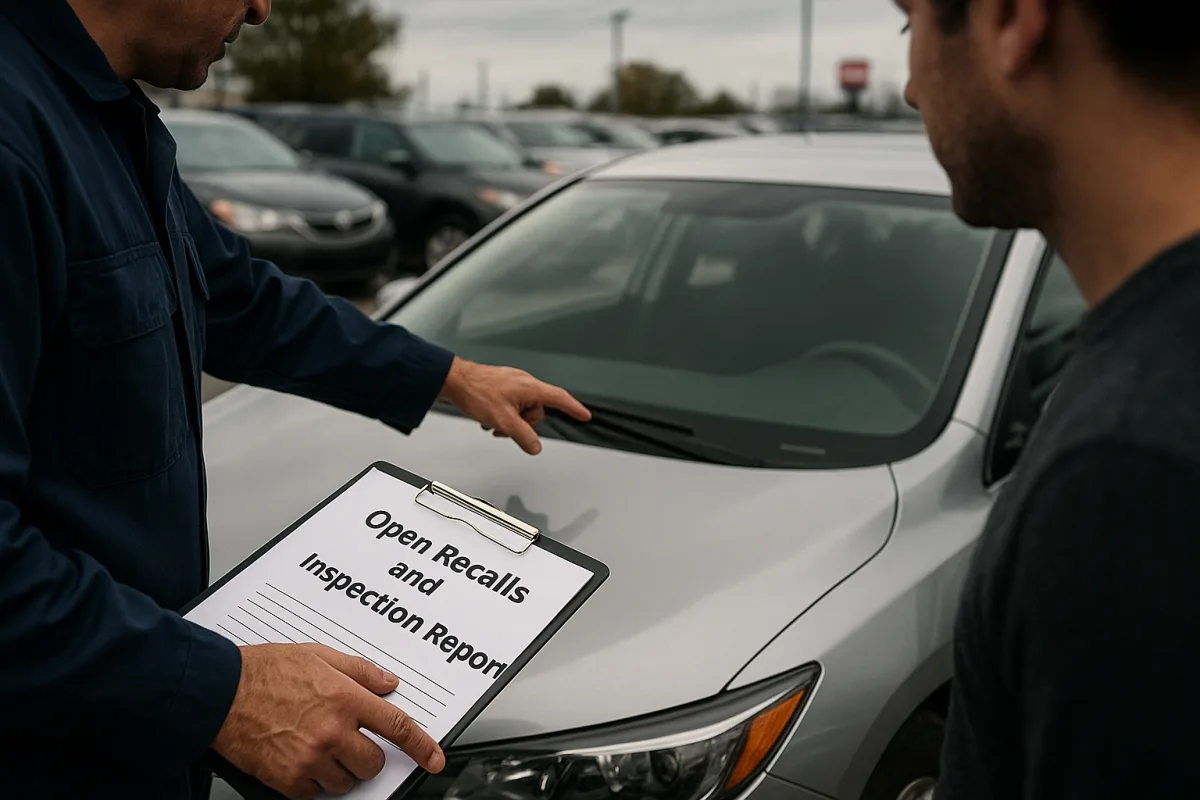
The used-car inspection that is not really an inspection
The most misunderstood phrase in used-car retail is “fully inspected.” Buyers hear it as a mechanical verdict: this car is sound, safe, and unlikely to hurt them financially. In practice, it usually means the dealer has performed whatever inspection its own policy requires.
That may include an oil change, a brake measurement, tyres, a scan for dashboard warnings, cosmetic preparation, and enough road testing to decide the car is saleable. It does not necessarily mean every factory recall has been completed, every future failure predicted, or every expensive defect discovered.
This matters most because used cars are sold at the awkward point between two ownership histories. The first owner has already absorbed some depreciation and maintenance. The next owner gets the remaining useful life, but also the deferred work, the unknown repairs, and any paperwork that was never handled properly.
The sensible question is not, “Has it been inspected?” It is, “What exactly was inspected, by whom, on what date, and what did they find?” A dealer unable or unwilling to answer that clearly has told you something useful before you have signed anything.
An open recall is a defect notice, not a repair
A safety recall begins when a manufacturer or the National Highway Traffic Safety Administration identifies a safety-related defect, or a vehicle’s failure to meet a federal safety standard. The manufacturer then assigns a recall campaign number and makes a remedy available, normally at no charge.
The important detail is that the recall attaches to the vehicle identification number, not to the owner. If a 2017 Honda Civic changes hands three times without receiving recall work, the fourth owner can still arrange the repair, assuming parts and the campaign remedy remain available.
That does not mean the problem is theoretical. CarScoops reported on a lawsuit alleging that a rear-seat belt system in a 2017 Honda Civic was defectively designed and contributed to the death of an 18-year-old passenger in a May 2025 crash. The claims remain allegations in litigation, not a finding that every 2017 Civic is unsafe.
That distinction is worth preserving. A lawsuit may reveal a claimed design issue. A recall is a formal manufacturer remedy campaign. A worn suspension bush, tired battery, blocked diesel particulate filter, or failed infotainment screen is neither, even if it is costly and frustrating.
The Civic case also illustrates why a five-star crash rating is not a lifetime guarantee against every injury pattern. CarScoops noted that all 2017 Civic body styles received a five-star NHTSA rating and IIHS Top Safety Pick status, but those broad assessments do not settle the facts of one collision or one lawsuit.
Why a dealer can still sell it
Many buyers assume a franchised or large-chain dealer cannot legally retail a used car with an open recall. That is not generally true. Federal law does not broadly prohibit the sale of used vehicles carrying unrepaired safety recalls, although rules can be different for rental fleets and some specific circumstances. [10]
The federal Used Car Rule requires dealers to display a Buyers Guide. It tells the buyer whether the vehicle is sold “as is” or with a warranty, and advises checking for recalls. That is useful disclosure, but it shifts a great deal of practical responsibility onto the person buying the car. [10]
Some states impose stronger duties. Tennessee, for example, may require a dealer to repair an open recall or disclose it and obtain the buyer’s acknowledgement. [10] The point is not to memorise Tennessee law, but to stop assuming that a national dealer advert or a glossy inspection sheet creates identical protections everywhere.
California’s Combating Auto Retail Scams Act takes effect on October 1, 2026. It requires clearer total-price advertising and prohibits specified dealer misrepresentations, which should make certain pricing games harder to play. [1] It is not, however, a substitute for a vehicle-specific recall search or inspection.
The August 2026 settlement involving CarMax and the FTC and 36 states shows why this gap deserves attention. In some states, more than 25 percent of vehicles at issue had unrepaired safety recalls despite marketing that emphasized thorough inspections, according to LawsuitWatch’s account of the settlement. [9]
That is an important example, not a national prevalence rate. There is no reliable figure establishing what proportion of all used cars are sold with undisclosed defects or unrepaired recalls. Anyone claiming that every dealer does it, or that only rogue dealers do it, is going further than the available evidence.
The VIN check is the first step, not the whole job
Run the VIN through the manufacturer’s recall lookup before seeing the car, then run it again when you have the car in front of you. Confirm that the VIN, registration, windscreen tag, door-jamb label, and title all agree. A one-character discrepancy can be an innocent transcription mistake, but it must be resolved.
Then ask the seller for repair invoices showing that any completed recall work was actually performed. “No open recalls” is the desired result, but “recall completed on this date by this dealer” is better documentation. Save screenshots and paperwork with the purchase file.
A history report can flag title brands, reported mileage, insurance events, registration history, and sometimes recall information. It cannot physically inspect the car, prove that every accident was reported, or confirm that a service was performed properly. It is evidence, not a mechanical examination.
That limitation matters in fraud cases. Title washing, odometer rollback, curbstoning by unlicensed dealers posing as private sellers, and fake online listings remain common patterns identified in used-car scam guidance. [5] [6] A polished advert, a clean driveway, and a believable story are not verification.
Do not send a deposit simply because the seller claims there are other buyers waiting. Verify the seller’s identity, the VIN, title status, and physical location first. Online-marketplace scams often rely on pushing the buyer toward a deposit before the vehicle or seller has been properly established. [7]
What an independent inspection should do
A pre-purchase inspection is not a guarantee either. It is a defined amount of diagnostic time, usually performed without dismantling the engine or transmission. Its value is that the mechanic works for you, rather than for the party trying to close the sale.
Give the inspection shop the VIN and ask it to check for codes, fluid leaks, underbody corrosion, tyre age and wear, brakes, suspension play, battery health, cooling-system evidence, signs of accident repair, and all available service records. On a diesel, ask specifically about emissions equipment and fuel-system condition.
A good inspection report separates urgent safety defects from maintenance due soon and cosmetic imperfections. That separation is how you decide whether to walk away, renegotiate, or buy the vehicle with a realistic repair reserve. A vague statement that it “needs a few things” is not enough.
At 60,000 miles, the biggest risk is often not a catastrophic engine failure. It is several medium-sized jobs arriving together: tyres, brakes, fluid services, a battery, suspension work, a leaking water pump, or an electronic fault that takes hours to diagnose.
Porsche’s expanding Classic Communication Management Plus programme is a useful reminder that ageing technology creates ownership costs without making a car mechanically worn out. CarScoops reports that newer PCCM Plus systems cover 2009-16 Boxster, Cayman, and 911 applications, but estimates dealer-supplied fitting may approach $3,000 when the systems reach US dealers.
That is not a required repair, and it may suit an owner who plans to keep an older Porsche rather than replace it. But it is exactly the sort of cost a spec sheet misses: an otherwise good car can feel old daily because its navigation, phone connection, or media hardware has aged badly.
The diesel trap: repair cost is labour plus uncertainty
Diesel vehicles reward the right use cycle. Long, regular runs allow exhaust after-treatment systems to heat up and regenerate properly. Short trips, extended idling, poor maintenance, and neglected warning lights can turn an economical workhorse into a very expensive project.
The repair numbers need context. TruckMargin puts diesel particulate filter cleaning at roughly $450 to $900, while replacement can run from $3,000 to $8,000. It lists turbocharger replacement at $2,000 to $4,000 or more, and an injector set at $1,500 to $4,500. [3]
Those figures are commercial-truck ranges, not quotes for a particular pickup, SUV, or the 2019 diesel Range Rover described by DailyDrivenExotics. They are still useful because they show why “it only needs emissions work” is not a casual sentence on a used diesel listing.
Labour magnifies the problem. FF Dispatch places the 2026 national average truck labour rate at $190 per hour, with regional ranges reaching $200 to $220 in the West. [2] Six hours of diagnosis and repair time can therefore add more than $1,000 before parts, shop supplies, taxes, or programming.
DailyDrivenExotics’ account of its 2019 diesel Range Rover lease is also a warning about paperwork, not a verdict on every lease or Range Rover. The channel says the lessee believed return at term was straightforward, but had signed an arrangement under which the vehicle’s residual value was guaranteed.
That is an open-end lease problem. If the agreed residual was $29,000 but the vehicle sold at wholesale for less, the lessee could owe the shortfall. The dealer’s retail asking price is irrelevant because the contract may specify auction, wholesale, or another disposal method.
For a used-car buyer, the equivalent lesson is simpler: never treat the most attractive number on the page as the whole deal. A monthly payment can conceal rate, term, add-ons, negative equity, and the actual amount financed. An inspection slogan can conceal what was never inspected.
Buy the paperwork before you buy the car
Ask for the Buyers Guide, vehicle-history report, service records, recall status, title information, warranty terms, and an out-the-door buyer’s order before leaving a deposit. Read the warranty exclusion list. “Powertrain coverage” may not cover diagnostics, seals, sensors, emissions components, or consequential damage.
Older, higher-mileage vehicles can also be harder and more expensive to finance. Most national banks generally limit lending to vehicles around 10 years old and 100,000 to 125,000 miles, while credit unions and specialist lenders may be more flexible. [11]
If the car falls outside ordinary lending rules, do not let the lack of finance push you toward a title loan. Those loans can be available for older or high-mileage vehicles, but the risk is secured against the car itself and should not be treated as routine used-car finance. [12]
The best protection is boring and document-heavy: verify the VIN, check recalls, inspect independently, price the repairs you can already see, and read the sales contract before payment. A used car is not made safe by a dealer logo, and it is not made unsafe merely because it is old.
Frequently Asked Questions
What are the common challenges when buying a used car?
Used cars often come with deferred maintenance, unknown repairs, and paperwork issues from previous owners. Buyers must navigate unclear inspection standards, potential undisclosed defects, and the risk of open safety recalls that remain attached to the vehicle. Additionally, repair costs can be high, especially for diesel trucks, where labor rates and parts expenses have risen sharply.
Can dealers sell used cars with open recalls?
Yes. Federal law generally does not prohibit dealers from selling used vehicles with unrepaired safety recalls. While the dealer must display a Buyers Guide advising buyers to check for recalls, responsibility largely falls on the buyer to verify and arrange recall repairs. Some states have stricter rules requiring disclosure or repair before sale.
How reliable are dealer inspections on used cars?
Dealer inspections often serve as a sales process rather than a thorough mechanical evaluation. They may include basic checks like oil changes, brake measurements, and road tests but do not guarantee all defects or open recalls are identified or repaired. Buyers should ask for detailed information about what was inspected, by whom, and when.
What should an independent used car inspection cover?
An independent inspection should go beyond dealer checks to identify open recalls, safety defects, and costly potential repairs that dealers might overlook. It should assess the vehicle’s mechanical condition comprehensively, including deferred maintenance and components prone to failure, to provide a clearer picture of future expenses.
How to verify if a used car has unrepaired recalls?
The first step is to run the vehicle identification number (VIN) through manufacturer or National Highway Traffic Safety Administration databases to check for open recalls. This VIN check is essential but not sufficient alone; buyers should also request written documentation from the dealer and consider an independent inspection to confirm recall status and completion.
How we researched this
This article was assembled from 1 video source, 4 published articles, 12 cited references.
Nothing here is based on hands-on testing. Where a figure or finding appears, it belongs to the source cited beside it, and the writing says so rather than implying otherwise. Every source is listed below so you can check it.
Sources
I Got SCAMMED by a Shady Used Car Dealership — DailyDrivenExotics
Lawsuit Claims Faulty Honda Seatbelt Killed Teenager In NJ Crash — CarScoops
$400 GTA VI Vice City Collection Doesn’t Even Come With The Game — CarScoops
Porsche Just Vanished Another Reason Not To Daily A Used Cayman Or 911 — CarScoops
California Combating Auto Retail Scams (CARS) Act - California DMV
Truck Maintenance Schedule and Costs: What Owner Operators Actually Pay in 2026 | FF Dispatch
Truck Maintenance Cost Per Mile Calculator (2026) — Repair Reserve | TruckMargin
Diesel Truck Fuel & Maintenance Ownership Cost (2026) | VehCalc
Common Used-Car Scams on Online Marketplaces | Used-Car Buyer Desk
How to Buy a Used Car From a Private Seller Without Getting Burned
CarMax Lawsuit: Undisclosed Safety Recalls on Used Cars | LawsuitWatch
Can a Dealership Sell a Used Car With an Open Recall? - LegalClarity
Title Loans for Older Cars: High Mileage & Classic Vehicle Approval
Watch Used Car Buying and Ownership Challenges on Youtube
Related Articles
Exotic Car Ownership and Modifications
Explore exotic car ownership and modifications, including costs, challenges, and real-world examples of high-performance exotic cars.
Embracing Change: Car Sales, Departure of Car Wizard, and Personal Reflections
Hoovies Garage faces changes with potential car sales and the departure of the Car Wizard. Reflects on personal loss and the importance of seeking therapy. Amidst challenges, the Amola red cars make a comeback.
Redeeming Automotive Mistakes: Hoovies Garage's Journey to Financial Recovery
Hoovies Garage tackles financial mistakes by selling iconic cars like a Cadillac Eldorado hot rod and a troublesome Fisker, aiming for redemption and smarter choices in car purchases.

Vintage Road Trip: 1959 Plymouth Fury 'Christine' Journey with Hoovies Garage
Join Hoovies Garage as they embark on a 1,340-mile journey with a 1959 Plymouth Fury named Christine, sponsored by Conel tire. Despite minor issues, the car's vintage charm and endurance shine through, making it a classic road trip to remember.