
EV Incentives and Market Challenges in 2026
Explore 2026 EV incentives, market challenges, and new models including California rebates, UK leasing, and used EV ownership risks.
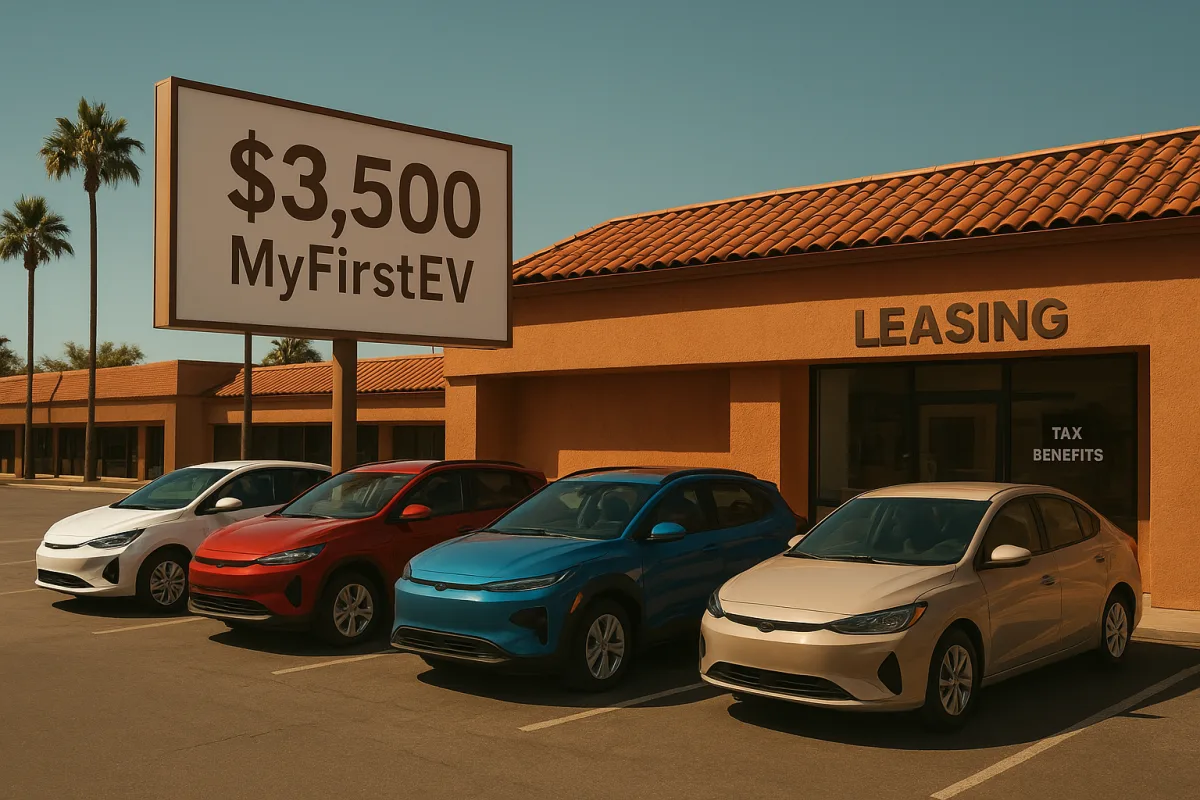
The EV market has moved from early-adopter product to contested mass-market transport
The shift is plain enough now: EV growth is no longer being carried by one type of buyer, one subsidy or one premium manufacturer. Governments, leasing companies, budget-car makers and fleet operators are all trying to solve different parts of the same problem.
California is using point-of-sale rebates and charger investment. UK leasing firms are leaning heavily on company-car tax treatment. Chinese and Chinese-backed manufacturers are pushing lower-priced products into mature markets. Ride-hailing companies are putting branded EV fleets in front of passengers.
That does not mean the transition is smooth. The evidence points to a market growing quickly in some channels while struggling in others, particularly among private used-car buyers who have to take the depreciation, insurance and charging risks themselves.
For somebody planning an EV purchase, or even a long-term ownership project, that matters more than the headline acceleration figure. The key question is increasingly not whether an EV can work. It is which route into one leaves you carrying the least financial uncertainty.
California is trying to reduce both the purchase-price and charging barriers
California’s MyFirstEV programme is more interesting than a conventional income-tested rebate because it is open to any state resident buying or leasing their first zero-emission vehicle. There are no income limits, which makes it unusually broad for a modern EV incentive. [1]
Eligible buyers receive $3,500 off a new zero-emission vehicle priced at up to $50,000 MSRP, or $1,750 off an eligible used vehicle costing up to $25,000. The used vehicle must be at least two model years old and sold through a participating manufacturer or its certified-pre-owned channel. [1]
The incentive is applied at the point of sale, which is important. A tax credit claimed months later helps on paper, but it does not reduce the deposit, monthly payment or finance amount when a buyer is actually deciding whether the car fits.
California committed $135 million, matched dollar-for-dollar by participating manufacturers, for a pool exceeding $270 million. Hyundai, Tesla, Ford, Chevrolet, Kia, Toyota/Lexus, Honda, Nissan, Volvo and several other brands are involved. [1]
The catch is straightforward: this is first-come, first-served funding, not a permanent price reduction. InsideEVs reported that Tesla exhausted its allocation within five days, which is a useful warning not to configure a car around a rebate before a dealer confirms availability.
The early take-up is real. Nearly 12,000 first-time buyers used MyFirstEV after its August 2026 launch, according to the California update cited by InsideEVs. But that figure does not tell us how many would have bought an EV without the subsidy.
California’s new-car EV share is already well above the national picture, at 16.3 percent of third-quarter sales versus 6.4 percent nationally, according to InsideEVs. That suggests incentives are landing in a market that already has supply, awareness and substantial charging deployment.
The state is also acknowledging that a rebate alone cannot fix the ownership experience. California projects that 6.8 million light-duty EVs in 2030 will require roughly 478,000 public and limited-access charging ports, including 53,000 DC fast chargers.
By mid-2026, California had reached about 47 percent of the required light-duty charging total, according to the state’s infrastructure projections. That is substantial progress, but it is also a large remaining build-out with uncertain completion dates and funding beyond current plans.
For an owner, charger access remains more valuable than a spec-sheet range figure. An EV with reliable home, workplace or apartment charging is usually easier to live with than a theoretically longer-range model dependent on a busy rapid charger across town.
That distinction should shape a California buying plan. A $3,500 rebate is worth taking, but the stronger long-term saving may come from choosing a car and charging arrangement that lets it charge while parked, rather than making dedicated charging trips.
Affordable EVs are changing the used-car calculation
The strongest pressure in the market is coming from affordable new EVs. Mighty Car Mods used a BYD Atto 1, also sold in some markets as the Dolphin Mini or Seagull, to make the point in an intentionally unserious comparison.
The Australian-market BYD Atto 1 Essential featured by Mighty Car Mods was priced below A$20,000. It has a 65 kW electric motor, a quoted 220 km range, current crash protection and an eight-year battery warranty, making it suitable for urban commuting and first-time new-car buyers.
The Atto 1’s appeal is not that it replaces every petrol car. A quoted 220 km range will be restrictive for regular long-distance travel, particularly if the owner cannot charge at home. It suits short commutes, local work and second-car use better.
Mighty Car Mods paired it with an SV10 Toyota Vienta, effectively a V6 manual Camry, bought for A$3,000. The older Toyota was entertaining and fast enough to make the race close, but the episode also showed smoke, oil leakage and age-related risk.
That A$3,000 Vienta suits a hobbyist who can inspect, repair and tolerate downtime. Its 3VZ-FE V6, manual gearbox and old-school simplicity may appeal to an enthusiast project, but it is not comparable with a new EV warranty in everyday ownership terms.
The relevant lesson is not that the BYD beats every old bargain. It is that a cheap new EV can now compete with the traditional used-car fallback on monthly predictability, safety and warranty, even if the old petrol car remains more involving.
The UK market is seeing the same pressure in a more complicated form. Autocar reported that leasing companies describe a cut-throat market, with aggressive new-car pricing and new Chinese brands making it difficult to forecast what ex-lease EVs will be worth.
For a private buyer, falling used values can be an opportunity. For a buyer using finance, it can be a problem. A cheap used EV can look attractive until an insurer, lender or future buyer assigns a higher cost to battery uncertainty.
There is no UK government grant for used EVs, according to Carsa’s 2026 used-EV finance guide. Battery-health concerns can influence finance terms, so a low purchase price should not be treated as the full affordability story. [3]
Insurance adds another variable. EV Compared estimates typical EV premiums at £650 to £710 annually, roughly 10 to 15 percent higher than petrol equivalents at £550 to £610, although the gap varies sharply by model and driver. [4]
The difference can be dramatic. EV Compared cites an annual premium around £418 for a Renault 5 E-Tech and around £922 for a Jaguar I-Pace 400SE. Those figures are illustrations, not quotes, but they show why an insurance check should come before a deposit. [4]
Repair costs matter as well. Carsa says EV repairs can be around 25 percent more expensive and take 14 percent longer than comparable petrol or diesel work, partly because of battery-related procedures and specialist repair requirements. [3]
That does not make a used EV a bad project. It means the sensible purchase file now includes a battery-health report, insurance quote, charging plan, tyre prices, service history and confirmation that local body shops can handle the model.
UK leasing remains strong because tax policy still changes the numbers
In Britain, EV adoption is increasingly split between company-backed arrangements and ordinary retail demand. The British Vehicle Rental and Leasing Association told Autocar that business contract hire and salary sacrifice have grown while personal contract hire has contracted.
Salary sacrifice works because employees pay for the lease from gross salary and then pay benefit-in-kind tax. For 2026/27, a pure EV is taxed at 4 percent of list price, compared with at least 26 percent for the most efficient petrol and diesel cars.
The 4 percent rate is still low, but it is not static. It doubled from 2 percent in 2025/26, and the scheduled rate is due to reach 9 percent by 2029/30. Anyone choosing a three- or four-year agreement should model those increases.
The BVRLA’s concern is understandable. Autocar reports that salary-sacrifice fleets have grown more than tenfold over five years to 285,000 vehicles, while EVs make up almost all of that channel. That is a tax-policy success, not pure retail enthusiasm.
For someone who cannot charge at home, salary sacrifice does not magically make an EV convenient. It can make the monthly payment compelling, but the driver still needs a realistic plan for electricity cost, public charging availability and time spent charging.
Leasing also shifts residual-value risk to the finance company. In a market where new EV discounts are undercutting older stock, that can be worth more than chasing the lowest advertised used-car price, especially for buyers who change cars every few years.
The downside is that leasing is not ownership. Excess-mileage charges, damage bills, insurance requirements and restrictions on modifications can turn a cheap monthly figure into an expensive arrangement. It is poor territory for somebody wanting a long-term mechanical project.
Ride-hailing fleets are becoming a public test of EV usability
Green SM’s Los Angeles launch is another sign that EV adoption is moving beyond private owners. The Vietnamese ride-hailing company has put 500 VinFast VF8 electric SUVs and 500 trained full-time drivers onto Los Angeles streets. [2]
That is materially different from Uber and Lyft’s familiar model. Green SM owns or controls the fleet, supplies the vehicle and employs drivers with training and benefits, rather than relying on drivers’ personal cars and gig-work arrangements. [2]
The VinFast VF8 suits this role as a five-seat electric crossover capable of airport and urban passenger work. No fleet purchase price or operating-cost data has been published, so it would be wrong to claim Green SM has proven the economics.
The operation does offer a useful real-world test. A ride-hailing EV has to survive heavy daily mileage, repeated charging, passenger wear, collision repairs and dispatch pressure. Those are harsher conditions than a privately owned commuter car sees.
Car and Driver noted that earlier U.S.-market VF8s drew criticism for handling, ride quality and fit and finish, while newer versions are said to address some shortcomings. That remains a developing story, not a settled reliability record.
Green SM may also function as a rolling showroom for VinFast, a brand that has struggled to gain U.S. registrations. Automotive News data cited by Car and Driver recorded only 389 VinFast registrations in the United States from January through July 2026.
For a prospective owner, fleets like this can eventually provide useful used-market evidence. High-mileage examples may reveal battery durability, suspension wear, cabin quality and parts availability. That evidence simply does not exist in sufficient volume yet.
The broader trend is clear, though. EV market growth is becoming less dependent on buyers making a single emotional purchase decision. It increasingly depends on fleets, employers, tax systems, affordable models and charging networks doing their parts at the same time.
Frequently Asked Questions
What EV incentives are available in California in 2026?
California’s MyFirstEV rebate program offers $3,500 off new zero-emission vehicles priced up to $50,000 MSRP and $1,750 off eligible used EVs costing up to $25,000. The rebate applies at the point of sale and is available to any state resident buying or leasing their first zero-emission vehicle, with no income limits. Funding is first-come, first-served, and several major manufacturers participate in the program.
How do new affordable EVs affect used EV values?
The arrival of affordable new EVs is putting significant downward pressure on used EV values. Cheap new models with warranties and modern features compete with older used cars, making leasing a potentially safer option than buying used due to uncertain residual values. This dynamic challenges traditional used-car market assumptions.
What are the challenges of owning a used electric car?
Used EV ownership can involve higher insurance premiums, increased repair costs, and battery degradation concerns. Insurance for EVs tends to be 10-15% more expensive than for petrol cars, and repairs can be about 25% costlier and take longer. Financing used EVs is also complicated by the lack of government grants and uncertainty around battery life.
How does the MyFirstEV rebate program work?
The MyFirstEV program provides a point-of-sale rebate of $3,500 for new zero-emission vehicles and $1,750 for eligible used EVs, with no income restrictions. The used EV must be at least two model years old and sold through a participating manufacturer or certified-pre-owned channel. The program is funded by the state and automakers, but rebates are limited and allocated on a first-come, first-served basis.
Are EV insurance premiums higher than petrol cars?
Yes, EV insurance premiums are generally 10-15% higher than those for petrol vehicles. For example, average EV premiums range from about £650 to £710 annually, compared to £550 to £610 for petrol cars. Premiums vary widely depending on the EV model, with some lower-cost models having significantly cheaper insurance than high-end EVs.
How we researched this
This article was assembled from 1 video source, 3 published articles, 4 cited references.
Nothing here is based on hands-on testing. Where a figure or finding appears, it belongs to the source cited beside it, and the writing says so rather than implying otherwise. Every source is listed below so you can check it.
Sources
Toyota Camry NUGGET vs BYD: Budget Junk or EV Killer? — Mighty Car Mods
Leasing firms: “Bloodbath” electric car market needs Budget support — Autocar
L.A.’s Newest Ride-Hailing Service Consists of 500 VinFast EVs — Car and Driver
California’s EV Push Goes Beyond Giving Buyers $3,500 — InsideEVs
Watch EV Incentives, Market Challenges, and New Models on Youtube
Related Articles
Electric Vehicle Market and Warranty Trends in 2026
Explore 2026 trends in the electric vehicle market, charging infrastructure, and warranty coverage to make informed EV ownership decisions.
Electric and Hybrid Vehicle Market Trends and Innovations
Explore electric and hybrid vehicle market trends, innovations, and practical ownership insights including small EVs, charging, and financing.

Affordable Used Cars Buying Guide
Explore our affordable used cars buying guide with practical tips on ownership costs, maintenance, financing, and choosing the right vehicle for your
Ford Product Strategy 2026
Explore Ford's 2026 product strategy, badge use, ownership costs, and challenges with Mustang, Bronco, and the upcoming Ranger model.