
Affordable Performance Car Depreciation and Bargains Explained
Explore affordable performance car depreciation, ownership costs, and how to find the best used performance car bargains with smart financing tips.
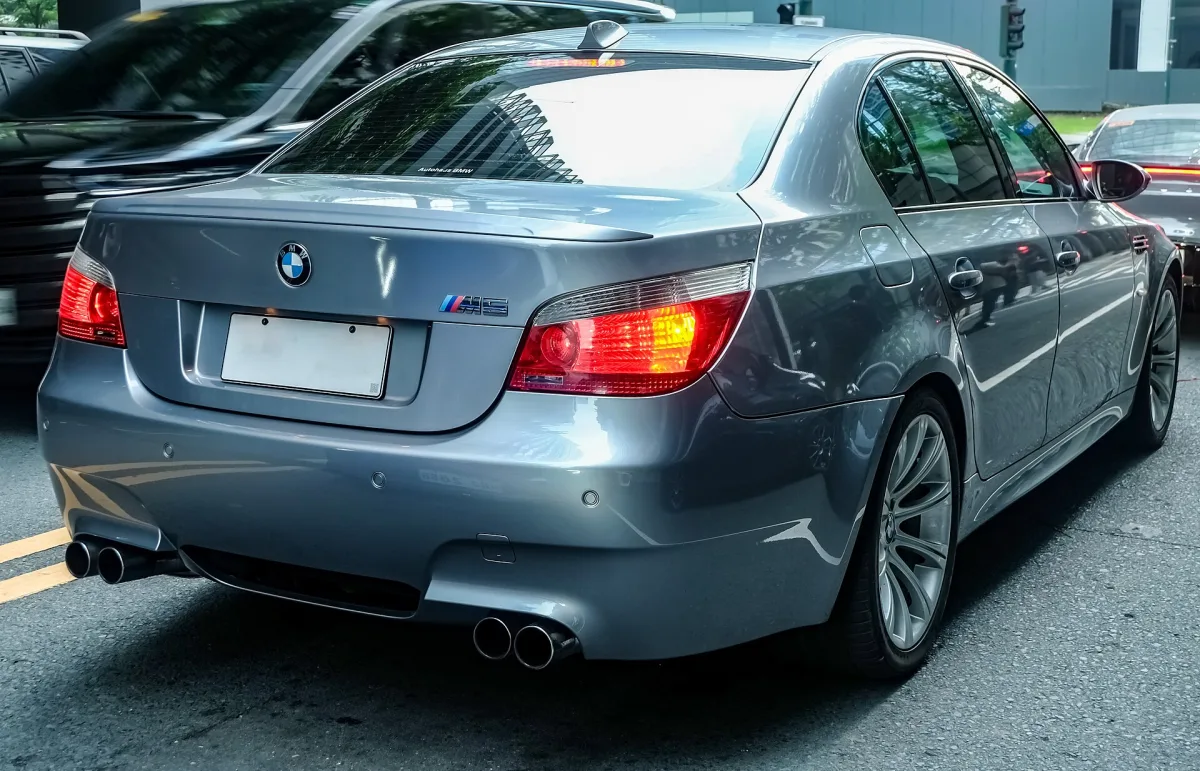
Photo: Ethan Llamas, CC BY-SA 4.0, via Wikimedia Commons
Set your all-in budget
A 2025 Hyundai Ioniq 5 N with nearly 24,000 miles listed at $39,500 in Illinois is the kind of ad that gets attention. The Drive also found a 17,000-mile example in New Jersey pending sale at $40,800, against a reported new price of $61,550.
That sounds like $20,000 of free performance. It is not. Add sales tax, registration, insurance, a pre-purchase inspection, tires, charging equipment if you need it, and financing before comparing any used car with a new-car monthly payment.
Interest rates can turn a $40,000 car into a much dearer commitment. Experian reported the average used-car loan rate at 11.19% in 2026, though borrowers with excellent credit can do far better than the market average. [5]
We would arrange financing before shopping and use a short loan, or cash, if possible. A depreciated performance car bought at a high rate can lose its appeal fast, especially when an insurer sees expensive wheels, tires, bodywork, and battery components.
Decide whether an EV fits your week
The Ioniq 5 N works best when you can charge where you park. Hyundai’s 800-volt system can charge from 10% to 80% in roughly 18 minutes on a suitable 350-kW DC fast charger, while Level 2 charging takes about seven hours and 20 minutes. [7]
Its EPA range is 221 miles, but The Drive correctly flags that as a limitation for some owners. Highway driving, cold weather, and the temptation to use its 641 horsepower and 570 lb-ft of torque will all cut into the number.
The Audi e-tron GT asks the same lifestyle question in a more luxurious form. The Fast Lane Car bought a 2023 example for $49,000 after reporting an original price around $115,000, while its presenter also recalled seeing the car at roughly $135,000 when new.
Market data broadly supports the cheap-Audi story. VinExposed estimates that a 2023 e-tron GT retains 40.4% of its original value after three years, a 59.6% decline, with a median resale value near $49,980. [2]
The e-tron GT is the long-distance cruiser of the pair. The Fast Lane Car praised its air suspension, rear-wheel steering, quietness, and unusually soft ride, describing it as more GT than Porsche Taycan, with the Taycan carrying about a $10,000 used-market premium.
Before buying either, drive your normal highway route and locate the chargers you would actually use. An e-tron GT’s reported highway range is about 215 to 235 miles in mild conditions, falling to roughly 170 to 200 miles below freezing. [6]
We would take the Ioniq 5 N at around $40,000 if it suits your charging routine. It has the newer-car warranty advantage, lower entry price, five-seat practicality, and a personality that makes it much more than a straight-line appliance.
Check the battery warranty and charging history
A used EV bargain starts with the in-service date, not the model year. The Fast Lane Car notes that Audi covers the e-tron GT battery for eight years or 100,000 miles, so a three-year-old, 30,000-mile car may retain five years and 70,000 miles of coverage.
Confirm that remaining coverage with the dealer and the vehicle identification number. Also ask whether every recall has been completed, whether the car has collision history, and whether it has spent long periods sitting at a very low or very high state of charge.
Battery-health evidence is encouraging for the broader Hyundai Ioniq 5 family. An Aviloo study found median state of health of 97.2% at 50,000 kilometers, 95% at 100,000 kilometers, and 92.8% at 150,000 kilometers. [3]
There is less detailed public battery-longevity information for the e-tron GT. That does not make the Audi a bad bet, but it means you should be stricter about an inspection, warranty verification, charging performance, and the condition of the 21-inch tires and brakes.
Insurance quotes deserve the same discipline. Estimates for Ioniq 5 N coverage vary enormously, while luxury-EV repair costs can raise premiums because battery-adjacent damage and specialized body repairs are costly. [3][4]
Use depreciation to choose your Audi
The 2023 e-tron GT is a compelling used performance luxury car because someone else has absorbed the brutal first depreciation hit. At roughly $50,000, its 800-volt charging system, over-500-horsepower output, air suspension, and rear-wheel steering look very different than they did at six figures.
Buy it for its ride quality, cabin, design, and effortless acceleration. Do not buy it expecting Taycan handling for Audi money, or a long-range road-trip EV in winter, because those are different jobs.
The Fast Lane Car’s distinction is helpful: the Porsche Taycan is the sportier choice, while the Audi is the more relaxed grand tourer. We would skip the Porsche premium unless the sharper chassis is the point of the purchase.
The Audi’s low resale value also means condition matters more than color or option fantasy. A complete service history, clean title, healthy charging behavior, undamaged wheels, and remaining battery coverage are worth paying for, because an inexpensive e-tron GT can become an expensive Audi quickly.
Choose the Mustang generation that matches your tolerance for age
Ford Mustang bargains span wildly different ownership experiences. Jalopnik’s seven-car list covers the 1985.5 SVO, 1989 5.0 LX, 1969 302 and 351 models, 2005 GT, 2015 EcoBoost, 1999-2004 SVT Cobra, and 2007-2009 Shelby GT500.
The 1985.5 SVO is for the buyer who wants an unusual turbocharged Fox-body Mustang. Its 2.3-liter four-cylinder made 205 horsepower after Ford’s mid-1985 update, and Hagerty values a good-condition example at about $14,000. That is 20% below its estimated value three years earlier.
A 1989 5.0 LX delivers the classic Fox-body V8 experience, with 225 horsepower and period low-six-second 0-to-60-mph performance. Jalopnik reports roughly $24,900 for a good coupe, while hatchbacks and convertibles sit around $10,000 lower.
Those older cars are cheap because they are old. Inspect the torque boxes and subframe areas for cracking or twisting, look closely for strut-tower rust, and expect oil leaks around the rear main seal on neglected examples. [8]
The 1969 Mustang is the old-school entry point, but skip the six-cylinder versions if performance is the aim. Jalopnik places a 220-horsepower 302 car around $13,600, a 250-horsepower 351 Windsor GT around $24,200, and the 1970 351 Cleveland at 290 horsepower.
Find the Mustang sweet spot before modifying anything
We would start with the 2005 Mustang GT. Jalopnik calls it the best bang-for-buck Mustang of the group, and the case is strong: 300 horsepower from the 4.6-liter Modular V8, 320 lb-ft, a five-speed manual option, and enough age to be cheap without feeling antique.
Hagerty puts a good 2005 GT around $15,600, while Kelley Blue Book suggested lower figures. Jalopnik’s scan of live AutoTempest listings found most cars at $10,000 or more, which is the realistic territory for avoiding a high-mileage project.
The 2015 EcoBoost is the other smart answer if you want a newer chassis and lower buy-in. Its 2.3-liter turbocharged four-cylinder makes 310 horsepower, and Kelley Blue Book placed a coupe’s fair-purchase price at $14,550.
It will not sound like a V8, but Jalopnik found later EcoBoost Mustangs more European sports car than traditional muscle car. Buy one if you value a newer interior and balance, but inspect modifications closely because cheap turbo cars attract questionable tunes and intake plumbing.
A 1999-2004 SVT Cobra is the specialist’s choice. Its quad-cam 4.6-liter V8 makes 320 horsepower and it has independent rear suspension, while Hagerty values a good coupe around $14,900 and a convertible about $1,200 less.
Check transmission behavior on every early-2000s Mustang. Manual cars can suffer synchro wear, while automatics can fail expensively; cooling leaks, worn ball joints, tired tie rods, and ignition or fuel-system misfires also belong on the inspection list. [9]
Reserve the Shelby for buyers who can absorb surprises
The 2007-2009 Shelby GT500 is the Mustang for someone who wants 500 horsepower without six-figure collector-car money. Jalopnik found some examples selling from $15,000 to $25,000, though Hagerty suggests mid-$30,000 money for a car in fine condition.
That gap tells you exactly where danger lies. A cheap GT500 may have been modified, raced, neglected, or all three, while a better car costs more because it has records, original parts, a cleaner body, and fewer unknowns.
The rare 2000 SVT Cobra R is not the bargain. Its 5.4-liter V8 produced 385 horsepower, but prices often exceed $80,000, placing it firmly in collector territory rather than affordable performance ownership.
We would buy a documented 2005 GT before an anonymous cheap GT500. The GT is slower, but it leaves money for tires, brakes, suspension refresh work, insurance, and the repairs that make an older performance car enjoyable after the first exciting month.
Inspect maintenance records before test-driving the fantasy
The E60 BMW M5 is the clearest example of a cheap car that needs an expensive mindset. The Fast Lane Car paid $35,000 for a 2008 manual M5 that cost $85,000 new, but that price reflects its rarity as much as its risk.
BMW made about 20,000 E60 M5s, according to The Fast Lane Car, with roughly 1,300 six-speed manual examples sent to America. The manual avoids the controversial SMG automated manual, but it does not remove the S85 V10’s rod-bearing and VANOS concerns.
Buy one only after seeing invoices for rod-bearing work, proper oil changes, VANOS repairs where needed, clutch condition, and a comprehensive inspection by a BMW specialist. A meticulous ownership file is worth more than a flashy exhaust or a low asking price.
The reward is exceptional: a naturally aspirated V10, an 8,000-rpm redline, a six-speed manual, and a four-door cabin. The risk is equally exceptional, which is why we would regard the E60 M5 as a weekend car for a buyer with repair reserves, not a low-cost commuter.
Frequently Asked Questions
How does depreciation affect affordable performance cars?
Depreciation can create opportunities to buy high-performance vehicles at significantly reduced prices, but it is important to consider total ownership costs. For example, a used Hyundai Ioniq 5 N near $40,000 offers strong performance at a steep discount from new, but taxes, insurance, financing, and maintenance can reduce the apparent savings. High interest rates on used-car loans, averaging over 11% in 2026, can also erode the financial advantage of buying depreciated performance cars.
What are the best affordable performance cars with low depreciation?
Among affordable performance cars, the Hyundai Ioniq 5 N stands out for its combination of horsepower, seating capacity, and remaining factory warranty at a lower price point than many gas-powered competitors. The Audi e-tron GT offers luxury and performance but experiences steep depreciation, retaining about 40% of its value after three years. Choosing a car with remaining warranty and good condition is key to preserving value.
Is buying a depreciated electric performance car a good bargain?
Buying a depreciated electric performance car can be a good bargain if the vehicle fits your charging routine and you verify remaining battery warranty and condition. For example, a used Hyundai Ioniq 5 N offers strong performance and warranty coverage that can make it a practical choice. However, factors like limited electric range, charging infrastructure, and higher insurance premiums should be carefully considered.
What should I consider when financing a used performance car?
Financing terms are critical when buying a used performance car because high interest rates can quickly negate depreciation savings. The average used-car loan rate was about 11.19% in 2026, so securing financing with a low rate or using cash is advisable. It is also important to include taxes, insurance, inspection, and potential maintenance costs in your budget.
How does battery warranty impact used electric performance car value?
Battery warranty significantly affects the value of used electric performance cars. For instance, the Audi e-tron GT’s battery warranty lasts eight years or 100,000 miles, so a three-year-old car may still have five years of coverage remaining, which adds value. Confirming warranty status, recall completion, and battery health can help avoid costly repairs and protect resale value.
How we researched this
This article was assembled from 1 video source, 2 published articles, 9 cited references.
Nothing here is based on hands-on testing. Where a figure or finding appears, it belongs to the source cited beside it, and the writing says so rather than implying otherwise. Every source is listed below so you can check it.
Sources
Bargain Alert - These Top 5 Cool Cars Have Depreciated So Much That They Are Mind-Blowing Cheap!, The Fast Lane Car
A Lightly Used Hyundai Ioniq 5 N Just Might Be the Best Performance Car Bargain Right Now, The Drive
7 Ford Mustangs That Are Used Performance Bargains Right Now, Jalopnik
used cars mustang buying guide trends features and value insights
Audi E-Tron-GT Resale Value & Depreciation by Model Year | VinExposed
2026 Audi e-tron GT Performance: Range, Charging & Real-World Review | AutoEdgeView
2026 IONIQ 5 N | High Performance Electric SUV | Hyundai USA
5 of the Worst Ford Mustang Model Years, According to CarComplaints - MotorBiscuit
What are common problems with the 2000 Mustang V6? | Ryan's Auto Care
Watch Affordable Performance Car Bargains and Depreciation on Youtube
Related Articles
Used and Classic Car Market Highlights: Key Models and Costs
Explore used and classic car market highlights, including top models, ownership costs, and buying tips for enthusiasts and collectors.
EV Incentives and Market Challenges in 2026
Explore 2026 EV incentives, market challenges, and new models including California rebates, UK leasing, and used EV ownership risks.

Affordable Used Cars Buying Guide
Explore our affordable used cars buying guide with practical tips on ownership costs, maintenance, financing, and choosing the right vehicle for your
Car Ownership Costs and Residual Value Explained
Learn how car ownership costs relate to residual value and depreciation to make smarter buying and selling decisions.