
Volvo, Toyota, Audi Hybrid SUVs Comparison and Updates
Compare Volvo, Toyota, and Audi hybrid SUVs on range, seating, and ownership to find the best fit for your driving and family needs.
The quick list
Best overall: Volvo XC60 Long Range PHEV, for a premium-family buyer with dependable charging who wants meaningful electric commuting range without relying on public fast chargers.
Best value: Toyota Innova Hycross Flex Hybrid, for Indian families and fleet owners needing three rows, predictable fuel stops, and lower entry pricing.
Best for small spaces: Volkswagen ID. Cross R-Line, for European buyers who want an EV that fits city streets and parking spaces without accepting tiny-car cargo capacity.
Audi alternative: Audi Q5, for buyers who prefer Audi’s newly renewed premium-SUV rival, although no comparable price, range, or ownership figures are available here.
Volvo, Toyota, and VW answer very different driveway problems
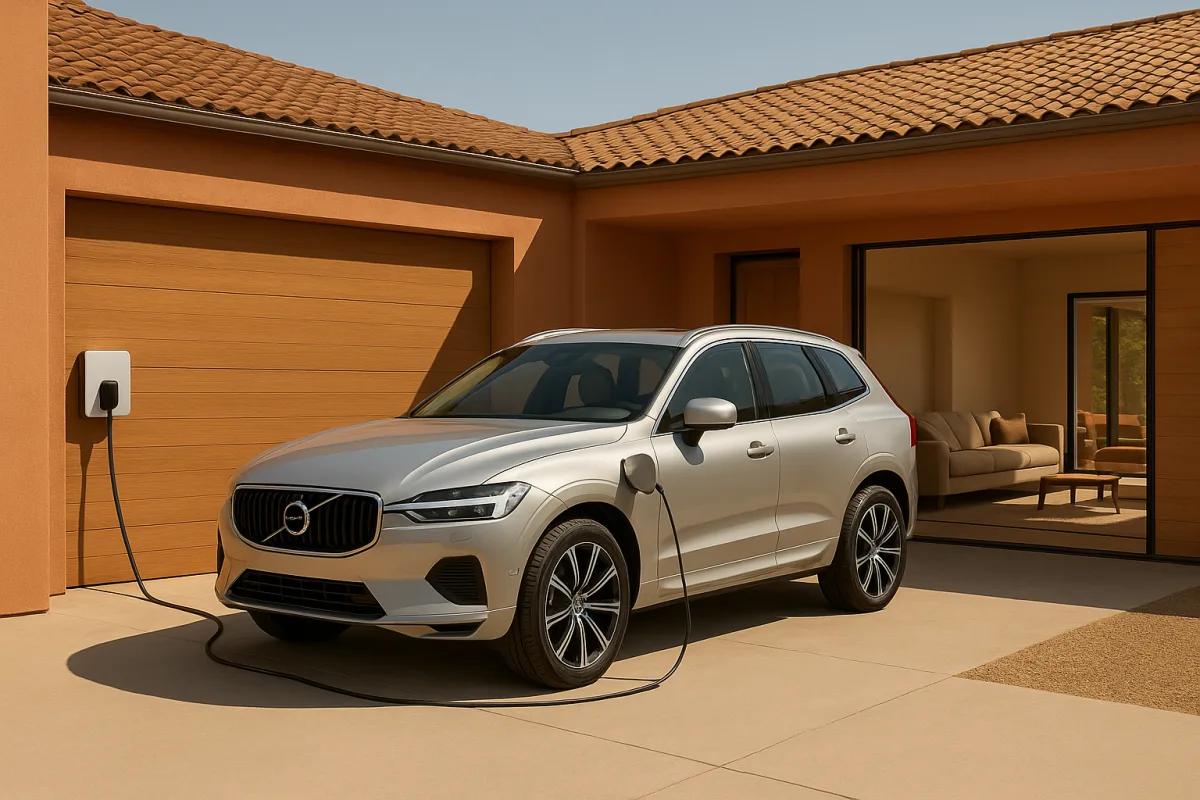
The charging cable on your garage wall changes the XC60 equation. Volvo’s revised plug-in hybrid claims up to 124 miles of WLTP electric range, enough on paper to cover several ordinary commutes before its gas engine needs to wake up. [1]
That figure belongs to the new Long Range T6 and T8 powertrains, not every XC60. The T6 makes 351 horsepower and claims 124 miles of electric range, while the 455-hp T8 Ultra is rated at 115 miles.
Autocar’s launch drive gives the more useful answer. Its fully charged T8 displayed 99 miles at departure, and the publication estimated 70-90 miles of mixed motorway and main-road electric range, influenced by wheels, temperature, traffic, and speed.
That is still exceptional by plug-in hybrid standards. It is not the 124-mile result you should put into a household budget, particularly if your commute involves sustained freeway speeds or winter temperatures.
The Innova Hycross takes the opposite approach. Toyota’s Indian-market three-row is a self-charging strong hybrid, meaning it recovers energy and uses an electric motor to assist, but you cannot plug it in for a long electric-only trip.
Its 2.0-liter flex-fuel engine and fifth-generation hybrid system produce 197 hp, driving the front wheels. It can run on fuel blends from E20 to E85, though E85 remains uncommon at Indian filling stations. [6]
Toyota rates the Flex Hybrid at 22.58 km/l, or about 53 mpg, on E20 fuel. [6] CarWale’s real-world testing reported 13.1 km/l, or 30.9 mpg, in city running and 18.2 km/l, or 42.9 mpg, on the highway. [7]
Those numbers make the ownership case clearer than a headline efficiency claim. The Innova will save gas in traffic without needing a charging routine, but urban use can cut deeply into the advertised fuel-economy figure.
Volkswagen’s ID. Cross R-Line is a battery-electric subcompact SUV, so there is no gas fallback. Its stronger version combines a 223-hp motor with a 52-kWh battery, a claimed 266 miles of WLTP range, and a 6.9-second 0-62 mph time.
The entry R-Line uses a 133-hp motor and 37-kWh battery, claiming 195 miles WLTP. The 223-hp version adds adaptive chassis control, progressive steering, an electronically controlled front differential lock, and a 0.6-inch lower ride height.
Audi is present mainly as the premium benchmark Volvo must now face. Autocar notes that the Audi Q5 has entered a new generation, while the current XC60 dates from 2017 and will turn 10 years old in 2027.
That age does not automatically make the Volvo a poor buy. It does explain why its exceptional new battery and motor system needs to carry an older underlying platform against fresher German competition.
Comparison table
| Model | What it is | Seating and size | Powertrain | Claimed electric or fuel range | Price reported | Main ownership trade-off |
|---|---|---|---|---|---|---|
| Volvo XC60 Long Range T6/T8 | Premium midsize plug-in hybrid SUV | Five seats, roomy second row | 351-hp T6 or 455-hp T8, gas engine plus electric rear axle | 124 miles WLTP T6, 115 miles WLTP T8 | No price reported | Requires regular charging to justify its complexity and cost |
| Toyota Innova Hycross Flex Hybrid | Three-row SUV-minivan hybrid | Seven or eight seats, 187.2 inches long | 197-hp 2.0-liter flex-fuel strong hybrid, FWD | 22.58 km/l claimed on E20, 13.1-18.2 km/l tested | ₹19.99-31.99 lakh | No plug-in capability or substantial electric-only travel |
| Volkswagen ID. Cross R-Line | Electric subcompact SUV | Five seats, 16.8-cu-ft cargo area plus small frunk | 133 hp with 37-kWh battery, or 223 hp with 52-kWh battery | 195 or 266 miles WLTP | From €37,225 in Germany | German pricing is high for its compact footprint |
| Audi Q5 | Premium midsize SUV rival | Not specified | Not specified | Not specified | Not specified | Newer rival, but no directly comparable figures are published here |
Price, equipment, and what each quote leaves out
Toyota is the easiest of these to price because its Indian range is already on sale. The Flex Hybrid starts at ₹19.99 lakh, or about $22,600, and the ZX Hybrid tops out at ₹31.99 lakh, or about $36,100. [6]
Those reported figures identify the vehicle and trim, but do not state a complete on-road total. Registration, insurance, finance charges, accessories, and local taxes can change what you actually pay, and Toyota has not published model-specific financing terms.
A non-hybrid Innova GX starts from ₹19.59 lakh, or about $21,200. The hybrid’s price premium is therefore modest at the lower end, but your savings depend on how much time you spend in stop-and-go traffic.
Volkswagen lists the 133-hp ID. Cross R-Line from €37,225 in Germany, approximately $40,900. That price is for the base R-Line vehicle, not necessarily options, insurance, registration, home charging equipment, or the 223-hp version arriving in March 2027.
The quicker 223-hp ID. Cross will likely exceed the €38,995 price of Germany’s ID. Polo GTI, according to CarScoops. It may approach the €42,695 price of the larger ID. Tiguan, which makes the small SUV’s value case less automatic.
Volvo pricing was not published in the available UK launch coverage. That leaves an important gap, because the T8’s 455-hp output, Ultra trim, 21-inch wheels, and optional or standard-by-trim air suspension can move it well beyond a basic family-SUV budget.
We would also avoid forecasting resale too confidently. iSeeCars reports that plug-in hybrid SUVs can lose substantial value over five years, but no specific resale data is available for this new long-range XC60 or the revised Innova Hycross. [4]
Space, controls, and what you live with after purchase
The Innova is the clear people carrier. It is 187.2 inches long, about 7.7 inches shorter than a U.S.-market Highlander, yet its 112.2-inch wheelbase matches the Highlander’s, helping explain its useful three-row packaging.
Higher Indian trims bring dual 12.3-inch screens, a nine-speaker JBL system, a 360-degree camera, ventilated front seats, powered ottoman second-row seats, a panoramic sunroof, six airbags, and Toyota Safety Sense 3.0.
This is the one for airport runs, grandparents, and three-child households. Its minivan-like cabin priorities are a virtue, even if its SUV styling cannot disguise that it is built for occupants before cornering entertainment.
Volvo’s cabin remains one of the XC60’s strongest arguments. Autocar found excellent front seats, generous rear legroom, quality wood, metal, and glass trim, plus more physical secondary controls than many newer premium rivals retain.
There are irritations. Climate controls remain in the 11.2-inch portrait touchscreen, and Apple CarPlay and Android Auto require a cable. The native Google Maps navigation is helpful, but the contextual shortcut bar can guess the wrong function.
The ID. Cross makes a strong case for buyers short on space. Its 16.8-cubic-foot trunk is supplemented by a 0.9-cubic-foot front compartment for charging cables, and the 52-kWh version can tow up to 2,646 pounds when fitted with a hitch.
Its R-Line equipment includes matrix LED headlights, adaptive cruise control, a rearview camera, sports-comfort seats, a 10.25-inch instrument display, and a 12.9-inch center screen. That is a generous technology list, although more screens also mean more software to live with long term.
The market is moving, but your charging access still decides it
Battery-electric vehicles accounted for 20.7% of European new-car registrations in the first half of 2026, up from 15.6% in the same period of 2025. Plug-in hybrids held roughly 10% of the market. [8]
That helps explain Volkswagen’s push into smaller electric crossovers. The ID. Cross is aimed at the buyer who wants EV range in a parking-friendly package, while the XC60 proves Volvo still sees room for a plug-in hybrid bridge.
India’s market has a different balance. EV sales exceeded 120,000 in the first half of 2026, compared with 57,885 strong-hybrid sales, although affordability, safety, and fuel efficiency remain major priorities. [9]
The Innova’s flex-fuel hybrid system fits those conditions. It gives buyers a gasoline-station routine with hybrid savings now, plus compatibility with higher ethanol blends if fuel infrastructure expands, instead of asking every household to install charging.
Who each option suits
The Volvo XC60 Long Range PHEV suits a five-seat household with home charging, a daily trip inside its likely 70-90-mile real-world electric range, and a taste for a calm, high-quality cabin. We would choose the T6 unless you specifically want T8 performance.
Skip the XC60 if charging will be occasional. Running the B5 mild hybrid instead means roughly 30 mpg in Autocar’s experience, while buying a complex plug-in hybrid and rarely plugging it in leaves much of its appeal unused.
The Toyota Innova Hycross Flex Hybrid suits buyers in India who need seven or eight seats every week, not twice a year. It is our pick for family duty because it delivers space, a long hybrid-battery warranty of eight years or 160,000 km, and no dependence on public chargers.
The Volkswagen ID. Cross R-Line suits a smaller household with reliable charging and city-sized parking spaces. We would wait for firm pricing on the 223-hp version, because the 133-hp car may be enough for relaxed use and starts below the expected GTI-powered flagship.
The Audi Q5 suits the buyer committed to Audi’s premium-SUV format, but there are not enough directly comparable figures here to call it a better ownership proposition than the Volvo. The XC60’s unusually long plug-in range is its clearest advantage, provided you will use it.
Frequently Asked Questions
What are the electric ranges of Volvo XC60 plug-in hybrids?
The Volvo XC60 Long Range plug-in hybrids claim up to 124 miles of WLTP electric range for the T6 and 115 miles for the T8. However, real-world mixed driving estimates from Autocar suggest a more practical range of 70 to 90 miles depending on conditions like speed, temperature, and wheel choice. This range is exceptional for plug-in hybrids but requires regular home charging to maximize electric-only use.
How does the Toyota Innova Hycross hybrid compare for family use?
The Toyota Innova Hycross Flex Hybrid is designed for Indian families needing three rows of seating with seven or eight seats. It uses a 197-hp strong hybrid system that cannot be plugged in, so it does not offer electric-only driving. Its fuel efficiency ranges from about 31 mpg in city driving to 43 mpg on the highway, making it a practical choice for carrying multiple passengers without the need for charging.
What makes the Volkswagen ID Cross R-Line suitable for city driving?
The Volkswagen ID. Cross R-Line is a compact electric SUV with a WLTP range of up to 266 miles in its stronger version, making it well suited for mostly electric urban driving. Its small size and cargo capacity of 16.8 cubic feet allow it to fit easily into tight city parking spaces. However, its pricing in Germany approaches that of larger electric vehicles, which is a consideration for buyers.
How does the Audi Q5 hybrid compare to Volvo's XC60?
The Audi Q5 is a newer premium midsize SUV rival to the Volvo XC60, but specific details on its hybrid powertrain, electric range, or pricing were not provided. The XC60’s plug-in hybrid system offers a notably long electric range, but it is based on an older platform compared to the Q5’s recent redesign. Without comparable figures, a direct assessment is not possible.
What are the ownership trade-offs for Volvo, Toyota, and VW hybrid SUVs?
Owning the Volvo XC60 plug-in hybrid requires regular charging to justify its complexity and higher cost, offering substantial electric-only range for commuters with home charging. The Toyota Innova Hycross Flex Hybrid does not need charging and provides reliable fuel economy with flexible fuel options but lacks electric-only driving capability. The Volkswagen ID. Cross R-Line offers full electric driving with city-friendly dimensions but comes with relatively high pricing in its market segment.
How we researched this
This article was assembled from 6 published articles, 10 cited references.
Nothing here is based on hands-on testing. Where a figure or finding appears, it belongs to the source cited beside it, and the writing says so rather than implying otherwise. Every source is listed below so you can check it.
Sources
New Volvo XC60: Driving the UK's longest-range plug-in hybrid, Autocar
Toyota Just Updated Its $21k Three-Row SUV-Minivan Mashup In India, CarScoops
The On-Again-Off-Again TVR Griffith Is Back, And Lotus Is Helping Build It, Motor1
VW's Smallest Electric SUV Gains R-Line Version With GTI-Matching Power, CarScoops
Toyota's New Innova Hycross Combines Hybrid Power With Flex-Fuel Technology, Motor1
German Economist Says Selling Volkswagen To China Wouldn't Be A Bad Idea, Motor1
You're driving your electric car wrong - here's how to get the best efficiency out of it
2026 Volvo XC60 Hybrid: MPG, Electric Range, and Real-World Ownership Guide | AutoEdgeView
Toyota Innova Hycross Hybrid Real-World Mileage Tested - CarWale
Electric Cars Are Outselling Hybrids 2 To 1 In India: Here's Why
One in three consumers still weighing festive car purchase: Survey | India News - Business Standard
Related Articles
Electric and Hybrid SUV Comparison
Compare electric and hybrid SUVs with a detailed look at Tesla Model Y and Toyota RAV4 PHEV performance, ownership, maintenance, and driving experience.
Electric and Hybrid Trucks and SUVs
Explore the latest electric and hybrid trucks and SUVs, including Ford Maverick, Slate, and Fathom models, with insights on performance and ownership.
2027 SUVs and Trucks Updates
Explore key updates on 2027 SUVs and trucks including Ford Ranger, BMW X5, Kia Sorento PHEV, and Volvo EX60 EV. Get insights on features and ownership.

2027 Electric SUVs: Volvo EX60, Porsche Cayenne & EV Tech
Explore 2027 electric SUVs like the Volvo EX60 and Porsche Cayenne, plus key EV tech advances and ownership insights.