
Manual Transmission Golf GTI 2026: Limited Edition Revival
Discover the 2027 manual transmission Golf GTI 1976 limited edition and how it compares to DSG models in performance and features.
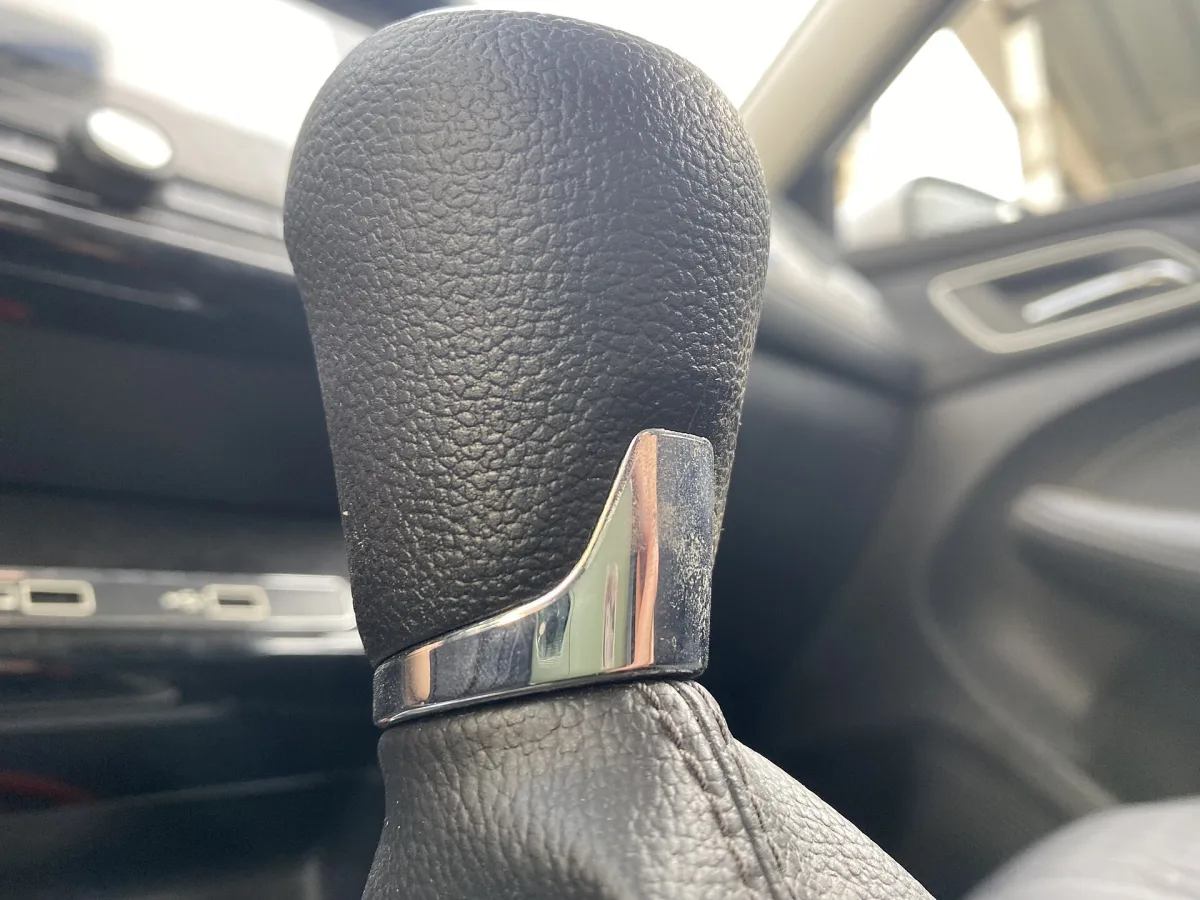
Photo: A Chinese ID, CC BY-SA 4.0, via Wikimedia Commons
A manual GTI returns in 2027, briefly
Volkswagen will begin European deliveries of the Golf GTI 1976 in the first quarter of 2027. It has a six-speed manual, a numbered “One of 1976” plaque, and production capped at 1,976 cars. [1]
That number marks the year the original Golf GTI went on sale in Europe. More important for today, it marks how narrowly Volkswagen has defined the manual’s comeback: this is a commemorative exception, not a restored option. [1]
Autocar, Motor1, and CarScoops have all reported the same core story from Volkswagen’s announcement: a manual GTI is back after a two-year absence, but only for a fixed European run. The evidence supports a reprieve, not a broad revival.
The manual was removed after the 2024 model year. Car and Driver described 2024 as the final opportunity to buy a manual GTI or Golf R in the United States, and Volkswagen’s facelifted GTI arrived for 2025 with DSG only. [4]
Volkswagen had tied the original decision to emissions compliance. Motor1 reported that the manual 2024 GTI emitted 162 g/km of CO2, against 160 g/km for the DSG, a small paper gap that mattered to fleet emissions targets. [2]
Euro 7 rules were later softened and remain subject to revisions, but product planning had already moved on. A gearbox needs calibration, certification, supplier capacity, production scheduling, and enough global volume to justify all of it.
That is why the 1976 exists as a low-volume celebration. Volkswagen can package the manual around a known GTI platform for a finite run, then avoid committing to a transmission across every market and trim level.
The case for the stick is real, but localized
The strongest evidence of American demand came at the end of the previous GTI manual’s run. Volkswagen told Motor1 that 41 percent of U.S. GTI buyers selected the six-speed manual in 2024, its final model year. [4]
That is a serious take rate in a market where automatics dominate almost everything else. It also came during a last-call year, when buyers who had delayed a purchase had a reason to act immediately.
Ideal’s look at Volkswagen’s upcoming U.S.-only 2027 GTI Rabbit Edition makes the mismatch clear. The Rabbit revives GTI heritage cues and adds desirable chassis equipment, yet uses DSG only, even though its audience includes many manual GTI owners.
The channel points to the 2024 GTI 380 as the better-used alternative for a driver who wants three pedals. It was Volkswagen’s farewell manual package, and it paired the six-speed with adaptive dampers and available 19-inch summer tires.
That combination explains why manual demand has held up among hot-hatch buyers. The appeal is not a claim that the clutch pedal makes the car faster. It is the repeated involvement of matching engine speed, selecting the gear, and managing weight transfer yourself.
You can feel that in an ordinary right turn, not only on a track. Downshift well and the car settles cleanly as you turn in. Get lazy with the clutch and revs, and the same corner reminds you why a manual asks something back.
The available evidence is thin outside the GTI’s last-call U.S. figure, because Volkswagen has not published comparable take rates by country, age group, or buyer type. We would not call this a market-wide manual comeback on one 1,976-unit special edition.
What the GTI 1976 actually changes
The GTI 1976 uses Volkswagen’s turbocharged EA888 2.0-liter four-cylinder, driving the front wheels through an electronically controlled locking differential and six-speed manual transmission. Volkswagen quotes 325 PS, or 321 horsepower, and 280 lb-ft of torque. [1]
It is the most powerful manual-production GTI Volkswagen has offered. The company quotes 0-62 mph in 5.8 seconds and a 168-mph top speed, figures that would have looked absurd beside a 1976 GTI. [1]
Still, the manual is slower than the DSG version of this formula. CarScoops reports 5.3 seconds to 62 mph for the DSG-only Edition 50, while Volkswagen quotes 5.8 seconds for the three-pedal 1976. [7]
Autocar reports that the Edition 50 makes 310 lb-ft, meaning the manual’s torque output falls by 30 lb-ft to suit its gearbox. Motor1 described the 1976 as having the same 280 lb-ft output as the Edition 50, so published reporting conflicts on that comparison.
Volkswagen’s own GTI 1976 specifications list 380 Nm, or 280 lb-ft, for the manual. [1] If maximum acceleration is the priority, the dual-clutch car remains the better tool, and Volkswagen has made no effort to hide that.
The manual GTI’s equipment list is not stripped down to make a point. Standard hardware includes adaptive chassis control, progressive steering, the electronically controlled front differential, and the Clubsport’s Nürburgring-oriented Special driving mode. [1]
Those parts matter more on an imperfect road than a commemorative badge. Adaptive damping lets the car carry body control on a smooth corner without becoming brittle when the pavement changes halfway through it.
The GTI Performance Package goes further with a lightweight exhaust, titanium tailpipes, forged 19-inch wheels, revised suspension mounting points, added front camber, recalibrated adaptive damping, and optional semi-slick tires. [1]
CarScoops reports that the forged Warmenau wheels cut 6.6 pounds of unsprung weight at each corner. [7] That is the sort of change you may notice in the way a front-drive car follows broken pavement, though tire choice will still have a larger effect.
The standard 19-inch Queenstown wheels and adaptive dampers make the basic car the one we would target. We would skip the semi-slick tires unless you have a second wheel set, because a cold or wet commute can make track-oriented rubber an expensive compromise.
America gets nostalgia, not the clutch pedal
Volkswagen’s 2027 GTI Rabbit Edition is expected in the United States during the second quarter of 2027. Ideal reports that it sits between the base S and SE trims and brings adaptive dampers, Golf R-style 19-inch wheels, and summer tires.
It also has a DSG selector where the manual lever should be. That is not an engineering limitation, because Volkswagen sold U.S. GTIs with a six-speed through 2024. It is a product decision made after manual production ended.
The Rabbit’s dark moss green paint, cloth upholstery, rabbit badge, and upgraded suspension will appeal to the same owner who remembers the 2019 Rabbit Edition. But the 2019 car offered both a six-speed manual and DSG.
Volkswagen of America told CarScoops it has no plans to offer the GTI 1976 special edition in the United States. [7] No current North American regulation has been identified as a barrier to selling it here, unlike the original 1976 European GTI.
That leaves American buyers with an odd split. Europe gets a costly, limited-run manual halo car, while the U.S. gets a heritage-themed automatic Rabbit that borrows some of the same visual language.
The Rabbit could still be a good daily GTI if its price stays near the S trim, particularly for a shared household or a stop-and-go commute. Volkswagen had not announced U.S. Rabbit pricing when Ideal covered the car.
But if the manual is the point, do not wait for the Rabbit badge to solve the problem. It will not. A clean 2024 GTI 380 is the more direct answer, and it comes from the last production year Volkswagen committed to selling manuals here. [4]
What to buy for a long-term GTI project
Start with a 2024 GTI 380 manual, then inspect it as a used hot hatch before treating its farewell status as a collectible credential. Check service records, clutch engagement, tire wear, brake condition, wheel damage, and signs of tuning or track use.
The 380 is attractive because it combines the manual with useful hardware, rather than forcing you into an older, softer-spec GTI. Ideal specifically highlights its adaptive dampers and 19-inch summer-tire setup as equipment shared in spirit with the newer Rabbit.
A manual GTI does not erase modern ownership costs. The EA888 turbo engine, electronically controlled differential, adaptive dampers, large wheels, and performance tires all add expense when they need attention, regardless of how simple the gearbox itself feels.
Budget for tires before buying 19-inch-wheel cars. A front-drive GTI works its front tires under braking, turn-in, and acceleration, and a summer tire package means winter-capable buyers may need a second set of wheels and tires.
Do not assume the GTI 1976 will be a low-risk investment because it is numbered. Volkswagen has published no resale, insurance, long-term reliability, maintenance-cost, or parts-availability data for the unreleased model. [1]
The old-car market offers context, not a forecast. Marque lists a roughly $17,500 median value for Mk1 Golf GTIs since 2020, after an 18 percent decline over the preceding 12 months. [6]
That history says limited GTIs can become desirable, but condition, originality, regional demand, and maintenance records still decide the money. A 2027 special edition with expensive chassis parts will not automatically become cheap to own because it wears a numbered plaque.
We would buy the best documented 2024 GTI 380 manual we could find, retain its stock hardware, and spend first on tires, fluid service, and a careful inspection. The GTI 1976 is a welcome signal, but it is too scarce, too unpriced, and unavailable in America.
Frequently Asked Questions
When will the manual Golf GTI 1976 be available?
The manual Golf GTI 1976 will begin European deliveries in the first quarter of 2027. Production is limited to 1,976 units.
Is the Golf GTI 1976 manual a full return or a limited edition?
The Golf GTI 1976 manual is a limited-edition model, not a full return to the regular lineup. It is a commemorative run capped at 1,976 cars.
How does the manual Golf GTI 1976 compare to the DSG version?
The manual GTI 1976 has 321 horsepower and 280 lb-ft of torque, with a 0-62 mph time of 5.8 seconds. It is slower than the DSG Edition 50, which achieves 0-62 mph in 5.3 seconds but retains the same chassis hardware.
Why did Volkswagen discontinue the manual Golf GTI after 2024?
Volkswagen discontinued the manual Golf GTI after 2024 mainly due to Euro 7 emissions regulations. The manual version emitted slightly more CO2 (162 g/km) than the DSG (160 g/km), affecting fleet emissions targets.
What features come standard on the Golf GTI 1976 manual edition?
The GTI 1976 features a six-speed manual transmission, a turbocharged 2.0-liter EA888 engine producing 321 horsepower, an electronically controlled locking differential, and a numbered “One of 1976” plaque. It uses the same chassis hardware as modern GTIs.
How we researched this
This article was assembled from 1 video source, 3 published articles, 7 cited references.
Nothing here is based on hands-on testing. Where a figure or finding appears, it belongs to the source cited beside it, and the writing says so rather than implying otherwise. Every source is listed below so you can check it.
Sources
VW Brought Back the Rabbit GTI… and Forgot the Best Part, Ideal
Volkswagen Golf GTI brings back manual for its 50th birthday, Autocar
Surprise! Volkswagen Brings Back The Manual Golf GTI, But Not For Long, Motor1
The Manual Golf GTI Is Back, But America Misses Out, CarScoops
Limited-edition model: world premiere of the manual Golf GTI 1976 | Volkswagen Newsroom
Revised 2024 VW Golf, Including GTI, Will Likely Lose Manual: Report
The Volkswagen Golf GTI 1976 brings a manual gearbox back to the iconic hot hatch
2024 Is Your Last Chance to Buy a Manual Volkswagen GTI or Golf R
Volkswagen Golf GTI (Mk1) Prices & Market Data, United States | Marque
VW’s 321 HP FWD Golf Destroys The Type R To 60 MPH And Beyond | Carscoops
Watch Manual Transmission Revival in Hot Hatches on Youtube
Related Articles
Gordon Ramsay Named New Host of Top Gear for 2028 Return
Learn about Gordon Ramsay's role as the new Top Gear host and the show's planned 2028 return with filming starting in 2027.
Audi RS6 Sedan Return and 2027 Performance SUV Updates
Explore the Audi RS6 Sedan return, hybrid performance, ownership costs, and updates on Audi’s 2027 performance SUVs like the SQ7 and SQ5.
Acura Integra Type S Heritage Edition
Explore the Acura Integra Type S Heritage Edition's unique design, performance specs, and ownership costs in this detailed review.
Corvette C8 Manual Transmission Conversion
Explore Corvette C8 manual transmission conversion options, costs, and what the Peitz Performance swap offers for true manual driving.