
New Electric and Hybrid SUVs: Reviews and Comparisons
Explore reviews and comparisons of new electric and hybrid SUVs, covering performance, ownership costs, range, and driving experience.
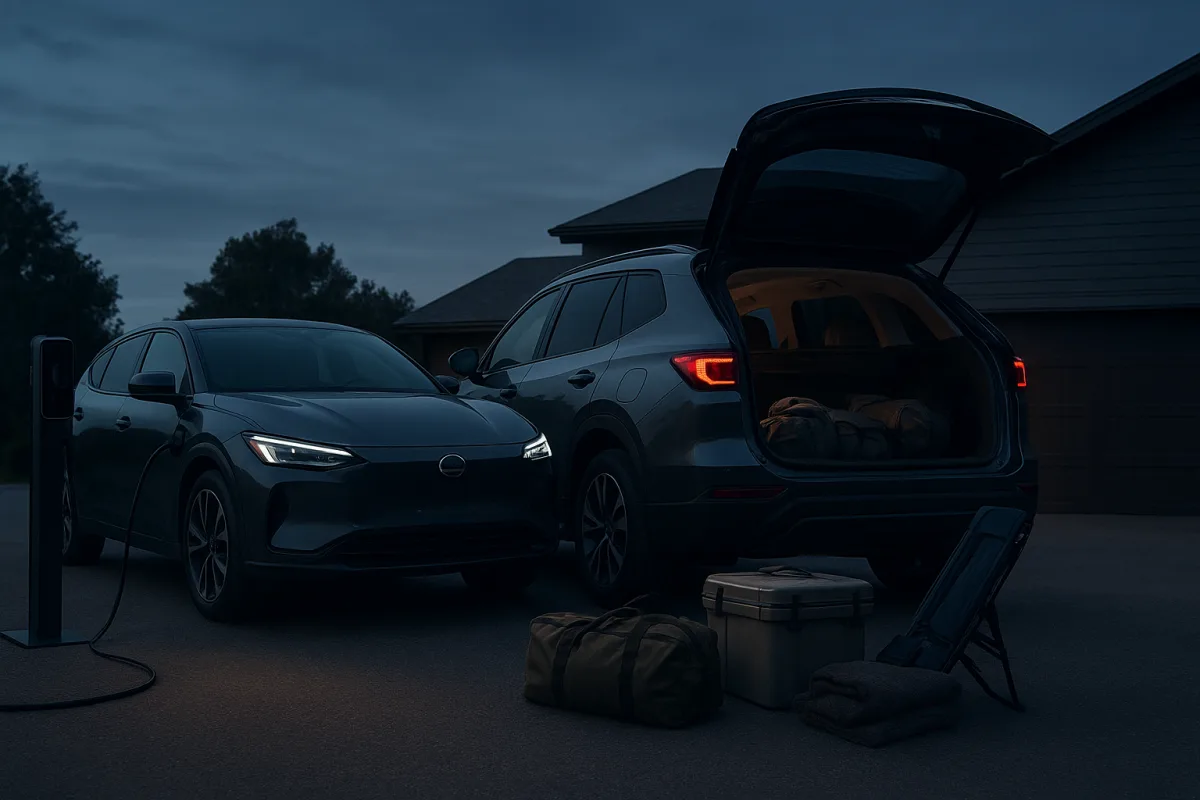
The decision: Volvo EX60 P10 or Hyundai Ioniq 5 AWD?
This is not really a straight fight between two versions of the same idea. The Volvo EX60 P10 is a newly launched premium electric SUV with a large battery, an 800-volt charging system and a distinctly luxury-focused cabin.
The Hyundai Ioniq 5 AWD is the more established choice. The owner report from TheStraightPipes covers nine months, winter and summer use, home-charging installation and insurance, which is more useful than a launch-day range estimate.
I have not owned or driven either vehicle. The Volvo assessment here rests on carwow’s first-drive report, while the Hyundai evidence includes a genuine household ownership account from TheStraightPipes. That difference matters.
The Ioniq 5 is the safer recommendation for a buyer who wants evidence rather than promise. The EX60 looks like the more capable road-trip car on paper, but it needs time, mileage and repair history before anyone can call it the better ownership proposition.
Price and the cost before the first mile
Volvo pricing for the EX60 P10 was not included in the supplied carwow reporting, so it would be dishonest to invent a number. Treat it as an unconfirmed premium-SUV purchase price, not an affordable alternative to a mainstream electric crossover.
The Hyundai Ioniq 5 AWD owner featured by TheStraightPipes did not disclose what the car cost either. He bought it used with roughly 30,000 km, and it had reached 48,000 km after nine months.
That owner had initially been shopping around the C$40,000 used-SUV mark. A used Lexus RX was ruled out after an insurance quote of C$5,500 a year, and the Genesis GV60 quote was similarly expensive.
The Ioniq 5’s insurance came in at about C$3,000 annually. That is still substantial, but it shows why insurance needs checking before committing to any EV, particularly an expensive or theft-prone model.
There is no longer a federal US EV tax credit to soften the purchase decision, because it expired on September 30, 2025. State and local incentives may still exist, but they vary considerably and can change quickly. [2]
Used EVs have become more competitive as off-lease supply grows and technology moves on, according to Kiplinger. [4] That makes a used Ioniq 5 easier to justify than it was two years ago, but it also points to the depreciation risk facing a newly bought EX60.
General five-year EV depreciation is estimated at 57.2 percent, compared with 41.8 percent for vehicles overall and 35.4 percent for hybrids. Those are broad averages, not predictions for either SUV, but they are a reason not to assume a premium EV will hold its value. [5]
Range, charging and winter use
The EX60 has the more ambitious electrical hardware. Volvo’s P12 flagship is claimed to exceed 500 miles, but the P10 assessed by carwow has a slightly smaller battery and a claimed range of just over 400 miles.
That distinction is important. A headline 500-mile figure is not an EX60 range figure, it is a P12 range figure. The P10 still has 510 horsepower, so it is hardly an entry-level commuter specification.
The EX60’s 800-volt system can accept up to 370 kW, according to carwow. Volvo claims a 10 to 80 percent recharge in 16 minutes under suitable conditions, charger availability and battery temperature.
Those conditions are the fine print. A 370 kW peak charge rate is not the same as getting 370 kW at every public charger, nor does it guarantee that rate through an entire charging session.
The Hyundai ownership report offers a useful reality check. In summer, its app predicted about 480 km, while the instrument display showed roughly 460 km. During winter, indicated range fell by around 80 to 100 km.
That is not a fault, it is the ordinary cost of heating the cabin and battery in cold conditions. Still, it is the sort of reduction a buyer needs to budget for before deciding that an EV’s brochure range covers a weekly routine.
For the Hyundai owner’s commute, the loss did not matter much. His wife used around 20 percent of the battery each day, but the story changes for people making repeated 300 km winter trips without dependable destination charging.
The EX60 should be the better long-distance tool, provided its claimed charge curve translates outside a controlled launch route. The Ioniq 5 is the more known quantity because someone has already lived through a winter with it.
Driving and ride quality
The EX60 P10 has 510 hp and carwow recorded 0 to 60 mph in 4.27 seconds. It also stopped from 60 mph in 34 metres, a credible result for a substantial electric SUV.
Those figures are useful context, but they are not the reason to buy either car. The Volvo’s more relevant advantage is that it appears to combine brisk acceleration with a well-resolved ride and a quiet cabin.
Carwow found the EX60’s seats particularly comfortable and praised its premium materials. Acoustic glass is fitted front and rear, while adaptive cruise control, lane keeping assistance and one-pedal-driving settings are standard.
The Ioniq 5 owner chose it partly because his wife disliked the Ford Mustang Mach-E’s standard suspension and its large central display. The Hyundai was seen as quieter, more comfortable and more luxurious than a Toyota RAV4 Prime.
There is an important winter caveat. The Hyundai AWD is rear-biased in its normal mode. In the owner’s account, it felt unsettled in snow until Snow mode was selected, which shifts it towards a 50:50 torque split.
Tyres also mattered. The owner fitted Continental VikingContact 8 winter tyres, then Continental ExtremeContact DWS 06 Plus all-season tyres for summer. He still noticed the EV’s weight under braking and on low-grip surfaces compared with the old Lexus RX 350.
That is a useful warning against treating all-wheel drive as a substitute for winter tyres or sensible inputs. Heavy EVs can feel secure until they run out of grip, then their mass is hard to disguise.
Cabin, family practicality and controls
The Volvo has the more polished-looking cabin. carwow found generous rear knee room, head room and under-thigh support, plus a flat rear floor that makes carrying three adults more realistic than in many electric SUVs.
It also has reclining rear backrests, rear climate controls, heated rear seats and USB-C ports. The boot has some clever organisation, including a split-folding floor, while Volvo has even marked useful load-space dimensions in the cargo area.
The EX60’s rear doors do not open as widely as expected, though. carwow noted that fitting a child seat can therefore be awkward, even if there is ample space once a bulky rear-facing seat is installed.
The rear windows are another small but very real family complaint. They only lower part way, which may annoy children and passengers more often than any 0 to 60 figure will impress them.
The Ioniq 5 has the advantage of familiarity. TheStraightPipes owner said the screen arrangement was easy for his wife to learn, and she largely left the climate control in automatic rather than constantly working through menus.
Volvo has taken the screen-led approach further. The EX60 retains stalks for wipers and drive selection, which is welcome, but carwow found too many functions buried in the main screen, including phone controls and other routine adjustments.
Its electrochromic panoramic roof is clever, allowing the glass to darken electronically rather than using a physical blind. But there is no meaningful long-term user evidence on reliability, effectiveness in harsh weather or repair cost, so it should not decide a purchase. [6]
The same caution applies to the Volvo’s small rechargeable digital key. carwow reported a low-battery warning and noted that an uncharged key could become inconvenient if the driver had not also set up a phone-based digital key.
Maintenance, warranty and the expensive unknowns
Neither vehicle has enough long-term evidence in the supplied material to produce a credible 60,000-mile fault list. That is especially true of the EX60, which is too new for meaningful independent reliability data.
Routine EV maintenance is usually less involved than maintaining a petrol or hybrid SUV. There are no engine-oil changes, spark plugs, timing components or exhaust system, but tyres, suspension, brakes, coolant systems and cabin filters remain real costs.
Battery replacement is often raised as the big EV scare story. It can be expensive outside warranty, with estimates for some EV battery replacements running from several thousand dollars to above $20,000 depending on model and battery capacity. [1]
That is not, however, a normal scheduled ownership expense. Most manufacturers provide around eight years of battery cover with a minimum capacity guarantee, and Tesla’s cited warranty benchmark is 70 percent retained capacity over eight years. [1]
There is no source-backed evidence that either the EX60 or Ioniq 5 is likely to need a traction battery at ordinary mileage. The sensible approach is to confirm the specific battery warranty, its transferability and local dealer support before signing.
Volvo’s EX60 hardware may be more technically ambitious. Its charging system and digital features promise more convenience, but they also create more systems whose long-term repair record does not yet exist.
Comparison table
| Criterion | Volvo EX60 P10 | Hyundai Ioniq 5 AWD |
|---|---|---|
| Price | Not stated in the supplied carwow report. Final purchase price, finance, insurance and local incentives need confirming. | Purchase price not disclosed in TheStraightPipes ownership report. The featured example was bought used at roughly 30,000 km. |
| Best use case | Premium family EV and frequent longer journeys where rapid DC charging is available. | Daily commuting, home charging and buyers who prefer an established model with real ownership evidence. |
| Power and performance | 510 hp, 0 to 60 mph recorded by carwow in 4.27 seconds. | No performance figure supplied. The ownership report focuses on comfort and usability rather than acceleration. |
| Claimed range | A little over 400 miles for the P10. The 500-plus-mile claim applies to the P12. | Around 460 to 480 km indicated in summer in one owner’s use. |
| Winter range evidence | No long-term winter data in the supplied reporting. | Around 80 to 100 km lower than summer in the Canadian owner report. |
| Charging | 800-volt architecture, up to 370 kW claimed, 10 to 80 percent in 16 minutes claimed. | Home charging featured in the ownership report, but no charging-speed figures were supplied. |
| Ride and refinement | Strong launch-drive reports for comfort, quietness and adaptive suspension. | Owner reports a comfortable, non-crashy ride, although the mass is noticeable. |
| Winter behaviour | No owner evidence yet. | Snow mode was necessary to make best use of AWD on slippery roads. |
| Rear-seat practicality | Very roomy, flat floor and reclining seats, but rear doors are not especially wide for child-seat installation. | No direct rear-seat measurements in the supplied report. |
| Controls | Excellent screen quality, but too many functions are screen-based. | Screen system was easy for the owner’s wife to adapt to, with climate left on automatic. |
| Ownership confidence | Too early for a meaningful reliability record. | Nine-month household report, including winter use and insurance experience. |
| Main risk | Unknown pricing, depreciation and long-term reliability of new systems. | Winter range loss, weight in slippery conditions and potentially meaningful insurance costs. |
Who each option suits
Volvo EX60 P10
The Volvo EX60 P10 suits the buyer who wants a premium electric SUV to replace a conventional executive SUV, not merely a cheap way into EV ownership. It is the better fit for regular long trips between reliable high-power chargers.
It also suits families that genuinely use the rear seats. The roomy second row, reclining backrests and flat floor are tangible benefits, although parents fitting child seats should try the rear doors before ordering.
It falls down for buyers who dislike touchscreen dependence, need a confirmed low purchase price or want a well-understood long-term reliability record. The EX60 is promising, but it is still a new product asking buyers to trust its engineering.
Hyundai Ioniq 5 AWD
The Hyundai Ioniq 5 AWD suits the household with home charging, a predictable commute and a preference for a car that has already been through real winter use. It is the more evidence-led choice.
It also makes sense for a buyer shopping used, especially now that falling used-EV prices have improved the value proposition. [4] Insurance remains something to quote individually, because the featured owner’s C$3,000 annual premium may not translate to another driver or region.
It falls down for drivers who regularly need maximum cold-weather range, dislike having to select a snow mode, or want the fastest possible public charging and newest cabin technology. For those people, the EX60 looks more capable, but it is not yet the more proven ownership bet.
Frequently Asked Questions
What are the pros and cons of new electric and hybrid SUVs?
New electric SUVs like the Volvo EX60 offer advanced features such as large batteries, fast DC charging, and premium cabins, but their purchase prices and long-term reliability remain uncertain. Hybrid SUVs tend to have lower average monthly payments and better resale value, making them a more affordable and practical choice for buyers prioritizing cost over EV performance. However, hybrids do not provide the same electric-only driving experience or charging infrastructure considerations.
How do the Volvo EX60 and Hyundai Ioniq 5 compare?
The Volvo EX60 P10 is a newer premium electric SUV with a larger battery and faster 800-volt charging, promising over 400 miles of range, but it lacks long-term ownership data. The Hyundai Ioniq 5 AWD is a more established model with proven day-to-day usability, supported by nine months of user experience including winter driving and insurance costs. The Ioniq 5 is generally the safer choice for buyers seeking reliability and known ownership costs, while the EX60 may appeal to those prioritizing range and charging speed.
What is the real-world range of new electric SUVs in winter?
Real-world winter range for electric SUVs can drop significantly due to heating demands. For example, the Hyundai Ioniq 5 owner reported a range reduction of about 80 to 100 km in cold conditions compared to summer. Such reductions are typical and should be factored into trip planning, especially for longer journeys without reliable destination charging.
Are hybrid SUVs cheaper to own than electric SUVs?
Hybrids currently have the lowest average monthly payments among powertrain types, with an average of $646 per month. Insurance for electric SUVs can be substantially higher; for instance, the Hyundai Ioniq 5 owner paid about C$3,000 annually, and EV insurance generally runs 10 to nearly 49 percent above comparable petrol vehicles. These factors can make hybrids more affordable to own overall, despite the appeal of electric SUVs.
What should I consider about charging and insurance for electric SUVs?
Charging rates vary by model and conditions; the Volvo EX60’s 800-volt system can charge from 10 to 80 percent in about 16 minutes under ideal circumstances, but actual public charger availability and battery temperature affect this. Insurance premiums for electric SUVs tend to be higher than for petrol vehicles, influenced by costly battery and electronics repairs, so checking insurance quotes before purchase is important. Additionally, federal US EV tax credits expired in 2025, though some state and local incentives may still apply.
How we researched this
This article was assembled from 5 video sources across 5 channels, 7 cited references.
Nothing here is based on hands-on testing. Where a figure or finding appears, it belongs to the source cited beside it, and the writing says so rather than implying otherwise. Every source is listed below so you can check it.
Sources
I Might've Gone a Little Overboard... — Cleetus McFarland
I SECRETLY bought an EV 9 months ago, this is what happened — TheStraightPipes
Porsche Cayenne Electric | Necessary Excess — savagegeese
Jay Leno Flies the $3.6M Cirrus Vision Jet (The Plane With a Parachute!) | Jay Leno's Garage — Jay Leno's Garage
EV Battery Replacement Cost in 2026 — What It Really Costs by Brand | Wealthvieu
Best Hybrid Leases, Deals & Incentives for September 2026 - TRUECar
Used EV Prices Are Falling - Here's How They Compare to Gas Cars Now
How to Choose the Right Electric Truck Motor in 2026: Oil-Cooled vs. Water-Cooled
Oil-Cooled Electric Motor Market Share, Growth, Analysis, 2034
Watch New Electric and Hybrid SUVs: Reviews and Comparisons on Youtube
Also from the sources
Related Articles
Electric and Hybrid SUV Comparison
Compare electric and hybrid SUVs with a detailed look at Tesla Model Y and Toyota RAV4 PHEV performance, ownership, maintenance, and driving experience.

Electric Vehicle Range Tests and New EV Developments
Explore electric vehicle range tests, efficiency, and new EV developments to understand real-world performance and ownership factors.

2027 Electric SUVs: Volvo EX60, Porsche Cayenne & EV Tech
Explore 2027 electric SUVs like the Volvo EX60 and Porsche Cayenne, plus key EV tech advances and ownership insights.
BMW Electric Vehicle Sales Milestone and Neue Klasse iX3
Explore BMW's electric vehicle sales milestone and the Neue Klasse iX3's range, ownership, and impact on Europe's EV market.