
2027 Mitsubishi Pajero Revival: Launch, Specs & Availability
Discover the 2027 Mitsubishi Pajero revival with launch dates, specs, pricing, and market availability including Australia and Asia.
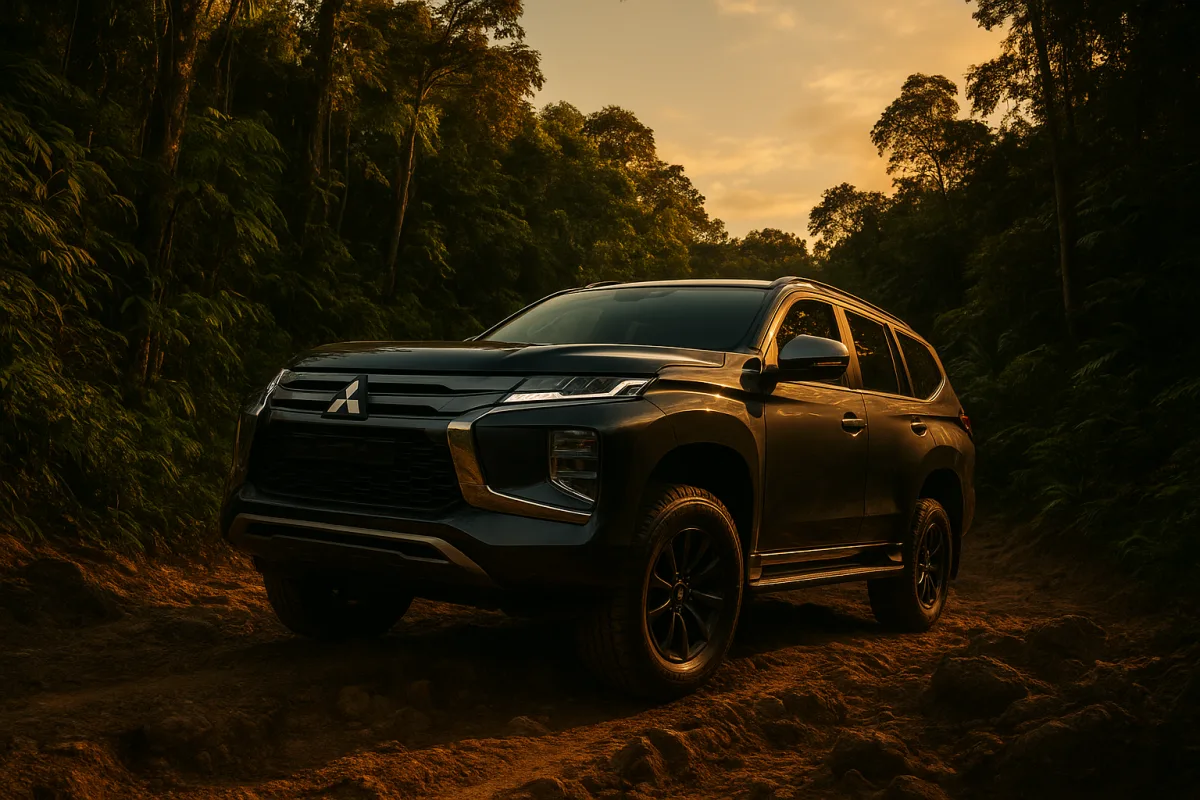
Mitsubishi is returning to the proper 4x4 business
The shift is plain: Mitsubishi is putting the Pajero name back on a body-on-frame, diesel-powered, seven-seat SUV, rather than attaching it to another crossover. That matters because the previous Pajero disappeared in 2021 without a direct replacement. [7][10]
Several independent reports describe the same basic vehicle: a fifth-generation Pajero on a ladder frame, with a 2.4-litre diesel, eight-speed automatic transmission, proper four-wheel drive and a rigid rear axle. That consistency is the useful evidence here. [4][5][7]
Mitsubishi itself confirms production, markets and launch timing. Thailand receives the new Pajero first in mid-October 2026, followed by Japan and Australia in December, with the company targeting 10,000 sales across those three countries in fiscal 2026. [2][7]
That is a modest volume by global SUV standards, but it is not the sort of target set for a nostalgic limited edition. Mitsubishi is rebuilding the Pajero as a regional flagship, then intends wider sales in roughly 100 markets. [2][5]
The American story needs more restraint. Car and Driver, Road & Track and MotorTrend all note that a U.S.-market Montero has not been confirmed, and Mitsubishi has given no timeline or price for North America. [10]
That distinction is important for readers seeing early coverage from American outlets. The U.S. has had no Montero since 2006, and the current Mitsubishi showroom there revolves around crossovers such as the Outlander, not a large diesel 4x4. [8][10]
It is a Land Cruiser rival in format, not necessarily in status
The new Pajero has been positioned against Toyota’s Land Cruiser, and that is fair in the practical sense. Both are upright, body-on-frame SUVs intended to carry people, cover long distances and deal with bad surfaces without pretending to be a sports car. [5][7]
Mitsubishi’s configuration is conventional in the best way: independent double-wishbone front suspension, a five-link rigid rear axle, low-range gearing and a locking centre differential. That is more relevant to a long ownership plan than digital terrain graphics. [5]
The 2.4-litre twin-turbo diesel produces about 150kW, or 201hp, and 480Nm. Mitsubishi combines it with Super Select 4WD-II, seven drive modes and its Super All-Wheel Control electronic systems. [1][5][7]
Numbers on an early specification sheet are not the same as how a vehicle behaves after five years of corrugations, school runs and loaded trailers. Still, 480Nm at least suggests the engine has been selected for usable low-speed work rather than headline acceleration. [1]
Ground clearance is quoted at 230mm, with approach, breakover and departure angles of 30.4, 22.6 and 25.8 degrees respectively. Those are meaningful dimensions, particularly the clearance, although tyre choice and underbody protection will decide much in practice. [5]
The Pajero’s 255/55 R20 road-biased tyres are worth noting. Twenty-inch wheels may look appropriate on an AUD 80,000 flagship, but they are not automatically the sensible answer for remote travel, replacement cost or sidewall protection. [5]
Toyota’s 2026 U.S. Land Cruiser begins at $57,200 and uses a 326hp turbocharged petrol-electric four-cylinder producing 465lb ft. It is quoted at 23mpg combined in U.S. testing, but that makes it a very different ownership proposition. [6]
The Lexus LX is the more relevant comparison for luxury and size in the U.S., beginning at $108,550 and returning a quoted 19mpg combined. It uses a twin-turbo V6 and full-time four-wheel drive, but occupies another price bracket. [6]
There is no comparable Pajero economy number yet. Mitsubishi has not published official fuel consumption for Australia, Japan or Thailand, so any claim that the diesel will be cheaper to run than a Land Cruiser is still an assumption.
The range gives Australian buyers a clear choice
Australia is currently the only market with published pricing. The Pajero GLS five-seater starts at AUD 68,490 before on-road costs, making it the sensible entry point for owners who need cargo room more often than occasional third-row seats. [1][4]
The GLS seven-seater costs AUD 69,990 before on-road costs. An extra AUD 1,500 for the third row looks sensible for a family that genuinely needs seven seats, though it is wasted money for buyers who will permanently use it as a touring platform. [1][4]
The Exceed seven-seater is AUD 79,990 before on-road costs, while the GSR seven-seater is AUD 84,990 before on-road costs. These higher grades suit buyers prioritising equipment and trim, not necessarily better off-road fundamentals. [1][4]
Those figures exclude registration, stamp duty, dealer delivery, insurance, finance charges, accessories, fuel and servicing. A bullbar, recovery points, underbody protection, towbar, roof storage and touring tyres can add a substantial amount before the first trip.
The price also needs historical context. The Pajero badge once represented a relatively straightforward alternative to Toyota’s big 4x4s, but this version is clearly positioned as a flagship. It has leather-heavy trim, dual screens and three-zone climate control. [5][7]
The interior is more useful than some premium SUVs because Mitsubishi has retained physical climate and drive-mode controls. The second row slides 150mm, and the cabin is arranged for seven people rather than treating the third row as brochure decoration. [5]
Whether adults can use that rearmost row for long journeys remains unproven until independent road tests and, more importantly, owner reports emerge. A flat roof helps headroom, but foot room, seat comfort and luggage capacity are what determine real usefulness. [5]
Why Mitsubishi is doing it now
Mitsubishi is reacting to an obvious market gap in its own range. The company has spent years selling crossovers and pickup-based SUVs, while Toyota, Land Rover and Lexus have retained profitable, image-building full-size off-road flagships. [6][7]
The Pajero also has a genuine legacy that Mitsubishi can use without inventing one. The nameplate began in 1982 and accumulated more than 3.3 million sales in over 170 countries before production ended in 2021. [5]
That heritage alone does not guarantee demand. Mitsubishi’s target of 10,000 units in Thailand, Japan and Australia is cautious, and there is no 2026 market-share data proving that diesel seven-seat body-on-frame SUVs are suddenly booming. [2]
The company’s decision makes more sense as product positioning than as a claim about huge volume. A Pajero gives Mitsubishi a credible towing and remote-travel flagship, and it gives Triton pickup hardware a higher-margin application. [5][7]
The ladder frame is related to the Triton’s architecture, though Mitsubishi says the Pajero’s structure has been made stiffer through greater use of high-tensile steel. Shared hardware can help parts supply and repair familiarity, but it proves nothing yet about reliability. [5]
That is where the trend becomes relevant to a project planner. If you are considering a long-distance tourer, family expedition vehicle or tow car, there are now more new vehicles with serious mechanical layouts than there were a few years ago.
But the revival does not make the Pajero automatically the safe ownership choice. Toyota’s Land Cruiser has an established dealer network, known resale behaviour and published consumption figures in markets where it is sold. The Pajero currently has none of that evidence. [6]
What to watch before committing to one
The first issue is diesel emissions equipment. Australia’s Pajero meets Euro 6d standards, but Mitsubishi has not confirmed a European launch, and the older Pajero’s withdrawal from Europe was tied to emissions compliance problems. [9][12]
A modern twin-turbo diesel will almost certainly carry the usual complexity of emissions controls, sensors and high-pressure fuel hardware. That is not a criticism specific to Mitsubishi. It is simply why service history and intended use matter more than old-school diesel nostalgia.
The second issue is service information. Mitsubishi has not released service intervals, capped-price servicing schedules or country-specific maintenance costs for the new Pajero. Anyone claiming to know its five-year cost today is filling gaps with guesswork.
There is some historical maintenance material from the UAE covering older Pajeros, but it is weak evidence for a new twin-turbo diesel, different transmission, different electronics and different climate. It should not be used to forecast Australian ownership bills. [11]
The third issue is tyre and brake cost. Large 20-inch tyres, a seven-seat body and towing expectations mean consumables may not be cheap, even if the diesel itself proves economical. Ask dealers for tyre sizes across every trim before signing.
The fourth issue is payload. This matters more than 0-60mph when a seven-seat SUV is fitted with passengers, a towbar, recovery gear, fridge, drawer system, roof load and a full fuel tank. Mitsubishi’s published launch material needs checking for market-specific payload figures. [7]
For a buyer with a current Pajero project, the new model does not make an older vehicle obsolete. In fact, it may lift attention on clean older examples, particularly where the Pajero’s straightforward mechanical character remains attractive.
Autocar has reported strong used demand for older UK-market Shoguns, with decade-old examples regularly changing hands above £20,000. That is not a universal valuation guide, but it shows that the old Pajero still has a following. [3]
The sensible approach is to let the first production year do its work. Watch for recalls, independent fuel tests, dealer parts availability, diesel-system failures, transmission behaviour when towing and real-world reports from Australian owners driving beyond metropolitan roads.
Mitsubishi has brought back the right sort of Pajero: ladder-frame, diesel-powered, seven-seat and designed around four-wheel-drive use. The evidence supports that much. Whether it becomes a credible 60,000-mile ownership recommendation will depend on information nobody has yet.
Frequently Asked Questions
When will the 2027 Mitsubishi Pajero be released?
The 2027 Mitsubishi Pajero will launch first in Thailand in mid-October 2026, followed by Japan and Australia in December 2026. Mitsubishi targets selling 10,000 units across these three countries in fiscal 2026.
What are the key features of the 2027 Mitsubishi Pajero?
The new Pajero is a body-on-frame SUV with a 2.4-litre twin-turbo diesel engine producing about 150 kW (201 hp) and 480 Nm of torque. It has an eight-speed automatic transmission, Mitsubishi’s Super Select 4WD-II system with seven drive modes, and a rigid rear axle with a five-link suspension setup.
Is the new Mitsubishi Pajero available in the US or Europe?
Mitsubishi has not confirmed availability of the Pajero in the United States or Europe. Regulatory challenges, especially emissions compliance, remain a significant obstacle for Europe, and no timeline or pricing has been announced for the U.S. market.
How does the 2027 Mitsubishi Pajero compare to the Toyota Land Cruiser?
The Pajero is positioned as a practical rival to the Toyota Land Cruiser, sharing a body-on-frame design and off-road capabilities. However, the Land Cruiser has a more powerful turbo gas/electric I-4 engine with 326 hp, while the Pajero uses a 2.4-litre diesel producing 201 hp. Detailed comparisons of fuel economy and running costs are not yet available for the Pajero.
What are the pricing details for the 2027 Mitsubishi Pajero in Australia?
In Australia, the 2027 Pajero starts at AUD 68,490 for the GLS five-seater variant. Seven-seat versions include the GLS at AUD 69,990, Exceed at AUD 79,990, and GSR at AUD 84,990, all prices excluding on-road costs such as insurance and fuel.
How we researched this
This article was assembled from 5 published articles, 13 cited references.
Nothing here is based on hands-on testing. Where a figure or finding appears, it belongs to the source cited beside it, and the writing says so rather than implying otherwise. Every source is listed below so you can check it.
Sources
The Mitsubishi Pajero Is a Massive Body-on-Frame Global Flagship SUV — Road & Track
Mitsubishi Pajero returns as diesel-powered Land Cruiser rival — Autocar
2027 Mitsubishi Pajero Returns to Take on the Toyota Land Cruiser — Car and Driver
The Mitsubishi Pajero Is Back To Take On The Toyota Land Cruiser — Motor1
Mitsubishi Motors targets 10,000 sales in revived Pajero rollout
2026 Mitsubishi Pajero Price And Specs: Icon Returns From $68,490 | CarSauce
2027 Toyota Land Cruiser - Specs, Prices, MPG, Reviews & Photos | Cars.com
Mitsubishi Motors Unveils the All-New Pajero Cross-Country SUV
I drove the Mitsubishi Outlander for a week - and it's the cheapest 3-row SUV I've tested all year
No Mitsubishi Pajero in EU by 2026 — Not Emissions-Compliant
Related Articles
2027 BMW 3 Series Review: Launch, Features & Performance
Explore the 2027 BMW 3 Series review covering launch details, design, M350 xDrive performance, and interior updates.
Ferrari 296 GT Modificata vs McLaren P34
Compare Ferrari 296 GT Modificata and McLaren P34 track cars, specs, performance, and ownership insights for enthusiasts and prospective buyers.
Ford 2027 Bronco Filson and Fathom EV
Explore Ford's 2027 Bronco Filson and Fathom EV, including specs, pricing, and innovations in EV platform and ownership experience.
2028 Dodge Charger Hellcat Return: What We Know So Far
Explore the 2028 Dodge Charger Hellcat return, rumored specs, ownership costs, and what to expect from this upcoming muscle car.