
2027 BMW 3 Series Review: Launch, Features & Performance
Explore the 2027 BMW 3 Series review covering launch details, design, M350 xDrive performance, and interior updates.
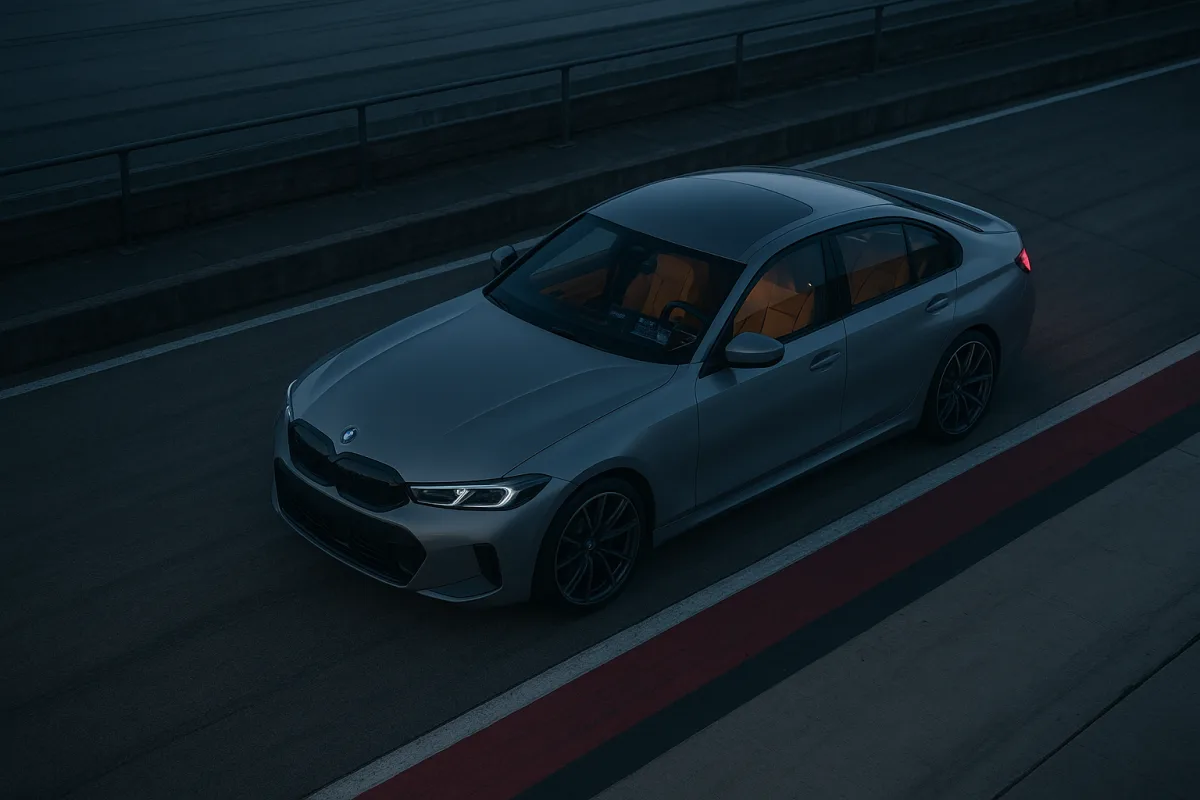
The shift is real: BMW is splitting the 3 Series family by powertrain, not by badge
The redesigned 2027 BMW 3 Series is the clearest sign yet that BMW no longer sees the compact executive saloon as one car with a choice of engines. It is becoming two related products, one combustion-powered and one electric.
Motor1 and CarScoops have independently reported the same basic strategy: the petrol, diesel and plug-in hybrid G50 3 Series will sit beside the electric i3, sharing much of its styling and cabin philosophy but not its underlying architecture.
That matters because it is more than BMW putting a familiar grille on an electric car. The G50 combustion 3 Series remains on an evolved CLAR platform, while the i3 uses BMW’s Neue Klasse architecture. [4]
For buyers, that means the traditional 3 Series is not being quietly retired yet. BMW is trying to retain buyers who want an inline-six, long-distance refuelling and familiar mechanical packaging, while offering a separate EV to customers ready for that step.
It is a pragmatic answer to a market where electrification is growing, but not evenly. The buyer who runs a company car on public charging has different needs from the owner covering 18,000 motorway miles annually or towing occasionally.
Why BMW is doing this now
The timing is partly product-cycle logic. The current G20 3 Series is approaching the end of its production life, with European production expected to end in October 2026 as the G50 arrives. [9]
It is also an answer to regulation without being a wholesale surrender to it. European emissions rules still favour lower-carbon powertrains and plug-in hybrids, while the US regulatory position has become less straightforward than many predicted.
The US Environmental Protection Agency says new limits on smog- and soot-forming vehicle pollution will phase in from model year 2027 through 2032. [1] That creates a continuing incentive for cleaner combustion engines, hybrid assistance and careful fleet planning.
At the same time, the research brief notes that the EPA rescinded the 2009 greenhouse-gas endangerment finding in February 2026. The result is not a simple return to carefree large-engined saloons, because local pollutants remain regulated.
BMW’s response is familiar: keep the profitable combustion car alive, electrify where it helps, and use one visual language across both. The risk is that a 3 Series becomes defined by its interface and silhouette rather than its driving position.
The exterior change is not subtle
CarScoops reports that the G50 takes its cues from the electric i3, including a slimmer, wider grille flowing into the headlights and diagonal daytime-running-light signatures. That is a large departure from the G20’s conventional three-box conservatism.
The change may actually age better than BMW’s recent oversized kidney-grille period. But owners coming from an F30 or G20 should not assume that a restrained nose means a restrained car overall, because the cabin is changing more dramatically.
Motor1 reports that the combustion 3 Series will borrow heavily from the i3 inside, with fewer physical controls and a strong emphasis on displays. CarScoops similarly points to BMW’s Panoramic iDrive system and a slanted central screen.
This is where launch imagery tells only part of the story. A clean dashboard looks impressive in a studio, but an owner needs to know how quickly demisting, drive-mode selection, navigation and climate adjustments work on a wet February commute.
BMW has not yet provided enough information to judge that. There are no independent road tests, long-term reviews, service records or owner reports for the 2027 3 Series, so claims about usability and quality would be premature.
Do not assume the new car will be roomier
Motor1 suggested the combustion G50 could be less spacious in the rear than the electric i3 because it retains a transmission tunnel, driveshaft and exhaust packaging. That is mechanically plausible, but it is not a confirmed measurement.
The available figures do not support a simple assumption that the i3 is automatically the better family car. The 2026 3 Series is listed with 35.7 inches of rear legroom and 37.7 inches of rear headroom. [5]
The i3 figures cited in the research brief are 31.9 inches of rear legroom and 37.2 inches of rear headroom. Those are not directly transferable to the new G50, whose dimensions have not been confirmed.
That leaves an important gap for buyers who use rear seats regularly. Wait for measured knee room, foot space under the front seats, door aperture width, boot volume and child-seat access, rather than treating platform theory as a verdict.
It is worth remembering that the G20 has always been adequate rather than class-leading for three adults in the back. If the G50 prioritises a low roofline, larger wheels and screen architecture, practicality could remain a secondary concern.
The M350 is the headline, but not yet an ownership proposition
The early performance story centres on the 2027 BMW M350 xDrive, replacing the M340i xDrive. BMW is expected to use a 3.0-litre turbocharged inline-six with 48-volt mild-hybrid assistance, producing 443 hp and 580 Nm. [4]
Those figures are substantial in a car wearing an M Performance badge rather than a full M badge. The reported 0-100 km/h time is 4.1 seconds, although such launch numbers tell little about tyre wear, fuel use or long-term transmission stress. [4]
CarScoops reported 437 hp, while the independent research brief and paultan.org list 443 hp. Until BMW releases final market-specific specifications, treat either number as provisional rather than as a firm ordering-guide figure. [4]
The interesting feature is the planned Drift Moment mode. BMW reportedly intends to add it by a free over-the-air update in 2027, allowing all available power to be directed to the rear axle. [7][8]
That is a notable change in how performance features are delivered. It also means an early buyer should ask the dealer exactly what is installed at handover, whether activation is market-dependent, and what happens if the car misses software-update eligibility.
No reported dealer delays or early-owner issues have surfaced around Drift Moment, but that is because there are no production-owner experiences yet. It should be viewed as a promised software capability, not a proven reason to place a deposit.
The old M340i remains the useful benchmark
For all the attention on the M350, the outgoing G20-generation M340i xDrive is still the more knowable quantity. Its B58 3.0-litre turbocharged straight-six is familiar to independent specialists and has had several years to establish its reputation.
The 2023 M340i xDrive carries an EPA combined rating of 26 mpg, and one published estimate puts fuel spending around $2,250 annually at 15,000 miles. [5][6] Those figures are useful context, not a prediction for the M350.
More power, mild-hybrid hardware, all-wheel drive and a rear-drive performance mode do not automatically equal lower real-world costs. Until official consumption data and owner reports appear, nobody can honestly say whether the M350 will improve on that 26 mpg baseline.
Nor is there enough evidence to write a proper 60,000-mile guide. There is no published maintenance schedule, no parts pricing, no insurance data, no tyre-cost evidence, and no record of common faults for the G50 or its M350 powertrain.
That is exactly why buyers should distinguish the final G20 from the first G50. A late G20 M340i may look less fashionable inside, but its servicing requirements, parts availability and likely fuel use are much easier to model.
Pricing is the biggest unanswered practical question
BMW has not officially announced a starting price for the 2027 M350 xDrive in the US or Europe. Any precise figure currently circulating should be treated as speculation, not a leaked order-sheet fact. [2]
The 2027 BMW M3 Competition xDrive starts at $88,600 in the US and €95,000 in Europe, giving the M350 a logical ceiling rather than a reliable estimate of transaction price. [3]
That ceiling does not make the M350 cheap. Once options, wheels, premium tyres, insurance, finance charges and dealer-added packages enter the picture, the difference between an M Performance car and an M3 can narrow unexpectedly.
BMW’s usual options structure matters more than launch power figures. An apparently sensible base price can grow quickly once adaptive suspension, upgraded seats, driver-assistance equipment, metallic paint and desirable wheel designs are added.
A prospective buyer should also avoid assuming that an over-the-air feature is free forever simply because the initial Drift Moment update is described that way. Ask what software functions are included, subscription-based, transferable and supported after warranty expiry.
What the trend means for a 3 Series project
For somebody planning a 3 Series purchase, lease or long-term project, the emerging pattern is clear. The G50 will be a technology-first car with traditional engines, not a simple evolution of the analogue-ish G20 formula.
Buy the final G20-generation car if known costs and mature mechanical support matter most. It is the safer route for someone intending to keep a car beyond warranty, modify it cautiously, or use independent servicing from the outset.
Wait for the G50 if the priority is the newest interface, modern driver assistance and a more overtly electrified powertrain range. But wait for full specifications, road tests and a year of ownership evidence before treating it as a proven replacement.
The M350 xDrive looks especially tempting on paper, yet it remains unpriced and untested outside controlled launch material. Its 443 hp claim, 580 Nm output and promised rear-drive mode are interesting, but they do not answer daily-cost questions. [4][7]
BMW’s two-track 3 Series strategy is real, and it is likely to spread across the rest of the range. The important decision is no longer simply petrol versus diesel or rear-wheel drive versus xDrive. It is whether you want mature hardware or first-year software.
Frequently Asked Questions
What are the key changes in the 2027 BMW 3 Series compared to previous models?
The 2027 BMW 3 Series is an all-new model that retains the combustion CLAR platform but adopts styling cues and a screen-focused cabin inspired by the electric Neue Klasse i3. It marks a split in the 3 Series family into combustion and electric versions, with the combustion G50 model featuring a slimmer, wider grille and diagonal daytime running lights, departing from the previous generation’s more conservative design.
How does the 2027 BMW 3 Series M350 xDrive perform?
The M350 xDrive is expected to have a 3.0L turbo inline-six engine producing 443 hp and 580 Nm of torque, capable of accelerating from 0-100 km/h in 4.1 seconds. It will receive a rear-drive “Drift Moment” mode as a free over-the-air update in 2027, enabling all power to be sent to the rear axle, a feature previously exclusive to the M3.
What are the interior and technology updates in the 2027 BMW 3 Series?
The interior adopts a more screen-led design with fewer physical controls, featuring BMW’s Panoramic iDrive system and a slanted central display. This cabin approach is heavily influenced by the electric i3, emphasizing digital interfaces over traditional buttons, though detailed usability and quality assessments are not yet available.
Is the 2027 BMW 3 Series more spacious than the previous generation?
Interior dimensions for the 2027 model have not been confirmed. The 2026 3 Series offers rear legroom of 35.7 inches and rear headroom of 37.7 inches, which is greater than the electric i3’s 31.9 inches legroom and 37.2 inches headroom. However, the new G50 combustion model retains mechanical elements like a transmission tunnel that could affect rear passenger space.
What powertrain options are available for the 2027 BMW 3 Series?
The combustion G50 3 Series will continue to offer petrol, diesel, and plug-in hybrid powertrains based on the evolved CLAR platform. The M350 xDrive features a turbocharged inline-six engine, while a separate electric i3 model shares styling but uses a different Neue Klasse architecture. No detailed powertrain lineup has been fully disclosed yet.
How we researched this
This article was assembled from 2 published articles, 9 cited references.
Nothing here is based on hands-on testing. Where a figure or finding appears, it belongs to the source cited beside it, and the writing says so rather than implying otherwise. Every source is listed below so you can check it.
Sources
We’re Finally Going To See The New BMW 3 Series This Week — Motor1
BMW Gears Up To Unveil All-New 3-Series On September 29 — CarScoops
Regulations for Smog, Soot, and Other Air Pollution from Passenger Cars & Trucks | US EPA
BMW M350 xDrive: 2027 Specs, Performance & Release - BMW M350 xDrive Wiki
Used 2023 BMW 3 Series M340i xDrive Specs & Features | Edmunds
2023 BMW M340i xDrive Sedan Specs, MPG, Fuel Economy | Car Lookup
BMW M350 xDrive Delivers M3-Exclusive Drift Mode to All Owners as Free OTA Update
BMW M340i RWD vs M350 Drift Moment: Last Rear-Drive 3 Series
Related Articles
Ferrari 296 GT Modificata vs McLaren P34
Compare Ferrari 296 GT Modificata and McLaren P34 track cars, specs, performance, and ownership insights for enthusiasts and prospective buyers.
Ford 2027 Bronco Filson and Fathom EV
Explore Ford's 2027 Bronco Filson and Fathom EV, including specs, pricing, and innovations in EV platform and ownership experience.
2027 Porsche Cayenne Electric Charging and Performance EVs
Explore the 2027 Porsche Cayenne Electric's 400 kW charging, performance specs, and what it means for real-world EV ownership and driving.

2027 Mitsubishi Pajero Revival: Launch, Specs & Availability
Discover the 2027 Mitsubishi Pajero revival with launch dates, specs, pricing, and market availability including Australia and Asia.