
Mercedes-AMG GT 4-Door EV Comparison
Compare the Mercedes-AMG GT 4-Door EV GT55 and GT63 models, their performance, charging, and autonomy features to find the best fit for you.
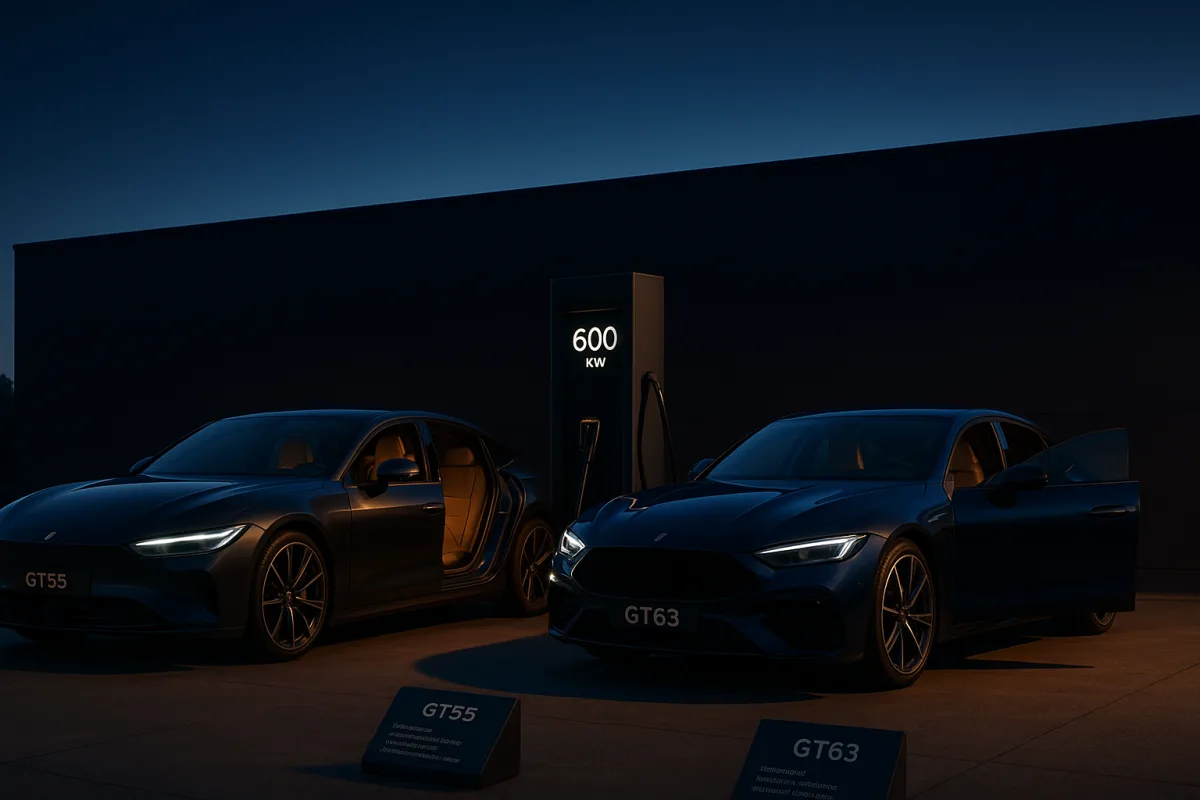
Mercedes-AMG GT 4-Door EV: GT55 vs. GT63, and the Autonomy Claims to Ignore for Now
The quick list
- Best overall: Mercedes-AMG GT55 4-Door EV, for the driver who wants the full three-motor AMG experience and can live without the flagship chassis hardware.
- Best for track-day ambition: Mercedes-AMG GT63 4-Door EV, for the buyer who wants maximum output, active roll control, and the most adjustable version of AMG’s new software-led handling.
- Best for waiting: Neither, if autonomy is part of your shopping list, for buyers who need confirmed hands-free or self-driving capability before spending six figures.
You are deciding between two versions of the same large, low electric hatchback, not between a sensible commuter and an outrageous special. The GT55 and GT63 share the new AMG.EA platform, a 106-kWh battery, three electric motors, 800-volt architecture, rear-wheel steering, and a great deal of theatrical software. [6][8]
The meaningful divide is price, peak power, suspension hardware, and how much track use you honestly expect. Both cars are extraordinarily quick. Only one needs to be the one in your garage.
GT55 versus GT63: the numbers that change the decision
Mercedes-AMG has not announced official U.S. pricing including destination charges for either model. European pricing starts at €154,700 for the GT55 and €208,130 for the GT63, but American pricing, equipment bundles, and final fees may differ. [2]
Car and Driver previously listed a $146,550 starting price for the GT55 and $176,550 for the GT63, but those figures should not be treated as confirmed U.S. MSRP until Mercedes-Benz USA publishes them. [2][10]
| Model | Mercedes-AMG GT55 4-Door EV | Mercedes-AMG GT63 4-Door EV |
|---|---|---|
| U.S. price | Not officially announced | Not officially announced |
| European starting price | €154,700 [2] | €208,130 [2] |
| Peak power | 805 hp [6] | 1,153 hp [6] |
| Peak torque | 1,372 lb-ft [[8]](https://media.mercedes-benz.com/en/article/c8b7109f-2287-4070-b776-9204da1513ef "The new Mercedes-AMG GT 4-Door Coupé: Revolutionary performance. Maximum intensity. | Mercedes-Benz Media") |
| Continuous output | 577 hp, according to Jalopnik [[4]](https://autocostcalc.com/blog/2027-mercedes-amg-gt-4-door-estimated-ownership-costs-and-to "2027 Mercedes AMG GT 4-Door: Estimated Ownership Costs and Total Cost of Ownership Calculator | Auto Cost Calc |
| Motor layout | One front motor, two rear motors [6] | One front motor, two rear motors [6] |
| Battery | 106 kWh, 800-volt lithium-ion pack [6] | 106 kWh, 800-volt lithium-ion pack [6] |
| Claimed charging peak | Over 600 kW [6] | Over 600 kW [6] |
| Claimed 10-80 percent DC charge | About 11 minutes, with suitable hardware [[8]](https://media.mercedes-benz.com/en/article/c8b7109f-2287-4070-b776-9204da1513ef "The new Mercedes-AMG GT 4-Door Coupé: Revolutionary performance. Maximum intensity. | Mercedes-Benz Media") |
| Suspension difference | Conventional anti-roll bars [6] | Hydraulic active-roll control [6] |
| Top speed | Final U.S. specification unconfirmed | Up to 186 mph with the Driver’s Package [[8]](https://media.mercedes-benz.com/en/article/c8b7109f-2287-4070-b776-9204da1513ef "The new Mercedes-AMG GT 4-Door Coupé: Revolutionary performance. Maximum intensity. |
| Cargo space | 15 cubic feet rear, 1 cubic foot front [6] | 15 cubic feet rear, 1 cubic foot front [6] |
Both cars are 200.6 inches long, 77.1 inches wide, and 55.6 inches tall, riding on a 119.7-inch wheelbase. That puts them firmly in full-size performance-sedan territory, though the sloping roof and hatchback body make them less square and formal than a conventional flagship sedan. [6]
The GT63 is not small, either. Car and Driver estimates curb weight between 5,300 and 5,500 pounds across the range, and Road & Track reported 5,534 pounds for the GT63 it drove. That mass does not disappear because the car corners hard. [6][7]
The GT55 is the real value play
The GT55 uses the same basic powertrain layout as the GT63: a permanent-magnet motor at the front axle and two independently controlled axial-flux motors at the rear. Those rear motors enable torque vectoring without a conventional rear differential. [6][8]
Its 805-hp peak output is available in launch-control or boost situations, while Jalopnik reports a 577-hp continuous figure intended to protect the battery and motors during extended hard use. That is still enough power to make restraint a daily driving skill. [4]
Mercedes-AMG claims the GT55 reaches 60 mph in 2.7 seconds, or 2.4 seconds with a one-foot rollout included. Autocar reported a roughly 3.0-second 0-to-62-mph estimate, pending final confirmation. [3][6]
The GT55 gives up the GT63’s hydraulic roll-control system, using conventional anti-roll bars instead. It still gets standard rear-wheel steering that can turn the rear wheels by as much as six degrees, a feature that should help both tight parking maneuvers and high-speed lane changes. [6]
For most owners, that is the version to buy. The GT55 still has the 106-kWh battery, the ultra-high-voltage charging system, the adjustable rear axle, the Race Engineer controls, and the synthetic AMGFORCE V8 experience.
It also avoids turning every freeway merge into an argument with your passenger’s neck muscles. A 2.7-second car is already beyond what public roads can productively use, particularly when its usable range, tire wear, and charging stops will shape ownership far more often than peak launch output.
The GT63 is about repeatability, not just peak horsepower
The GT63 adds 348 hp and 103 lb-ft over the GT55, for totals of 1,153 hp and 1,475 lb-ft. Mercedes-AMG says peak output is available in Race mode or Boost mode, with the latter offering full power for 63 seconds. [6][8]
Car and Driver estimates a 1.9-second 60-mph run for the GT63, while Mercedes-AMG has cited 2.3 seconds and other publications have reported figures around 2.0 seconds depending on rollout conventions. Those are all astonishing, but they are not interchangeable measurements. [6][7]
The bigger mechanical difference is suspension. The GT63 gets AMG Active Ride Control, using hydraulically interconnected dampers in place of conventional anti-roll bars. That system can resist body roll in corners while allowing more compliance when you are traveling straight. [6][8]
Road & Track found the GT63 remarkably flat and composed at Ascari, with strong resistance to brake fade, although it criticized the brake pedal’s airy initial travel before the pedal firms up. That is exactly the sort of detail that should matter if you are buying one for occasional track use. [7]
The GT63 also brings the AMG Dynamic Package as standard. Its center-console Race Engineer dials separately alter accelerator response, handling attitude, and traction intervention through nine settings each. The GT55 can have that package, but it is optional. [6]
If you will actually drive quickly on a track, the 63’s active-roll hardware and standard adjustment suite make sense. If your GT will mainly cover fast highway miles, scenic roads, and city errands, the GT55 is the smarter allocation of money.
The charging claim is impressive, but the network remains the limitation
The shared 106-kWh battery uses 2,660 cylindrical cells arranged in 18 modules, with direct oil cooling focused around the areas that build heat during charging. Mercedes-AMG claims this thermal strategy permits DC charging above 600 kW. [6][8]
Mercedes says the GT can go from 10 to 80 percent in about 11 minutes when connected to appropriate equipment. Car and Driver witnessed 259 kW at 78 percent state of charge, which suggests the car can maintain unusually high charging rates late into the session. [6]
That is the good news. The catch is that no publicly accessible 600-kW DC fast chargers currently operate in the United States, where 350-kW equipment remains the practical ceiling. Mercedes’ hardware is ahead of the places where you can plug it in. [1]
The GT models will use NACS connectors in the U.S., according to Car and Driver. That expands potential access, but it does not transform every charging location into a 600-kW station, and peak-rate claims never guarantee a specific charge session. [6]
If you keep cars for years, evaluate charging based on your home setup and your repeat routes. A robust home Level 2 installation and reliable 150-to-350-kW stops matter more than a peak figure you may never see outside a demonstration.
AMGFORCE gives this EV character, with one caveat
In Sport+ mode, AMGFORCE recreates the sound and sensations of AMG’s twin-turbocharged 4.0-liter V8. Mercedes recorded more than 1,600 sound samples from the previous GT R, then combines them in real time with seat-mounted sound exciters and simulated shifts. [3][4]
The system also gives the paddles a different job. Instead of adjusting regeneration, they select simulated gears, complete with interruption in torque and simulated engine braking on downshifts. Road & Track reports seven virtual ratios and a 7,200-rpm simulated redline. [7]
This is not a minor novelty. Autocar found that the V8-style soundtrack created reference points for throttle load, braking, and speed that disappear when the feature is switched off, while Jalopnik judged the result unusually convincing from inside the cabin. [3][4]
The caveat is outside the car. Road & Track found the exterior speaker’s artificial V8 sound less convincing and potentially embarrassing once bystanders realize what they are hearing. The system will delight some owners and irritate others, so try it before ordering. [7]
Autonomy is the missing specification
Mercedes-AMG’s autonomy story is currently a blank space in the GT 4-Door’s purchase case. The company has not published detailed capability levels, operating conditions, hands-free functions, or U.S. regulatory approval information for a new autonomous-driving system in this model. [10]
That means you should assume the driver remains responsible for the car. Do not interpret its screens, software-defined controls, rear steering, or sophisticated traction algorithms as proof of an advanced hands-free highway system.
The wider industry is also becoming more careful with language. Tesla renamed Full Self-Driving to Tesla Assisted Driving in the United Kingdom and Europe amid regulatory concern over the original name. [7]
Porsche’s latest digital push centers on PCM software, multi-step voice functions, over-the-air updates, smartphone integration, and Apple Music features. Those are useful infotainment developments, but they are not an answer to verified autonomous driving either. [9]
Mercedes-AMG appears to be recalibrating its message toward driver control. The GT’s most prominent new technology is not a promise that it will drive itself, but a set of knobs that lets you decide how sharply it responds, rotates, and intervenes.
Ownership reality at 60,000 miles
There is no model-specific long-term maintenance record yet, no published battery replacement price, and no established failure pattern for this first dedicated AMG EV. Early buyers are accepting the normal uncertainty of a new platform, new battery cooling system, and highly integrated chassis software.
Generic ownership estimates for AMG models suggest maintenance could run about $800 to $1,500 annually in the first two years, $2,500 to $4,000 in year three, and $3,500 to $6,000 by years four and five. Those are estimates, not GT EV service quotes. [4]
Battery replacement costs are also unknown for this model. General EV replacement estimates often run from $5,000 to $15,000, while battery coverage commonly extends to roughly eight years or 100,000 miles, but Mercedes-AMG has not published a GT-specific replacement figure. [4]
The expensive consumables will arrive before a battery pack does. These are heavy, very powerful cars on wide summer tires, with optional carbon-ceramic brakes and suspension systems that will be costly outside warranty coverage. Plan for tire replacement and insurance accordingly.
Who each option suits
Mercedes-AMG GT55 4-Door EV: Buy this if you want the electric AMG experience, need a usable four-door hatchback, and care about charging capability as much as acceleration. We would choose it because 805 hp is already excessive, while the shared battery, motor arrangement, cabin, and software make it far from a stripped-down alternative.
Mercedes-AMG GT63 4-Door EV: Buy this if you will use its active-roll suspension, standard Dynamic Package, and greater sustained performance on track or on demanding roads. It is the engineering showcase, but it asks you to pay flagship money for performance that is difficult to exploit outside controlled conditions.
Wait for more autonomy detail: Skip both for now if you want a confirmed hands-free driver-assistance system or verified autonomous capability. Mercedes-AMG has not yet published enough information to make the GT 4-Door EV a responsible purchase on that basis.
Frequently Asked Questions
What are the differences between the Mercedes-AMG GT55 and GT63 4-Door EV models?
The GT55 features 805 horsepower, a three-motor drivetrain, and conventional anti-roll bars, while the GT63 offers 1,153 horsepower, a hydraulic active-roll system, and the standard AMG Dynamic Package. Both share the same 106-kWh battery and 800-volt architecture, but the GT63 adds chassis hardware and software for more adjustable handling. The GT63 commands a significantly higher price, reflecting its enhanced performance and track-focused features.
Is the Mercedes-AMG GT 4-Door EV suitable for track use?
The GT63 model is best suited for track-day use due to its higher output of 1,153 hp, hydraulic active-roll control, and advanced AMG Dynamic Package. The GT55, while still very quick, lacks the flagship chassis hardware and is more oriented toward everyday driving rather than dedicated track performance.
How fast can the Mercedes-AMG GT 4-Door EV charge?
Both GT55 and GT63 models support peak charging rates over 600 kW, allowing a 10-to-80-percent DC fast charge in about 11 minutes under ideal conditions. However, this fast charging speed requires suitable hardware that is not yet publicly available in the U.S., where current maximum fast chargers typically deliver up to 350 kW.
What is the current status of autonomy features in the Mercedes-AMG GT 4-Door EV?
Mercedes-AMG has not published detailed capability information or regulatory approval status for the autonomous driving system in the GT 4-Door EV. Buyers seeking confirmed hands-free or self-driving features should not expect these capabilities to be available at launch or fully operational in the near term.
Which Mercedes-AMG GT 4-Door EV model offers the best value for performance?
The GT55 is considered the best overall value for those wanting the full AMG EV experience without paying for the GT63’s flagship chassis and extra power. It retains the core three-motor platform and fast charging hardware, making it suitable for most drivers who do not require the extreme performance and track-focused features of the GT63.
How we researched this
This article was assembled from 8 published articles, 11 cited references.
Nothing here is based on hands-on testing. Where a figure or finding appears, it belongs to the source cited beside it, and the writing says so rather than implying otherwise. Every source is listed below so you can check it.
Sources
The Toyota GR GT3 Is Heading to Its First Race This Weekend at Motegi, Road & Track
View Interior Photos of the 2027 Mercedes-AMG GT 4-Door Coupe, Car and Driver
Mercedes-AMG GT 63 EV: £160k hyper-saloon makes up for the V8, Autocar
Open Your Mind And The 2027 Mercedes-AMG GT 4-Door Coupe Will Blow It, Jalopnik
Alan Jones, 1980 Formula 1 World Champion, Has Died, Road & Track
Driven: The Mercedes-AMG GT 4-Door Won’t Make You Wait, Car and Driver
The 2027 Mercedes-AMG GT 63 4-Door Coupe Turns a New Page for AMG, Road & Track
View Exterior Photos of the 2027 Mercedes-AMG GT 4-Door Coupe, Car and Driver
2027 Mercedes-AMG GT EV 4-Door First Drive Review: Catch It If You Can
Used EV Prices Are Falling - Here's How They Compare to Gas Cars Now
Tesla renames its 'misleading' Full Self-Driving tech in the UK and Europe
Porsche just gave its cars a major AI upgrade with integrated Apple Music
Mercedes Electric CLA and GLC Carry Six-Month Lead Times as Orders Run Into 2027 | EV.com
Related Articles
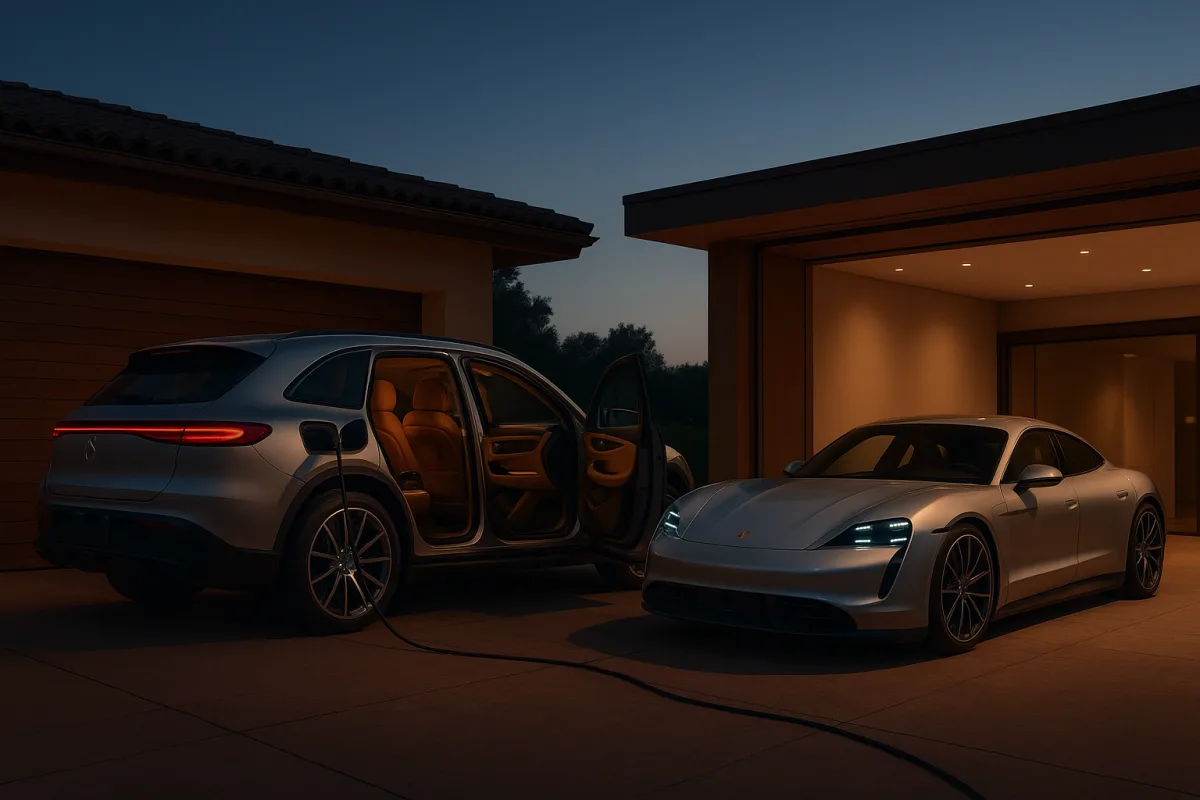
Mercedes-AMG GT SUV vs Porsche Mission S
Compare the Mercedes-AMG GT SUV and Porsche Mission S for luxury, performance, and ownership insights on these 2026 electric and petrol supercars.
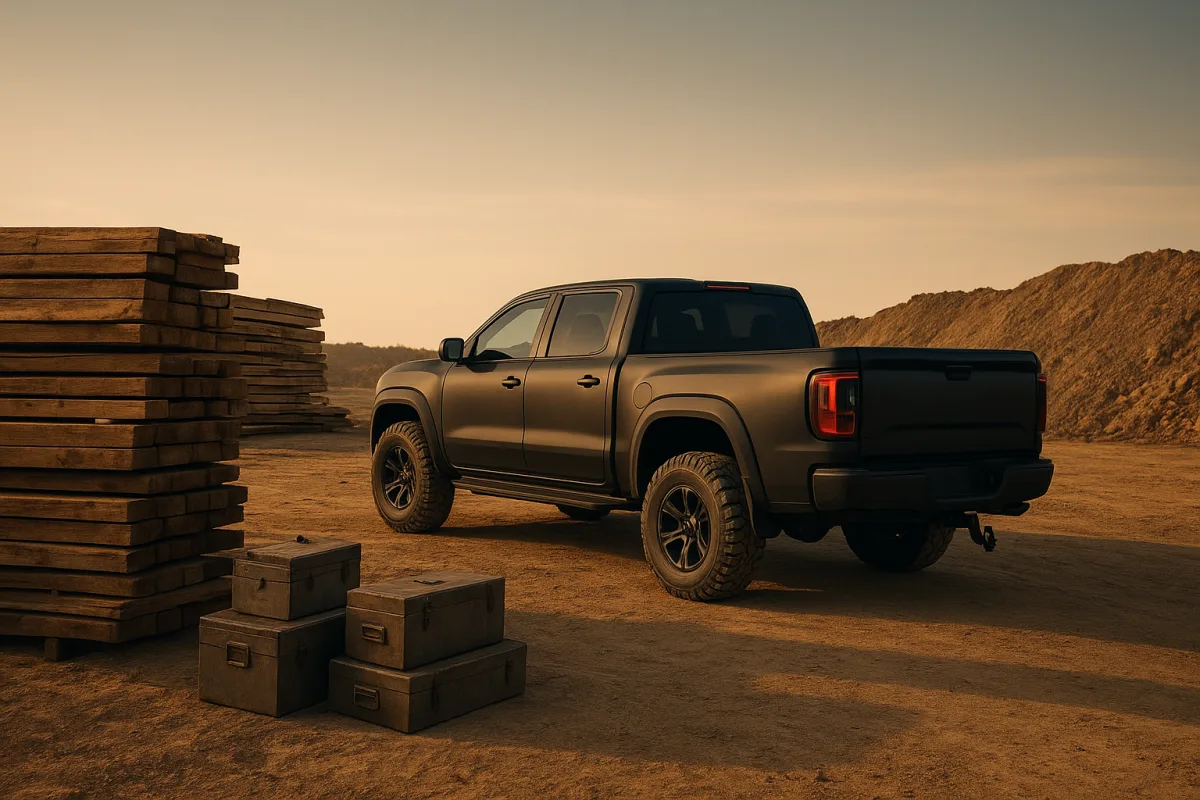
2027 New SUV and Pickup Models: Features and Ownership Guide
Explore 2027 new SUV and pickup models with insights on performance, ownership costs, maintenance, and driving experience.
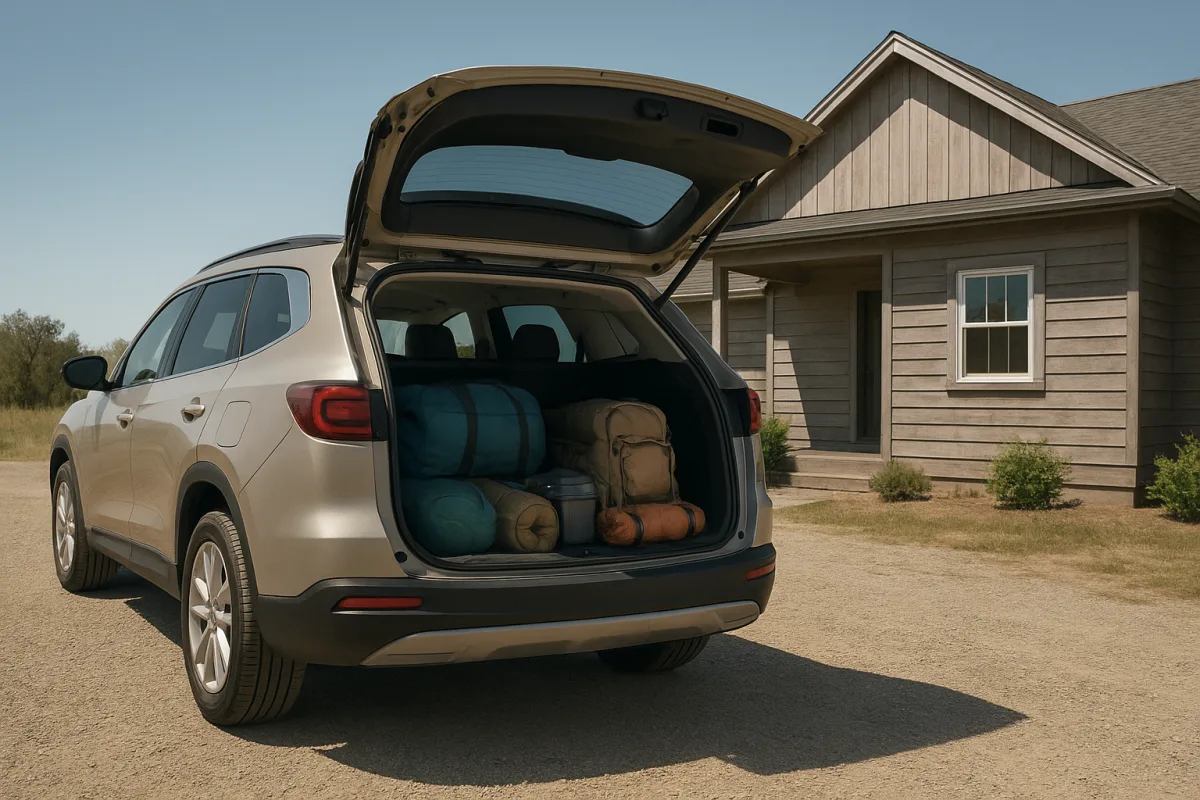
2027 Mid-Size Family SUV Comparison
Compare 2027 mid-size family SUVs like the Kia Telluride and Volkswagen Atlas on performance, space, fuel economy, and features to find your best fit.
2027 BMW 3 Series Review: Launch, Features & Performance
Explore the 2027 BMW 3 Series review covering launch details, design, M350 xDrive performance, and interior updates.