
Ferrari 296 GT Modificata vs McLaren P34
Compare Ferrari 296 GT Modificata and McLaren P34 track cars, specs, performance, and ownership insights for enthusiasts and prospective buyers.
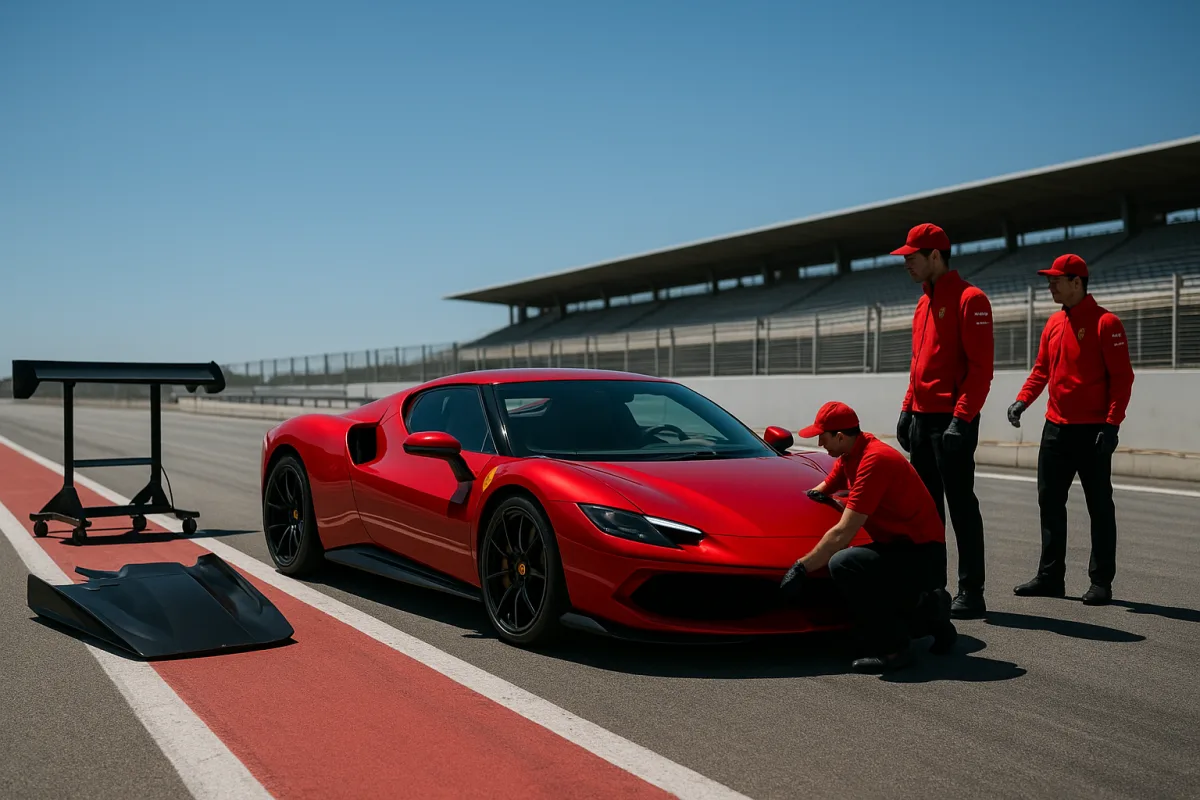
The decision: Ferrari’s finished track weapon or McLaren’s promising unknown?
This is not quite the conventional Ferrari-versus-McLaren argument. The Ferrari 296 GT Modificata exists, has a defined purpose and is tied into Ferrari’s Club Competizioni GT programme. The McLaren P34 is a reported forthcoming hybrid supercar, still awaiting a full official announcement.
That makes the Ferrari the safer purchase for an owner who wants track access now, support included and little interest in road legality. The McLaren is the more rational value proposition on paper, but paper is doing a lot of work here.
The supplied research briefing categorises both as track-only, non-street-legal cars. That sits awkwardly beside dealer reporting which positions the P34 between the road-going Artura and 750S, so prospective McLaren buyers should treat its final legal status as unresolved until McLaren confirms it.
I have not driven either car, and nobody should pretend that a launch specification tells us how either will behave after 30 track days, several sets of tyres and a couple of hard brake-service cycles. The decision therefore rests on what is confirmed, what is merely reported, and how much uncertainty an owner is willing to buy.
Head-to-head comparison
| Criterion | Ferrari 296 GT Modificata | McLaren P34 |
|---|---|---|
| Status | Revealed September 2026, limited-production track car | Reported 2027 hybrid supercar, not fully announced |
| Powertrain | 2,992cc 120-degree twin-turbo V6, 730 CV, approximately 720 hp | Reported twin-turbo V6 hybrid, around 810 hp |
| Torque | 590 lb-ft reported | Around 800 lb-ft reported |
| Performance evidence | Ferrari claims 1:11.0 at Fiorano, independently unverified | No official performance figures or lap times |
| Development approach | GT3-derived package freed from FIA and IMSA competition rules | New hybrid model intended to sit between Artura and 750S |
| Track use | Built around Ferrari Club Competizioni GT participation | Track-only classification in the supplied briefing, final use case needs factory confirmation |
| Price | Undisclosed | Reported from about $315,000 |
| Running-cost evidence | No Modificata figures, only 296 GTB context exists | No public maintenance or insurance evidence |
| Main risk | Very high operating and event costs, limited independent use | Specification, delivery, legality and ownership costs remain unconfirmed |
| Best suited to | Ferrari client wanting a supported track-car ecosystem | Buyer willing to wait and accept a less certain but potentially cheaper, more powerful package |
1. What you are actually buying
The Ferrari 296 GT Modificata is not a road-car special with a cage, tyres and a rear wing. It is Ferrari’s GT3-derived platform liberated from the balance-of-performance restrictions and homologation compromises that shape a real racing car. [6][12]
Ferrari quotes 730 CV, or 537 kW, from the 2,992cc 120-degree V6 at 7,500 rpm. That is commonly reported as roughly 720 hp, so the apparent discrepancy between 720 hp and 730 CV is a unit-conversion issue, not two different engine states. [1][12]
The important bit is not the peak number. Ferrari reportedly revised the turbochargers, crank train, camshafts, induction system, intercooling, low-pressure fuel pump and fuel system, which suggests a package engineered for sustained circuit load rather than a one-lap social-media figure. [6][12]
Its aero is equally central. The altered front splitter, additional front aero surfaces and fixed rear wing exist because the Modificata does not need to meet the normal compromises of public-road use, pedestrian regulations or road-car ground clearance. [1][6]
McLaren’s P34 takes a different route. Dealer and industry reports describe an all-new hybrid V6 coupe rather than a version of an existing racing platform, positioned between the Artura and the V8-powered 750S. [2][3][4]
The expected headline is around 810 hp and 800 lb-ft from a twin-turbocharged hybrid V6. That would comfortably clear the 750S for torque, whose 4.0-litre twin-turbo V8 produces 590 lb-ft, but McLaren has not published definitive output or a complete technical specification. [2][3]
That uncertainty matters more than it would on a normal road car. A buyer considering a six-figure specialist machine needs to know cooling strategy, battery warranty, service intervals, parts supply, brake specification and the precise rules governing track use. None is public yet.
Winner: Ferrari. The Modificata is the clear choice if you value certainty. Its basic proposition may be narrow, but it is a real, defined product rather than an estimate supplied through dealer briefings.
2. Performance claims versus usable performance
Ferrari says the 296 GT Modificata laps Fiorano in 1:11.0, roughly three seconds faster than the 296 GT3 Evo. [1] That is a serious claim, but it remains Ferrari’s own number, without independent timing or enough supporting detail to compare conditions.
This is where a sensible track-car buyer should resist treating a factory lap time as a transferable ownership result. Tyres, ambient temperature, track condition, driver quality and the exact operating mode can move a lap time by more than the difference between some supposedly distinct models.
Still, the Modificata’s case is credible in a way that goes beyond that one number. It has the power, aero and chassis freedom of a car no longer constrained by race-series regulations, while retaining lessons from Ferrari’s GT3 programme. [6][12]
The P34 could ultimately be the stronger straight-line machine. Around 800 lb-ft in a hybrid coupe should make it substantially more forceful out of slower corners than the Ferrari’s reported 590 lb-ft, assuming the reports prove accurate. [2][3]
But no official P34 lap time, kerb weight, tyre fitment, downforce figure, braking data or cooling specification has been released. Its claimed 810 hp is therefore interesting, not actionable. A buyer cannot yet tell whether it is a track tool, a fast road car, or something between them.
The McLaren is also expected to borrow design cues from the McLaren F1, including a wedge-shaped nose and tempered-glass engine cover. [2][3] Those details may make it visually distinctive, but they say nothing useful about brake temperatures after a 25-minute session.
Winner: Ferrari. Not because Ferrari’s Fiorano time is proven, it is not, but because the Modificata has a clearer engineering brief. The P34 may be faster in several measurable ways, but that remains a future-tense argument.
3. Purchase price, availability and value
Ferrari has not disclosed a price for the 296 GT Modificata. [1][6] That omission should not be read as a bargain opportunity. It is an extremely limited track-only Ferrari attached to an exclusive programme, and it is reasonable to expect pricing well beyond a standard 296 GTB.
For reference only, the median U.S. asking price for a Ferrari 296 GTB was $339,894 in September 2026. [7] Asking prices are not transaction prices, and the road-going GTB is not a valid substitute for the Modificata, but it establishes the floor beneath the likely conversation.
Ferrari also includes two years or 12 rounds of Club Competizioni GT participation with the purchase, according to reporting on the programme. [6] That has real value if the owner wants Ferrari-run events, transport logistics and an organised place to use the car.
The McLaren’s expected starting price is around $315,000, with some reporting putting it roughly $45,000 below a 750S. [2][3] If McLaren holds that number, the P34 could represent unusually strong output-per-dollar in this rarefied class.
However, $315,000 is not a confirmed retail price, and it does not answer the expensive questions. Delivery, track support, transport, tyres, consumables, specialist insurance, taxes and any membership or event fees will sit outside the headline number.
Resale is unknowable for both. The Ferrari’s scarcity and programme connection may support values, but exclusive track cars can also have a tiny buyer pool. The McLaren’s future value depends on final production volume, actual performance and whether the model establishes a distinct identity.
Winner: McLaren, with a large asterisk. The reported P34 price is compelling against the Ferrari’s likely cost, but only for a buyer prepared to accept that the number, delivery date and final specification can change.
4. Maintenance, consumables and the costs manufacturers rarely headline
There is no public maintenance schedule or running-cost record for the 296 GT Modificata. That is normal for a new limited-run track car, but it means nobody can honestly quote an annual figure yet.
The closest available guide is the road-going 296 GTB. Ferrari’s seven-year Genuine Maintenance programme covers scheduled maintenance on that car, while post-warranty annual servicing has been estimated at $1,200 to $3,500. [9]
That road-car context becomes less comforting once consumables enter the picture. Estimates for a 296 GTB include $1,500 to $2,500 for a tyre set and $800 to $1,500 for carbon-ceramic brake pads, while annual wear items can reach $3,000 to $8,000 depending on use. [9][11]
A Modificata used properly should exceed those figures. Track mileage is not road mileage, and heat cycles, brake wear, alignment checks, fluids, transport, crew support and specialist parts can make an apparently low-mileage car a high-cost proposition.
The P34 has even less usable ownership information. There is no published maintenance pricing, no clear warranty position, no battery-service strategy and no evidence of insurance rates for the final car. Its hybrid system could be excellent, but a new powertrain brings early-adopter exposure.
The research briefing also notes that specialised insurance for non-street-legal, high-value track cars is likely complex and costly for both models. Neither manufacturer has published an insurance case study or a representative premium, so any exact quote would be invented.
Winner: Neither. Ferrari has the advantage of a known client-support structure and some 296-family context. McLaren may prove cheaper, but there is currently no evidence to support that hope.
5. The ownership reality beyond the pit lane
The Ferrari’s weakness is that it concentrates ownership into Ferrari’s world. That suits the buyer who wants curated events, recognised circuits and factory-led logistics. It suits the owner less well if they prefer an independent race-shop relationship and track days chosen on a whim.
The P34’s weakness is uncertainty. Reports suggest late-summer 2027 deliveries and production of around 1,000 cars annually, but neither figure should be treated as final until McLaren states it publicly. [2][4]
The Ferrari is also an intentionally narrow car. It does not promise school-run usability, weekend touring or a drive home after the circuit. Its value lies in removing the compromises that make those activities possible.
McLaren’s reported interior specification, including leather seats, digital instruments, large infotainment display and glass engine cover, sounds more civilised. [2][3] Yet if the supplied briefing’s track-only classification remains correct, those comforts will not turn it into a road-trip supercar.
That leaves a surprisingly straightforward decision. The Ferrari is the purchase for someone buying access to a specific experience. The McLaren is the reservation for someone buying into potential, with the expectation that the contract details will matter as much as the claimed power output.
Who each option suits
Ferrari 296 GT Modificata: It suits the established Ferrari client who wants a GT3-informed track car, factory-organised events and a machine with an already-defined purpose. Its price is undisclosed, its running costs will likely be substantial, and its narrow programme-led ownership model will not suit everyone. [1][6]
McLaren P34: It suits the patient buyer who wants the prospect of roughly 810 hp and 800 lb-ft for a reported starting price near $315,000, potentially below a 750S. [2][3] It falls down because nearly every ownership-critical detail, from final legality to service costs and actual delivery timing, still needs official confirmation.
Frequently Asked Questions
What are the key differences between the Ferrari 296 GT Modificata and McLaren P34?
The Ferrari 296 GT Modificata is a limited-production, track-only car developed beyond GT3 regulations and tied to Ferrari’s Club Competizioni GT programme, with a 2,992cc twin-turbo V6 producing about 720 hp. The McLaren P34 is a reported forthcoming hybrid supercar with an estimated 810 hp twin-turbo V6 hybrid powertrain, positioned between the Artura and 750S, but it has not been officially announced or confirmed. The Ferrari is a known quantity with a defined purpose, while the McLaren remains speculative in specs, price, and delivery.
Is the Ferrari 296 GT Modificata suitable for independent track-day ownership?
No, the Ferrari 296 GT Modificata is designed for a managed, Ferrari-supported track programme and not for independent track-day ownership. It is not a road car with added safety equipment but a GT3-derived track weapon built without compromises for road use, making it more suited to owners participating in Ferrari’s official track ecosystem.
What performance claims does Ferrari make for the 296 GT Modificata?
Ferrari claims a Fiorano lap time of 1:11.0 for the 296 GT Modificata, which is about 3 seconds faster than the 296 GT3 Evo. However, this lap time has not been independently verified and should be treated as useful context rather than a definitive buying decision.
What is known about the McLaren P34's powertrain and delivery timeline?
Industry reports suggest the McLaren P34 will feature a twin-turbo V6 hybrid powertrain producing around 810 hp and approximately 800 lb-ft of torque. Deliveries are expected in late summer 2027, with about 1,000 units annually. However, these details remain unconfirmed by McLaren and are subject to change upon official announcement.
Which car is better for track use: Ferrari 296 GT Modificata or McLaren P34?
The Ferrari 296 GT Modificata is the safer choice for immediate track use, offering a finished, Ferrari-supported track programme and a car engineered specifically for circuit performance beyond GT3 rules. The McLaren P34, while promising higher power and a potentially lower price, remains unproven with uncertain delivery, legality, and ownership costs, making it a riskier option for track use at this time.
How we researched this
This article was assembled from 4 published articles, 12 cited references.
Nothing here is based on hands-on testing. Where a figure or finding appears, it belongs to the source cited beside it, and the writing says so rather than implying otherwise. Every source is listed below so you can check it.
Sources
The Ferrari 296 GT Modificata Is A No-Rules Track Car With 720 HP — Motor1
McLaren’s Next Supercar Will Pack A Bigger Punch Than The 750S For Less Money — CarScoops
Ionna’s EV Charging Network Grew 50% In Just Six Months — InsideEVs
Tesla Sets Roadster Reveal Date, RSVP Deadline Looms — Motor1
McLaren P34 Hybrid Supercar: More Torque, Lower Price Than 750S
McLaren to Expand Lineup With New P34 Supercar and GT Models
Swapping the V-8 for 810 Horsepower: Inside McLaren's Secret "P34" Hybrid Coupe - Stick Shifting
Meet the 296 GT Modificata: Ferrari's latest track special | RACER
Ferrari Maintenance Cost 2026: Annual Service & What to Expect
Is the Ferrari 296 GTB Hybrid Worth It? Performance, Value, and Ownership Analysis | Automonitor
Related Articles
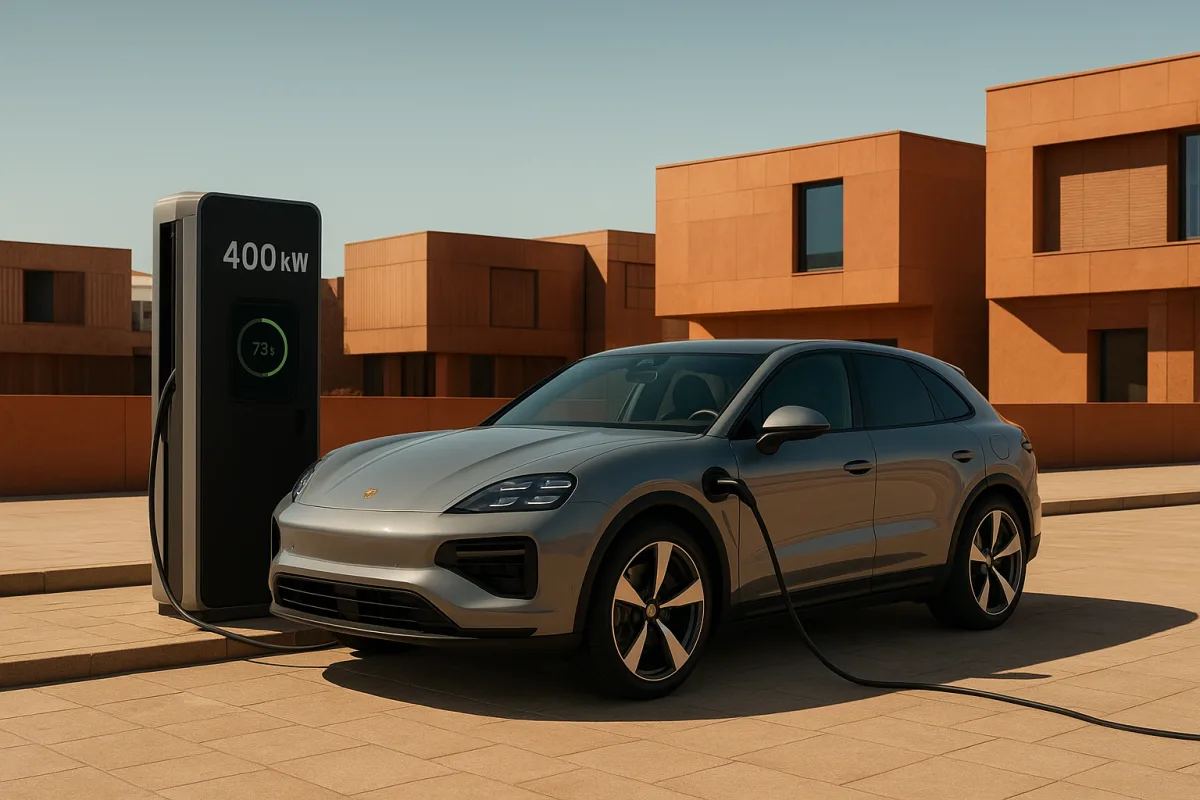
2027 Porsche Cayenne Electric Charging and Performance EVs
Explore the 2027 Porsche Cayenne Electric's 400 kW charging, performance specs, and what it means for real-world EV ownership and driving.
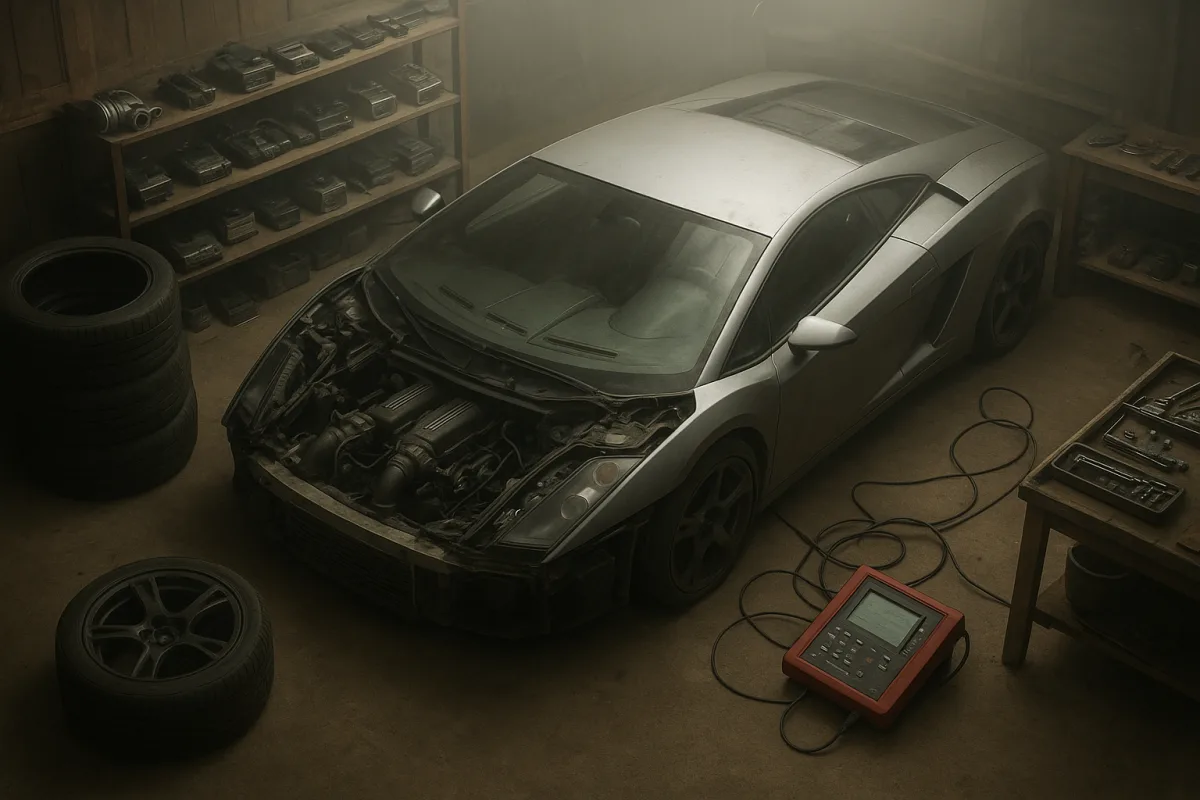
Exotic Car Ownership and Modifications
Explore exotic car ownership and modifications, including costs, challenges, and real-world examples of high-performance exotic cars.
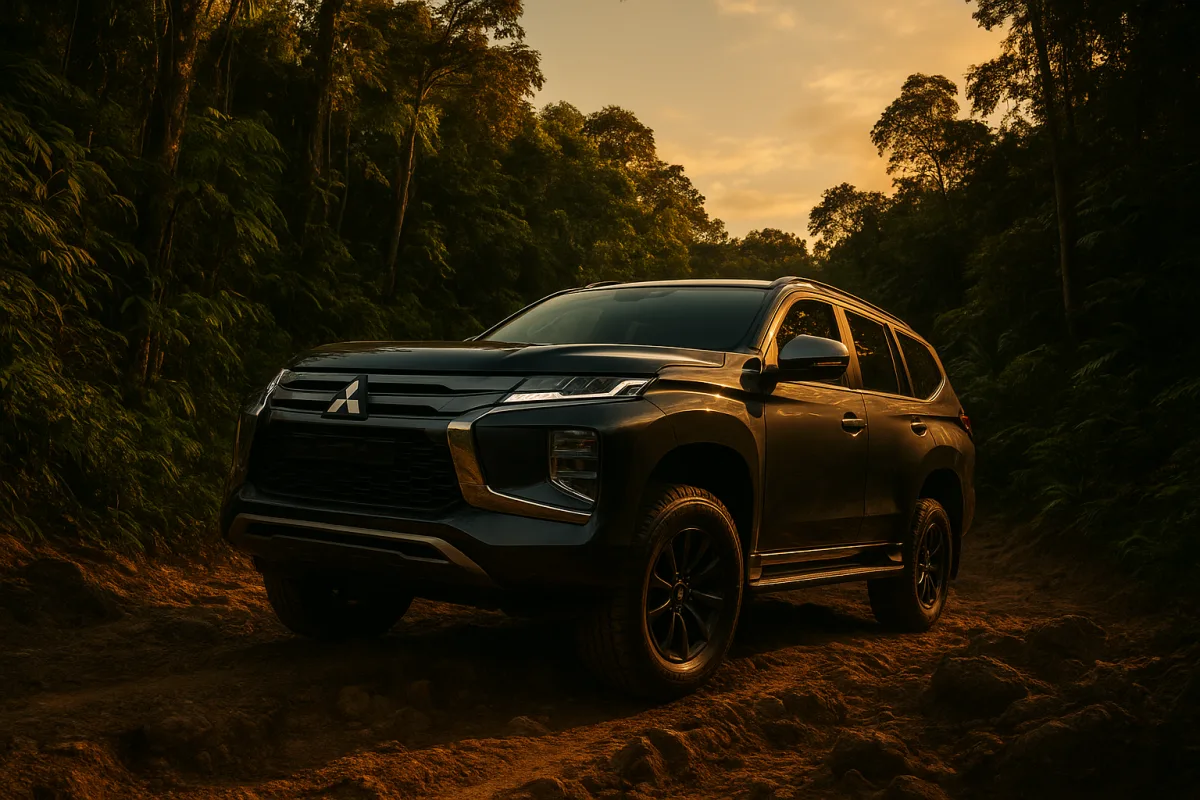
2027 Mitsubishi Pajero Revival: Launch, Specs & Availability
Discover the 2027 Mitsubishi Pajero revival with launch dates, specs, pricing, and market availability including Australia and Asia.
2027 Lexus NX Hybrid Refresh
Explore the 2027 Lexus NX hybrid refresh, including new battery, e-axle, and ownership details for hybrid and plug-in models.