
2027 Hyundai Tucson Redesign and Hybrid Powertrain Details
Explore the 2027 Hyundai Tucson redesign, hybrid powertrain, fuel economy, towing, and new features in this detailed overview.
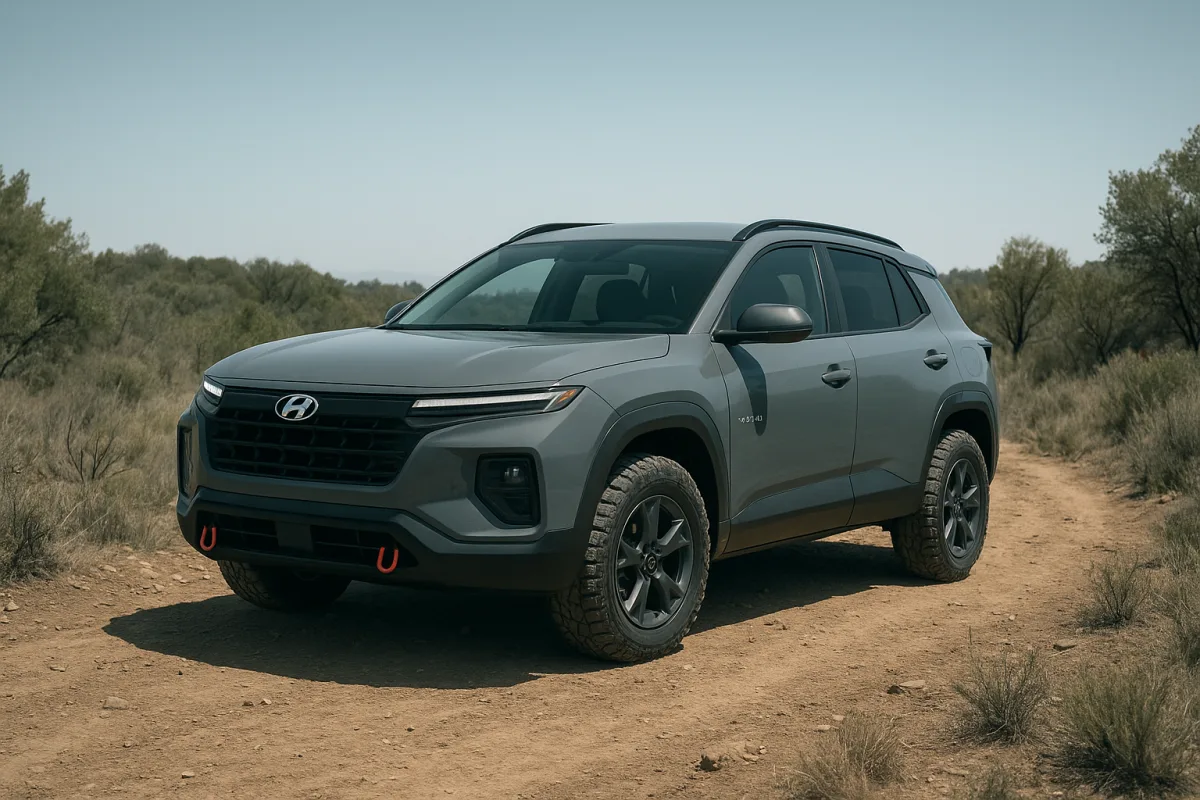
The shift is plain: hybrid family SUVs are becoming the default answer
The 2027 Hyundai Tucson is Hyundai acknowledging where the compact-SUV market has gone. The old formula, a naturally aspirated petrol engine with hybrid power reserved for higher trims, is giving way to turbocharged hybrid drivetrains as the main event. [2][7]
That is not Hyundai moving alone. Toyota has built the RAV4 Hybrid into a volume model, Honda has made hybrid power central to the CR-V range, and Hyundai is now putting its strongest Tucson powertrain behind the mainstream efficiency pitch. [1][2]
The evidence is not merely the 233-hp Tucson Hybrid headline. Hyundai has reduced the 2027 U.S. range to a 1.6-litre turbo petrol engine or that engine with hybrid assistance, dropping the old naturally aspirated 2.5-litre four-cylinder. [7]
This is a significant product-planning decision. A manufacturer does not simplify its engine range around a more complex powertrain unless it expects fuel economy, emissions compliance, and customer demand to justify the additional hardware.
The new Tucson also follows the wider move from soft, rounded crossovers toward squared-off, deliberately rugged-looking family transport. Hyundai, Toyota, Subaru, Nissan, and Mazda all know buyers increasingly associate upright proportions and cladding with usefulness, whether or not they leave asphalt. [6][7]
I have not driven the 2027 Tucson, and neither has anyone accumulated meaningful ownership mileage in one. This is therefore a trend analysis based on Hyundai’s published details and early reporting, not a road test dressed up as an ownership review.
Hyundai is chasing the RAV4 on usefulness, not just numbers
Hyundai has made the Tucson larger in every main direction. The North American model is about 2.4 inches longer, 1.6 inches wider, and roughly 0.8 inch taller than before, with additional wheelbase helping rear-seat accommodation. [2][7]
That matters more than the claimed 8.5-second 0-60 mph time. Compact crossovers spend their lives carrying child seats, muddy boots, dogs, flat-pack furniture, and passengers who do not enjoy climbing through a narrow rear door.
The new Tucson’s rear doors open to 83 degrees, and Hyundai quotes 41.7 cubic feet of cargo room behind the rear seats. Those are the sort of details that improve daily ownership, provided the production car meets its measurements. [6][8]
The Tucson Hybrid’s all-wheel-drive tow rating rises to 3,000 pounds, a 1,000-pound increase over the previous hybrid. That gives it a meaningful advantage over the Honda CR-V Hybrid, which is rated for only 1,000 pounds. [2]
It should still be treated as a light-duty tow vehicle. A small camping trailer, utility trailer, or pair of personal watercraft are plausible uses, but a 3,000-pound rating leaves little room for casual assumptions about trailer weight, payload, or hills.
Hyundai also adds Trailer Reverse Assist, an increasingly common feature in a class where many owners tow only occasionally. It may reduce stress at a boat ramp or campsite, but it cannot make an inadequately loaded trailer safe. [2]
The hybrid hardware is more interesting than the headline output
The 2027 Tucson Hybrid uses a turbocharged 1.6-litre four-cylinder, a 1.49-kWh battery, and two electric motors. Combined output is quoted at 233 hp and 280 lb-ft, modest increases over the outgoing hybrid. [2][6]
The important change is the added crank-integrated electric motor, which replaces the conventional belt-driven starter-generator. It can assist under acceleration and recuperate energy during deceleration, supplementing the larger motor integrated with the six-speed automatic transmission. [6]
That is a sensible development of Hyundai’s existing hybrid layout rather than an all-new experiment. For an owner, evolutionary hardware is generally preferable, although it is still too early to claim anything about reliability or repair costs.
Hyundai’s preliminary target is up to 42 mpg combined for the front-wheel-drive hybrid on 17-inch wheels. The outgoing Tucson Hybrid managed 38 mpg combined in its most efficient specification, so the claimed improvement is useful if verified. [2]
Be careful with that word, though: claimed. As of October 2, 2026, the EPA has not issued an official combined rating for the 2027 Tucson Hybrid, and larger wheels or all-wheel drive will reduce the result.
That puts the Tucson in the same conversation as the Toyota RAV4 Hybrid, although Hyundai’s projected best-case figure still does not automatically establish it as the class fuel-economy leader. A comparative Edmunds test found real-world differences matter more than brochure claims. [1]
For someone who covers 15,000 miles annually, a four-mpg gap can add up, but it should not be viewed in isolation. Purchase price, insurance, depreciation, tyre replacement, and finance costs can easily outweigh a modest fuel saving.
The plug-in hybrid story needs separating by market
Reporting on the Tucson’s plug-in hybrid has created some understandable confusion. Hyundai will offer a PHEV in certain overseas markets, where it is quoted with 288 hp, a 17.1-kWh battery, and about 50 miles of electric range. [6]
That 50-mile figure should not be read as an American EPA number. InsideEVs correctly noted that Hyundai did not identify the test cycle behind it, while the existing 2026 Tucson PHEV is rated at 32 EPA miles. [6]
For the United States, the more relevant information is that Hyundai currently has no plan to sell the new-generation Tucson PHEV. Car and Driver also reports that the standard petrol Tucson is the only alternative to the conventional hybrid. [2]
That decision tells us something about the market. Plug-in hybrids only make financial sense when owners charge regularly, and their extra battery capacity adds purchase cost and complexity for buyers who may never plug them in.
The regular hybrid is the safer recommendation for an owner without dependable home or workplace charging. It delivers its economy without asking for new habits, and it avoids the disappointing outcome of hauling a depleted PHEV battery around on petrol.
Rugged trims are becoming hardware, not just black plastic
The 2027 Tucson XRT and XRT Pro show the second major trend: compact crossovers are being sold as mild adventure vehicles. Hyundai is not alone here, but it has given the top Tucson more than cosmetic wheel-arch trim. [4][5]
The XRT is the appearance-led version, with specific bumpers, skid plates, black cladding, and standard all-wheel drive. The XRT Pro adds the equipment that gives the idea some substance, including all-terrain tyres and front recovery hooks. [4][5]
Most importantly, the XRT Pro gets 210 mm, or about 8.3 inches, of ground clearance. That is 30 mm more than a standard Tucson and above the roughly 198 mm of the Honda CR-V or approximately 200 mm offered by the Rogue and CX-5. [4]
That extra height is useful on rutted access roads, snow-covered driveways, forest tracks, and campsites with pronounced drainage channels. It is not a substitute for underbody protection, a low-range transfer case, proper recovery training, or careful tyre placement.
Hyundai’s Smart Terrain Assist adds drive modes and a colour-coded assessment of terrain difficulty. It may be useful guidance, but a dashboard “stuck score” cannot know whether the surface beneath the vehicle will collapse or whether a rock will damage a battery enclosure. [6]
The practical cost of this trend comes later. All-terrain tyres can be noisier, less efficient, and more expensive to replace than road-biased tyres. Higher-profile styling also gives owners more painted and textured surfaces to keep clean.
One early video observer noted the Tucson’s deeply sculpted rear lamp area could be awkward to clean, but that is only an observation from a pre-production walkaround. There are no owner reports yet establishing cleaning difficulty or related durability problems.
Software is now part of the ownership calculation
The third change is less visible but potentially more consequential at year six: the Tucson moves to Hyundai’s Android Automotive-based Pleos Connect infotainment system. It uses either a 12.9-inch or available 17-inch central display. [2][6]
There is also a slim 9.9-inch driver display, over-the-air updates, downloadable apps, and Gleo AI voice control. Hyundai is clearly treating the Tucson as a software-defined vehicle, a phrase buyers should approach with measured skepticism. [6][7]
Software can improve navigation, charging information, voice commands, and driver-assistance behavior after delivery. It can also leave future owners dependent on account logins, mobile connectivity, app support, and a manufacturer’s willingness to maintain older systems.
The positive detail is that Hyundai retained physical buttons for climate and audio controls. That matters on a wet motorway or a dark winter morning, when finding fan speed by touch is safer than looking through layered touchscreen menus. [2][6]
Hyundai also adds features such as Memory Reverse Assist, navigation-linked adaptive cruise control, and trailer reverse support. These may be genuinely helpful, but they also create more sensors, cameras, processors, and calibration-sensitive components outside basic mechanical maintenance. [2][7]
What the ownership case looks like at 60,000 miles
Nobody can yet tell you which components fail on a 2027 Tucson Hybrid at 60,000 miles. It does not reach U.S. dealers until early 2027, so claims of proven reliability, known faults, or resale performance would be fiction. [2][6]
The best available context comes from the 2026 Tucson Hybrid. Its scheduled service pattern includes inspections, filters, and synthetic-oil work at 7,500, 15,000, 30,000, and 60,000 miles, with typical visits ranging from roughly $75 to $750. [10]
That is not unusually expensive for a modern hybrid crossover, and the 1.6-litre turbo engine remains a conventional engine needing routine oil changes. The hybrid system reduces idle time but does not eliminate the usual maintenance basics.
Depreciation is the more concerning ownership variable. iSeeCars estimates the 2026 Tucson Hybrid loses about 48.3 percent of its value over five years, worse than the hybrid compact-SUV segment average cited in the research. [9]
That does not prove the 2027 model will depreciate identically, particularly with a more distinctive design and stronger hybrid positioning. It does mean buyers who change cars every three years should compare finance quotes and projected trade values against the RAV4 Hybrid carefully.
The 2026 Tucson Hybrid ranges from $32,950 for an SE to $44,075 for a Limited, while the 2026 Tucson XRT starts at $35,375. Those are useful planning markers, not confirmed 2027 prices, and destination charges, taxes, registration, finance, insurance, and accessories remain extra. [3]
For a buyer planning a 2027 purchase, the sensible move is to decide first whether the use case is commuting, family hauling, towing, or access-road travel. The hybrid looks like the rational Tucson, while the XRT Pro only earns its premium if its tyres, clearance, and recovery hardware will actually be used.
Frequently Asked Questions
What are the key design changes in the 2027 Hyundai Tucson?
The 2027 Tucson adopts a more upright, boxier styling with increased dimensions—about 2.4 inches longer, 1.6 inches wider, and 0.8 inch taller—along with a longer wheelbase for better rear-seat space. It moves away from soft, rounded crossover shapes toward a rugged look with pronounced fender flares and a full-width light bar, reflecting a broader market trend.
How does the 2027 Hyundai Tucson hybrid improve fuel economy?
Hyundai estimates the front-wheel-drive Tucson Hybrid with 17-inch wheels can achieve approximately 42 mpg combined, up from 38 mpg in the previous model. This improvement comes from simplifying the engine range to a 1.6-liter turbo petrol engine paired with hybrid assistance, focusing on turbocharged hybrid drivetrains as the main powertrain.
What are the performance specs of the 2027 Tucson hybrid?
The Tucson Hybrid produces a combined 233 horsepower and achieves a 0-60 mph time of about 8.5 seconds. It offers all-wheel drive and an increased towing capacity of 3,000 pounds, which is 1,000 pounds higher than the previous hybrid model.
How much can the 2027 Tucson hybrid tow?
The 2027 Tucson Hybrid can tow up to 3,000 pounds when equipped with all-wheel drive. This rating is suitable for light-duty towing such as small camping trailers or utility trailers but requires careful attention to trailer weight, payload, and terrain.
How we researched this
This article was assembled from 2 video sources across 2 channels, 8 published articles, 11 cited references.
Nothing here is based on hands-on testing. Where a figure or finding appears, it belongs to the source cited beside it, and the writing says so rather than implying otherwise. Every source is listed below so you can check it.
Sources
Here's The ALL NEW 2027 Hyundai Tucson — TheStraightPipes
BREAKING NEWS: Here's Your First Look At the Radically New 2027 Hyundai Tucson! — The Fast Lane Car
2027 Hyundai Tucson Hybrid — Car and Driver
New 2027 Hyundai Tucson gets bold look and practicality boost — Autocar
The 2027 Hyundai Tucson Is an Electrified Adventurer With a Whole New Look — Road & Track
2027 Hyundai Tucson Bets On Hybrids And A Modern Infotainment System — InsideEVs
2027 Hyundai Tucson Goes Right For The RAV4 With A 42-MPG Hybrid And A Smarter Brain — Jalopnik
2027 Hyundai Tucson Lands With Wild Design And New Hybrids — CarScoops
View Exterior Photos of the 2027 Hyundai Tucson Hybrid — Car and Driver
See More Photos of the 2027 Hyundai Tucson — Road & Track
Edmunds' hybrid SUV test: 2025 Hyundai Tucson Hybrid vs 2025 Toyota RAV4 Hybrid
2027 Hyundai Tucson XRT PRO Gets 210mm Clearance - DailyRevs
2027 Hyundai Tucson XRT Revealed With Rugged Styling | CarFwd
2027 Hyundai Tucson Brings Bold Look, New Tech, Rugged Capability - Kelley Blue Book
Up Close With the Redesigned 2027 Hyundai Tucson: Bigger and Bolder | Cars.com
Hyundai TUCSON Hybrid Resale Value and Depreciation - iSeeCars.com
Hyundai Tucson Hybrid maintenance schedule, costs & known repairs - Carlyle
I drove the Hyundai Tucson Hybrid and Kia Sportage Hybrid for a week - here's the SUV I recommend
Watch 2027 Hyundai Tucson Redesign and Hybrid Focus on Youtube
Also from the sources
Related Articles
New Hybrid Off-Road SUVs: 2026-2027 Models and Features
Explore new hybrid off-road SUVs for 2026-2027, including fuel economy, AWD features, and suitability for family and light off-road use.
2027 Off-Road and 4x4 Vehicles Comparison: Defender vs Ram
Compare 2027 off-road and 4x4 vehicles including the Land Rover Defender and Ram Power Wagon diesel for towing, performance, and ownership.
2027 BMW 3 Series Review: Launch, Features & Performance
Explore the 2027 BMW 3 Series review covering launch details, design, M350 xDrive performance, and interior updates.
GM 8.3-Liter Duramax Diesel Engine for 2027 Heavy-Duty
Explore GM's 8.3-liter Duramax diesel engine specs, torque, and impact on 2027 Silverado HD and Sierra HD heavy-duty trucks.