
Off-Road and 4WD Vehicle Reviews: Choosing the Right Rig
Explore off-road and 4WD vehicle reviews, comparisons, and buying tips for trails, desert trucks, and electric models.
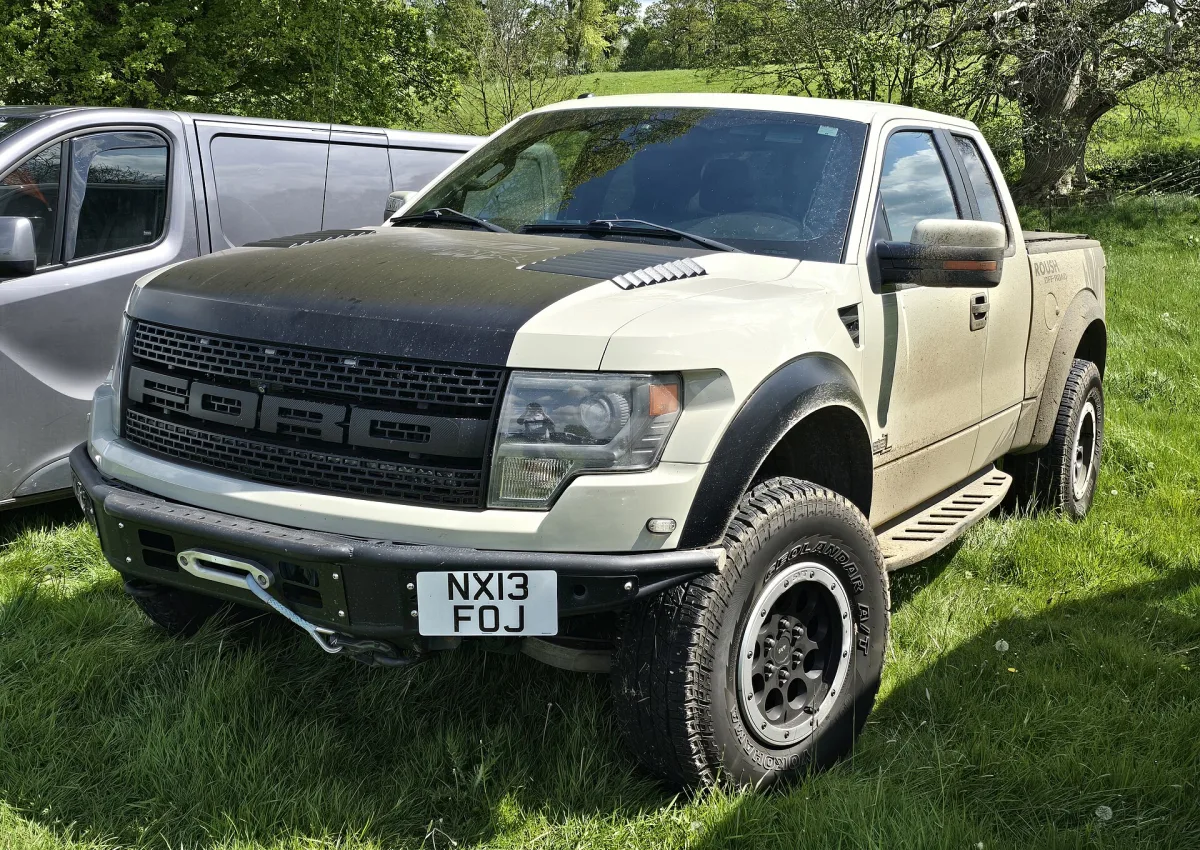
Photo: Calreyn88, CC BY-SA 4.0, via Wikimedia Commons
Match the vehicle to the ground under its tires
A rutted forest road, a steep rocky shelf, and a 70-mph desert wash all punish different weaknesses. Start with the route you will actually drive, including the distance to it, the passengers you carry, and whether the vehicle must commute Monday through Friday.
A narrow trail rewards compact dimensions and a short wheelbase. Deep sand favors flotation and momentum. Rock shelves demand clearance, low-range gearing, underbody protection, and careful throttle control. A full-size truck can be excellent off-road, but it cannot shrink around trees.
Mighty Car Mods demonstrated the appeal of the small, oddball alternative with a gasoline Skoda Yeti 4WD. The Australian-market Yeti used a turbocharged 1.8-liter engine, a dual-clutch transmission, Haldex all-wheel drive, hill-descent control, and removable rear seats.
That is a very different tool from a live-axle trail truck. The Yeti’s attraction is that it fits daily life, uses familiar Volkswagen Group mechanical hardware, and can cover poor roads without the bulk and fuel use of a traditional body-on-frame 4WD.
We would take that approach only if your off-road work means dirt roads, snow, light ruts, and occasional muddy tracks. For deep water, boulder ledges, or repeated recovery work, buy the purpose-built vehicle instead of asking a road-oriented crossover to become one.
Inspect the rare bargain before modifying it
The Yeti featured by Mighty Car Mods cost A$7,200 after being advertised at A$8,400, had about 50,000 kilometers, and came with a reported A$2,000 major service. Those are promising details, but rarity can turn a cheap purchase into a slow parts search.
The channel described it as the only gasoline four-wheel-drive Yeti then listed for sale in Australia. That scarcity creates charm, but it also means you need to establish where drivetrain, transmission, suspension, and body parts will come from before handing over a deposit.
Do not follow the sight-unseen buying method shown there. Put the car on a lift, scan it for fault codes, confirm the all-wheel-drive system engages, inspect the underbody, and demand invoices for the major service, especially on a turbocharged, dual-clutch-equipped vehicle.
Start with tires that suit the real route and a modest lift only if clearance is demonstrably limiting progress. A contributor to the Mighty Car Mods outing described similar Volkswagen-based hardware responding well to those two changes, without claiming it became a heavy-duty crawler.
For a rarer traditional 4WD, condition still beats novelty. Australian Mitsubishi Pajero Evolutions from 1997 through 1999 have been advertised from A$31,350 to A$100,388, while a new LandCruiser 70 Series WorkMate wagon starts at A$76,900 before on-road costs.[6]
That spread explains why collector-grade machines and ordinary working trucks must be evaluated differently. A Pajero Evolution may deserve preservation and specialist parts planning. A LandCruiser 70 is still a working platform, though its price no longer makes casual trail damage painless.[6]
Choose the high-speed desert truck by suspension, not horsepower
A washboard road tells you more about a desert truck than a parking-lot specification sheet. The Ford F-150 Raptor R and Ram 1500 TRX SRT both offer supercharged V8 power, long-travel Baja-style suspension, and enough mass to make mistakes costly.
The Raptor R uses a 720-horsepower supercharged 5.2-liter V8 and a 10-speed automatic, with a starting price around $114,000 in MotorTrend’s comparison. The 2027 TRX SRT makes 777 horsepower, but it weighs roughly 600 pounds more than the Ford.[1]
Ignore tiny acceleration claims when these trucks are this heavy and this expensive. Independent testing puts the 2027 TRX SRT at 3.6 seconds to 60 mph, while Raptor R results fall between 3.6 and 3.9 seconds, effectively a draw in real ownership.[1]
MotorTrend’s off-road comparison gave the Raptor R the win after rock crawling, a sandy climb, and a rough short course. It found the Ford more precise, softer over repeated impacts, and easier to place when the surface was constantly kicking the truck sideways.[1]
The TRX remains compelling if you want its supercharger whine, linear thrust, and big personality. But we would buy the Raptor R, because suspension control makes you less tired, keeps the truck straighter at speed, and reduces the temptation to drive beyond visibility.
Neither is a substitute for a normal trail rig. Their width, weight, tire cost, fuel use, and bodywork exposure make them poor choices for tight wooded trails, where a smaller SUV can reach camp with fewer pinstripes and less chance of needing a winch.
Decide whether electrification fits your remote trips
Scout’s upcoming Traveler SUV is aimed at buyers who want an electrified off-roader with old-school structural cues. Scout CEO Scott Keogh has pointed to body-on-frame construction, a solid rear axle, mechanical switches, and conventional door handles as core features.
The Traveler is expected in 2028, and Scout says the base battery-electric model will start below $60,000. Motor1 reports that heavily equipped versions should land in the high-$80,000 to low-$90,000 range, before extra accessories, taxes, registration, and financing costs.
The Harvester range-extended version is the interesting one for remote travel. Scout targets about 800 horsepower, 1,000 lb-ft of torque, 150 miles of electric driving, and roughly 500 miles total range from its battery-electric drive system and gasoline generator.
Those are targets from a company that has not yet put a production Scout in customer hands. Keep the reservation refundable if possible, and do not plan a build around published range, towing, charging, or service-access assumptions until production specifications and owner experience exist.
Scout also will not offer removable doors or roof panels on the Traveler or Terra pickup, according to Keogh. If open-air driving is central to why you want a 4WD, the Bronco and Wrangler remain the direct answer, not a future Scout workaround.
Keogh names the Toyota Land Cruiser, Ford Bronco, and Land Rover Defender as likely Traveler cross-shops. The Drive argues that Rivian will also compete for many buyers, despite Scout’s body-on-frame layout and solid rear axle separating it mechanically from Rivian’s independent-suspension models.
We would wait on Scout if you need a vehicle now. If you can wait until 2028, its range-extender layout could suit long-distance overlanding, but only after real production vehicles establish battery durability, trail range, dealer support, and parts availability.
Separate luxury-SUV comfort from trail durability
A comfortable three-row crossover can get a family to a trailhead, but it should not be bought on the assumption that luxury equipment equals off-road strength. The 2026 Lexus TX350 shows how an otherwise appealing SUV can be undermined by daily-use details.
The Drive praised the TX350’s roomy cabin, comfortable ride, and likely long-term resale strength, while criticizing its steering-wheel touch-sensor controls. That complaint concerns everyday usability, not a documented mechanical failure pattern specific to those controls.
RoadVitals lists owner complaints involving electrical and software concerns, including door-lock and overheating reports, but does not establish that the steering-wheel controls themselves are a widespread reliability or safety issue.[5] Check every function during a test drive instead of relying on a single criticism.
Genesis is taking another route with its 2027 G80 Hybrid sedan and GV80 Hybrid SUV. Their turbocharged 2.5-liter four-cylinder hybrid systems produce 347 horsepower and 391 lb-ft, and Genesis claims efficiency gains of 30 percent for the sedan and 24 percent for the SUV.
Those figures may make the GV80 Hybrid attractive for paved touring and mild-access roads, but it belongs in the luxury-SUV category, not alongside a Bronco, Land Cruiser, or Raptor R. Genesis has not published its exact battery capacity, EV-only range, or pricing.
Buy an amphibious machine only for water work
The 1996 Argo 8x8 Response XTV listed in Michigan for $12,500 is a different kind of off-road vehicle. Its 627cc Briggs & Stratton Vanguard engine is rated at 23 horsepower, and it includes a stern-mounted 6-hp Mercury outboard.
The Argo floats and uses its eight wheels to paddle through water, while tracks spread its weight on mud, snow, and soft ground. The outboard gives it extra propulsion once the tires no longer find enough purchase on a lakebed.
Motor1 reports that the sale includes a clean Michigan title, watercraft registration, new tires, battery, two winches, and fuel lines, plus a reportedly overhauled land engine. Confirm every claim, including hull sealing and outboard condition, before treating the asking price as a bargain.
Newer amphibious Argos show the price gap. Motor1 lists the 2026 Frontier 650 8x8 at $20,199, before taxes, prep, and registration, while Conquest Pro 800 XT and 950 XT models list at $55,699 and $55,899 respectively.
The inexpensive old machine carries its own costs. Argo chains can need replacement between 75 and 400 operating hours depending on terrain and use, and the transmission belt requires regular inspection for wear.[4] Tire-and-rim sealing is equally important because leaks can let water into the vehicle.
Long-term owner data for older Argos is thin, so do not invent certainty around reliability or annual repair bills. Buy one with access to a capable specialist, learn its chain and belt service procedures, and test flotation in controlled water before any remote crossing.
Fund the build without financing yesterday’s modifications
A modified 4WD often looks valuable because the seller has receipts for suspension, tires, bumpers, lights, a winch, and a roof tent. Lenders often value it as an old truck with nonstandard equipment, which can leave you covering a larger down payment.
Specialist lenders such as MotorFi advertise collector and exotic-vehicle loans with individual appraisals and terms from 48 to 180 months, including loans up to $5 million.[2] That is relevant to a rare Pajero Evolution, a restored classic, or a carefully documented custom build.
CarJourney likewise notes that heavily modified vehicles often need specialist finance and an appraisal to establish loan-to-value ratio.[3] Strong credit and a larger down payment can help, but longer loan terms can turn a trail toy into a very expensive monthly obligation.
We would finance the base vehicle only if necessary, then modify it with cash in stages. Begin with deferred maintenance, recovery gear, tires, and underbody protection. Add suspension height, lockers, auxiliary power, or expedition accessories only after you can identify the limitation each part solves.
Frequently Asked Questions
Which off-road and 4WD vehicles perform best on rough trails?
The best vehicle depends on the terrain. For high-speed desert runs, the Ford F-150 Raptor R outperforms the Ram 1500 TRX SRT in suspension control and comfort over rough terrain. For narrow, technical trails, smaller, lighter vehicles with short wheelbases and compact dimensions are preferable, while purpose-built trucks suit deep water, boulder ledges, and repeated recoveries.
How to choose the right 4WD vehicle for different off-road terrains?
Select a vehicle based on the specific trail conditions and your trip needs. Narrow trails favor compact vehicles with short wheelbases, deep sand requires good flotation and momentum, and rocky terrain demands clearance, low-range gearing, and underbody protection. Also consider passenger load, commuting needs, and whether the vehicle must handle water crossings or extreme recovery situations.
What are the pros and cons of the Ford F-150 Raptor R vs Ram 1500 TRX SRT?
The Ford F-150 Raptor R offers more controlled and compliant suspension, making it better for repeated high-speed rough-road use and reducing driver fatigue. The Ram 1500 TRX SRT has more horsepower and a distinctive supercharger sound but weighs about 600 pounds more, which affects handling on rough terrain. Both trucks have similar acceleration, but the Raptor R is easier to place on challenging surfaces.
When is it worth buying a rare crossover 4WD for off-roading?
Rare crossover 4WDs can be suitable if you carefully inspect them and confirm parts availability before purchase. They work best for lighter off-road conditions like dirt roads, snow, and muddy tracks but are not substitutes for purpose-built 4WDs in demanding environments. Treat them as projects requiring thorough evaluation rather than cheap alternatives to traditional off-road trucks.
What maintenance should I expect for amphibious off-road vehicles like the Argo?
Amphibious vehicles like the Argo require regular maintenance focused on chains, transmission belts, and tire/rim sealing to maintain water tightness and drivetrain reliability. Chains may need replacement every 75 to 400 hours depending on usage. Budgeting for these upkeep tasks from the start is essential if water crossings are a central part of your off-road activities.
How we researched this
This article was assembled from 2 video sources across 2 channels, 6 published articles, 8 cited references.
Nothing here is based on hands-on testing. Where a figure or finding appears, it belongs to the source cited beside it, and the writing says so rather than implying otherwise. Every source is listed below so you can check it.
Sources
Buying the RAREST 4WD and OFFROADING IT, Mighty Car Mods
Ford Raptor R vs. Ram TRX SRT: Which One Is the Better Flying Truck?, MotorTrend Channel
Here’s Why Scout Isn’t Doing Removable Doors and Roofs Yet, The Drive
This Eight-Wheeled Off-Roader Drives On Land And Water. And You Can Buy It, Motor1
2027 Genesis GV80 And G80 Hybrids Promise To Drive Like EVs But Without The Anxiety, CarScoops
2026 Lexus TX350 Pros and Cons Review: A Great SUV Disgraced by Awful Tech, The Drive
A Fully Loaded Scout Traveler SUV Won't Hit $100,000, Motor1
Scout CEO Says Rivian Isn’t a Direct Competitor. He’s Wrong, The Drive
2027 Ram 1500 TRX SRT First Test: More Power and Off-Road Punch Equals More Fun
Financing Options for Heavily Modified Vehicles | CarJourney
2026 Lexus Tx Problems, Complaints by Component · RoadVitals
Toyota LandCruiser 70 Series prices rise by $1300 in Australia
2027 Nissan Patrol pricing and specification - carsales.com.au
Watch Off-Road and 4WD Vehicle Enthusiasm and Reviews on Youtube
Also from the sources
Related Articles

Ford Bronco Review: Pros, Cons, and Special Features
The Fast Lane Car reviews the Ford Bronco, highlighting its pros like comfortable seats and responsive engine, and cons such as subpar sound system and choppy ride quality. Special features of the Everglades model and Ford's effective four-wheel drive system are also discussed.
2026 Honda CRV and CRV Trail Sport Review: Off-Road Style and Refined Hybrid Performance
Savagegeese reviews the 2026 Honda CRV and CRV Trail Sport, highlighting the Trail Sport's off-road aesthetics and the CRV's refined hybrid drivetrain. The midcycle update maintains the CRV's competitive edge in the midsize SUV market.

Volkswagen Golf GTI Edition 50 Review: Design, Power, Exclusivity
Explore the Volkswagen Golf GTI Edition 50 in this detailed review by The Fast Lane Car. Discover its unique design, powerful engine, luxurious interior, and why it's unfortunately not available in the United States.
2025 Lexus GX 550 Overt Trail Plus Review: Off-Road Adventure Await
Explore the 2025 Lexus GX 550 Overt Trail Plus in this review. Discover its off-road capabilities, interior design, and future adventures with the team.