
BMW 2027 Driver Assistance and Electric Tech Explained
Discover BMW 2027 driver assistance features and electric tech, including urban Level 2 systems and ownership considerations.
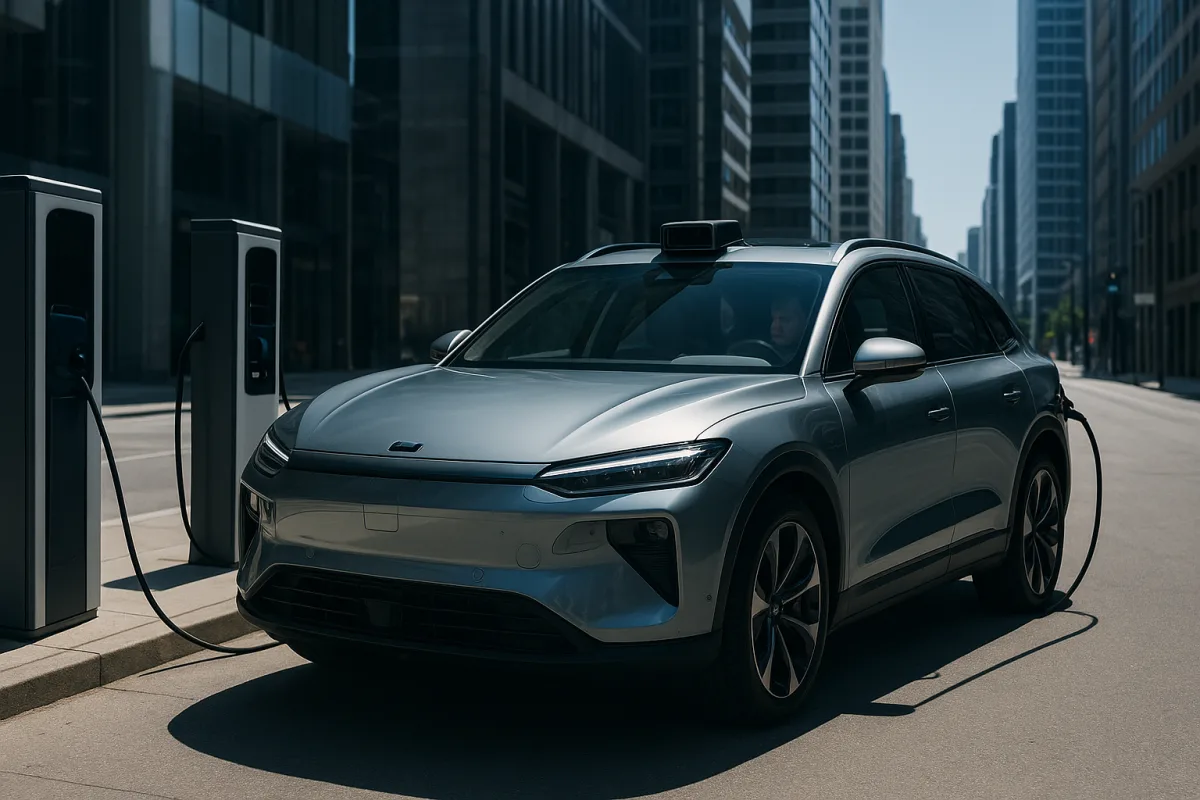
BMW’s 2027 Driver Assistance and Electric Tech: What It Means for Long-Term Owners
BMW’s 2027 deadline is about city streets, not hands-free driving
BMW says it expects approval in early 2027 for an expanded City Assistant that can follow a mapped route through turns, lane changes, roundabouts, merges, and some right-of-way situations. Germany will be first, followed gradually by other European markets. [2][7]
That is a meaningful expansion from the current use case. Highway lane centering and stop-and-go traffic ask a car to read a comparatively orderly environment, while a city center adds delivery vans, cyclists, construction zones, faded lane markings, and drivers who ignore the intended flow.
BMW calls the wider assistance approach Symbiotic Drive. Its pitch is that the system blends route guidance with steering, braking, and acceleration assistance, while allowing you to take over instantly through the wheel or brake pedal. [2][7]
The company’s language needs reading carefully. This remains SAE Level 2 automation, meaning you are legally and operationally the driver, even while the car handles a maneuver. [2][7]
BMW’s existing Highway and Commuting Assistant can permit hands-off driving on approved roads at speeds up to 90 mph, provided the driver remains attentive. The forthcoming city capability has not been described as hands-off driving. [2][3]
That makes the comparison with Tesla Full Self-Driving Supervised only partly useful. Both approaches put advanced steering and route-following into the driver’s hands, but neither makes the occupant a passenger who can stop monitoring traffic.
The important change is navigation-guided assistance
A conventional lane-centering system reacts to lane lines, radar targets, and the car immediately ahead. BMW’s planned urban system adds a destination and route, allowing it to anticipate that a turn, exit, roundabout, or merge is approaching. [2][7]
That sounds like a software detail, but it changes the car’s job. Instead of merely staying centered, the BMW will need to select lanes early, slow for an intersection, identify a gap, and complete a maneuver that fits the route.
Right-of-way decisions are the point to watch. BMW specifically includes them in the planned capability, yet unprotected turns, shared intersections, and four-way stops are exactly where city traffic stops behaving like a predictable engineering problem. [2]
Road conditions also vary block by block. Academic work on smart-city driving identifies infrastructure quality, interacting traffic systems, and changing urban conditions as persistent challenges for automated functions, not problems solved by adding one more camera. [1]
BMW says an in-cabin camera must detect an attentive driver for the functions to operate. Active BMW Maps route guidance is also required, so this is not a system you can engage casually while wandering around without a destination entered. [2]
The driver display will matter as much as the steering intervention. BMW plans to use Panoramic Vision to show traffic the vehicle recognizes and the action it intends to take, giving you a chance to spot a bad assumption before it becomes an awkward lane change.
BMW has not published independent city-driving intervention rates, disengagement figures, weather limitations, or comparative results against Tesla and Mercedes-Benz systems. The evidence on real-world urban performance is therefore thin until customer cars accumulate miles outside manufacturer test programs.
Approval, software updates, and the ownership catch
BMW completed the real-world traffic testing required for type approval under UNECE Regulation No. 171, the Driver Control Assistance Systems regulation that entered into force in September 2024. It expects final approval in early 2027. [2][7]
This explains why the rollout begins in Germany instead of appearing everywhere at once. A common European regulatory framework helps, but BMW still has not published country-by-country dates beyond Germany or a timetable for a U.S. launch. [2][7]
The hardware is reportedly standard on the new iX3 and iX4, plus all variants of the X5, 3 Series, and 7 Series. BMW says eligible owners will receive the functions by over-the-air update after approval, without a dealer sensor retrofit. [2]
That is good news if you keep cars for eight or 10 years. A factory-fitted camera, sensor, and computer suite is usually easier to live with than an aftermarket system added after purchase, especially when collision repairs and calibration are involved.
It also introduces a familiar modern-BMW ownership concern: the hardware may stay with the car, while the feature access can be time-limited. BMW’s Driving Assistance Professional package has been listed at $2,500 on some 2027 configurations, and some Highway and Commuting Assistant access is included for four years before a paid renewal. [4]
That $2,500 figure covers the assistance package on the cited configurations, not necessarily the later urban feature or every market. BMW has not announced separate pricing for the 2027 City Assistant functions, and package content varies by model and region. [2][4]
For a buyer planning to own the car after its warranty expires, ask the dealer to put three points in writing: which sensors are fitted, which functions are activated at delivery, and what subscriptions or renewals apply after the included term.
Also ask whether a used-car buyer receives the remaining entitlement. Software options can help resale if they transfer cleanly, but they can also confuse a buyer who assumes a visible sensor array means every function is active.
Electric investment is funding a broader BMW, not replacing every BMW overnight
BMW’s electric push is becoming harder to describe as a side program. The redesigned 2027 X5 lineup includes an all-electric iX5, and Kelley Blue Book reports an estimated range of up to 435 miles for that model. [6]
An estimated 435 miles would make the iX5 a very different ownership proposition from BMW’s earlier short-range electric efforts. For a driver with home charging, it could eliminate most gas-station stops while retaining the towing-height, family-hauling shape buyers expect from an X5.
BMW M is also preparing fully electric high-performance models for 2027 on the Neue Klasse platform. BMW says those cars will use four independent electric motors, one at each wheel, to manage traction and vehicle dynamics. [5]
Four motors promise unusually fine control of torque at each wheel, which may make an electric M car very quick and very stable. They also add components, cooling requirements, and potential specialist repair costs that are still unknown in long-term customer use.
At the same time, BMW continues to make room for twin-turbo 4.4-liter V8 performance models in its large-car range. The company is not forcing every X5 or 7 Series buyer into an EV while charging networks, apartment parking, and buyer preferences remain uneven.
This two-track strategy makes commercial sense in 2027. EVs help BMW meet tightening emissions expectations and compete in the growing electric luxury market, while V8 models preserve a high-margin performance option for buyers who value sound, range, and rapid refueling.
The ownership decision remains less romantic than the marketing. An EV deletes oil changes, spark plugs, exhaust parts, and much of the transmission complexity, but battery, inverter, charging, and collision repairs can be expensive and dependent on qualified service access.
A V8 M Performance model brings established refueling convenience and a familiar mechanical character, but it also brings more heat, more plumbing, more turbocharged hardware, heavier tire wear, and a higher fuel bill. Neither is automatically the cheaper long-term project.
What we would plan around
If your next BMW will be a commuter or family vehicle, we would prioritize the electric model only after confirming your charging arrangement. A claimed range figure is useful, but your winter speed, tire choice, towing, and charging habits decide whether the car fits your life. [6]
If you are drawn to the V8, buy it because you want the engine and will use it, not because you assume it is guaranteed to become collectible. Limited production can support values, but maintenance history, accident records, modifications, and the condition of expensive consumables will still decide its future.
For driver assistance, we would not pay a premium for promised 2027 urban autonomy alone. Buy the car if its seats, visibility, ride, drivetrain, and ownership costs already work for you, then view city assistance as an update that may improve daily traffic.
The best first step is checking the build specification, not the brochure headline. Confirm the camera and sensor hardware, determine whether the Driving Assistance Professional package is included, and calculate renewal costs over the years you expect to own the car. [2][4]
BMW is moving toward cars that can handle more of a route, receive new functions after delivery, and offer electric performance alongside V8 muscle. For you, the durable choice is still the one whose basic mechanical and charging needs make sense before the software starts making promises.
Frequently Asked Questions
What new driver assistance features will BMW offer in 2027?
BMW will introduce an expanded City Assistant that can follow a mapped route through urban maneuvers such as turns, lane changes, roundabouts, merges, and some right-of-way situations. This system, called Symbiotic Drive, blends route guidance with steering, braking, and acceleration assistance while requiring active driver attention.
How does BMW's 2027 urban driver assistance system work?
The system uses navigation-guided assistance to anticipate upcoming maneuvers like turns and lane changes based on the entered route. It selects lanes early, slows for intersections, identifies gaps, and completes maneuvers accordingly, while an in-cabin camera monitors driver attentiveness and the driver can take over instantly.
Which BMW 2027 models will have the new driver assistance tech?
Models such as the iX3, iX4, 3 Series, 7 Series, and X5 already have the required hardware for the new urban assistance system. Activation of the features will be available through software updates, subject to having the necessary hardware and software packages.
What level of automation does BMW's 2027 driver assistance provide?
BMW’s 2027 system remains SAE Level 2 automation, meaning the driver is legally and operationally responsible and must remain attentive at all times. The system assists with driving tasks but does not enable hands-free or fully autonomous driving.
How will BMW's 2027 driver assistance impact long-term ownership?
Owners should ensure their vehicle has the necessary hardware and budget for ongoing software-package renewals after any trial period to maintain the assistance functions. The system enhances urban driving convenience but requires continued driver engagement, so buyers should consider their willingness to remain attentive and manage updates over time.
How we researched this
This article was assembled from 7 published articles, 7 cited references.
Nothing here is based on hands-on testing. Where a figure or finding appears, it belongs to the source cited beside it, and the writing says so rather than implying otherwise. Every source is listed below so you can check it.
Sources
BMW Takes Aim At Tesla With New Driver Assistance Tech Coming In 2027, Motor1
The Harley-Davidson Sprint 440 Is Exactly What Harley Needs, Jalopnik
Fiery Jet Crash In Florida Kills 9 After Falling 20,000 Feet Per Minute Before Impact, Jalopnik
Here's What The Original Tesla Roadster Cost In 2008 Vs. What It's Worth Today, Jalopnik
Yamaha Refuses To Race In Qatar Despite MotoGP's Penalty Threats, Jalopnik
Driving A 43-Horsepower Geo Metro Convertible From New York To Los Angeles Looks Really Miserable, Jalopnik
BMW gets green light for 'hands-off' highway driving in major first - here's how it works
BMW M Ushers in a New Era of Electric High-Performance Models | IAA MOBILITY
BMW Reveals All-New 2027 X5 and All-Electric iX5 SUVs - Kelley Blue Book
Related Articles

2027 Electric SUVs: Volvo EX60, Porsche Cayenne & EV Tech
Explore 2027 electric SUVs like the Volvo EX60 and Porsche Cayenne, plus key EV tech advances and ownership insights.
Ford 2027 Bronco Filson and Fathom EV
Explore Ford's 2027 Bronco Filson and Fathom EV, including specs, pricing, and innovations in EV platform and ownership experience.
2027 Range Rover Electric Review: Performance and Ownership
Explore the 2027 Range Rover Electric review covering performance, range, price, off-road ability, and ownership insights.

Ultimate John Deere 790 Tractor Maintenance Guide
Saabkyle04 showcases maintenance tips for a 2004 John Deere 790 tractor, from oil changes to custom roof fabrication. Expertly detailed and engaging content for tractor enthusiasts.