
Bufori Bespoke Luxury Cars
Explore Bufori bespoke luxury cars, their coachbuilt design, ownership tips, maintenance challenges, and how to commission your unique Bufori model.
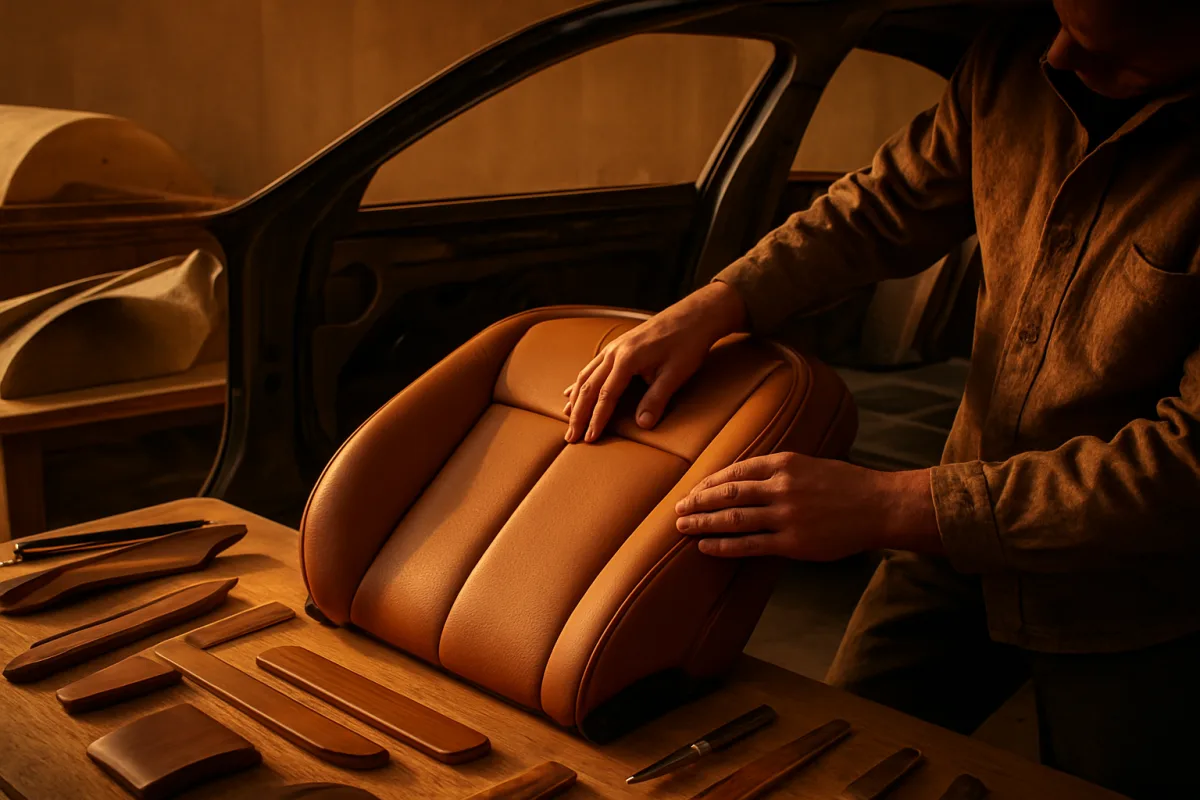
Start by deciding what sort of exclusivity you actually want
“Coachbuilt” is often used loosely. In the traditional sense, it means a small maker builds a distinctive body and interior around a chassis or mechanical package, rather than merely fitting special leather and wheels to a production car.
Malaysian manufacturer Bufori is closer to that old-school definition than most modern luxury brands. Hagerty’s factory visit shows a maker producing composite bodies, moulds, interior foam and selected trim components in-house, rather than operating a conventional high-volume assembly line.
That does not automatically make every Bufori the right kind of rare car for every buyer. The practical question is whether you want a classic-looking touring car, an ultra-luxury sedan, or a modern high-performance coupe with a small-maker ownership burden.
The Hagerty feature identifies four relevant Bufori models. The retro-styled Bufori Mk II suits a buyer who wants 1920s and 1930s-inspired roadster styling. No current public price was found, so regard it as quotation-only rather than assuming an old advertised figure still applies.
The Bufori La Joya coupe suits somebody after a formal, classic-inspired two-door rather than an overtly modern sports car. Again, no verified 2026 price is publicly available, and buyers should ask whether the quote includes the exact trim, drivetrain specification and destination-market equipment.
Bufori’s Geneva luxury sedan suits an owner who wants rear-seat luxury and coachbuilt visual presence, not necessarily a car designed around lap times. Hagerty also showed a Geneva-based two-door prototype, but described homologation difficulties with its proposed gullwing doors.
That prototype is a useful warning. A low-volume builder can create remarkable shapes, but a design shown at the factory is not automatically a road-legal, deliverable production specification. Ask what has been certified for your country, in writing.
The Bufori CS8 is the contemporary performance choice. CarSifu reported its August 2025 launch price at RM2,188,888, roughly $500,000 at the time, before any unreported bespoke content, export transport, insurance, local taxes, registration or dealer support. [1]
Get the quotation right before choosing colours
The pleasant part of commissioning a coachbuilt car is usually the colour and trim session. Hagerty’s visit showed Bufori producing carbon-Kevlar sample panels for customers, which makes the selection process more tangible than choosing tiny paint chips from a corporate brochure.
Do not let that enjoyable stage obscure the commercial basics. There is no current detailed public Bufori price list for 2026, nor published figures showing what individual paint, leather, carbon-fibre or interior changes cost. Request a line-by-line quotation.
The quote should distinguish the base car from every selected option, including body finish, cabin materials, bespoke luggage, entertainment equipment, exterior brightwork and any engineering changes. “Fully customised” is not a useful contract description.
Ask whether alterations are cosmetic or structural. A different leather colour is one thing. Relocating switches, changing seats, fitting a non-standard wheel, modifying lighting or requesting unusual doors can affect certification, service access and delivery time.
Hagerty’s factory report shows why bespoke work takes time. Bufori makes moulds in-house and describes manufacturing its own seat foam, lighting components and composite panels. That capability is valuable, but it also means changes may involve development work rather than a parts-bin substitution.
Obtain a final specification pack with photographs or approved samples attached. It should state left- or right-hand drive, engine and transmission configuration, tyres, wheel sizes, braking hardware, infotainment, air-conditioning specification and the exact finish used on exposed composite panels.
This is not paperwork for paperwork’s sake. Ten years later, it is the only reliable starting point when an insurer, repairer or future buyer needs to know whether a part was standard, optional, modified after delivery or unique to your car.
Understand the body before assuming it will age like steel
Bufori’s main engineering distinction is its carbon-fibre and Kevlar composite construction. Hagerty’s factory feature shows the company laying dry fabric into moulds, vacuum-infusing resin, then curing parts to form body panels and, on some models, larger structural sections.
The factory representative told Hagerty that the material combination addresses a real compromise. Carbon fibre is strong and light but can fail in a brittle fashion, while Kevlar offers greater impact resistance. Those are useful properties, but composite repair is not ordinary bodywork.
The company also described putting hinges and other highly loaded fixtures onto internal steel structures rather than directly through composite bodywork. The stated reason is to avoid cosmetic cracking around attachment points after years of use.
That is the kind of detail worth checking during an inspection. Look around hinges, bonnet and boot shut-lines, door latches, suspension mounting areas and bumper joints for hairline cracks, stress marks, mismatched weave or paint distortion.
Do not confuse every surface crack with structural failure. Hagerty’s feature specifically distinguishes cosmetic cracking around carbon-fibre attachment points from structural problems. But only a composite specialist can establish whether a crack is superficial, in the finish, or extends into the laminate.
Ask Bufori who is authorised to repair a damaged carbon-Kevlar panel in your region. You need names, not reassurance. A conventional bodyshop may be excellent with aluminium or steel and still be unsuitable for scarf repairs, resin work and correct refinishing.
The CS8’s reported 1,450kg mass and 810hp output show why lightweight composites matter to its character. [1] Still, a light body does not guarantee low repair costs, particularly if a minor parking impact damages moulded trim, bespoke lighting or non-stock composite panels.
Plan servicing around parts supply, not just mileage
With a mainstream luxury car, an annual service interval is only part of the ownership calculation. With a coachbuilt car, the more important question is whether the dealer or factory can supply filters, electronic modules, brake components and body hardware when required.
Hagerty’s factory report says Bufori builds its own subframes, crossmembers and some suspension components, while buying in shock absorbers. It also reports that the CS8 braking system was made specifically for the car by Brembo USA.
That mixture of proprietary and bought-in hardware is normal for low-volume cars, but it changes your preparation. Ask for a parts catalogue identifying every consumable by manufacturer part number, and which items require direct ordering from Malaysia.
Before delivery, establish the service schedule for your exact engine, gearbox and brakes. It should include time-based fluid changes, not merely mileage intervals. A low-mileage collector car can still need brake-fluid, coolant, battery and tyre attention.
Ask whether the selling price includes diagnostic access, software updates and technical support for an independent specialist. If the answer is vague, budget for transporting the car to the supplying dealer or factory when electrical or calibration problems arise.
There is no published Bufori-specific maintenance-cost record that supports a precise annual figure. General luxury-vehicle estimates put routine maintenance at roughly $1,500 to $3,000 annually, with unexpected repairs running from $2,000 to $10,000, but those are comparison figures, not Bufori data. [3]
The sensible response is a reserve fund rather than a fictional ownership spreadsheet. For a bespoke car, the expensive event may not be an engine service, but a damaged lamp lens, interior switchgear fault or a part that needs remanufacturing.
Insure and store it as a rare object, not merely an expensive car
Insurance is likely to be harder than arranging finance. A normal insurer may struggle to value a low-production Malaysian coachbuilt car with individually specified trim, especially where there are few comparable sales and no regular auction record.
Use an agreed-value policy if available, supported by the purchase invoice, specification pack, professional photographs and an independent valuation. Update it after material changes, major repairs or a sharp change in the cost of replacing the car.
General ownership research cited in the briefing puts average full-coverage insurance for ordinary mid-range cars at $1,820 annually. [2] That is not a sensible number to use for a Bufori, where agreed value, specialist recovery and restricted repair networks can dominate the premium.
Climate-controlled storage is less about keeping the odometer low than preserving materials and avoiding preventable deterioration. The research brief cites premium storage at roughly $400 to $600 per month, though actual cost will depend heavily on location and services provided.
For a carbon-Kevlar-bodied car, inspect paint, seals, bonding areas and exposed composite surfaces annually. Keep battery conditioning and tyre-age records as well. A lightly used luxury car on old tyres and an unknown battery is not preserved, merely parked.
Do not buy on the assumption that rarity creates resale value
A famous limited-production model can produce headline auction results, but that does not turn every rare vehicle into a safe store of money. Hagerty recently reported a one-owner 1999 Acura NSX Zanardi Edition selling for $635,500, helped by its documented history, condition and only 51-car production.
That result is not a useful valuation proxy for Bufori. The Acura has a long enthusiast base, well-known mechanical reputation, auction history and a clear special-edition story. Bufori’s market is much smaller, and no verified global resale dataset currently exists.
Broader collector demand is mixed rather than uniformly rising. Black Book’s second-quarter 2026 market update found modest gains in muscle and pony cars while American classics and sports cars declined, a reminder that the market rewards particular categories unevenly. [5]
Similarly, strong mainstream retention figures do not transfer automatically. NextGen Auto reports approximately 72 percent five-year retention for the Porsche 911, but that reflects a deep market, predictable servicing and broad international demand that a niche coachbuilder cannot assume. [4]
Buy the Mk II, La Joya, Geneva or CS8 because its design and construction justify the cost to you. Keep every invoice, factory email, option record, service document and repair photograph, because provenance is your best defence against an uncertain future market.
Check import and registration before the car leaves Malaysia
No direct 2026 prohibition specifically targeting Malaysian-built Bufori cars was identified in the research brief. That does not mean importation is simple, because tax treatment, safety rules, lighting standards, emissions requirements and registration processes vary by destination.
The United States has broader tariff measures affecting Malaysian imports, while Malaysia itself uses import licensing on certain motor-vehicle tariff lines. These are indirect trade factors, not Bufori-specific restrictions, but they can alter cost and delivery arrangements.
Ask the seller who is legally responsible for export documentation, shipping insurance, customs brokerage, conformity work and local registration. A headline factory price is not the landed price, and an exotic car delayed at a port is expensive to store and difficult to inspect.
Finally, do not assume a car can be registered merely because it has been sold internationally. Confirm the exact chassis, lighting, seat-belt, emissions and steering configuration with your local registration authority or a specialist importer before the deposit becomes non-refundable.
Frequently Asked Questions
What should I know before buying a Bufori bespoke luxury car?
Treat a Bufori as a bespoke commission rather than a stock vehicle. Obtain a written build specification, delivery estimate, parts availability, and warranty terms before paying a deposit. Budget for specialist insurance, climate-controlled storage, and a contingency fund for bespoke repairs, as routine luxury-car cost estimates often underestimate the time and labor involved in maintaining one-off parts.
How does Bufori build its coachbuilt luxury cars?
Bufori produces carbon-fibre and Kevlar composite bodies using in-house moulds and vacuum-infused resin curing processes. The company manufactures seat foam, lighting components, and composite panels internally rather than relying on conventional high-volume assembly lines. Hinges and heavily loaded fixtures are attached to internal steel structures to avoid cosmetic cracking on composite surfaces.
What are the maintenance challenges of owning a Bufori bespoke car?
Maintenance can be costly and complex due to bespoke parts and composite bodywork. Repairs require specialist knowledge of carbon-fibre and Kevlar composites, and only authorized repairers should work on these materials. Owners should expect higher insurance premiums, specialist servicing, and potential delays in obtaining or fabricating unique components.
How to get an accurate quote for a Bufori bespoke car?
Request a line-by-line quotation that clearly separates the base car price from every selected option, including body finish, cabin materials, bespoke luggage, entertainment equipment, and any engineering changes. Ensure the quote specifies whether alterations are cosmetic or structural, as some modifications can affect certification and delivery time. Obtain a final specification pack with photographs or approved samples to document the exact configuration.
What makes Bufori's composite body unique in bespoke cars?
Bufori uses a hybrid carbon-fibre and Kevlar composite construction that balances strength, lightness, and impact resistance. Carbon fibre offers high tensile strength and UV resistance, while Kevlar adds greater impact durability. This combination allows for lighter, stronger bodies compared to traditional materials but requires specialized repair techniques and careful inspection for cosmetic versus structural cracks.
How we researched this
This article was assembled from 1 video source, 1 published article, 5 cited references.
Nothing here is based on hands-on testing. Where a figure or finding appears, it belongs to the source cited beside it, and the writing says so rather than implying otherwise. Every source is listed below so you can check it.
Sources
Bufori: One of the World’s Most Exclusive Coachbuilders | Capturing Car Culture — Hagerty
One-Owner NSX Zanardi Edition Sets a New Bar at $635,500 — Hagerty
True Cost of Car Ownership 2026: Complete Annual Cost Breakdown | CarCostBreakdown
Motorcoach Cost of Ownership (2026) — Real Annual Costs & Budget Guide | MotorcoachIndex
Top 10 Resale Value Cars 2026 | Depreciation Kings | NextGen Auto
Watch Rare and Exclusive Coachbuilt and Bespoke Luxury Cars on Youtube
Related Articles
Used Luxury and Sports Cars Reliability and Ownership Guide
Explore reliability, ownership experiences, and costs of used luxury and sports cars under $40K to make informed buying decisions.
Rare Exotic Car Ownership: Stories, Costs, and Restorations
Explore rare exotic car ownership stories, restoration costs, and maintenance insights for models like Ferrari, Porsche, and Toyota Supra.

Mercedes-AMG CLE 646 Ownership
Explore Mercedes-AMG CLE 646 ownership, including performance, maintenance, costs, and the driving experience of this exclusive V8 coupe.
High-Performance Exotic Car Ownership
Explore high-performance exotic car ownership costs, maintenance, modifications, and financing to make informed decisions about your dream vehicle.