
Retro and Classic Car Revivals with Modern Twists Explained
Explore retro and classic car revivals blending vintage style with modern tech, EVs, and collector editions for daily use or enthusiasts.
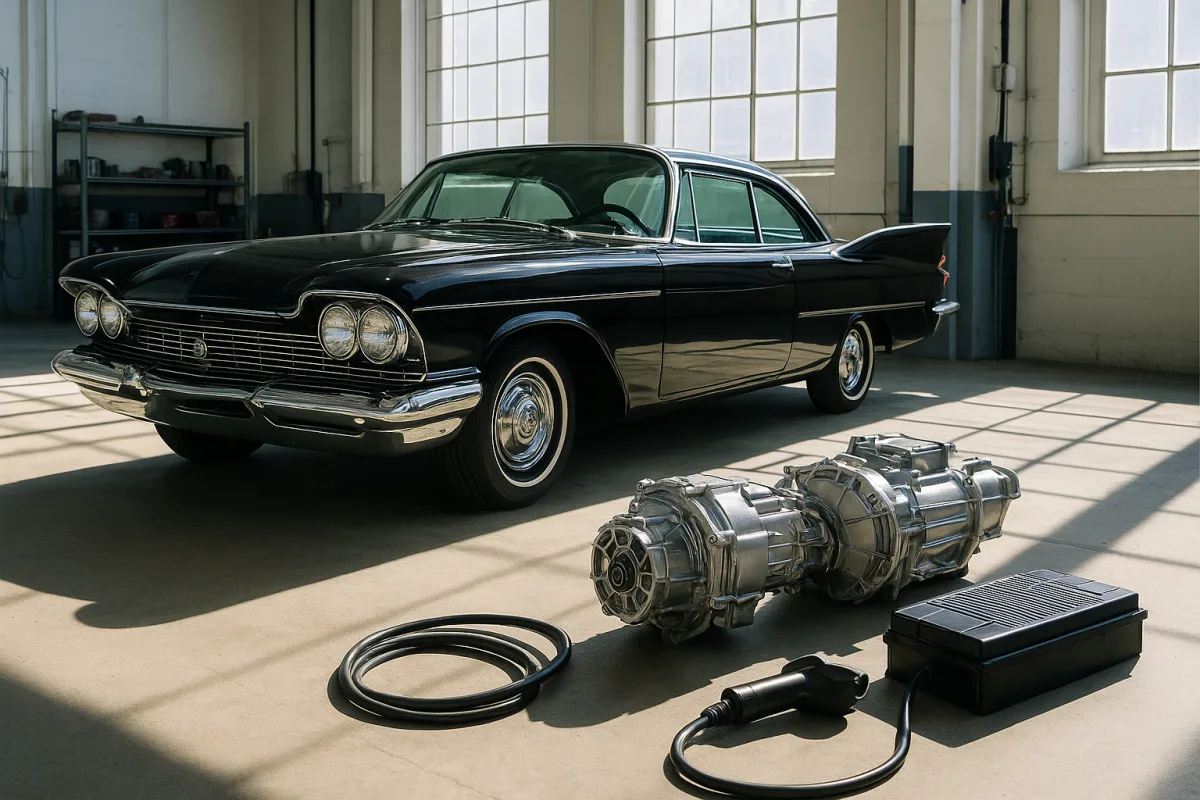
The quick list
- Best overall: Nissan Pixo, for urban buyers who want a usable, small electric car with cheerful retro design rather than a weekend ornament.
- Best driver’s-car collectible: Mazda MX-5 FSW Ver.2, for the committed Mazda enthusiast who values rarity, a manual-roadster formula and an unusually vivid factory finish.
- Best fantasy garage car: Renault 8 Gordini Concept, for readers interested in where electric retro performance design could go, not in a car they can buy.
- Best old-school cruiser: 1977 Ford Thunderbird, for the buyer who wants a genuine period coupe and accepts that classic ownership is maintenance-led, not mileage-led.
Retro cars are no longer one market. Some are practical EVs wearing familiar shapes, some are current cars given a heritage-themed special edition, and some remain actual classics, complete with old fuel systems, old wiring and old-car bills.
The useful question is not which one is prettiest. It is whether you need daily transport, a weekend car, a collectible or simply a design idea worth watching. These four examples sit at very different points on that spectrum.
Comparison table
| Option | What it is | Layout and size | Power and claimed range | Price position | Main trade-off |
|---|---|---|---|---|---|
| Nissan Pixo | Renault Twingo-based electric city hatch, due early 2027 | Front-drive, five-door city car, around two inches shorter than a Mini Cooper | 80 hp, 27.5-kWh LFP battery, 161-mile WLTP range | Price unannounced. Related Renault Twingo starts below €20,000 before incentives | Slow 50-kW DC charging and modest real-world range |
| Mazda MX-5 FSW Ver.2 | Six-car Japanese-market yellow MX-5 special | Front-engine, rear-drive two-seat roadster | Standard ND MX-5 mechanical package | Roughly $9,400 equivalent added cost, plus the donor car. Mazda has not announced an equivalent US offer | You pay heavily for colour, scarcity and an event, not more speed |
| Renault 8 Gordini Concept | One-off electric tribute to the 1960s Renault 8 Gordini | Rear-drive, two-seat coupe, 4.12m long, 1.88m wide, 1.27m tall | 270-hp rear electric motor | Not for sale, no production price | No route to ownership, warranty, servicing or finance |
| 1977 Ford Thunderbird | Genuine period American personal-luxury coupe | Front-engine, rear-drive, six-seat two-door, 215.5in long, 4,343lb | 173-hp 400-cu-in V8 in Car and Driver’s test car | $5,063 base, $7,946 as tested when new | Fuel use, age-related repair work and vast physical size |
Nissan Pixo: the one that makes the most everyday sense
Jalopnik describes the new Nissan Pixo as Nissan’s Twingo-based smallest European model, due to begin deliveries in early 2027. It is a rebadge, certainly, but not a cynical one: Nissan has changed the nose, lights, trim and cabin details enough to give it its own character.
The Pixo’s 27.5-kWh lithium-iron-phosphate battery and 80-hp front motor are modest by modern EV standards. That is deliberate. This is a city car, not a small hot hatch with a retro badge attached.
Nissan quotes 161 miles on the European WLTP cycle. Treat that as an optimistic planning number, not a guaranteed distance between charges, particularly in cold weather or sustained motorway use. The 50-kW peak DC charging rate is also unremarkable, although the small pack should go from 15 to 80 percent in under 30 minutes.
Its practical advantage is packaging. Jalopnik reports rear seats that slide individually, fold individually and sit above underfloor luggage storage. That sort of flexibility matters more at 60,000 miles than a clever pixel headlight signature, because it determines whether a tiny car remains useful after the novelty has worn off.
Pricing has not been announced. The only credible guide supplied is the related Renault Twingo’s sub-€20,000 starting price before incentives. Do not treat that as a promised Pixo price, and remember it excludes finance, insurance, charging installation and the usual country-specific registration costs.
The likely ownership case is favourable compared with a classic. EV maintenance averages about $0.061 per mile in one 2026 comparison, against $0.101 per mile for gasoline vehicles, largely because there are no oil changes, spark plugs or exhaust systems. [2] Tyres, suspension joints, brakes, 12-volt batteries and body repairs still remain.
Mazda MX-5 FSW Ver.2: a modern classic with a collector premium
Car and Driver’s Japanese-market Mazda MX-5 FSW Ver.2 is a different kind of revival. It does not revive a discontinued model, but it reconnects the current ND-generation roadster with the Sunburst Yellow NA Miata and Competition Yellow NC Miata.
Only six will be built, finished in Sunflower Yellow paint code A6Y with black aerodynamic accessories. Buyers must win a lottery, and the roughly $9,400 equivalent premium includes a two-day Hiroshima visit covering Mazda headquarters, museum and the Mazda-linked facility applying the paint.
That price is an added cost, not an all-in car price. It does not include the underlying MX-5, local taxes, insurance, fuel, servicing or, for anyone outside Japan, import and compliance costs. It is also not a US-market Mazda programme.
For the right buyer, that is less irrational than it first appears. The ND MX-5 is already an established enthusiast car with a simple front-engine, rear-drive, two-seat layout. The FSW Ver.2 does not promise extra power, track hardware or a longer warranty. It sells provenance, appearance and six-car scarcity.
That makes it the strongest purchase here for someone who wants a car to drive rather than preserve, but who also understands that yellow paint alone should not be treated as an investment thesis. Demand for retro-influenced vehicles is healthy, while restomods and limited builds can command premiums, but model-specific resale data remains thin. [6]
Renault 8 Gordini Concept: the best design, and the least buyable option
The Renault 8 Gordini Concept is the clearest example of a modern twist on a classic. Autocar and CarScoops report that it borrows the original 1960s Gordini’s blue-and-white livery, round lamps, squared arches and rear-driven layout, but turns the four-door saloon into a low, wide two-seat electric coupe.
It is 4.12 metres long, 1.88 metres wide and only 1.27 metres tall. Renault gives it a 270-hp rear-mounted electric motor, 19-inch front wheels and 20-inch rear wheels. Those numbers make it substantially more dramatic than the original 95-hp Renault 8 Gordini, but not necessarily more useful.
There is no battery capacity, range, charging speed, kerb weight, boot capacity, price or service schedule. That is not an omission to fill with guesses. Renault has stated that the car is a one-off, intended ultimately for its Flins museum, rather than a product heading to dealers.
The original deserves its place in the story. Autocar notes that the 1964 Renault 8 Gordini became a rally favourite, and the later 1.3-litre, five-speed version topped 100 mph. Its appeal was not luxury, it was accessible mechanical fun from an ordinary family-car starting point.
A production electric restomod or low-volume recreation would face more than demand risk. EU type approval requires safety, electrical and electromagnetic-compatibility compliance, while national retrofit rules remain fragmented. France has permitted electric retrofits since April 2020, but the retrofitter carries homologation responsibility. [1][5]
That is why a 270-hp concept can be simple to reveal and difficult to sell. A small manufacturer must fund engineering validation, documentation, repair support and parts supply before it can responsibly quote a customer a delivery date.
1977 Ford Thunderbird: the real classic, with real-classic obligations
Car and Driver’s archive test of the 1977 Ford Thunderbird is useful because it shows what a period revival-free classic actually involves. Ford repositioned it as a cheaper, slimmer personal-luxury coupe, cutting $2,727 from the prior model’s price and reducing length by 10.3 inches.
“Slimmer” is relative. The 1977 Thunderbird measured 215.5 inches long, 78.5 inches wide and weighed 4,343lb. Its tested 400-cu-in V8 made 173 hp and 326 lb-ft, drove through a three-speed automatic, and returned a 17.9-second quarter-mile in Car and Driver testing.
The base price was $5,063, or $7,946 as tested, in 1976 money. Neither number tells a modern buyer what one costs now, but they do explain Ford’s original positioning: this was an affordable-looking luxury coupe, not an economy car.
Its ownership arithmetic is entirely different from the Pixo’s. A carburetted V8, cooling system, vacuum-operated accessories, rubber hoses, weather seals and 1970s electrical connections all need inspection based on condition, not a dashboard reminder. A pre-purchase inspection matters more than odometer mileage.
Classic-car maintenance is estimated at roughly $2,700 to $4,900 over five years in the supplied research, though the range is broad because storage, driving distance and deferred work matter enormously. [3] A neglected Thunderbird can consume that figure in one cooling-system, brake or fuel-system recommissioning job.
Insurance can look cheaper if the car is on an agreed-value, limited-mileage classic policy. That only works if you genuinely meet the insurer’s garaging, usage and second-car requirements. An electric restomod may be harder to insure, not easier, because custom battery, software and body repairs raise uncertainty.
The ownership costs the spec sheet leaves out
The Pixo should be the cheapest to run mechanically, provided Nissan and Renault establish sensible parts availability. It is a volume-platform city car, and its LFP chemistry should suit frequent charging, but battery warranty terms, software support and repair-network coverage matter more than brochure nostalgia.
The MX-5 is the least technically risky enthusiast choice because it remains a conventional series-production car. Its special paint may be expensive to repair, however, and an owner should obtain insurer confirmation of agreed value before assuming the FSW premium is fully covered.
The Renault concept has no ownership case because it cannot be purchased. Even if Renault changed its position, finance for a rare, low-volume electric restomod would likely require a large deposit, an appraisal, vendor documentation and a specialist lender rather than an ordinary personal-contract arrangement.
The Thunderbird is mechanically understandable and potentially repairable by a broad range of classic specialists. That is different from being cheap. Fuel, storage, corrosion prevention and gradual restoration work are the recurring costs, especially if the car has spent years as a lightly used showpiece.
Who each option suits
Nissan Pixo: the city-based buyer who wants a compact EV with character, needs flexible rear seating and can charge regularly at home or work. It is the sensible choice, assuming its final price remains close to the Twingo’s accessible positioning.
Mazda MX-5 FSW Ver.2: the established MX-5 enthusiast who wants an ultra-limited Japanese-market collectible but still intends to use it as a roadster. It suits someone who can absorb the premium without pretending it buys extra engineering.
Renault 8 Gordini Concept: the designer, collector or Renault-history enthusiast who wants to understand the direction of retro EV performance. It suits no retail buyer today, because Renault has supplied neither a car to order nor a price to pay.
1977 Ford Thunderbird: the classic-car owner with space, patience and a realistic repair reserve. It suits relaxed touring and period charm, not tight parking, economical commuting or anyone who needs modern reliability without undertaking modern-car payments.
Frequently Asked Questions
What are the best retro and classic car revivals with modern features?
The Nissan Pixo is the best overall choice for an everyday-use retro-shaped electric vehicle, offering practical packaging and modest performance suitable for city driving. The Mazda MX-5 FSW Ver.2 is a limited-run special edition that appeals to collectors valuing rarity and factory-backed heritage, while the Renault 8 Gordini Concept represents a high-performance electric retro design but remains a one-off with no production plans.
How do electric retro cars compare to traditional classic cars?
Electric retro cars like the Nissan Pixo benefit from simpler electric drivetrains, which reduce routine maintenance compared to classic cars with combustion engines. However, electric restomods face challenges such as specialist repairs, insurance complexity, and regulatory homologation, making them less straightforward to own than production EVs or traditional classics.
What are the ownership costs of modernized classic cars?
Owning a modernized classic like the Mazda MX-5 FSW Ver.2 involves paying a premium for rarity and special finishes rather than improved performance. While electric restomods can lower routine drivetrain maintenance costs compared to gasoline classics, they often incur higher specialist repair and insurance expenses. Classic cars themselves can have significant fuel and age-related repair costs that may outweigh their initial purchase price advantage.
Are limited edition classic car reissues worth the premium?
Limited editions such as the Mazda MX-5 FSW Ver.2 command a substantial surcharge—around $9,400 above the base car—primarily for exclusive paint, scarcity, and associated experiences rather than enhanced performance. Whether this premium is worthwhile depends on the buyer's interest in collectibility and factory-backed heritage rather than driving improvements.
What challenges come with owning an electric restomod classic car?
Electric restomod classics face regulatory hurdles including complex homologation and safety approvals, especially in Europe where rules vary by country. They also require specialist maintenance and repairs, which can be costlier and less accessible than for production EVs. Insurance premiums tend to be higher due to repair complexity and parts scarcity, making ownership more complicated than with either traditional classics or standard electric vehicles.
How we researched this
This article was assembled from 8 published articles, 6 cited references.
Nothing here is based on hands-on testing. Where a figure or finding appears, it belongs to the source cited beside it, and the writing says so rather than implying otherwise. Every source is listed below so you can check it.
Sources
The Gordini story: How legendary fast Renaults paved way for Alpine — Autocar
Japanese Mazda Fans Are Getting a Bright-Yellow Miata Roadster — Car and Driver
Renault 8 Gordini Is Back As A Bold Electric Coupe With Rally Heritage — CarScoops
The Renault 8 Gordini Is Back As A Gorgeous Rear-Wheel Drive EV — InsideEVs
Renault Made A Rear-Wheel-Drive Coupe You Can’t Buy — Motor1
New Nissan Pixo Is Almost As Cute As The Renault Twingo It's Based On — Jalopnik
Gordini returns: Renault revives 8 as futuristic electric sports car — Autocar
Archive Road Test: 1977 Ford Thunderbird Slims Down — Car and Driver
EV Maintenance Costs vs Gas Cars: Complete 2026 Comparison | CarCostBreakdown
Are Electric Cars Cheaper to Maintain? 2026 Cost Breakdown | AutoEdgeView
Best EVs 2026: putting this year's top electric cars to the test
Related Articles
Classic Car Restomods: Unique Restored and Modified Classics
Explore classic car restomods, comparing restored originals and modernized classics with insights on ownership, maintenance, and usability.
Rebuilding and Restoring Performance Cars
Explore rebuilding and restoring performance cars with insights on Audi RS6, BMW E61, and Holden Monaro projects, costs, and practical advice.
New and Special Edition BMW Models and Restorations Overview
Explore new and special edition BMW models plus restoration insights for collectors and enthusiasts in this detailed overview.

Mercedes-AMG CLE 646 Ownership
Explore Mercedes-AMG CLE 646 ownership, including performance, maintenance, costs, and the driving experience of this exclusive V8 coupe.