
Rare Classic Car Restoration
Learn how to buy, inspect, and restore rare classic cars while preserving originality and controlling costs in your restoration project.
Rare-Classic Restoration: Buy the Right Project, Control the Scope, and Build Something You Can Keep
Decide whether you are restoring a car or building your own version
Before buying parts, decide what must remain original and what you are willing to change. A factory-correct restoration, a sympathetic driver upgrade, and a full custom build need different cars, different budgets, and different expectations when you eventually sell.
The ultra-rare 1990 BMW 850CSi restored by M539 Restorations is the case for restraint. It is a Santorini Blue E31, one of only five examples made in that color, not one of two as sometimes reported.[1] With that kind of scarcity, its original V12, rear-wheel-steering system, trim, and matching paint are the car.
A 1974 Ford Capri can support a very different decision. JH Restorations turned a sound Canadian-market Capri into a Pro Touring-style build with widened bodywork, bespoke suspension, a Ford Racing 347-cubic-inch V8, Tremec TKO five-speed, coilovers, a four-link rear suspension, and modern brakes.
Both approaches can be valid. We would preserve the 850CSi and make its systems work as BMW intended, while treating a common six-cylinder Capri with rust already present as a candidate for a carefully engineered custom build.
Do not expect the same resale logic from both. The collector market has split, with exceptional original cars and fully documented high-end builds retaining demand while broadly modified, driver-quality cars can take longer to sell and attract narrower audiences.[10]
Inspect completeness before admiring the paint
A dirty but complete project is usually preferable to a clean shell assembled from somebody else’s leftovers. Hagerty’s $150 Kendee Dandy pocket-bike purchase illustrates the principle on a small scale: the fairing, engine, and unusual cast pieces were present, even though tires, fuel system, and a broken triple clamp still needed attention.
Scale that lesson up to a car. Look for glass, exterior trim, gauges, seat hardware, bumper brackets, original wheels, emissions labels, engine-control components, and the small model-specific pieces sellers dismiss as “easy to find.” They often are not.
The 850CSi shows why you inspect systems rather than just body panels. Its restoration required attention to oil leaks, failed suspension, rough running, a damaged differential, leaking transmission, worn braking components, and BMW’s AHK hydraulic rear-wheel-steering system.
The AHK system was particularly threatening because its hydraulic lines had been discontinued for years. Reproduction lines from Coena Classics and a reproduction pressure accumulator from V12 Throttle Corp made repair possible, but these are the kinds of dependencies you need to identify before money changes hands.
For a 1957 Dodge Custom Royal, examine every panel gap, mounting point, and control before accepting “they were all like that.” The car featured by Regular Car Reviews had extensive owner improvements, including front disc brakes from a 1972 Chrysler, power brakes, 15-inch wheels, all-season radial tires, refreshed upholstery, and paint.
Those changes are defensible because they make a heavy 1950s sedan safer and easier to use. They do not erase the reality that the car’s assembly quality, braking performance, steering feel, and highway composure belong to its period.
Price the project from its defects, not its asking price
Barn finds tempt you to buy the story. Buy the defects instead.
ChrisFix’s 1990 Nissan 300ZX had reportedly been parked since 1998 and appeared at an estate sale with a $4,700 asking price. After considering comparable running cars advertised around $9,000 to $10,000 and the risks of nearly three decades of storage, he bought it for $2,300.
That purchase price was not the cost of owning the car. It still required transport, tires capable of holding air, cleaning, inspection for rust, a replacement JDM front bumper, paint matching, mechanical diagnosis, and whatever its fuel, cooling, brake, electrical, and engine systems needed after storage.
Work backward from the finished condition you want. A freshly restored 1976 Pontiac Trans Am with a 455 V8 and four-speed manual was advertised at $72,495 after restoration, with only seven miles recorded since completion. Jalopnik reported that figure as an asking price, not a confirmed sale price.
The Trans Am’s price includes a detailed exterior, restored black interior, clean underbody, engine-bay presentation, custom Autosound system, and factory-style dashboard. It does not guarantee that a restoration done today will cost less than the asking price, or that you can sell yours for the same money.
For the 850CSi, market guides place general median sales roughly around $101,900 from 77 DriveIndex auction records and $115,000 from 17 Motor Guild sales.[2][3] Neither figure establishes the value of the five Santorini Blue cars, and no published 2026 sales data identifies a dependable color-specific premium.
We would not buy a $100,000-plus rarity because its possible finished value appears to cover the restoration. Paint alone can involve 80 to 200 labor hours and roughly $8,000 to $20,000, before mechanical systems, trim, shipping, or discontinued parts enter the estimate.
Make it safe to turn before you try to start it
Do not connect a battery and crank a vehicle that has been parked for years. Start with tires, brakes, rodent damage, fluids, visible leaks, engine rotation by hand, and a close look at the fuel system.
ChrisFix first inflated the 300ZX’s flat tires so it could be rolled and trailered. Once at WD Detailing, lifting the car also made an underbody rust check possible before the cosmetic work created false confidence.
Drain old fuel rather than hoping additives will rescue it. Hagerty’s tiny Kendee Dandy would not run until its 12mm Mikuni carburetor, petcock, fuel hose, and jets were cleared of old fuel residue, described as dark, viscous goo.
The engine then started on the first pull because it already had compression and spark. That is the sequence you want: establish mechanical basics, clean the fuel path, then diagnose what remains.
A stored V12 deserves even more patience. M539 Restorations addressed the 850CSi’s vacuum leaks, crank seal, ignition system, AC system, cooling system, fueling system, hoses, and loose camshaft banjo bolts before relying on the 5.6-liter S70 V12 for an 800-mile trip.
Repair rare systems before adding upgrades
Do not pile performance parts onto a car that cannot steer, stop, cool itself, or start hot. A restoration earns its modifications only after the original systems have been assessed and repaired.
The 850CSi’s AHK rear-wheel steering required a rebuilt hydraulic pump that could again produce 160 bar of pressure. Its rear actuator had seized, requiring removal of the entire rear end before cleaning and repair returned the system to operation.
That is expensive work, but deleting a defining system from a scarce CSi would have been the wrong shortcut. The same restoration also rebuilt the differential, renewed front and rear suspension parts, fitted shocks, serviced the driveshaft, repaired the shifter, renewed brakes, and installed an ABS pump.
Finish the roadworthy work with a real shakedown. The 850CSi’s hot-start issue appeared only after prior work and warm operation, producing five to 10 seconds of cranking despite immediate cold starts. That is why cosmetic completion should not be mistaken for mechanical completion.
For a car you plan to modify, start with packaging and service access. JH Restorations 3D-scanned the Capri inside and out before designing its front suspension and rear arrangement, because available performance parts did not meet the build’s requirements.
The result included power steering, a triangulated four-link, a 9-inch rear housing, and a Detroit Speed 8.8 Ford gear set. That is a deeper job than fitting an engine and wheels, but it is the level of planning required to make a compact 1970s platform carry V8 power credibly.
Choose an engine swap you can support ten years from now
A swap should fit the car’s character, but parts supply, tuning, diagnostics, emissions requirements, and service knowledge matter more than internet approval. The all-carbon Nissan 240Z shown by Larry Chen is fascinating precisely because it accepts difficult ownership.
Its 3.5-liter flat-plane-crank VK45 race engine came from a 2014 Indy Lights car and was said to produce 420 horsepower, 380 pound-feet of torque, and an 8,200-rpm redline in race specification. The builder had not completed full dyno testing on the finished car.
The proposed production run is limited to 10 customer cars, supported by spare engines and parts engines. It uses MoTeC engine management, a dry-sump system, a custom starter arrangement, a custom bellhousing, and a Nissan CD009 transmission.
That is a thrilling specification, but it is not a normal 240Z ownership proposition. No published maintenance or reliability record establishes the running costs of an Indy Lights VK45-powered street 240Z, so you should budget it as a bespoke race-derived machine, not a Nissan parts-bin commuter.
Standard VK45-family concerns include timing-chain and tensioner wear, oil consumption, sensitivity to oil quality, catalyst trouble, and exhaust-manifold cracking.[4] The race engine’s flat-plane crank, dry sump, bespoke installation, and MoTeC calibration add their own unknowns.
We would choose the VK45 build only if the builder supplies engine history, spare-parts inventory, wiring diagrams, calibration access, and a named shop capable of supporting it. Without those, a conventional drivetrain will leave you driving more and diagnosing less.
Paint and finish only after the car has earned it
Paint exposes bad preparation forever. Do the rust repair, panel fitting, drivetrain installation, suspension fabrication, and repeated road testing before you spend on final color and trim.
The 300ZX’s replacement bumper was paint-matched from a removed painted sample. The process included camera-based color measurement, adhesion promoter on the plastic bumper, chip guard to recreate the factory lower texture, color coat, pearl coat, and clear coat.
That procedure belongs on any bumper repair where the rest of the car is retained. Skipping adhesion promoter is how paint later flakes from plastic, and skipping texture matching leaves a repair looking wrong even if the color is close.
On the 850CSi, mismatched earlier repairs led to repainting the entire right side, hood, and front bumper. Its Santorini Blue single-stage paint then required careful correction so repaired panels would match the preserved original paint.
The Capri’s build involved 5,500 hours in roughly five months, including body-gap correction, structural work around rust-prone areas, custom flares, interior fabrication, and a full mechanical redesign. That kind of total should make you cautious of any shop promising a comparable build quickly for a vague fixed price.
Document, insure, and fund the finished car properly
Photograph the car before disassembly, during metalwork, after mechanical work, and at completion. Keep invoices, part numbers, alignment settings, wiring diagrams, paint formulas, engine serial numbers, and correspondence for rare or fabricated parts.
This documentation helps the next owner, but it also protects you now. Collector-car lenders commonly want photographs, shop contracts, insurance, title records, restoration history, and independent appraisals, particularly where a loan is capped at appraised value.[8]
Collector-car loans can run from 36 to 144 months, typically asking for 10 to 30 percent down, while quoted rates commonly fall in the 5 to 10 percent range.[5] A HELOC may cost less initially but places your home at risk and carries variable rates tied to prime.
Avoid using credit cards to bridge major restoration gaps. Rates often exceed 20 percent, and a stalled bodywork or parts-supply problem can turn a temporary balance into a long-term burden.[6]
Finally, make the car legal before declaring it finished. A long-stored 1990 Nissan 300ZX may need title work, a physical inspection, emissions-label verification, insurance inspection, and state-specific registration steps before it can return to the road. Requirements vary by state, so confirm them before buying a non-running project.
Frequently Asked Questions
How do I choose the right rare classic car project to restore?
Choose a car that matches your restoration goals, whether a factory-correct restoration, a sympathetic driver upgrade, or a full custom build. For genuinely rare cars like the BMW 850CSi, preserving originality is important. More common models with existing rust or damage may be better suited for custom builds. Consider the car’s completeness and condition, as missing parts and corrosion increase restoration costs.
What are the key steps in restoring a rare classic car?
Start by inspecting the car’s completeness, including trim, gauges, and original components, since missing parts can be costly or impossible to find. Verify that the engine turns and can run before committing to cosmetic work. Address mechanical issues such as leaks, suspension wear, and discontinued system repairs early. Decide on the scope of originality versus modernization based on safety, drivability, and parts availability.
How important is preserving originality in rare classic car restorations?
Preserving originality is crucial for ultra-rare cars, as documented originality tends to retain market value better than heavily modified vehicles. Modernize only when necessary for safety or because original parts are unavailable. Radical modifications are better suited for personal projects rather than investments, as the 2026 market favors well-documented original cars.
What should I inspect before buying a rare classic car for restoration?
Inspect the car’s completeness thoroughly, including glass, trim, seat hardware, original wheels, and engine-control components. Check for rust, damaged structure, and discontinued systems that can inflate restoration costs. Evaluate mechanical systems carefully, especially complex or rare features like the BMW 850CSi’s hydraulic rear-wheel-steering system. Confirm the engine’s condition by ensuring it turns over and can receive fuel.
How can I finance a rare classic car restoration project?
Finance restoration projects with a clear written scope, insurance, photos, title documentation, and an independent appraisal, as lenders typically cap loans at the car’s supported value. Collector car loans often require a down payment of 10-30%, interest rates between 5-10%, and terms from 36 to 144 months. Alternatives include home equity lines of credit, personal loans, or paying cash to avoid interest costs.
How we researched this
This article was assembled from 5 video sources across 4 channels, 3 published articles, 12 cited references.
Nothing here is based on hands-on testing. Where a figure or finding appears, it belongs to the source cited beside it, and the writing says so rather than implying otherwise. Every source is listed below so you can check it.
Sources
How to Restore an ABANDONED Barn Find (Parked for 28yrs), ChrisFix
I Finished My V12 BMW 850CSi Restoration & Took It On An 800 Mile USA Adventure!, M539 Restorations
This 400hp All-Carbon 240z Features a Nissan VK45 Race Motor From Indy Pro Series, Larry Chen
1957 Dodge Custom Royal: Regular Car Reviews, Regular Car Reviews
Made in the UK, Perfected in Canada: This Ford Capri Is a Work of Art, Larry Chen
A Dandy Little Distraction, Hagerty
1976 Pontiac Trans Am For Sale With 7 Miles After Restoration Pairs 4-Speed Stick And 455 V8, Jalopnik
SpaceX Starship Will Need To Re-Fuel 22 Times In Space To Make It To The Moon, Jalopnik
Ultra-Rare Santorini Blue BMW 850 CSi Found in U.S. Is One of Just Five Ever Made
Nissan VK45DE / VK50VE engine, specifications, cars fitted and common faults
Classic Car Financing Explained (November 2026) Complete Guide
How Lenders Value a Classic or Collector Car for a Loan | Veride
Classic Car Restoration Loans: Ultimate Guide 2026 - SuperMoney
Classic Car Market Trends 2026: A Market Split in Two, Heritage Gruppe
U.S. Classic Cars Market Size, Growth, Share and Forecast 2032
Classic Car Trends 2026: Why $758.3M Masks a Two Tier Collector Market
Watch Rare and Classic Car Restorations and Stories on Youtube
Also from the sources
Related Articles
Rare Exotic Car Ownership: Stories, Costs, and Restorations
Explore rare exotic car ownership stories, restoration costs, and maintenance insights for models like Ferrari, Porsche, and Toyota Supra.
Classic Car Restoration Stories
Explore classic car restoration stories focusing on usability, maintenance, and ownership challenges for vintage vehicles.
Unleashing Power: Transforming BMW Z4M Roadster with S54 Engine
Join M539 Restorations as they transform a BMW Z4M Roadster with an iconic S54 power plant. From uncovering oil leaks to upgrading to a Euro-spec exhaust, follow the journey to unleash the full potential of this automotive masterpiece.
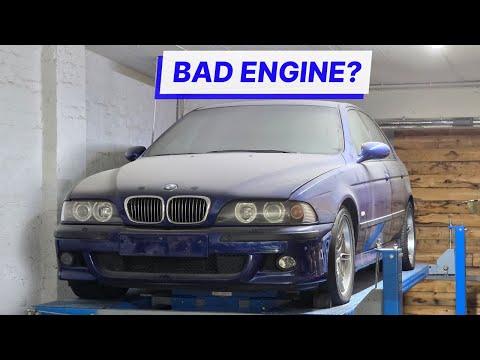
Reviving a Neglected E39 M5: Comprehensive Engine Rebuild Project
Join M539 Restorations as they revive a neglected E39 M5, uncovering engine issues and embarking on a comprehensive rebuild project.