
Classic Car Restoration Stories
Explore classic car restoration stories focusing on usability, maintenance, and ownership challenges for vintage vehicles.
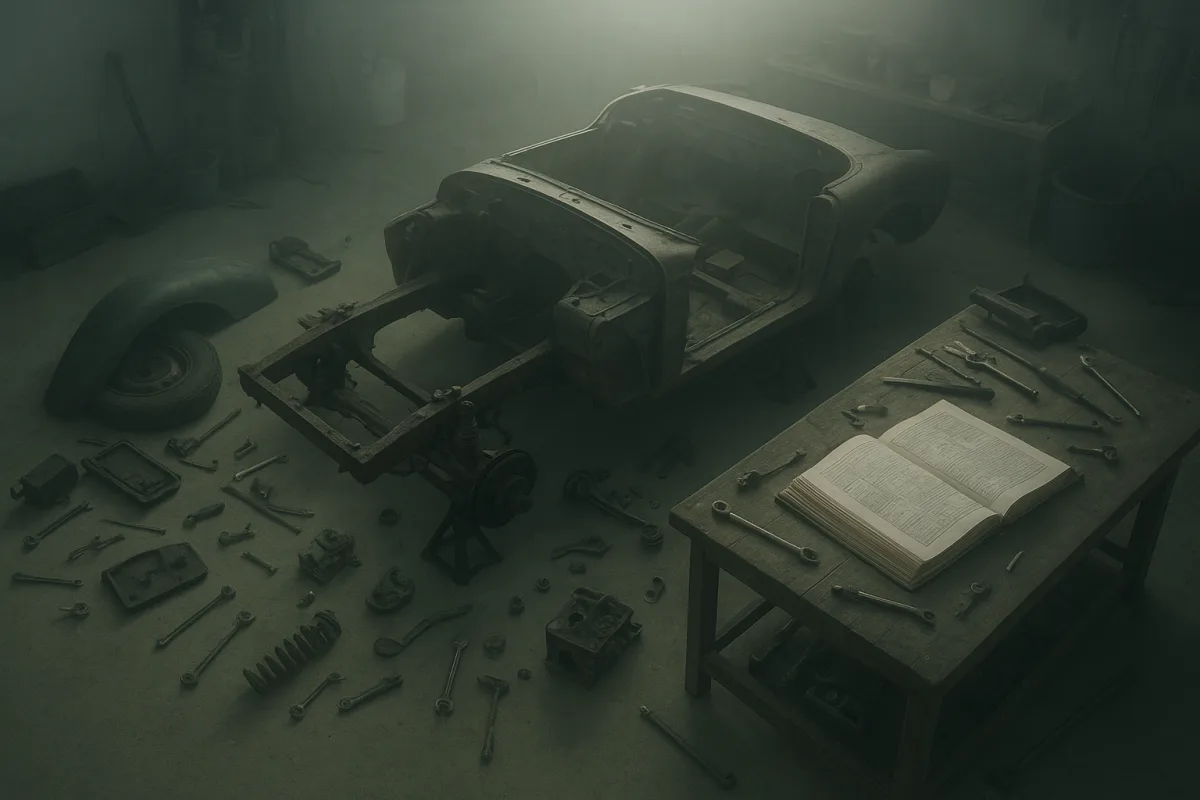
The shift: restoration is becoming more use-focused
The change is fairly plain: enthusiast coverage is moving away from restorations judged only by paint depth, concours originality and auction staging. The more interesting classic-car stories now centre on whether an old car can still be used, maintained and enjoyed on ordinary roads.
That is not the same as saying concours restoration has disappeared. It has not, and there will always be cars whose value lies in exact finishes, factory-correct fasteners and historical provenance. But more attention is going to the practical side of ownership.
Doug DeMuro’s feature on a restored 1950 Buick Roadmaster Estate Wagon gives the car its due as a museum-grade object, but its interest comes from the awkward reality of its construction. The wood is beautiful, yet it is also structural, heavy and vulnerable.
Hagerty’s profile of a 1979 Rolls-Royce Silver Shadow II makes a similar point from the luxury-car side. The appeal is not acceleration or a theoretical resale return. It is the experience of preserving an old, complicated luxury saloon with systems that need understanding.
A separate Hagerty road story about a 1966 Beaumont Sport Deluxe convertible goes further still. The Canadian-market Chevrolet-based convertible was not merely displayed, it covered more than 600 miles through Ontario and Michigan, with motel stops, fuel stops and fluid checks.
Those are different cars, audiences and formats, yet they point in the same direction. A properly restored classic is increasingly being presented as something to operate in public, not simply wheel out of an enclosed trailer.
The evidence needs a limit placed on it. Three editorial treatments do not prove that the entire collector market has changed, and there is no broad 2026 restoration-spending dataset in the supplied research. They do show an increasingly visible enthusiast preference for usable stories.
Why the usable classic matters now
Part of the reason is that the supply of untouched, easy projects has been diminishing for years. The remaining cars are often incomplete, poorly repaired decades ago, modified beyond recognition, or expensive precisely because someone else has already done the hard work.
A usable restoration also answers a modern problem: owners want a car with a purpose. A 1950 Buick may only be a fair-weather local car, while a 1966 Beaumont can cover serious distance, but both make more sense when the build has a defined job.
That does not mean every old car needs to become a road-trip machine. The right target for a wooden-bodied Roadmaster Estate Wagon is likely careful local use and dry storage, not weekly motorway commuting in winter.
The Beaumont story is useful because it does not pretend old cars become modern after a service. Hagerty’s driver noted a vague speedometer, a small oil leak and the vulnerability of small rear lamps and lap belts amid modern traffic.
Those are not defects a clever restoration can entirely erase without changing the car’s character. They are part of the ownership bargain. A sensible project plan works around those limitations rather than trying to hide them behind fresh paint.
This also explains some of the interest in cars with shared mechanical parts. The Beaumont used Chevrolet Chevelle body, chassis, suspension and powertrain components, including a 283-cubic-inch V8 and two-speed Powerglide. That does not make every part easy, but it improves the practical case.
The 1950 Buick: rarity does not simplify restoration
The 1950 Buick Roadmaster Estate Wagon is a good example of why buyers need to separate romance from repair exposure. Only 420 were built, and its ash framing and wood body structure create restoration work that a steel-bodied saloon simply does not have.
Doug DeMuro correctly identifies the Estate Wagon as one of the last American mass-produced woodies, with Buick ending the type after 1953. The attractive bodywork is also the reason the car can consume a budget quickly when it has been damp, warped or neglected.
The Roadmaster was a top-line Buick, with a 3,213 mm wheelbase, a 5,302 mm overall length and weight around 4,927 lb. It is not a compact weekend toy, and storage space matters before any purchase decision. [1]
It is also important to correct a common specification mistake. The 1950 Roadmaster used Buick’s 5.2-litre straight-eight, rated at 152 hp and 280 lb-ft, paired with the two-speed Dynaflow automatic, not a Fireball V8. [1]
That distinction matters when ordering manuals, seeking engine parts or assessing originality. It is easy for an attractive video feature to repeat a bad specification, particularly with a car whose four Ventiports visually suggest eight cylinders.
On the road, the numbers explain the character better than nostalgia does. A roughly 12-second 0-60 mph time and about 90 mph top speed mean the Roadmaster belongs on relaxed secondary roads, parades and Sunday outings, not among modern high-speed traffic. [1]
The market is equally sobering. DriveIndex records verified auction results spanning approximately $10,250 to $137,500, with a median around $17,625, down 3.1 percent over the past year. [1]
That range means a supposedly cheap project is not automatically a bargain. The difference between a complete, sound wagon and one needing wood fabrication, chrome work, upholstery and mechanical recommissioning can be far larger than the purchase price.
A March 2026 sale recorded by The Classic Valuer reached £27,900, or roughly $35,000. That sits well above the median but well below the headline six-figure result, which is exactly why a buyer should not budget from one glamorous auction listing. [2]
The Silver Shadow II: luxury systems, ordinary ageing
The 1979 Rolls-Royce Silver Shadow II represents a different kind of restoration temptation. Hagerty’s profile rightly highlights the improvements over the earlier Silver Shadow: rack-and-pinion steering, revised front suspension, automatic climate control and a redesigned dashboard.
It remains a large, complex saloon with a 6.75-litre V8 and three-speed GM Turbo-Hydramatic 400 automatic. North American cars are listed at 170 hp and 369 lb-ft, while European versions reached 200 hp and 398 lb-ft. [5]
Those regional differences are worth checking against the actual car, particularly for imported examples. Exact 1979 production figures are not available in the supplied research, so rarity claims should be treated cautiously rather than assumed from a surviving-car count.
The attraction is real. A Silver Shadow II can feel special at ordinary speeds, and Hagerty’s featured two-tone burgundy example illustrates why colour and trim matter on these cars. But a low purchase price is no protection against high running costs.
There is no direct 2026 maintenance dataset specifically for the 1979 model. Related Rolls-Royce ownership figures suggest annual maintenance of $4,000 to $5,000, with total annual ownership around $8,165 once fuel, insurance, depreciation and maintenance are counted. [3][4]
Those figures are indicative, not a quote for a particular car. A well-sorted example driven modestly may cost less in a quiet year, while hydraulic, electrical, climate-control or corrosion work can make a deferred-maintenance car much more expensive.
The lesson is not to avoid the Silver Shadow II. It is to buy records, specialist inspection and parts access. The car’s dignity comes from its systems working together, and an owner who cannot fund that should choose a simpler classic.
Plan the project around the road, not the reveal
For someone choosing a restoration project, the first question should be what the finished car will actually do. A dry-weather local cruiser, a show entrant and a 1,000-mile touring car need different standards of mechanical work and different contingency budgets.
A Buick woody needs a body and timber assessment before an engine rebuild becomes the centrepiece. A Silver Shadow II needs evidence of disciplined specialist servicing before cosmetic improvements. A Beaumont-type American convertible needs brakes, cooling, tyres and lighting sorted before scenery and photographs.
Avoid financing a restoration around its optimistic end value. General collector-car loans commonly run three to 15 years, with 5 to 10 percent interest, 10 to 30 percent down and lending capped against appraised value. [8]
That appraisal cap is the issue. Restoration invoices can rise beyond the vehicle’s value quickly, especially when hidden corrosion, missing trim or specialist labour appears. Personal loans and home-equity borrowing may provide money, but they do not make the project economically sensible. [8]
Cash remains the least complicated option, provided it leaves enough reserve for surprises. No supplied research identifies a restoration-specific finance product that reliably funds the gap between a cheap project and a professionally restored classic.
The paperwork can shape the build
Regulation is another reason usable restorations now need more planning. Antique and classic registration thresholds vary, commonly from 20 to 30 years, while inspection and emissions obligations can differ not just by state but by vehicle history. [6][7]
Kentucky requires Classic Motor Vehicle Project Certification for certain restored classics, so a buyer there should establish the title path before stripping a car into parts. [9] Florida requires inspection procedures for rebuilt motor vehicles, particularly relevant to cars with salvage histories.
Texas also regulates restoration facilities through environmental and operational rules, which matters if painting, surface coating or commercial-scale restoration is part of the plan rather than simply home maintenance. [10]
The practical answer is simple: speak to the local DMV or equivalent agency before money changes hands, then confirm insurance restrictions and workshop rules. The best restoration story is still one that can be titled, insured and legally driven when finished.
Frequently Asked Questions
What are common challenges in classic car restoration?
Common challenges include dealing with incomplete or poorly repaired cars, sourcing original or compatible parts, and addressing age-related wear such as corrosion and electrical issues. For example, the 1950 Buick Roadmaster Estate Wagon’s wood body requires careful restoration due to its structural and vulnerable nature, while a 1979 Rolls-Royce Silver Shadow II demands specialist maintenance and understanding of complex systems.
How do enthusiasts approach restoring and driving vintage cars?
Enthusiasts increasingly focus on restoring classics for practical use rather than static display. Stories highlight driving restored cars on real roads and planning restorations with defined purposes, such as local use or road trips, while accepting inherent limitations like minor leaks or outdated safety features. This approach values usability and enjoyment over concours-level perfection.
What should I consider before buying a classic car project?
Before purchasing, check the car’s condition, completeness, and title status, as well as state-specific emissions, inspection, and restoration regulations. Restoration rules and antique registration requirements vary widely across states, so understanding local legal frameworks is essential to avoid surprises during the project.
How do maintenance costs vary for different classic cars?
Maintenance costs differ significantly by model and complexity. For instance, a 1979 Rolls-Royce Silver Shadow II can require $4,000 to $5,000 annually for maintenance alone, reflecting the need for specialized care. In contrast, other classics may have lower or less specialized upkeep, but all require budgeting for ongoing repairs and parts.
Why is usability important in classic car restorations?
Usability matters because owners want classics with a clear purpose, whether for local driving or longer trips. A usable restoration acknowledges the car’s limitations and plans around them rather than masking issues, making the vehicle more enjoyable and practical to operate on modern roads. This trend reflects a shift toward appreciating classics as functioning vehicles rather than solely collectible artifacts.
How we researched this
This article was assembled from 1 video source, 3 published articles, 10 cited references.
Nothing here is based on hands-on testing. Where a figure or finding appears, it belongs to the source cited beside it, and the writing says so rather than implying otherwise. Every source is listed below so you can check it.
Sources
1950 Buick Roadmaster Review: Ultra-Luxury From 75 Years Ago — Doug DeMuro
Tesla Promised To Bring The Cybertruck To Australia And New Zealand. But It's Never Coming — InsideEVs
Chasing Autumn Colors with a Beaumont — Hagerty
Buick Roadmaster Estate Wagon Auction Results: 58 Verified Sales | DriveIndex
Rolls-Royce Maintenance: Cost, Plans and Service Schedule (2026
Rolls Royce Silver Shadow Ii Cost in 50 Countries — Full Comparison | CarCostBreakdown
Classic Car, Truck & Motorcycle Values | Hagerty Valuation Tools®
How to Register an Antique, Classic, or Historic Vehicle - LegalClarity
Car Inspection Requirements by State (2026) - MechanicsRated
Watch Classic and Vintage Car Restorations and Stories on Youtube
Related Articles
Rare Exotic Car Ownership: Stories, Costs, and Restorations
Explore rare exotic car ownership stories, restoration costs, and maintenance insights for models like Ferrari, Porsche, and Toyota Supra.
Classic Car Ownership and Restoration
Explore classic car ownership and restoration with insights on the 1966 Pontiac GTO, Acura Integra 40, and Jaguar D-Type restorations.
Unleashing Power: Transforming BMW Z4M Roadster with S54 Engine
Join M539 Restorations as they transform a BMW Z4M Roadster with an iconic S54 power plant. From uncovering oil leaks to upgrading to a Euro-spec exhaust, follow the journey to unleash the full potential of this automotive masterpiece.
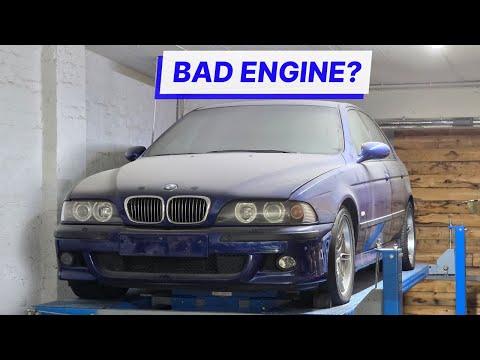
Reviving a Neglected E39 M5: Comprehensive Engine Rebuild Project
Join M539 Restorations as they revive a neglected E39 M5, uncovering engine issues and embarking on a comprehensive rebuild project.