
2027 BMW X5 Review: Performance, Ownership & Impressions
In-depth 2027 BMW X5 review covering performance, ownership costs, maintenance, and driving impressions of the new X5 and iX5 models.
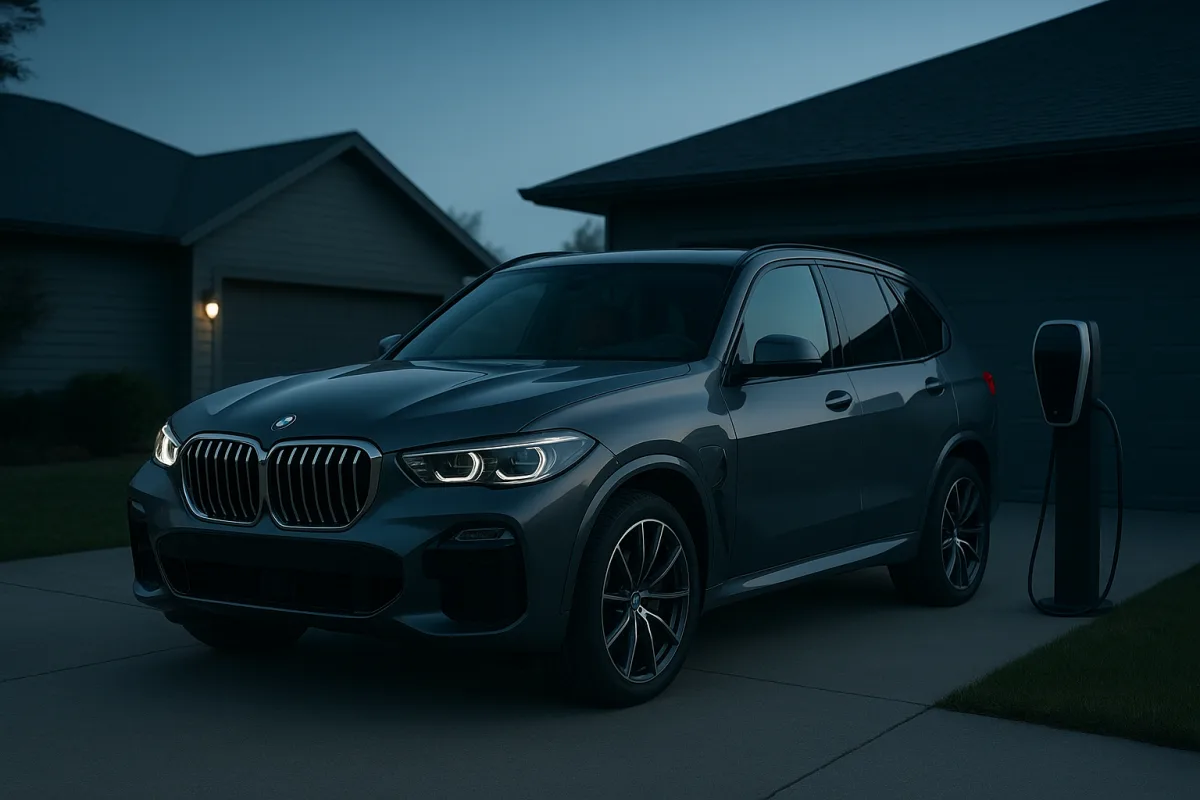
The decision: X5 40 xDrive or iX5 60 xDrive?
The choice here is between the petrol mild-hybrid 2027 BMW X5 40 xDrive and the all-electric iX5 60 xDrive. Both use the new Neue Klasse-inspired X5 body, both are expensive luxury SUVs, and both carry the same controversial cabin philosophy.
The X5 40 xDrive starts at $73,550 in the United States, including BMW's $1,450 destination charge. The iX5 60 xDrive begins at $81,250, also including destination. Neither figure includes tax, registration, dealer-added fees or options. [1]
That $7,700 gap is not trivial, particularly because federal EV tax credits expired on September 30, 2025. State help remains inconsistent: Colorado can offer up to $5,000 for qualifying EVs below $80,000, while Florida and Alabama offer no state EV incentive. [2]
There is a third option, the $78,950 X5 50e xDrive plug-in hybrid. It suits buyers who can charge regularly but still want a combustion engine for long trips. It is not the decision here because it combines the complexity of both systems, and the supplied material gives too little real-world electric-range and long-term ownership data to call it the sensible middle ground. [1]
I have not driven or owned either 2027 model. The road impressions below come from Carwow, TheStraightPipes and The Fast Lane Car, while pricing, maintenance and incentive context comes from the cited research. That distinction matters with a first-year redesign.
Head-to-head comparison
| Criterion | 2027 BMW X5 40 xDrive | 2027 BMW iX5 60 xDrive |
|---|---|---|
| Starting price | $73,550 including $1,450 destination, before tax, registration, dealer fees and options. [[1]](https://www.tombushbmw.com/2027-bmw-x5-trims-pricing-packages-jacksonville?utm_source=openai "2027 BMW X5 Trims, Pricing & Packages | Tom Bush BMW") |
| Powertrain | 3.0-litre B58 turbocharged inline-six with mild-hybrid assistance, 394 hp and 428 lb-ft. [[9]](https://www.edmunds.com/bmw/x5/2027/features-specs/?utm_source=openai "2027 BMW X5 Specs & Features | Edmunds") |
| Everyday performance | Strong, smooth and familiar. The B58 and ZF eight-speed are the more proven pairing. | Likely the quieter urban choice, but there is not enough supplied independent road data to quantify its advantage. |
| Long journeys | Better choice for drivers without reliable charging, especially frequent motorway users. | Works best for owners with home charging and predictable routes, not those relying on public charging as their default. |
| Running-cost outlook | Fuel and routine servicing remain recurring costs. The engine is established, but air suspension and electronics can be costly after warranty. [3][5] | No oil changes or conventional engine servicing, but tyres, suspension, electronics and EV registration fees still matter. Colorado, for example, adds a $60.05 annual EV fee. [2] |
| Design | Same body as the iX5, including the new lighting signature and electronic door-release wings. | Same body, with only subtle cooling and trim differences separating it from the petrol X5. |
| Best buyer | The owner who keeps cars for years, covers long distances and wants the least disruptive transition from an older X5. | The owner who charges at home, drives locally most days and values quietness over familiar mechanical character. |
| Main weakness | It is still a $70,000-plus petrol SUV with potentially expensive post-warranty hardware. | Higher entry price, incentive uncertainty and charging dependence. |
Performance: the 40 xDrive has the clearer case
BMW has sensibly retained the B58 straight-six for the X5 40 xDrive. It produces 394 hp and 428 lb-ft, figures that put it ahead of the Mercedes-Benz GLE 350 4MATIC's 255 hp and 295 lb-ft, the Audi Q7 55 TFSI's 333 hp and 325 lb-ft, and the Porsche Cayenne's 335 hp and 332 lb-ft. [9][10]
TheStraightPipes found the engine and eight-speed automatic notably smooth, with immediate low-speed assistance from the mild-hybrid system and no awkward brake-pedal transition. That is more valuable in a daily SUV than an impressive launch-control clip.
The Fast Lane Car also calls the B58 a well-proven engine, noting its long service history since 2015. That does not make the entire vehicle proven, because the 2027 X5 wraps it in new electronic architecture, new interface hardware and new suspension choices.
The iX5 should appeal for another kind of performance: silent departures, immediate response and relaxed commuting. But the supplied material does not give independently verified range, charging speed, battery capacity or output figures. A buyer should not fill those blanks with assumptions.
For the owner who drives 15,000 to 20,000 miles annually, the 40 xDrive is the safer performance recommendation. It supplies ample thrust, conventional refuelling and a drivetrain whose behaviour is already understood by independent workshops.
Design: new X5, less old-school X5
The 2027 model is longer than the outgoing X5, with The Fast Lane Car quoting a 2.4-inch increase. Carwow reports a larger six-centimetre increase in overall length and wheelbase, so buyers should wait for BMW's final market-specific specification before treating either measurement as definitive.
All three reviewers agree that the new car is a break from the restrained, upright outgoing X5. The kidney grilles are smaller, the front lighting uses an illuminated X motif, and the sides are cleaner, lower and more hatchback-like.
Carwow's audience preferred the older car's appearance by 59 percent to 41 percent. That is not a scientific result, but it captures the risk: the previous X5 looked expensive without asking for attention, while this one looks deliberately futuristic.
The lighting can be configured from X-shaped elements to diagonal slashes, according to The Fast Lane Car. That helps, but it does not alter the core proportions, narrow rear lamps or the absence of visible exhaust finishers on the petrol model.
Both contenders share the same troublesome detail, the small electronic door-release wings. Carwow found them less intuitive than a normal handle, while TheStraightPipes questioned winter-glove usability. The Fast Lane Car disliked their delay and lack of tactile confirmation.
This is not nostalgia for old hardware. A door handle is one of the few controls every passenger uses without instruction. Replacing it with a sensor-operated release adds a failure point without a clear ownership benefit.
Cabin: better displays, worse basic controls
The cabin is where the 2027 X5 most clearly improves on its predecessor and most clearly risks irritating its owner. The panoramic display at the windscreen base, head-up display and large central screen make the old X5's conventional dashboard look dated.
The Fast Lane Car rates the latest iDrive system as BMW's best yet, praising its quick response, graphics and configurable panoramic display. TheStraightPipes also found the camera resolution good, while Carwow considered the central interface clearer and easier to browse.
But all three reviewers identify the same issue: BMW has moved too many ordinary tasks into a menu. Climate temperature remains permanently accessible, but vent direction, airflow mode, seat adjustments and driving modes require more screen interaction than before.
Carwow's comparison with the outgoing X5 is especially useful. The older SUV has physical vent tabs, a rotary controller, driving-mode buttons and conventional seat controls. In the new model, even changing airflow direction can mean selecting software presets.
The Fast Lane Car considers the materials and fit excellent, and praises the optional comfort seats. Carwow sees more cheap-feeling plastic than in the previous X5, particularly lower down in the cabin, and worries about the long-term durability of decorative stone trim.
Those findings are not mutually exclusive. A new car can feel well assembled while still containing more visible hard plastic and more electronic components that will be expensive or awkward at 10 years old.
The 2027 X5 suits someone happy to set the climate system once and leave it in automatic mode. It suits less well the owner who constantly adjusts vents, shares the car with several drivers, or expects basic functions to remain usable when a touchscreen ages badly.
Ownership at 60,000 miles: where caution belongs
There is no 2027-specific maintenance record, warranty history or established failure pattern yet. There are also no recorded NHTSA owner complaints as of October 2026, but that tells us little about a new model's long-term durability. [6]
Use the 2026 X5 as a guide, not a promise. Published estimates put annual routine maintenance at roughly $1,200 to $2,200, while BMW's standard warranty lasts four years or 50,000 miles. [3][4]
By 60,000 miles, the warranty has expired unless the owner bought additional cover. BMW offers Ultimate Care+ maintenance plans extending as far as seven years or 125,000 miles, though buyers should compare the plan price with the services actually included. [3]
Known 2026 X5 concerns include cooling-system plastic components, oil leaks from gaskets, electrical or sensor faults, and wear in adaptive or air-suspension hardware. [5] None is proof that the 2027 car will fail similarly, but none becomes irrelevant because the dashboard is newer.
For the 40 xDrive, the B58 itself is the comparatively reassuring part. The bigger 60,000-mile question is whether the air suspension, electronic door system, display hardware and sensor network remain trouble-free after warranty.
For the iX5, there is no conventional engine oil service, but that should not be mistaken for maintenance-free motoring. Tyres, brakes, suspension, HVAC equipment, charging hardware and electronics remain, while battery and high-voltage-system repair economics are still unknown for this specific model.
BMW is offering a $1,000 loyalty discount to eligible returning customers on a 2027 X5 purchase or lease. [7] It is welcome, but it should not decide an $80,000 ownership commitment or compensate for buying the wrong powertrain.
Does it improve on the old X5?
Mechanically, probably yes. The 40 xDrive has significantly more performance than many mainstream luxury-SUV rivals, and the reviewers consistently describe its ride, isolation and drivetrain calibration as polished. TheStraightPipes particularly praised its quiet, supple air-suspension ride.
Ergonomically, the answer is less comfortable. The older X5 gives the driver more physical controls, familiar door handles and fewer layers of software between a request and an action. Those are not trivial gains when living with a car daily.
The new car is a better technical product, but not automatically a better long-term ownership proposition. Its design will age according to taste. Its interior will age according to software support, screen reliability and whether BMW's electronic controls remain pleasant after the novelty disappears.
Who each option suits
BMW X5 40 xDrive
Choose the X5 40 xDrive if you cover serious distance, cannot charge reliably at home, or want to keep the SUV beyond warranty without also betting on a first-generation full-electric X5. Its $73,550 starting price is still substantial, but it buys the proven B58 and conventional long-trip usability. [1]
It falls down for buyers seeking the lowest local running costs, silent town driving or meaningful EV incentives. It also does not escape the new X5's electronic handles, touch-heavy cabin and potential air-suspension expense.
BMW iX5 60 xDrive
Choose the iX5 60 xDrive if you have dependable home charging, mostly drive predictable daily routes, and value refinement more than combustion-engine character. At $81,250 before taxes, fees and options, it is the more expensive choice, so state incentives need checking before ordering. [1][2]
It falls down for apartment dwellers, frequent long-distance drivers without a charging plan, and buyers expecting the old federal tax credit. It is also the less certain 60,000-mile proposition simply because independent long-term ownership evidence does not yet exist.
Frequently Asked Questions
What are the key differences between the 2027 BMW X5 40 xDrive and iX5 60 xDrive?
The X5 40 xDrive uses a 3.0-liter B58 turbocharged inline-six with mild-hybrid assistance producing 394 hp and 428 lb-ft, while the iX5 60 xDrive is fully electric. The X5 40 xDrive starts at $73,550, and the iX5 60 xDrive at $81,250, excluding taxes and fees. The X5 suits buyers who need easy long-distance refuelling and fewer changes to ownership, whereas the iX5 is better for those with convenient home charging and access to state EV incentives.
How does the 2027 BMW X5 perform compared to previous models?
The 2027 X5 is quicker, quieter, and more technically ambitious than the outgoing model. However, some changes such as screen-led ventilation controls, electronic door releases, and reduced physical switchgear represent usability regressions compared to previous models.
What are the expected maintenance costs for the 2027 BMW X5 after warranty?
While no specific data exists for the 2027 model, 2026 X5 maintenance costs ranged from $1,200 to $2,200 annually. The standard warranty covers 4 years or 50,000 miles, but after warranty expiration, owners may face costly repairs related to suspension, cooling system, sensors, and electrical components.
Is the 2027 BMW X5 a better choice for long-distance driving than the iX5?
Yes, the X5 40 xDrive is a better choice for drivers without reliable charging access, especially those who frequently use motorways. The iX5 60 xDrive is more suitable for owners with home charging and predictable local driving routes.
What are the pros and cons of the 2027 BMW X5's new design and features?
The new X5 shares the Neue Klasse-inspired body and lighting signature with the iX5, featuring electronic door-release wings. While it is quicker and quieter, the shift to screen-led controls and fewer physical switches reduces usability. The design is ambitious but introduces some practical drawbacks.
How we researched this
This article was assembled from 3 video sources across 3 channels, 11 cited references.
Nothing here is based on hands-on testing. Where a figure or finding appears, it belongs to the source cited beside it, and the writing says so rather than implying otherwise. Every source is listed below so you can check it.
Sources
LOTS TO LOVE AND HATE! 2027 BMW X5 Review — TheStraightPipes
2027 BMW X5 Review & Walkaround: The Good, Bad, & Ugly — The Fast Lane Car
Tax Incentives for Hybrid Cars: Who Still Qualifies - LegalClarity
BMW X5 Annual Maintenance Cost: What Owners Can Expect In 2026
2026 BMW X5 Service Schedules & Maintenance Pricing | Kelley Blue Book
2027 BMW X5 Redesign Has A $1,000 Loyalty Discount - CarsDirect
Luxury Midsize SUVs with the Most Horsepower for 2026 - iSeeCars.com
Watch BMW X5 2027 Reviews and Impressions on Youtube
Also from the sources
Related Articles
2027 BMW 3 Series M350 vs i3
Compare the 2027 BMW 3 Series M350 and i3 models on performance, ownership costs, and market challenges to find which suits your needs best.

Mercedes-AMG CLE 646 Ownership
Explore Mercedes-AMG CLE 646 ownership, including performance, maintenance, costs, and the driving experience of this exclusive V8 coupe.

Supercar Drag Race Comparison and Ownership Insights
Compare top supercars in drag races with insights on performance, quarter mile times, and ownership costs for informed buying decisions.
2028 Dodge Charger Hellcat Return: What We Know So Far
Explore the 2028 Dodge Charger Hellcat return, rumored specs, ownership costs, and what to expect from this upcoming muscle car.