
Rare Restored Porsche and BMW Builds
Explore rare restored Porsche and BMW builds, including inspection tips, restoration costs, and ownership risks for enthusiasts and buyers.
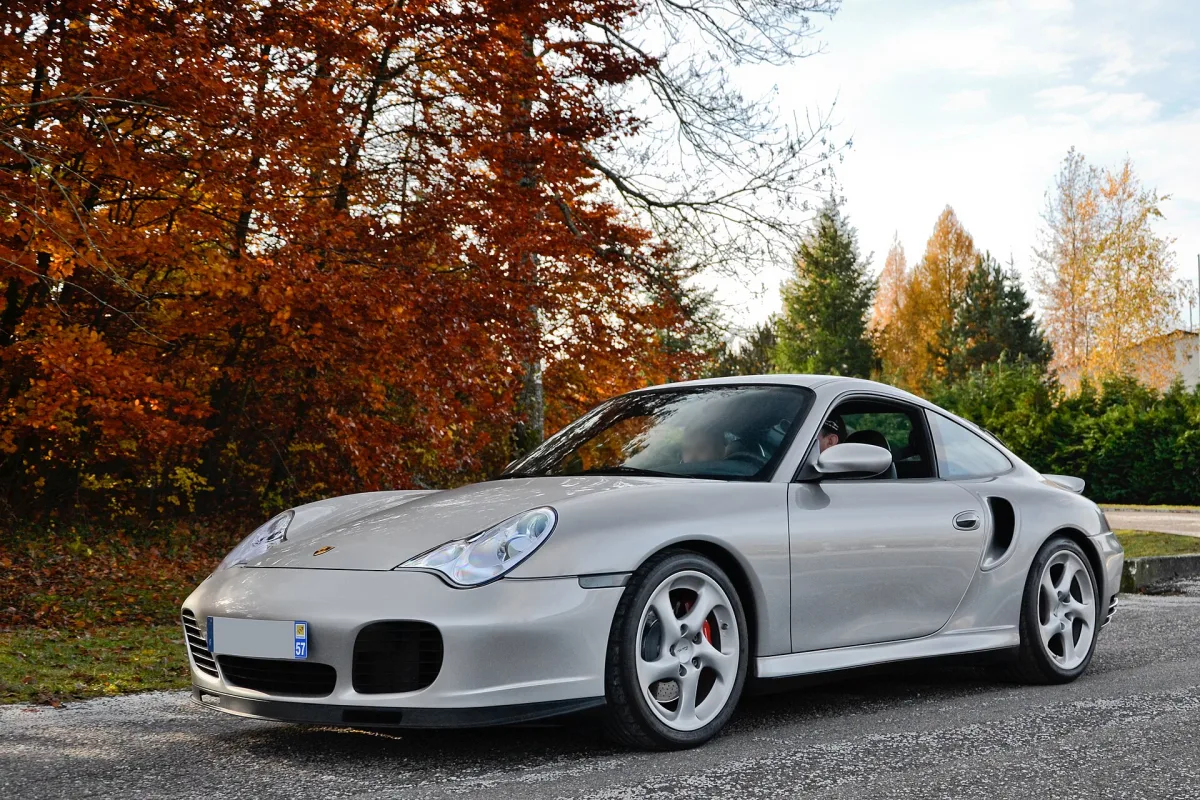
Photo: Alexandre Prévot from Nancy, France, CC BY-SA 2.0, via Wikimedia Commons
The quick list
The Speed Yellow 996 Turbo’s leaking rear wing and crude exhaust dumps are the sort of details that turn a “cheap 911 Turbo” into a restoration ledger.
- Best overall: Porsche 991.1 Turbo S, for the buyer who wants devastating pace, four-season usability, and minimal project work.
- Best value: 2006 BMW E46 M3, for the driver who wants a manual, naturally aspirated BMW M car with a known collector following.
- Best restoration prospect: Speed Yellow Porsche 996 Turbo manual, for the hands-on Porsche owner willing to pay for condition before cosmetics.
- Best for committed builders: BMW E46 Touring with M54 and S54 ITBs, for someone who values fabrication, track development, and induction noise over resale certainty.
The four routes at a glance
| Option | Asking price or reported value | Layout and character | Mileage or build state | Main upside | Main ownership risk |
|---|---|---|---|---|---|
| 2006 BMW E46 M3 | $22,000 asking price [[4]](https://exoticcomps.com/blog/porsche-996-turbo-prices/ "Porsche 996 Turbo Price Trend and Values | Exotic Comps") | Front-engine, rear-wheel-drive coupe, 3.2-liter S54 inline-six, six-speed manual | 55,732 miles claimed [[4]](https://exoticcomps.com/blog/porsche-996-turbo-prices/ "Porsche 996 Turbo Price Trend and Values | Exotic Comps") |
| BMW E46 Touring, Project Cologne | Build cost not published | Front-engine, rear-wheel-drive wagon, 3.0-liter M54 inline-six, modified for track use | Engine-swapped and heavily upgraded | Individual throttle bodies, carbon plenum, track hardware | No verified final output, emissions and parts-development complications |
| Porsche 996 Turbo manual | Purchase price not published | Rear-engine, all-wheel-drive coupe, twin-turbo flat-six, manual | 116,000 miles indicated | Mezger-engine Turbo appeal, rising collector interest | Deferred cosmetic and mechanical work, modified history |
| Porsche 991.1 Turbo S | SOL - Supercars of London reported $79,000, while also describing a sub-£80,000 UK car | Rear-engine, all-wheel-drive coupe, twin-turbo 3.8-liter flat-six, PDK | 51,028 miles reported | 550 hp, ceramic brakes, rear-wheel steering | High-cost Turbo S systems and unclear currency basis on the advertised price |
The table makes the split clear. The 991 Turbo S is a finished high-performance car, the E46 M3 is a relatively legible analog collectible, and the 996 Turbo and M54 Touring demand that you budget for surprises.
The BMW choice: buy the M3, build the Touring only if the work is the point
Jalopnik’s featured 2006 E46 M3 is the straightforward BMW option. It has the 333-hp 3.2-liter S54, the Getrag 420G six-speed manual, Phoenix Yellow paint, and a claimed 55,732 miles, or fewer than 2,800 miles per year. [4]
At $22,000, it is also the only car here with a clear U.S. asking price. The catch is familiar to anyone who has shopped aging M cars: the Craigslist ad says little beyond “runs great,” offers no useful maintenance file, and leaves tire age unknown. [4]
We would not pay collector-car money from photographs and a mileage claim. A pre-purchase inspection should include compression and leak-down tests, VANOS operation, rear subframe mounting points, cooling-system condition, suspension bushings, differential behavior, and clutch condition.
The S54 earns its reputation because it combines 3.2 liters, individual throttle bodies, a high redline, and 333 to 343 hp depending on application. It also has known rod-bearing, VANOS, and electronic throttle-actuator concerns, with actuator or linkage faults capable of triggering limp mode. [2][3]
That does not make the $22,000 M3 a bad buy. It means the purchase price must leave room for catch-up work, especially when the seller cannot show records for rod bearings, valve adjustments, cooling-system parts, and rear-subframe inspection.
M539 Restorations takes the opposite route with Project Cologne, an E46 Touring that began as a 325i before receiving a 3.0-liter M54. The builder started with a stock 330i-spec M54 output of 221 PS, then reported 270.7 PS after Schrick cams and another undisclosed modification.
The Touring already had Nürburgring-oriented suspension, brakes, wheels, tires, seats, and chassis reinforcement before the next step: ported cylinder head work, high-lift valves, S54 individual throttle bodies, an Eventuri carbon plenum, and a raised rev limit.
It is a compelling recipe because throttle response and intake sound are the stated goals. But do not price it like an M3 substitute. M539 Restorations had not published a final dyno number or long-term reliability result for this M54, ITB, and Eventuri combination.
The M54 was produced from 2000 through 2006 and is a DOHC inline-six designed for mainstream BMW applications, not an S54 with cheaper badges. [1] The conversion may deliver the sharper response the builder wants, but there is no verified output gain for this exact package.
The episode also delivers an ownership lesson. A rodent had chewed through wiring after winter outdoor storage, and removal of the cylinder head revealed a brittle plastic timing-chain guide that broke, forcing replacement of the chain and guides.
That is how old-car projects expand. A planned intake and cylinder-head upgrade became timing-cover work, cooling-system disassembly, and a parts order. The engine had survived repeated Nürburgring use without oil leaks, but age still found the plastic guide.
We would buy the stock E46 M3 if you want an M3. We would build an M54 Touring only if you already accept that the car’s value is in its individuality and your own time, not in an easy resale comparison.
The Porsche choice: condition versus outright capability
Vin_tra’s Porsche is the seductive, dangerous version of the 996 Turbo proposition: a Speed Yellow manual with the twin-turbo Mezger flat-six, factory-rated at 450 hp, modified hardware, and a reported 116,000 miles.
The seller had represented the car as having 100,000 miles. That 16,000-mile difference is not fatal for a 996 Turbo, but it affects value and should change how much risk you accept on a car already carrying a GT2-style bumper, aftermarket wheels, coilovers, arms, and altered exhaust.
The initial inspection found cracked lights, failed trim, flat or damaged tires, a nonstandard rear wing installation, rusty mild-steel wing fasteners, and exhaust dumps where the catalytic converters belong. Vin_tra also found the underside generally intact, with no alarming visible leaks.
That is better than buying a cosmetically tidy Turbo with hidden damage. It is still not a quick detail-and-drive job. The factory wing was included, which helps, but reinstalling it correctly and sorting the exhaust, tires, lights, paint, trim, and wiring can rapidly outrun the apparent bargain.
The market no longer treats a manual 996 Turbo as throwaway supercar inventory. Exotic Comps puts the 24-month median at $82,500 through November 2026 and the previous 12-month median at $90,500, a 27 percent increase. [4]
Color adds another complication. 911Finder cites Speed Yellow examples offered at €84,900 for a 2001 car and €128,500 for a 2003 Turbo X50, but limited listings do not establish a reliable color premium for every yellow 996 Turbo. [5][6]
A restoration budget needs a hard ceiling. Driver-quality restoration work can run roughly $20,000 to $60,000, show-quality work $60,000 to $150,000, and concours work $150,000 to $300,000 or more, with labor commonly taking 55 to 70 percent of the total. [8]
Rust repair alone can add $5,000 to $20,000 or more. Parts sourcing, glass, replating, and missing hardware also add up, which is why we would spend first on the 996 Turbo’s safety items, factory-correct mechanical work, and records before paint correction or cosmetic upgrades. [8]
Motor1’s account of a C4 Corvette left in a barn for 25 years makes the broader restoration point well. A deep clean exposed missing clearcoat and animal damage, proving that dirt can hide an expensive bodywork bill rather than preserve a car beneath it.
Why the 991.1 Turbo S is the finished-car answer
SOL - Supercars of London drove an 11-year-old 991.1 Turbo S with 51,028 miles and described an interior that still felt nearly new. Its 550-hp twin-turbo flat-six, PDK, standard ceramic brakes, and rear-wheel steering create a very different experience from either analog BMW.
It is the largest financial commitment in this group, even if it asks less of you in workshop time. SOL - Supercars of London reported the featured car at $79,000, while earlier referring to a black UK-market example below £80,000, so confirm both currency and taxes before treating that figure as comparable.
The broader UK market makes the sub-£80,000 claim look unusual. Autotrader UK listings generally sit above that threshold, while AskCar listed a 2016 Turbo S with 36,733 miles at £82,995 against an estimated £93,263 value. [12][13]
On the road, the 991.1 Turbo S makes its case through ease. SOL - Supercars of London found it quiet and composed in normal driving, then startlingly quick when driven harder, with an acceleration character closer to a fast-forward button than a dramatic naturally aspirated crescendo.
Its trade-off is that you buy expensive systems all at once. Ceramic brakes, PDK, turbochargers, rear-wheel steering, active chassis components, and Porsche option-heavy interiors make maintenance history vital. A neglected Turbo S can be less forgiving financially than a well-known 996 Turbo.
We would take the 991.1 if your garage space is limited and you want one car that can cover commuting, highway distance, poor weather, and serious performance. It is less involving at ordinary speeds than the E46 M3, but it asks far fewer compromises.
Insurance, financing, and registration before the first wrench turns
Modified and restored cars need agreed-value coverage, photographs, invoices, and a clear modification list. Hagerty notes that classic Porsche coverage can be structured around agreed value, while specialist BMW insurers cater specifically to modified and collector cars. [9][11]
A stock-looking E46 M3 with records is easier to explain to an insurer than an M54 Touring with an S54-derived intake system and track modifications. The same applies to a 996 Turbo with changed emissions equipment, aftermarket suspension, and a nonstandard wing installation.
Registration can become the deciding cost. Emissions-compliance rules can prevent registration in stricter states, including California, so the 996’s crude catalyst-area exhaust changes and the Touring’s engine-management alterations need local verification before money changes hands.
Traditional lenders are often happier financing a complete, documented car than a restoration plan or heavily modified build. High-end restomod specialists such as Theon Design work in a world of insurers and lenders that understand modified classics, but that does not make financing automatic. [10]
Who each option suits
The 2006 E46 M3 suits the driver who wants an analog weekend car with recognizable collector appeal. Buy it if the inspection supports its mileage and condition, then keep it stock, document every service, and preserve the original interior and wheels.
The M54 E46 Touring suits the builder with a track-car mindset. It offers a rare mix of wagon body, rear-wheel drive, and custom induction hardware, but you need fabrication tolerance, storage, diagnostic ability, and realistic expectations about resale and emissions legality.
The Speed Yellow 996 Turbo suits the Porsche enthusiast who can separate a good engine from a good car. The manual transmission, Mezger engine, and desirable color are real attractions, but only buy after a specialist checks the turbos, driveline, body, suspension, exhaust, paint, and repair history.
The 991.1 Turbo S suits the owner who wants to drive, not restore. It is our overall pick when the service history is complete and the price is verified in the correct currency, because it delivers modern usability with performance that still feels excessive at 50,000 miles.
Frequently Asked Questions
What should I inspect before buying a rare BMW E46 M3?
Before purchasing a BMW E46 M3, a thorough pre-purchase inspection is essential. Key areas to check include compression and leak-down tests, VANOS system operation, rear subframe mounting points, cooling system condition, suspension bushings, differential behavior, and clutch condition. This is especially important if maintenance history is unknown, as common issues include rod bearing wear, VANOS faults, and electronic throttle actuator problems.
How much does restoring a Porsche 996 Turbo cost?
Restoring a Porsche 996 Turbo can vary widely in cost depending on condition and goals. A neglected Speed Yellow 996 Turbo may require $20,000 to $60,000 to reach dependable driver quality. More extensive restorations, including show-quality or concours-level work, can exceed $150,000. Labor typically accounts for 55 to 70 percent of total restoration expenses.
What are the risks of buying a restored Porsche 991 Turbo S?
While the Porsche 991.1 Turbo S offers high performance and usability, buyers should be cautious about pricing and maintenance costs. Examples priced around $79,000 may be undervalued compared to UK market prices, which usually exceed £80,000. Ownership risks include high-cost Turbo S systems and the possibility of unclear pricing or currency basis in listings.
Is building a BMW E46 Touring with an M54 engine worth it?
Building an E46 Touring with an M54 engine and S54 individual throttle bodies is suited for enthusiasts focused on fabrication, track development, and induction sound rather than resale value or verified performance gains. There is no independently verified power output or long-term reliability data for this setup, so it should be considered a project rather than a direct substitute for an M3.
How we researched this
This article was assembled from 3 video sources across 3 channels, 2 published articles, 13 cited references.
Nothing here is based on hands-on testing. Where a figure or finding appears, it belongs to the source cited beside it, and the writing says so rather than implying otherwise. Every source is listed below so you can check it.
Sources
Can I Make a BMW E46 330i as Fast as an M3? S54 ITBs & Carbon Plenum, M539 Restorations
I bought the junkiest Porsche and restored it- Full transformation, Vin_ tra
Are YOU MAD to Buy a 11 Year Old Porsche 911 Turbo S?, SOL - Supercars of London
At $22,000, Is This 2006 BMW E46 M3 The Gold Standard?, Jalopnik
This Corvette Sat Abandoned For 25 Years. Then It Got Its First Deep Clean, Motor1
BMW N52 & S54 Throttle Body Guide: 2001-2013 1, 3, 5, Z4 & M3 | Go-Parts.com
Porsche 996 Turbo and Turbo S Price Development (2000-2006) | 911Finder
Elferspot market check: You should keep an eye on these three Porsches - elferspot.com - Magazine
I Drive and Collect Classic Cars: Here's How I Got in the Game Without Spending a Fortune
Theon Design celebrates ten years of transforming the classic air-cooled Porsche 911
BimmerInsurance, Specialty coverage check for modified & collector BMWs
Used Porsche 911 Coupe 991 Turbo S Cars For Sale | Autotrader UK
2016 Porsche 911 991 Turbo S - 36,733 miles - £82,995 - Birmingham | AskCar
Watch Rare and Restored Porsche and BMW Builds on Youtube
Also from the sources
Related Articles
SEMA 2026 Restomods and V8 Porsche 911s Highlights
Explore SEMA 2026 restomods and V8 Porsche 911s, including TWR Supercat, Devspeed LS2 GT3, and unique builds with ownership insights.
Unleashing Power: Transforming BMW Z4M Roadster with S54 Engine
Join M539 Restorations as they transform a BMW Z4M Roadster with an iconic S54 power plant. From uncovering oil leaks to upgrading to a Euro-spec exhaust, follow the journey to unleash the full potential of this automotive masterpiece.
Reviving a Neglected E39 M5: Comprehensive Engine Rebuild Project
Join M539 Restorations as they revive a neglected E39 M5, uncovering engine issues and embarking on a comprehensive rebuild project.
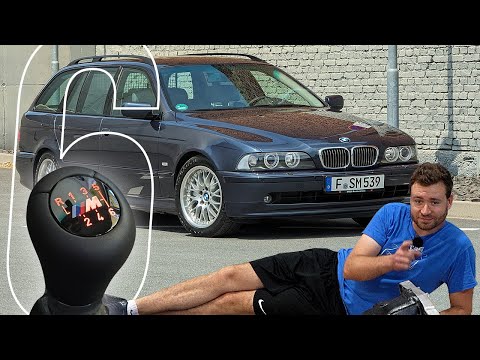
Ultimate E39 530i Manual Conversion: Rusty Bolts to Precision Wiring
Witness the epic transformation of the E39 530i touring by M539 Restorations as they swap the automatic transmission for a manual gearbox and tackle coolant leaks, rusty bolts, and intricate wiring challenges with expert precision.