
SEMA 2026 Restomods and V8 Porsche 911s Highlights
Explore SEMA 2026 restomods and V8 Porsche 911s, including TWR Supercat, Devspeed LS2 GT3, and unique builds with ownership insights.
The quick list
Best overall: TWR Supercat, for the buyer who wants a finished, usable grand-tourer restomod with factory-scale backing.
Best V8 Porsche: Devspeed LS2 911 GT3, for the experienced drift or track driver who values serviceable Chevrolet power over originality.
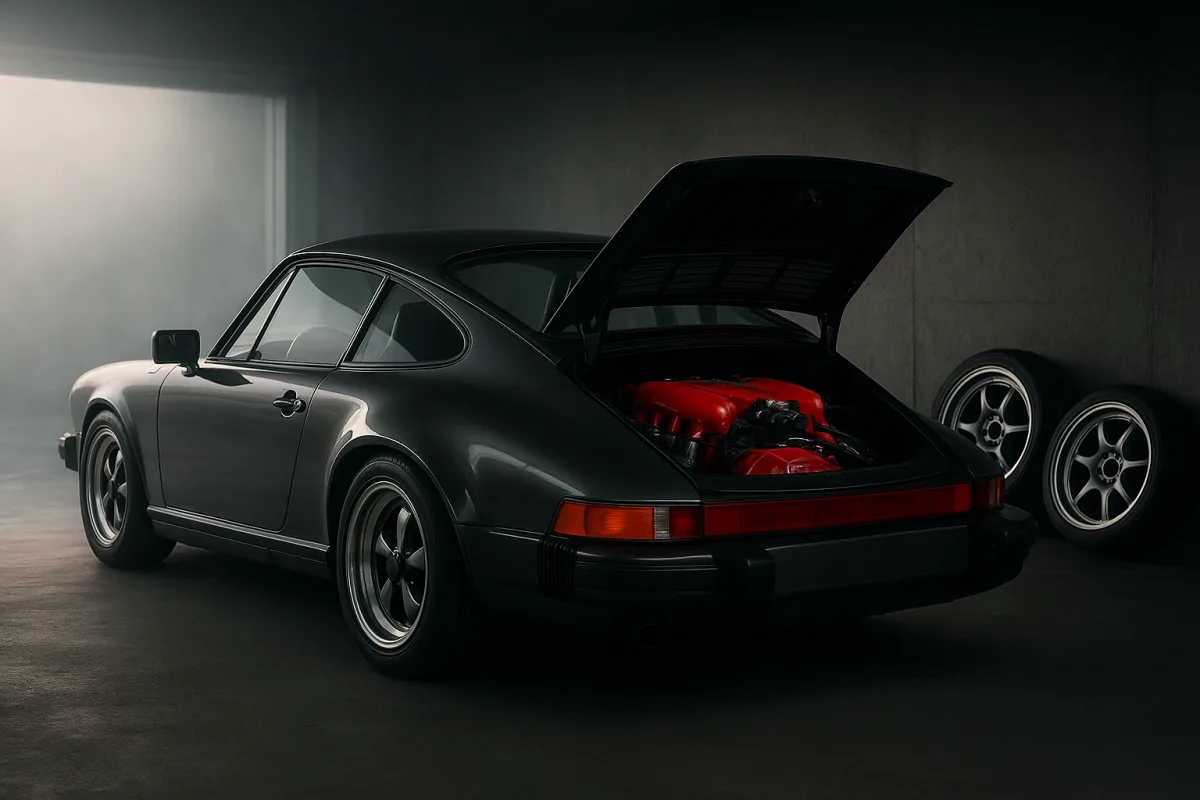
Best for character: Jimmy Oakes Ferrari V8 911 SC, for the Porsche owner who wants intake noise, revs, and a build with no interest in subtlety.
Best engineering statement: Mid-engine K24 Tacoma, for the track-day regular who would rather drive a tube-frame special than park a polished show car.
Four SEMA builds, four very different ownership propositions
SEMA’s most memorable cars often look alike from 20 feet away: low, wide, loud, and surrounded by a crowd. Get closer, though, and the 2026 standouts split sharply between expensive completed restomods, development-stage race projects, and one-off cars that will demand a patient owner.
The first difference is whether you need a car that can cover a long road trip. TWR’s Supercat starts with a Jaguar XJS backbone and turns it into a carbon-bodied, supercharged V12 coupe, while the V8 Porsches and Tacoma put nearly all their effort into performance character.
| Build | Base vehicle | Engine and layout | Power | Weight | Transmission | Known price | Best use |
|---|---|---|---|---|---|---|---|
| TWR Supercat | Jaguar XJS-based restomod | 5.6-liter supercharged V12, front-engine | 660 hp | 1,650 kg, 3,638 lb | Six-speed manual | £395,000 starting price | Road touring, events, occasional track use |
| Devspeed 911 GT3 | 2007 Porsche 911 GT3 | 6.0-liter LS2 V8, rear-engine | Unpublished | Unpublished | 996 Turbo manual | Unpublished | Drifting and track use |
| Jimmy Oakes 911 SC | 1978 Porsche 911 SC | Ferrari F136 V8, rear-engine | Unpublished | Unpublished | 996-generation manual | Unpublished | Show, street, track experimentation |
| Mid-engine K24 Tacoma | Single-cab Toyota Tacoma | 2.5-liter Honda K24, mid-engine | About 400 hp | About 1,550 lb currently, under 1,700 lb projected with fluids | Sadev sequential transaxle | Unpublished | Track days and development work |
TWR Supercat: the one to buy if road use matters
The Supercat is the only car here presented as a finished low-volume road car, rather than a shop-built experiment. It retains the XJS chassis, original glass, door handles, and taillights, but every other exterior panel is carbon fiber.
Its engine begins with Jaguar’s 5.3-liter V12 block and heads, enlarged to 5.6 liters and extensively rebuilt with a supercharger. TWR quotes 660 hp, compared with the original XJS’s roughly 200-to-300-hp output range, and says the finished car weighs 1,650 kg.
That is still a large coupe. Throttle House noted it is only one inch narrower than the Jaguar XJ220, and its proportions make that believable. You will notice the width in a parking structure long before you notice its claimed Lotus Emira-like power-to-weight ratio.
The cabin remains more accommodating than the Porsches or Tacoma because it retains XJS proportions. It has Apple CarPlay, a six-speed manual, a race-car-style pedal box, configurable steering and engine settings, and broad customization choices for leather, Alcantara, and trim.
There are compromises. Throttle House found the finish and detail execution below the level expected from Singer, Alfaholics, or Tuthill, even while praising the engine and dramatic driving experience. The standard center-console trim and some interior graphics did not look fully resolved.
At £395,000 before options, taxes, registration, insurance, and delivery, the Supercat is expensive but not priced like the most elaborate Porsche reimaginations. TWR has not published an all-in American price, so do not convert the pound figure and assume that is your final check.
We would buy this one if the goal is a genuinely usable, strange, noisy GT car. It makes fewer promises about preserving Jaguar purity, and it does not need to. The old XJS was never this sharp, this light, or this committed.
Devspeed’s LS2 911 GT3: the hard-edged V8 Porsche
Faruk Kugay of Devspeed brought a 2007 Porsche 911 GT3 to SEMA with a naturally aspirated 6.0-liter Chevrolet LS2 where the original flat-six once sat. The chassis had previously received an EJ25 Subaru turbo-four, then a widebody conversion, before its current drift-oriented form.
The original 2007 GT3 made 415 hp and 299 lb-ft from its 3.6-liter flat-six. [1] Those numbers do not apply to the LS2 car. Neither Devspeed nor Eneos has published verified horsepower or torque for the current V8 conversion.
Kugay told Larry Chen that this particular LS2, fitted with LS3 heads, a camshaft, and a dry-sump system, made 458 hp at the wheels. He also described a future 434-cubic-inch engine targeting roughly 630 to 650 hp, but that later engine was not installed.
The current drivetrain is more interesting than the headline swap. It uses a Porsche 996 Turbo manual transmission, a welded differential awaiting an OS Giken two-way limited-slip unit, and custom front suspension work developed around altered Wisefab components.
The exhaust is the point. German engineer Christian Koegler designed equal-length, stepped headers around target harmonics, moving from 1.75-inch primary tubing to 2-inch sections. The goal was a particular high-frequency character, not maximum output, with a reported 7,500-rpm intended redline.
A VAD fiberglass GT3 R-style widebody kit creates the clearance for 18-by-10 front and 18-by-11 rear wheels. Rear tires are 295/40R18, approximately 27.4 inches tall, a large package selected to fill the high race-car arches and retain suspension travel.
This is not the V8 Porsche we would put first on a road-trip list. The exposed headers, stripped cabin, welded diff, giant tires, and drift-specific setup will all ask something from you. Yet it is unusually honest about its purpose, and the serviceable LS architecture has appeal.
Jimmy Oakes’ Ferrari V8 911 SC: the wilder sound experiment
Jimmy Oakes’ 1978 Porsche 911 SC approaches the V8 swap from another direction. Its engine is a Ferrari F136 V8, the family used in Maserati Quattroportes, fitted with custom independent throttle bodies based on hardware from the BMW E92 M3 V8. [6]
CarScoops reports that it also uses a 996-generation Porsche manual transmission, upgraded Boxster brakes, a custom widebody kit, a stainless-steel exhaust, and 17-inch Volk Racing wheels. Its Guards Red paint and missing front bumper make it look far less finished than the TWR.
That unfinished-looking front end is part of the appeal, but it tells you what this is. The 911 SC is a custom car first and a conventional restoration second, inspired by Japanese tuning and motorsport culture rather than a factory-correct backdate.
Neither Oakes nor Eneos has published output, weight, final price, or a maintenance plan for the F136 installation. The Ferrari and Maserati V8 makes the swap more exotic than an LS conversion, but it also makes future diagnosis and parts sourcing more specialized.
A normal G-series 911 already requires close inspection for corrosion, body repairs, suspension wear, and aging mechanical systems. [3] Once the original engine, drivetrain components, bodywork, and brakes have been changed, the build quality and documentation matter more than the badge on the hood.
We would admire this one, but buy only after seeing the cooling layout, wiring documentation, ECU calibration, spare-parts list, and street-registration history. A custom Ferrari V8 911 can be unforgettable. It can also become a long-term workshop resident.
The mid-engine K24 Tacoma: SEMA’s purest track tool
The single-cab Tacoma begins with an idea that sounds wrong, then becomes compelling when you inspect the hardware. Its owner retained the cab, doors, and some Tacoma visual cues, but the chassis beneath is fully TIG-welded tube frame construction.
A 2.5-liter Honda K24 from Four Piston Racing sits behind the cab, coupled to a Sadev sequential transaxle commonly used in Formula 3 and Formula 4 applications. The truck uses paddle shifting, although the clutch remains necessary for downshifts.
The builder chose a factory-size clutch through a custom bellhousing adapter because the original racing transmission specification used a 5.5-inch clutch. That choice says more about intended ownership than the wild exterior does: this Tacoma is meant to be driven repeatedly, not unloaded once a year.
Larry Chen reported a previous weight of 1,456 pounds before additional components. The builder estimates roughly 1,550 pounds now and expects it to remain below 1,700 pounds with fluids, while targeting about 400 hp and a near-50/50 weight distribution.
The power-to-weight math is startling, but the trade-off is clear. There is little sound insulation, little luggage space, minimal crash protection beyond the race-oriented tube structure, and virtually no conventional Tacoma parts support once you move beyond the cab and exterior panels.
Still, it has the clearest maintenance logic of the one-off cars. The K24 has room around it, the cab can be removed, the transaxle and suspension are exposed, and the owner deliberately selected a configuration that can be serviced between track days.
Prices, paperwork, and the bill after SEMA
None of the two V8 Porsches or the Tacoma has a published sale price. That is normal for SEMA projects, but it means you should separate the cost of a donor, fabrication, drivetrain, paint, tuning, inspection, and subsequent sorting.
Comparable Porsche backdates illustrate the gap. Shoreline 911 says its builds land around $350,000 to $400,000, depending on specification. [5] Theon Design’s more comprehensive 911 commissions start at £430,000 before the donor car and taxes. [4]
Those figures do not establish a value for either SEMA Porsche. They do show why a lower-priced donor does not make a cheap finished restomod. One-off engine mounts, cooling systems, exhausts, wiring, fabrication, calibration, and bodywork absorb money quickly.
Registration can be harder than fabrication. Federal emissions rules prohibit many non-approved emissions modifications, while safety, insurance, and state registration standards vary widely. California is particularly demanding, but no state should be assumed to welcome a heavily modified engine-swapped car without documentation.
Get an insurer involved before buying a project or commissioning one. Specialty agreed-value coverage will usually require photographs, receipts, a build record, and an appraisal. Mainstream lenders may also decline to finance a bespoke build without an independently established value.
Who each option suits
TWR Supercat: You want the least compromised route to a road-driven SEMA-style restomod. It is still wide, expensive, and theatrical, but it has the cabin space, road equipment, development backing, and finished-car feel the others lack.
Devspeed LS2 911 GT3: You already understand drift-car compromises and want a Porsche with a durable, accessible V8 platform. Buy it for the layout, noise, manual transmission, and chassis fabrication, not for an unverified horsepower number.
Jimmy Oakes Ferrari V8 911 SC: You want the most distinctive engine choice and can accept that a Maserati-derived V8 adds complexity. This is for the owner who values a singular car over easy parts support or a predictable resale market.
Mid-engine K24 Tacoma: You want the lightest, most technically compelling machine in this group, and you have access to track days, trailer space, fabrication support, and patience for development. We would take this over a polished show build if driving is the priority.
Frequently Asked Questions
What are the standout restomods at SEMA 2026?
The key restomods at SEMA 2026 include the TWR Supercat, a Jaguar XJS-based grand tourer with a supercharged V12; the Devspeed 2007 Porsche 911 GT3 with an LS2 V8 swap aimed at drifting and track use; Jimmy Oakes’ Ferrari V8-powered 1978 Porsche 911 SC known for its characterful sound and manual transmission; and a mid-engine K24-powered Toyota Tacoma designed as a lightweight track-day special. Each offers a distinct ownership experience, from road touring to track-focused driving.
How do V8 engine swaps affect Porsche 911 performance?
V8 swaps in Porsche 911s at SEMA 2026 prioritize different goals. The Devspeed LS2 911 GT3 uses a naturally aspirated 6.0-liter LS2 V8 with custom suspension and exhaust tuning for drifting and track driving, though exact power figures are unpublished. Jimmy Oakes’ Ferrari V8 911 SC emphasizes intake noise, revs, and a manual gearbox for a more characterful and engaging street and track experience. These swaps generally increase power and alter driving dynamics but may involve regulatory and maintenance complexities.
What makes the TWR Supercat a notable restomod?
The TWR Supercat stands out as a finished, road-legal restomod with factory-scale backing. It transforms a Jaguar XJS chassis with carbon fiber body panels and a rebuilt 5.6-liter supercharged V12 producing 660 hp. The car balances dramatic performance with usable grand touring comfort, including a six-speed manual, configurable settings, and modern amenities like Apple CarPlay. Its price and build quality place it below ultra-high-end restomods but offer a unique blend of spectacle and usability.
What are the differences between the LS2 and Ferrari V8 Porsche 911s at SEMA 2026?
The LS2-powered 2007 Porsche 911 GT3 by Devspeed is a drift- and track-focused build featuring a Chevrolet LS2 V8 with custom suspension and exhaust, a welded differential, and a widebody kit for large tires. Its output is unverified but designed for high-rpm performance. In contrast, Jimmy Oakes’ 1978 Porsche 911 SC uses a Ferrari F136 V8 with a manual transmission and 17-inch wheels, emphasizing sound, revs, and Japanese tuning culture for a more characterful and street-friendly experience. The LS2 car is more aggressive and purpose-built, while the Ferrari V8 build prioritizes personality and style.
What unique engineering features does the mid-engine K24 Tacoma have?
The mid-engine K24 Tacoma is a lightweight, track-focused build weighing about 1,550 pounds before fluids and targeting under 1,700 pounds total. It uses a 2.5-liter Honda K24 engine mounted mid-ship and pairs with a Sadev sequential transaxle. The chassis is a tube-frame design aimed at delivering sharp handling and performance for track days rather than road use. This engineering approach prioritizes minimal weight and mechanical simplicity over refinement or show car polish.
How we researched this
This article was assembled from 5 video sources across 4 channels, 1 published article, 6 cited references.
Nothing here is based on hands-on testing. Where a figure or finding appears, it belongs to the source cited beside it, and the writing says so rather than implying otherwise. Every source is listed below so you can check it.
Sources
TWR Supercat Review, Throttle House
We Can FINALLY Reveal Our Two SEMA Builds!, DailyDrivenExotics
The CRAZIEST YouTuber Builds and Hypercars at SEMA 2026!, Shmee150
Batsh*t Crazy Tube Frame, Mid-Engine K24, Sequential Tacoma Track Monster, Larry Chen
The Sounds of This 911 (w/ 8-1 Headers & an LS) Shook The Ground, Larry Chen
These Two Porsche 911s Are Both Hiding Powerful V8s, CarScoops
Porsche 911 (G-Series) Buyer’s Guide: Everything You Need to Know
A spectacular private commission showcases Theon Design's skill with the 911 template
Watch SEMA 2026 Highlights: Restomods, V8 Porsche 911s, and Unique Builds on Youtube
Also from the sources
Related Articles
2026 Ferrari Purosangue vs 2027 Lamborghini Temerario Review
Compare the 2026 Ferrari Purosangue and 2027 Lamborghini Temerario in performance, handling, practicality, and ownership in this detailed review.
High-Performance Engine Builds
Explore high-performance engine builds and unique powertrains, focusing on fuel, drivetrain, chassis, and reliability for usable power.
SEMA 2026 Builds and Reveals
Explore SEMA 2026 builds and reveals with a focus on ownership, maintenance, and usability of the wildest custom projects.
Race Car Builds and Engine Swaps: Best Projects Compared
Explore race car builds and engine swaps with detailed comparisons of performance, cost, and value for high-performance projects.